Tag: Film Scores

  • Steampunk Movie Scores on Picture Perfect

    Steampunk Movie Scores on Picture Perfect

    This week on “Picture Perfect,” things will get pretty steamy, though not in the way you might think. We’ll have an hour of scores from films that exemplify the science fiction subgenre known as “steampunk.”

    Generally speaking, steampunk employs forward-looking technologies and gadgetry – in many cases literally powered by steam – in incongruous, quasi-Victorian settings.

    We’ll hear selections from Martin Scorsese’s “Hugo” (2011), with its abundant gears, steam, and free-writing automaton, with music by Howard Shore; “The Golden Compass” (2007), with its carriages, old-fashioned air ships, and vintage arctic gear, with music by Alexandre Desplat; “Wild Wild West” (1999), with its cowboys, proto-James Bond gadgetry, and Gustave Eiffel-style iron spider, with music by Elmer Bernstein; and “Time After Time” (1979), with Jack the Ripper, H.G. Wells, and a time machine of his invention, with music by Miklós Rózsa.

    We’re powered by steampunk this week, on “Picture Perfect,” music for the movies, this Saturday evening at 6:00 EST, on WWFM – The Classical Network and wwfm.org.

  • Mars Movies Music Conspiracy & Adventure

    Mars Movies Music Conspiracy & Adventure

    This week on “Picture Perfect,” we’re off to Mars – or are we?

    “Capricorn One” (1978) posits, in true conspiracy theory fashion, that the first manned mission to Mars is a fabrication, filmed on a sound stage. However, when the actual capsule burns up upon re-entry into the earth’s atmosphere, the government attempts to cover it up, and the astronauts are sent scrambling for their lives. This is the film in which O.J. Simpson eats a rattlesnake. The cast also includes Elliott Gould, James Brolin, Sam Waterston, Hal Holbrook, and Karen Black. Jerry Goldsmith wrote the propulsive score.

    The Red Planet is also the destination of the crew of Mars Gravity Probe 1, in “Robinson Crusoe on Mars” (1964). In events which loosely parallel the trajectory of Daniel Defoe’s classic novel, commander Paul Mantee survives a crash on the seemingly desolate planet, along with the mission’s test monkey. Later, he develops a friendship with an escaped alien slave, whom he names Friday. The composer is Van Cleave.

    Van Cleave had much in common with Ferde Grofé. Yes, THE Ferde Grofé – he of “The Grand Canyon Suite.” You’ll recall Grofé acted as an orchestrator for the Paul Whiteman Band. His most celebrated achievement in that capacity was his arrangement of George Gershwin’s “Rhapsody in Blue.”

    Cleave had also served as an arranger for Whiteman. Later, he pioneered the use of the theremin in his television scores, for series like “The Twilight Zone.”

    It was Grofé who allegedly introduced the theremin to outer space, with his music for “Rocketship X-M” (1950). “Rocketship X-M’s” unlikely premise is that the spacecraft of the title overshoots its target, the moon, and inadvertently ends up on Mars – a difference of many, many, many millions of miles! Lloyd Bridges heads the cast.

    Sadly, “John Carter” (2012), Walt Disney’s long-overdue adaptation of Edgar Rice Burroughs’ Martian tales, was branded a colossal flop. It’s a sad state of affairs when a 300 million dollar take is considered a disappointment! Though the film failed to live up to box office expectations, and some of the tropes established by Burroughs 100 years ago seem a little overly-familiar in the decades since the release of “Star Wars,” “John Carter” was nowhere near as bad as one was led to believe. It was certainly no worse than any other film of its kind made in recent years, and in fact a good deal better than many. And I would include in that assessment any of the recent Tolkien adaptations.

    True, most of the potential magic is lost in the usual over-reliance on computer effects, and the screenplay makes some unnecessary alterations to the books. But all in all, “John Carter” is a satisfying Martian adventure. Edgar Rice Burroughs never aspired to be Joseph Conrad. The film’s epic, evocative score is by Michael Giacchino.

    Prepare to see red with music from movies about the fourth planet, when Mars is our destination – whether by design, by accident, by conspiracy, or by unexplained means – on “Picture Perfect,” music for the movies, this Saturday evening at 6:00 EST, on WWFM – The Classical Network and wwfm.org!


  • John Williams: Oscar Record & Retirement?

    John Williams: Oscar Record & Retirement?

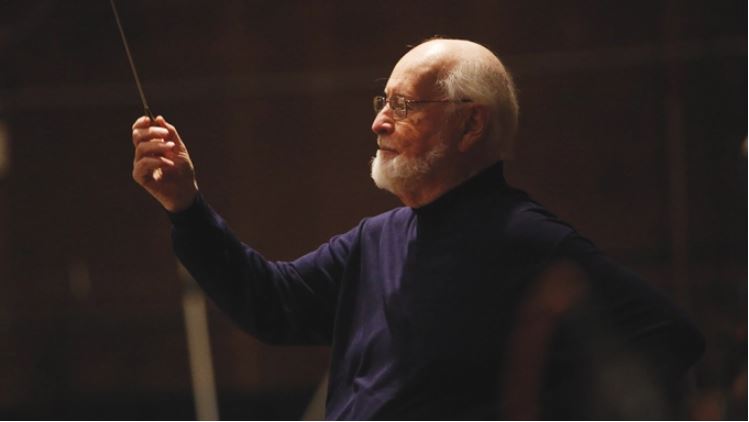
    More than anyone else in history, John Williams has had the pleasure of scoring the highest-grossing motion picture of the year. Those films remain among the most-successful of all time.

    Now, with his 53rd Oscar nomination, announced today, Williams sets another record, as the oldest person ever to be nominated for an Academy Award. The oldest person ever to win an Oscar is James Ivory who, at 89, was recognized in 2018 for his screenplay to “Call Me by Your Name.”

    Williams is already the second most-nominated person ever – a record he breaks every time he’s nominated – behind only Walt Disney (with 59). He has earned five statuettes, for his work on “Fiddler on the Roof,” “Jaws,” “Star Wars,” “E.T. The Extra-Terrestrial,” and “Schindler’s List.” However, it has been 30 years since his last win.

    What are the odds of this year bringing Williams more Oscar gold? Rather slim, I’m afraid. His work on “The Fabelmans,” while certainly effective and wholly appropriate for one of Steven Spielberg’s most intimate projects, is fairly understated and supplemented by a lot of classical music, including works by Kuhlau, Clementi, Bach, and Haydn. (Spielberg’s mom was a pianist.) The soundtrack album in only 31 minutes long, and at least one of the themes flirts with Satie’s “Gymnopédie No. 3.”

    That said, somebody should campaign for an honorary Oscar for this guy already. For 60 years, the movies would have been so much poorer without him. Not that he’ll be crying himself to sleep for lack of recognition. What a charmed career he’s had!

    At least since “Star Wars: The Rise of Skywalker” in 2019, Williams has teased his retirement from film scoring several times. Most recently, he stated that “Indiana Jones and the Dial of Destiny,” due this summer, would be his last score. Now, however, he intimates that that might not be entirely true.

    “I’ll stick around for a while,” Williams told Entertainment Weekly. “I can’t retire from music.” Which should be fairly obvious, when seemingly not a week goes by that he’s not conducting one of the world’s great orchestras, in between work on his long-anticipated Piano Concerto and fulfilling smaller commissions for occasional works and television themes.

    John Williams will be 91 on February 8.

    This year’s nominees for Best Original Score: “Everything Everywhere All at Once” (Son Lux), “Babylon” (Justin Hurwitz), “Banshees of Inisherin” (Carter Burwell), “All Quiet on the Western Front” (Volker Bertelmann), and “The Fabelmans” (John Williams).


    More details about William’s latest world record here:

    https://deadline.com/2023/01/john-williams-record-for-oldest-oscar-nominee-judd-hirsch-acting-nominee-longest-gap-1235238744/

    A full list of this year’s nominations:

    https://www.hollywoodreporter.com/movies/movie-news/oscar-nominations-2023-nominees-list-1235307974/

    For your consideration: “The Fabelmans”

  • Animated Film Scores Uplifting Movie Music

    Animated Film Scores Uplifting Movie Music

    “Music is a moral law,” wrote Plato. “It gives soul to the universe, wings to the mind, flight to the imagination… and life to everything.”

    That includes computer-generated imagery.

    While my distaste for the overkill of CGI in alleged “live action” movies is quite well known, I have to concede that, when shelling out the clams for a big-budget movie, one stands a better chance these days of getting a quality ride if one banks on the solely computer-animated feature. Put an action hero in a computer-animated landscape, and everything looks incredibly fake. But integrate the characters, by creating them in the computer as well, and the result is often much more absorbing, imaginative, and even wittier than your run-of-the-mill Hollywood blockbuster.

    Furthermore, in a day when so many movies sport scores made up of droning electronics punctuated by colorless action cues, the computer-generated feature seems to attract composers who still understand how to write music.

    This week on “Picture Perfect,” we’ll listen to enlivening scores from four computer-generated films.

    We’ll hear selections from the first installment in the “Ice Age” franchise, by David Newman (son of Golden Age heavy-hitter Alfred Newman, brother of Thomas Newman, and cousin of Randy Newman).

    We’ll also have some of John Williams’ music from “The Adventures of Tintin,” after the comic book adventurer created by Belgian artist and writer Hergé. Tintin’s popularity in Europe failed to translate into big domestic box office, comparatively speaking, but the score is Williams’ best of its kind – an exciting adventure piece full of leitmotifs and great action cues – since the first of the Harry Potter films.

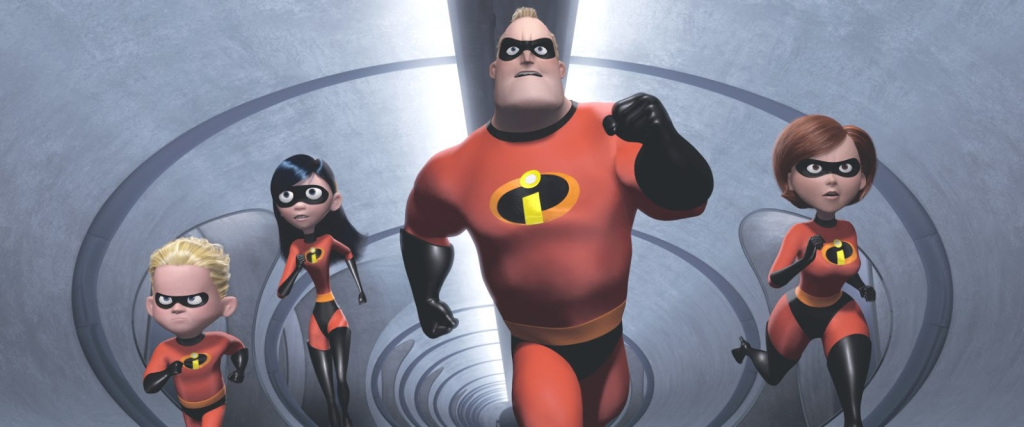
    We’ll round out the hour with two projects scored by Michael Giacchino for Pixar Animation Studios. Giacchino’s break-out success was the sly superhero satire, “The Incredibles,” for which he composed in the swinging ‘60s espionage style popularized by John Barry when writing for the James Bond films.

    We’ll also hear selections from Giacchino’s Academy Award-winning score to “Up.” “Up” was nominated for Best Picture at the 82nd Academy Awards, only the second animated feature ever to be included in the category.

    I think we can all use a little animation, can’t we? I hope you’ll join me for an hour of selections from computer-animated adventures, on “Picture Perfect,” music for the movies, this Saturday evening at 6:00 EST, on WWFM – The Classical Network and wwfm.org.

  • National Geographic’s Epic Soundtracks

    National Geographic’s Epic Soundtracks

    Years in advance of modern cable, at the very dawn of color television, the National Geographic Society aired its first “special” on September 10, 1965. The program, titled “Americans on Everest,” featured stunning footage taken from the summit of the world’s tallest peak. These specials really were special, with breathtaking images and real-life adventures unlike anything previously experienced in American living rooms.

    Three months later, viewers were introduced to the familiar “National Geographic Theme,” which was composed by Elmer Bernstein for the third of the broadcast specials, “Voyage of the Brigantine Yankee.” When one realizes that Bernstein also wrote the score for “The Magnificent Seven,” it becomes one of those “Of course!” moments. Both themes remain among the most recognized by American audiences.

    National Geographic went on to work with a number of the top film composers of the day. This week on “Picture Perfect,” we’ll travel the world with four of them.

    Bernstein, who was also responsible for the music for “The Ten Commandments,” “The Great Escape,” and “To Kill a Mockingbird,” returned in 1967 to write the music for a follow-up to “Voyage of the Brigantine Yankee,” called “Yankee Sails Across Europe.”

    Ernest Gold, composer of “Exodus,” was engaged in 1972 to write the score for “The Last Vikings,” a documentary about the inhabitants of the rugged northern coast of Norway, who at the time still practiced some of the traditions followed centuries before by their Norse forebears. Gold’s score is a good example of what a talented composer can accomplish through an economy of means – in this case, a wind ensemble, harp, cello and percussion.

    Leonard Rosenman, a pupil of Arnold Schoenberg, Roger Sessions, and Luigi Dallapiccola – a most unlikely pedigree on which to build a career in Hollywood – wrote classic scores for “East of Eden,” “Rebel Without a Cause,” and “Fantastic Voyage.” He also composed the music for one of the best known of the National Geographic specials, “Dr. Leakey and the Dawn of Man,” in 1966.

    Finally, Jerome Moross wrote a charming and buoyant Americana score for “Grizzly!,” which aired in 1967. Moross, of course, was the composer of one of the all-time great western scores, for “The Big Country.”

    Of course we’ll also get more than our share of that iconic National Geographic theme. All of this music was issued on limited edition compact discs from the Intrada label.

    I hope you’ll join me for music from outstanding television documentaries produced by National Geographic, on “Picture Perfect,” this Saturday evening at 6:00 EST, on WWFM – The Classical Network and wwfm.org.

Tag Cloud

Aaron Copland (92) Beethoven (95) Composer (114) Film Music (123) Film Score (143) Film Scores (255) Halloween (94) John Williams (187) KWAX (229) Leonard Bernstein (101) Marlboro Music Festival (125) Movie Music (138) Opera (202) Philadelphia Orchestra (89) Picture Perfect (174) Princeton Symphony Orchestra (106) Radio (87) Ralph Vaughan Williams (85) Ross Amico (244) Roy's Tie-Dye Sci-Fi Corner (290) The Classical Network (101) The Lost Chord (268) Vaughan Williams (103) WPRB (396) WWFM (881)

DON’T MISS A BEAT

Receive a weekly digest every Sunday at noon by signing up here


RECENT POSTS