Tag: Film Scores

  • Max Steiner & Dimitri Tiomkin Birthday Film Scores

    Max Steiner & Dimitri Tiomkin Birthday Film Scores

    May 10th is bursting with birthday energy! Turn down the lights for a celebration of those two silverbacks of the silver screen, Max Steiner and Dimitri Tiomkin.

    Steiner (1888-1971), the literal godson of Richard Strauss, was instrumental in transplanting the sound of fin de siècle Vienna to the realm of cinematic dreams. He composed over 300 film scores for RKO and Warner Brothers, earning 24 Academy Award nominations and winning three – for “The Informer,” “Now, Voyager” and “Since You Went Away” – though he is unquestionably better remembered today for his work on “King Kong,” “Gone with the Wind” and “Casablanca.”

    Tiomkin (1894-1979), a pupil of Alexander Glazunov, was born in Ukraine. He settled in the United States, where he composed music for films in all genres, though in the 1950s he enjoyed particular success writing for Westerns, including the Academy Award-winning “High Noon.” When asked why this would be the case, that a composer born halfway around the world would have such a command of this distinctly American idiom, Tiomkin replied, “A steppe is a steppe is a steppe.”

    Tiomkin was honored with four Academy Awards – three for Best Original Score (for “High Noon,” “The High and the Mighty” and “The Old Man and the Sea”) and one for Best Original Song (“The Ballad of High Noon”).

    Here’s a transcript of his acceptance speech, delivered after being handed the Oscar for “The High and the Mighty” in 1955:

    “Lady and gentlemen, because I working in this town for twenty-five years, I like to make some kind of appreciation to very important factor what make me successful to lots of my colleagues in this town. I’d like to thank Johannes Brahms, Johann Strauss, Richard Strauss, Beethoven, Mozart, George Gershwin, Jerome Kern, Wagner, Tchaikovsky, Rimsky-Korsakov. Thank you.”

    You can watch it here:

    Though Steiner and Tiomkin were both very well-connected in the wider musical world, comparatively speaking, neither left very much in the way of classical concert music. In 2019, Intrada Records put out a diverting 2-CD set of Tiomkin’s brightly-scored ballet music, dances composed in Paris for his wife, Albertina Rasch, in 1927-1932, prior to his work in film. It would be wonderful for afternoon drive-time – if only I had a live air shift! You can sample some of it by following the link. Already detectable is Tiomkin’s trademark snarling brass, in a number titled “Mars” (the second track in this YouTube playlist):

    In 2020, Oxford University Press published a book by Steven C. Smith, “Music by Max Steiner: The Epic Life of Hollywood’s Most Influential Composer.” Read my impressions of this authoritative biography, unbelievably the first full-length treatment of Steiner’s life and achievements, here. Then get yourself a copy!

    Also in 2020, while I was twiddling my thumbs, waiting to get back to work, I put together a Steiner-Tiomkin crossword puzzle. The clues not only allude to specifics of their respective lives and careers, but they should also be of ample interest, I hope, to classic movie buffs. So even if you’re convinced you don’t know a lot about music, do check it out if, like me, you happen to watch a lot of movies from the ‘30s, ‘40s, and ‘50s.

    To fill out the puzzle, follow the link and select “solve online” at the bottom of the page. You’ll then be able to type directly into the squares. Once you feel you’ve exhausted the puzzle, you’ll find the solutions by clicking on “Answer Key PDF.”

    https://www.armoredpenguin.com/crossword/Data/2020.05/1007/10071219.977.html?fbclid=IwAR1pIAkaVZccK4LXQ5yTMtwJ7kzNlQeOPjgyn3Fkx4X4NcAvd1Cxp52iahw

    Happy birthday to Max Steiner and Dimitri Tiomkin, two composers who enriched generations of movie lovers by keeping it “reel!”

    Steiner’s “Now, Voyager”

    Tiomkin’s “Land of the Pharaohs”

    A great, two-part interview with Steiner:

    Part 1 https://www.youtube.com/watch?v=eQuNnzH6_g8
    Part 2 https://www.youtube.com/watch?v=jmJLTn_6UOY

    The official Dimitri Tiomkin website:

    Welcome to DimitriTiomkin.com


    PHOTOS (counter-clockwise from top): Screen credits for their work on “Lost Horizon” (1937); Steiner conducting; Frank Capra (in coat) with Steiner and Tiomkin on the podium; Tiomkin composing

  • Shakespeare’s Birthday Henry V on Film

    Shakespeare’s Birthday Henry V on Film

    This week on “Picture Perfect,” it’s William Shakespeare’s birthday (observed).

    No one knows for sure when the Bard was born – his baptismal date was April 26, 1564 – but since he died on April 23, 1616, the tradition has been to keep it tidy. So, like Mark Twain, who “came in” with Halley’s comet and “went out” upon its return, we feel it as a matter of poetic satisfaction that Shakespeare’s death date must also be his birth date.

    All’s well that ends well! I’ll celebrate Shakespeare on both of my show’s this weekend (following up tomorrow night on “The Lost Chord” with some Shakespeare-inspired concert works at 10:00 EDT), beginning today with two complementary versions of “Henry V.”

    William Walton composed his now-classic score for Laurence Olivier in 1944. We’ll hear selections from a recording that hews closer to the film’s original orchestrations than does the sanctioned concert suite by Muir Mathieson and restores the parts for chorus. In addition, Olivier himself will declaim two of Henry’s rousing speeches, in a separate release conducted by the composer.

    Then Patrick Doyle will be the baritone that initiates the choral showpiece “Non nobis Domine” that caps his own acclaimed score for Kenneth Branagh’s directorial debut in 1989.

    Olivier’s “Henry V” was nominated for four Academy Awards: those for Best Picture, Best Actor, Best Art Direction, and Best Score. It didn’t win in the competitive categories, but Olivier was honored with a special award “for his outstanding achievement as an actor, producer and director in bringing ‘Henry V’ to the screen.”

    To go toe-to-toe with the 20th century’s most renowned Shakespearean interpreter was a bold gamble, but at 29 Branagh did just that. Amazingly, when his version galloped into theaters 45 years later, comparisons were not unfavorable. The film and Branagh’s performance would also be nominated (along with the film’s Costume Design). But despite its enthusiastic reception, Doyle’s music would be overlooked by the Academy. The soundtrack, however, received a lot of exposure on classical radio at the time, and the score remains popular.

    It’s instructive to view the two directors’ takes on “Henry V” in the context of the times in which they were filmed. When Olivier brought Harry the King to the big screen, England was in throes of the Second World War and his “Henry” bubbles over with patriotic zeal.

    Branagh, on the other hand, offers a grittier, post-Vietnam “Henry,” with his charismatic, ambitious king plunging his country into a war that is both costly and messy. Fortunately, as history tells us, the long-bow saves the day, and Branagh’s Henry makes us forget his cold rejection of old friendships with a hair-raising rendition of the St. Crispin’s Day speech that would drive anyone who hears it to want to fight the French, consequences be damned.

    Judge for yourself, from these two contrasting interpretations of the St. Crispin’s pep talk from “Henry V.”

    Olivier, a powerful and patriotic – if somewhat theatrical – symbol for the beleaguered British during World War II:

    And Branagh, a cinematic, very human Henry for today:

    https://www.youtube.com/watch?v=cRj01LShXN8

    Once more unto the breach, dear friends! I hope you’ll join me for “Henry V” times two, on “Picture Perfect,” music for the movies, this Saturday at 6:00 EDT, on WWFM – The Classical Network and wwfm.org.

  • Armchair Travel Through Film Scores

    Armchair Travel Through Film Scores

    This week on “Picture Perfect,” settle in for a little armchair traveling as, musically, we follow the English abroad.

    We’ll hear selections from “Enchanted April” (Richard Rodney Bennett), “A Passage to India” (Maurice Jarre), “The Best Exotic Marigold Hotel” (Thomas Newman), and “Around the World in 80 Days” (Victor Young).

    Bennett, quite the accomplished concert composer (and occasional torch song singer), supplies a sensitive score for the 1991 Merchant/Ivory adaptation of Elizabeth von Arnim’s novel about four English ladies who spend an idyllic month at an Italian villa.

    Jarre received his third Academy Award for his music to David Lean’s final film, a 1984 adaptation of E.M. Forster’s novel of repression and racial tension in colonial India.

    Newman incorporates traditional Indian elements into his score for “The Best Exotic Marigold Hotel,” the 2012 surprise hit about English pensioners reinventing themselves in retirement in Jaipur.

    And Young won his only Oscar (alas, posthumously bestowed) for “Around the World in 80 Days,” the star-studded, light-as-a-feather, though admittedly charming mega-winner at the 1956 Academy Awards. It takes longer to watch the movie than it does to read Jules Verne’s novel – though it does provide a rare opportunity to see Ronald Colman in color.

    No need to pack your valise for Picture Perfect,” music for the movies, this Saturday evening at 6:00 EDT, on WWFM – The Classical Network and wwfm.org.


    PHOTO: There’s no balloon in Verne’s original, but as long as there’s champagne, who cares?

  • Saints on Screen: The Music of Faith in Film

    Saints on Screen: The Music of Faith in Film

    This week on “Picture Perfect,” the saints go marching in.

    We’ll begin with a suite from “The Song of Bernadette” (1943), one of Jennifer Jones’ finest hours. Jones was honored with an Academy Award for her performance (the film was nominated in 12 categories). Franz Werfel’s novel tells the story of Bernadette Soubirous, a Lourdes peasant prone to visions of the Blessed Virgin Mary.

    Igor Stravinsky made several attempts to break into Hollywood, but he could never keep up with the grinding schedule. He took a crack at scoring the “Apparition of the Virgin” scene, but then thought better of it. The project went to Alfred Newman, who won his third Oscar (of nine). Stravinsky’s music would be recycled in the second movement of his “Symphony in Three Movements.”

    The story of Joan of Arc has been translated to film many times. In the case of “Saint Joan” (1957), Otto Preminger adapted the play by George Bernard Shaw. Newcomer Jean Seberg was cast in the title role. Her inexperience brought her in for a sound critical drubbing. Even an old hand like screenwriter Graham Greene was not immune to critical barbs for the liberties he took in reworking Shaw’s play. Despite all that, the score, by Russian-born English composer Mischa Spoliansky, is lovely.

    By contrast, the film of “A Man for All Seasons” (1966), after the play of Robert Bolt, was lavishly praised, especially Paul Scofield’s performance as Sir Thomas More (for which he received an Academy Award for Best Actor). The film won six Academy Awards in all, including that for Best Picture. The period-inflected score is by Georges Delerue.

    I suppose it’s impossible to get through Easter without some Biblical bombast, so why not go all out with “Quo Vadis” (1951)? Henryk Sienkiewicz’s international bestseller incorporates into its narrative Saints Peter and Paul, but the really interesting characters are the cynical Petronius (Leo Genn), who knows how to throw a party, and the quite mad Nero (Peter Ustinov), who plays the lyre even as Rome burns.

    Miklós Rózsa’s score has been much-lauded for its attempt at historical authenticity (the incorporation of contemporaneous Greek, Hebrew, and Sicilian melodies), though its popularity has been eclipsed, somewhat, by that of his work on “Ben-Hur” and “King of Kings.” “Quo Vadis” is really the film in which Rózsa lays out the blueprint for a decade or more of big screen piety. Bernard Herrmann called it “the score of a lifetime.”

    I hope you’ll join me in taking some time off for good behavior. That’s “Lives of the Saints,” on “Picture Perfect,” music for the movies, this Saturday evening at 6:00 EDT, on WWFM – The Classical Network and wwfm.org.


    PHOTO: Jennifer Jones and the Lourdes’ prayer

  • Silk Road Film Scores Yeoh & More

    Silk Road Film Scores Yeoh & More

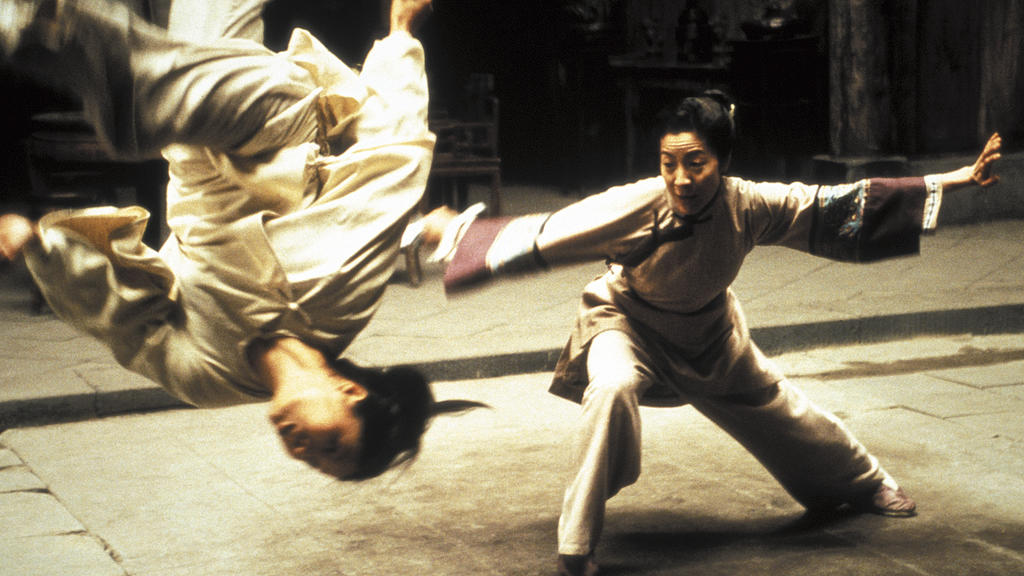
    This week on “Picture Perfect,” with Michelle Yeoh’s Academy Award win for her lead performance in “Everything, Everywhere All at Once,” I thought we’d revisit her earlier international success, “Crouching Tiger, Hidden Dragon,” as part of a musical journey along the Silk Road to China.

    We’ll begin with “The Adventures of Marco Polo” (1938), starring Gary Cooper, of all people, as the medieval merchant-explorer. The score was the first by Hugo Friedhofer – despite his über-German name, born in San Francisco. Freidhofer had been laboring as an orchestrator for bigger-named composers, such as Erich Wolfgang Korngold and Max Steiner. He would go on to win an Academy Award for his music for the 1946 film “The Best Years of Our Lives.”

    Then we’ll hear selections from two big-screen presentations of the exploits of Genghis Khan. “Genghis Khan” (1965), in the best Old Hollywood tradition, has quite the multi-national cast: Omar Sharif, Stephen Boyd, James Mason, Robert Morley, Francoise Morleac, Telly Savalas, Eli Wallach, Woody Strode, and hordes of extras. The music is by Yugoslavian composer Dusan Radic.

    It’s interesting to compare it with “Mongol” (2007). Though the latter film was a joint production of Russia, Germany, and Kazakhstan, it was actually shot in China. The music is by Finnish composer Tuomas Kantelinen, supplemented by contributions by the Mongolian rock band Altan Urag. We’ll stick with the orchestral stuff.

    The score is striking for its use of khöömii throat-singers, female soloists lamenting and ululating over the orchestra, as well as the unique art of “urtiin duu,” traditional Mongolian long-singing. “Mongol” received an Academy Award nomination for Best Foreign Language Film.

    Finally, we’ll hear selections from Ang Lee’s martial artsy opus “Crouching Tiger, Hidden Dragon” (2000), with music by Tan Dun. Let’s just say, Yeoh, as Yu Shu Lien, and Chow Yun-fat, as Li Mu Bai, are extraordinarily light on their feet. The film was the winner of four Academy Awards, including Best Foreign Language Film and Best Original Score. It was also nominated for Best Picture.

    Yo-Yo Ma performs the cello solos. One of the tracks is titled “Silk Road.” In 1998, Ma founded his Silk Road Ensemble.

    Slip into some sensible shoes. We’ll travel 7000 miles along the Silk Road this week, on “Picture Perfect,” music for the movies, this Saturday evening at 6:00 EDT, on WWFM – The Classical Network and wwfm.org.

Tag Cloud

Aaron Copland (92) Beethoven (95) Composer (114) Film Music (123) Film Score (143) Film Scores (255) Halloween (94) John Williams (187) KWAX (229) Leonard Bernstein (101) Marlboro Music Festival (125) Movie Music (138) Opera (202) Philadelphia Orchestra (89) Picture Perfect (174) Princeton Symphony Orchestra (106) Radio (87) Ralph Vaughan Williams (85) Ross Amico (244) Roy's Tie-Dye Sci-Fi Corner (290) The Classical Network (101) The Lost Chord (268) Vaughan Williams (103) WPRB (396) WWFM (881)

DON’T MISS A BEAT

Receive a weekly digest every Sunday at noon by signing up here


RECENT POSTS