Tag: Film Scores

  • Fairy Tale Film Scores Childhood Magic

    Fairy Tale Film Scores Childhood Magic

    This week on “Picture Perfect,” we’ll play on the inherent nostalgia of the holidays by recalling the magic of childhood, by way of our collective and personal interactions with the world of fairy tales.

    George Pal’s “The Wonderful World of the Brothers Grimm” (1962) was filmed in Cinerama and features the producer-director’s trademark stop motion effects. Its all-star cast includes Laurence Harvey, Claire Bloom, Barbara Eden, Russ Tamblyn, and Buddy Hackett. The narrative incorporates a number of familiar Grimm tales, while dealing with the brothers’ real-life struggles.*

    The music is by Leigh Harline. Harline was an integral part of the Disney team that scored an earlier fairy tale adaptation, “Snow White and the Seven Dwarfs.” He would win two Academy Awards for his work on “Pinocchio,” including one for Best Original Song, for “When You Wish Upon a Star.”

    “The Company of Wolves” (1984), one of Neil Jordan’s earlier films, explores the psychological underpinnings of the tale of “Little Red Riding Hood,” here presented as an allegory of adolescence and the loss of innocence. Angela Carter co-wrote the screenplay, based on a selection of her original short stories. The film features Angela Lansbury, any number of werewolves, and Terence Stamp as the Devil. The music is by George Fenton.

    With the advent of computer animation, a snarkier, post-modern take on the fairy tale predominates, most notably with the “Shrek” series, beginning in 2001. The “Shrek” films were so successful, they led to a spin-off, centered on the character of “Puss in Boots” (2011).

    Voiced by Antonio Banderas, Puss provides ample opportunity to vamp on the actor’s swashbuckler image, especially as portrayed in “The Mask of Zorro.” Likewise, the composer, Henry Jackman, chooses to rib James Horners’ “Zorro” score.

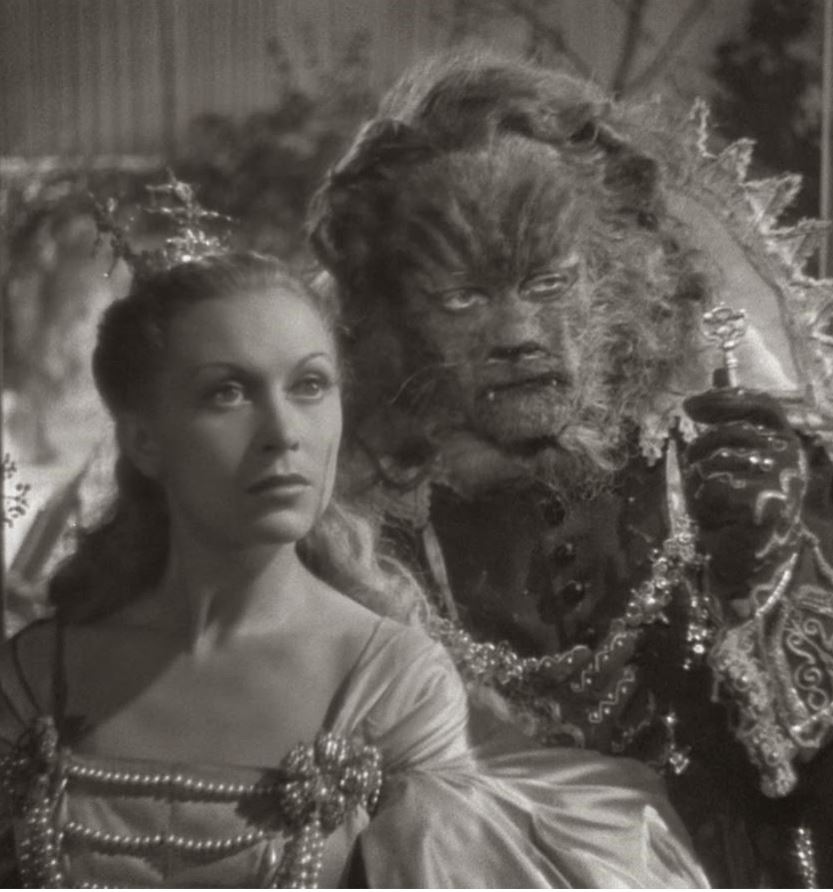
    Finally, we’ll hear selections from perhaps the finest fairy tale ever committed to film, Jean Cocteau’s “La Belle et la Bête” – “Beauty and the Beast” (1946). Moody, atmospheric, dreamy, clever, hypnotic, funny, and romantic, and sporting production design that looks like something Gustav Doré might have dreamed up while poisoning himself on Dutch Masters cigars, Cocteau’s masterpiece stars Jean Marais and Josette Day.

    The alternately mysterious and majestic score is by Georges Auric. Cocteau, you’ll recall, was the one-man publicity machine that propelled Auric and his composer-colleagues, Francis Poulenc, Darius Milhaud, Arthur Honegger, Germaine Tailleferre, and Louis Durey, to fame in Paris, circa 1920, dubbing them “Les Six.”

    I hope you’ll join me for an hour of once-upon-a-time and happily-ever-after, on “Picture Perfect,” music for the movies, now in syndication on KWAX, the radio station of the University of Oregon!


    Remember, KWAX is on the West Coast, so there’s a three-hour difference for the Trenton-Princeton area. Here are the respective air-times of my recorded shows (with East Coast conversions in parentheses):

    PICTURE PERFECT, the movie music show – Friday on KWAX at 5:00 PACIFIC TIME (8:00 PM EST)

    THE LOST CHORD, unusual and neglected rep – Saturday on KWAX at 4:00 PACIFIC TIME (7:00 PM EST)

    Stream them here!

    https://kwax.uoregon.edu/


    *PLEASE NOTE: By coincidence, Roy and I will also be discussing “The Wonderful World of the Brothers Grimm” on the next Roy’s Tie-Dye Sci-Fi Corner, to be livestreamed on Facebook, YouTube, etc., THIS WEEK AT A SPECIAL TIME, SUNDAY EVENING AT 7:00 EST!

  • Vampires on Film Movie Music from Dracula & More

    Vampires on Film Movie Music from Dracula & More

    This week on “Picture Perfect,” it’s all widow’s peaks and plastic fangs, as we listen to music from film adaptations of novels about vampires.

    “Interview with the Vampire” (1994), based on the novel by Anne Rice, featured some pretty counterintuitive casting, including Tom Cruise as Lestat (Rice would have preferred Rutger Hauer), but thanks largely to director Neil Jordan the film still managed to deliver the goods. Elliot Goldenthal’s music was nominated for an Academy Award. Interestingly, Princeton’s American Boychoir sings the opening “Libera me.”

    Frank Langella’s characterization of Bram Stoker’s Dracula drove the critics wild when the play by Hamilton Deane and John L. Balderston was revived on Broadway in 1977. (It was the same adaptation that launched Bela Lugosi on his big screen career.) But when the film “Dracula” (1979) was released a couple of years later, reviews were mixed. Langella retained his dreamy magnetism, and the producers managed to secure Sir Laurence Olivier and Kate Nelligan for the parts of Van Helsing and Mina, respectively, but I wonder if John Badham was the best choice for director. Badham had just come off the enormous box office success of “Saturday Night Fever,” and it looks as if his Dracula retains John Travolta’s hair. You know, just for luck.

    I remember being so excited, as a 13 year-old, watching the trailer at the movies. When Langella leaped through a window and transformed into a wolf in mid-flight to John Williams’ dramatic music, it was almost more than I could bear. Watch the trailer here:

    How could a film called “Abraham Lincoln: Vampire Hunter” (2012) ever live up to its title? The answer is, it can’t, but the adaptation of Seth Grahame-Smith’s supernatural-historical mash-up wasn’t as terrible as everyone says it was. Sure, I would have preferred it had Daniel Day-Lewis played Lincoln, but put anybody in a stove-pipe to fight vampires with an axe, and I’m happy. I probably wouldn’t have been so permissive had I seen it in the theater, where the noise and effects would have pushed me over the edge, but it was a diverting rental, with a gothic score by Henry Jackman that ping-ponged between Americana lyricism and an orchestra bolstered by electronics and heavy metal guitars. But what are you going to listen to when you’re fighting vampires, a string quartet?

    James Bernard’s music for Hammer Studios’ “Dracula,” released in the United States as “Horror of Dracula” (1958), is one of his best-known efforts. His Dracula theme, with its clashing harmonies, laid the groundwork for the sound of the film’s numerous sequels, most of which featured Christopher Lee in his most iconic role. Bernard became so closely associated with Hammer and vampires that he was approached late in life to provide a new score for the silent classic “Nosferatu.”

    Finally, “Bram Stoker’s Dracula” (1992), despite the claims of utmost fidelity in its very title, was not a faithful adaptation of Stoker’s book. Why? WHY??? The film was lovely to look at, with eye-popping costumes and production design that combined Universal Studios in-the-camera trickery and honest-to-goodness miniatures with a few more Jean Cocteau references than perhaps was for its own good. This could have been THE Dracula film. Alas, it wasn’t. However, for me, it had THE Dracula score. It was a stroke of genius to hire Polish composer Wojciech Kilar to give the film just the right Eastern European sound.

    Get your blood up, with page-to-screen vampires this week, on “Picture Perfect,” now in syndication on KWAX, the radio station of the University of Oregon!


    Remember, KWAX is on the West Coast, so there’s a three-hour difference for the Trenton-Princeton area. Here are the respective air-times of my recorded shows (with East Coast conversions in parentheses):

    PICTURE PERFECT, the movie music show – Friday on KWAX at 5:00 PACIFIC TIME (8:00 PM EDT)

    THE LOST CHORD, unusual and neglected rep – Saturday on KWAX at 4:00 PACIFIC TIME (7:00 PM EDT)

    Stream them here!

    https://kwax.uoregon.edu/

  • Airport Movie Music on “Picture Perfect” Radio

    Airport Movie Music on “Picture Perfect” Radio

    This week on “Picture Perfect,” get ready to take flight, with music from movies about airports and airplanes.

    In the original “Airport” (1970), producer Irwin Allen established the prototype for disaster movies of all stripes by placing an all-star, aging cast in spectacular peril. Burt Lancaster! Dean Martin! George Kennedy! Jean Seberg! Jacqueline Bisset! Helen Hayes! The list goes on and on, longer than the longest runway. The bongo-laden theme is by veteran film composer Alfred Newman,” from the last of his over 200 scores.

    Another movie with something of the same feel is “The V.I.P.s” (1963), allegedly inspired by the real-life love-triangle of Vivien Leigh, Laurence Olivier, and Peter Finch. The story is set at London Heathrow Airport, where flights are delayed because of a dense fog. The film was written by Terrence Rattigan and the parts cast from another laundry list of stars, including Elizabeth Taylor, Richard Burton, Louis Jourdan, Maggie Smith, Rod Taylor, and Orson Welles, with Margaret Rutherford in an Academy Award-winning performance. The music is by Miklós Rózsa.

    By contrast, Steven Spielberg’s “The Terminal” (2004) is an (intentionally) comic take on the predicament of a hapless Eastern European who finds himself in a kind limbo, trapped in an international arrivals terminal in New York, after his country erupts into civil war, so that his passport and other documentation are no longer valid. His plight mirrors that of real-life Mehran Karimi Nasseri, an Iranian who lived for 17 years in a terminal at Charles de Gaulle Airport.

    Tom Hanks plays the unfortunate traveler, who makes the terminal his home, and Catherine Zeta-Jones the airline attendant with whom he strikes up a relationship. The music is by regular Spielberg collaborator John Williams, and I think you’ll find it quite different from the Williams known for his work on “Star Wars” and “Indiana Jones.”

    Finally, we’ll turn to the Alfred Hitchcock thriller “North by Northwest” (1959), a film in which Cary Grant encounters love and danger in, on, and from a variety of planes, trains, and automobiles. Planes are particularly significant. During the course of the film, it’s revealed that the title is in reference to a Northwest Airlines flight; Eve Kendall (Eva Marie Saint) must do all she can to avoid getting on a plane with Phillip Vandamm (James Mason); and of course, Roger Thornhill (Grant) flees from a strafing crop duster. Bernard Herrmann’s opening fandango propels us into the adventure.

    Rush more to Rushmore. Departure time below, for “Picture Perfect,” music for the movies, now in syndication on KWAX, the radio station of the University of Oregon!


    Remember, KWAX is on the West Coast, so there’s a three-hour difference for the Trenton-Princeton area. Here are the respective air-times of my recorded shows (with East Coast conversions in parentheses):

    PICTURE PERFECT, the movie music show – Friday on KWAX at 5:00 PACIFIC TIME (8:00 PM EDT)

    THE LOST CHORD, unusual and neglected rep – Saturday on KWAX at 4:00 PACIFIC TIME (7:00 PM EDT)

    Stream them here!

    https://kwax.uoregon.edu/

  • The Shofar in Classical Music and Film

    The Shofar in Classical Music and Film

    The other day, for Rosh Hashanah, I posted a photo of Leonard Bernstein playing the shofar at a rehearsal for his “Mass” at the Kennedy Center in 1971. A lot of Bernstein’s concert music grapples with a crisis of faith in the modern world, so it’s hardly surprising that, in composing, he would often recall and incorporate into his mature works reminiscences of the synagogue and the traditions of his youth and apply them in addressing more universal humanistic concerns.

    The shofar, typically fashioned from a ram’s horn, is especially significant during the Jewish High Holy Days, ten days of awe and repentance, as it is sounded on Rosh Hashanah to welcome the new year and again to conclude Yom Kippur services, marking the end of a day of fasting and prayer.

    More broadly, anyone with a passing familiarity with the Judeo-Christian tradition, even if merely through the viewing of Hollywood biblical epics, likely has had some exposure to the instrument. Generally speaking, whenever you see “trumpet” or “horn” mentioned in an English translation of the Bible, what’s meant is the shofar. The instrument is often associated with the voice of God, the end of the world, or the raising of the dead. Its clarion blast accompanies celebratory or cataclysmic events. Its presence is noted to enhance a sensation of awe in the face of the sublime.

    The opening of Bernstein’s “West Side Story” evokes the call of the shofar – which makes sense when you consider that the show was originally conceived as “East Side Story,” with the clashing factions Jews and Irish Catholics in Lower East Side Manhattan. To bring it more in line with contemporary urban gang warfare of the 1950s, the setting was moved uptown to San Juan Hill (Lincoln Square), and the rival gang membership reimagined as white American and Puerto Rican immigrant.

    Less obvious is the reason Bernstein emulates the shofar in “Candide!”

    Bernstein was far from the only one to recognize the shofar’s expressive potential. The ram’s horn has been embraced by many composers, whether employing the actual instrument or suggesting it, as Bernstein did, in their orchestrations.

    Not surprisingly, some seized upon the shofar when treating biblical subjects. Sir Edward Elgar, a Roman Catholic, employs one in his oratorio “The Apostles” – though the part is usually taken by a flugelhorn.

    Sir William Walton’s cantata “Belshazzar’s Feast” opens with a suggestion of the shofar on the trombones.

    In his Requiem, Hector Berlioz, an atheist, conceived of four spatially separated brass bands to convey the effect of blaring shofars at the end of the world.

    “The Gates of Justice,” David Brubeck’s plea for racial harmony, includes a part for shofar. However, in performance, the part is often taken by a French horn.

    Of course, Elmer Bernstein employed the shofar in his film score for “The Ten Commandments.” John Williams paid homage when he gave Bernstein’s shofar calls to the Ewoks in “Return of the Jedi.”

    Jerry Goldsmith included the instrument in his music for “Planet of the Apes” and “Alien.”

    Another film composer, Franz Waxman, emulates the shofar in his oratorio “Joshua,” during the siege of Jericho.

    Then there’s a whole genre of shofar concerto, explored by a number of contemporary composers, among them Ofer Ben-Amots, Miguel Kertsman, and Meira Warshauer.

    Composers Herman Berlinski, Alvin Curran, and Matthew H. Fields have used the shofar, or suggested the shofar, in their works for their own expressive ends.

    Yes, yes, shofar so good. The instrument’s range may be comparatively limited, but it more than makes up for the fact through its powerful associations.

  • Dead Poets Society Phony Movie Music From School

    Dead Poets Society Phony Movie Music From School

    I ran this show a few years ago, and I must have been feeling particularly ill-tempered, as I totally went off on “Dead Poets Society” for being so phony. I was surprised to learn that many of you felt the same way. The comments were quite lively! I was amused when revisiting the old post here:

    At any rate, it’s back to school time, so get out your Golden Rod tablets and No. 2 pencils. You don’t want to be held back (again) for flunking your exam about music from movies with academic settings.

    I’ll be getting all pendantic, with selections from “Goodbye, Mr. Chips” (Richard Addinsell), “Dead Poets Society” (Maurice Jarre), “Back to School” (Danny Elfman), “Mr. Holland’s Opus” (Michael Kamen), and “Tom Brown’s School Days” (again, Richard Addinsell).

    Minds will be sharpened and buttons will be pushed, on “Picture Perfect,” music for the movies, now in syndication on KWAX, the radio station of the University of Oregon!


    Remember, KWAX is on the West Coast, so there’s a three-hour difference for the Trenton-Princeton area. Here are the respective air-times of my recorded shows (with East Coast conversions in parentheses):

    PICTURE PERFECT, the movie music show – Friday on KWAX at 5:00 PACIFIC TIME (8:00 PM EDT)

    THE LOST CHORD, unusual and neglected rep – Saturday on KWAX at 4:00 PACIFIC TIME (7:00 PM EDT)

    Stream them here!

    https://kwax.uoregon.edu/

Tag Cloud

Aaron Copland (92) Beethoven (95) Composer (114) Film Music (123) Film Score (143) Film Scores (255) Halloween (94) John Williams (187) KWAX (229) Leonard Bernstein (101) Marlboro Music Festival (125) Movie Music (138) Opera (202) Philadelphia Orchestra (89) Picture Perfect (174) Princeton Symphony Orchestra (106) Radio (87) Ralph Vaughan Williams (85) Ross Amico (244) Roy's Tie-Dye Sci-Fi Corner (290) The Classical Network (101) The Lost Chord (268) Vaughan Williams (103) WPRB (396) WWFM (881)

DON’T MISS A BEAT

Receive a weekly digest every Sunday at noon by signing up here


RECENT POSTS