Tag: Film Scores

  • Early Music in Film Scores: Picture Perfect

    Early Music in Film Scores: Picture Perfect

    March is Early Music Month. While the concept may seem somewhat remote from the world of film music, this week on “Picture Perfect,” we’ll set the Wayback Machine and enjoy four scores that employ melodies and modes of the Middle Ages.

    We’ll hear selections from “Becket” (1964), by Laurence Rosenthal. In the film, based on a play by Jean Anouilh, Richard Burton plays the Archbishop of Canterbury, and Peter O’Toole, King Henry II. The music is reliant on chant, with a quotation from the familiar Gregorian melody “Dies Irae” (“Day of Wrath”), occurring fairly early in the action.

    Then we’ll hear music from “The Hunchback of Notre Dame” (1939), by Alfred Newman. This time based on a novel – “Notre Dame de Paris,” by Victor Hugo – the film features Maureen O’Hara as Esmeralda and Charles Laughton as Quasimodo, with Cedric Hardwicke, Thomas Mitchell, Edmond O’Brien, and Harry Davenport in the supporting cast. The project was one of nine scored by Newman that year, which many historians regard as Hollywood’s finest. Again, the composer evokes the era through sacred choral passages and secular dances.

    “The Warlord” (1965) starring Charlton Heston, Richard Boone, and Rosemary Forsyth, is the tale a knight who falls in love with a peasant woman, and in order to keep her, claims his right of “droit du seigneur” – his prerogative to spend the first night with any bride among his serfs. Unfortunately, she falls in love with him, and all hell breaks loose.

    It was an unusual project for the composer, Jerome Moross, who is best-known for the kind of breezy Americana sound employed in his best-known music, that for “The Big Country.” Here, he evokes the 11th century with an underscore that, again, finds inspiration in authentic music of the era.

    Finally, we’ll turn to “The Lion in Winter” (1965), adapted from a play by James Goldman, an historical drama set at the Christmas court of Henry II – again, as in “Becket,” played by Peter O’Toole. Henry spars with his estranged wife, the temporarily paroled Eleanor of Aquitaine (played by Katherine Hepburn), in a familial power struggle, which also involves their three sons, played by Anthony Hopkins, John Castle, and Nigel Terry. Timothy Dalton appears as Philip II of France.

    The film was the winner of three Academy Awards, including one for Best Original Score. The composer was John Barry. Yet again the music is steeped in that of the Middle Ages, yet given a distinctly modern twist.

    Plentiful intrigue and funny haircuts are guaranteed. However, there’s nothing Middling about the music. Film composers make history, on “Picture Perfect,” music for the movies, now in syndication on KWAX, the radio station of the University of Oregon!


    Remember, KWAX is on the West Coast, so there’s a three-hour difference for those of you listening in the East. Here are the respective air-times for all three of my recorded shows (with East Coast conversions in parentheses):

    PICTURE PERFECT, the movie music show – Friday on KWAX at 5:00 PM PACIFIC TIME (8:00 PM EASTERN)

    SWEETNESS AND LIGHT, the light music program – ALL NEW! – Saturday on KWAX at 8:00 AM PACIFIC TIME (11:00 AM EASTERN)

    THE LOST CHORD, unusual and neglected rep – Saturday on KWAX at 4:00 PM PACIFIC TIME (7:00 PM EASTERN)

    Stream all three, at the times indicated, by following the link!

    https://kwax.uoregon.edu/


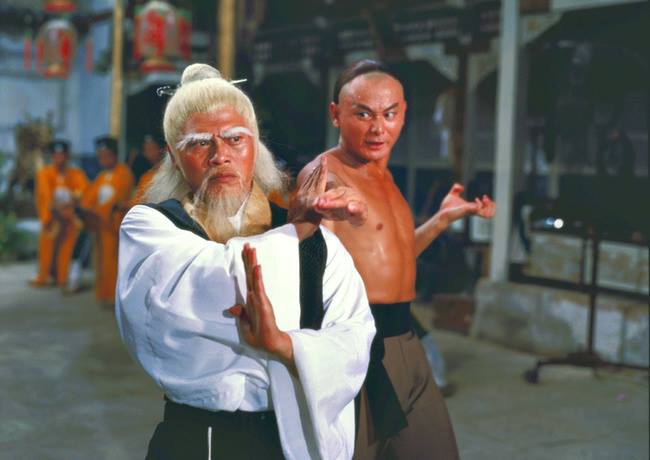
    PHOTOS: Dual O’Tooles, as Henry II in “Becket” (top) and “The Lion in Winter”
  • Classic Movie Scores & Film Composers on KWAX

    Classic Movie Scores & Film Composers on KWAX

    Time was when a good film score was expected to be both melodic and memorable. This morning on “Sweetness and Light,” with the Academy Awards coming up, we’ll take a nostalgic look back to some indelible themes from classic movies of years past.

    I don’t want to lay it all out in my Facebook teaser – in fact, during the course of the show, I won’t even identify the pieces until after each one is played, so that you can guess along at home – but trust that you’ll likely recognize most of them, all Best Original Score winners or nominees from highly-decorated films.

    Be there at the start for a 90-second montage of introductory fanfares from the great studios of Hollywood’s Golden Age. The fun begins this morning at 11:00 EST/8:00 PST!

    Then later today, on “The Lost Chord,” it’s another in a periodic series of shows built around concert works by composers better known for their work in film.

    This time, we’ll have a concerto for violin, cello and orchestra by James Horner (“Field of Dreams,” “Braveheart,” “Titanic”) and a concerto for flute and strings by Jerome Moross (“The Big Country,” “The Cardinal,” “The Valley of Gwangi”). I hope you’ll join me for “Typcast V” – the fifth in the series – on an all-new “The Lost Chord.”

    Both shows are now in syndication on KWAX, the radio station of the university of Oregon!

    Stream them, wherever you are, at the link:

    https://kwax.uoregon.edu/


    SWEETNESS AND LIGHT, the light music program – Saturday on KWAX at 8:00 AM PACIFIC TIME (11:00 AM EASTERN)

    THE LOST CHORD, unusual and neglected rep – Saturday on KWAX at 4:00 PM PACIFIC TIME (7:00 PM EASTERN)


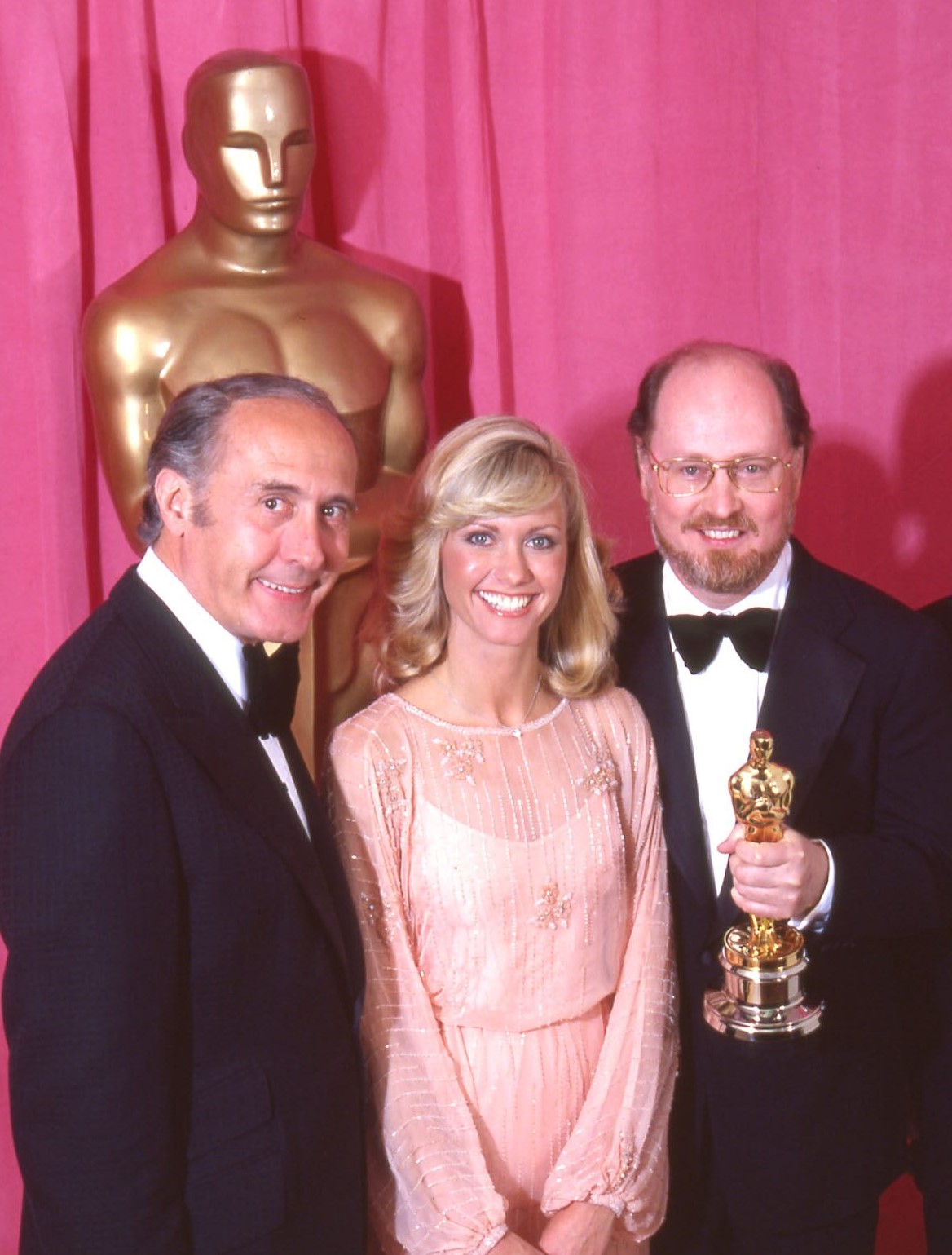
    PHOTO: Oscar-winner John Williams (right), with presenters Henry Mancini and Olivia Newton-John, in 1978

  • Delibes, Kung Fu Theater, and Stolen Scores

    Delibes, Kung Fu Theater, and Stolen Scores

    It’s Léo Delibes’ birthday. So naturally, my thoughts turn to kung fu!

    Perhaps you’re familiar with Delibes from his ballet music, or from his opera Lakmé, with its famous “Flower Duet” and “Bell Song.” But if you made it a habit to tune in to “Kung Fu Theater” in the 1980s, you may also have encountered the “Procession of Bacchus.”

    Granted, for some, this will be an arcane reference point. I can’t even remember what film, myself. But face it, all of those kung fu titles were randomly chosen from a scrambled short list of maybe eight or ten words anyway (i.e. Shaolin, jade, dragon, master, deadly, invincible, mantis, Buddhist, fist, etc.).

    Of course, I was one of a presumably tiny subset that always found the musical choices entertaining. There were purloined movie soundtracks from much better-known, western films, alongside the occasional snippet of classical music. And yes, every once in a while, there was an original score.

    Spaghetti western music was especially well-represented, with a lot of Morricone (presumably uncompensated). Sometimes there would be the odd needle-drop from John Williams. There were also many, many brief tracks that were often very nearly recognizable, yet always frustratingly just out of reach.

    Now, I find a page on the website of Kung Fu Magazine on which some committed disciple has taken it upon himself to identify the music of kung fu. He’s done a fairly impressive job of it, too. Though I still can’t find the kung fu movie I watched on my tiny, rabbit-eared set in the college dorms that opened with the “Procession of Bacchus” from Léo Delibes’ ballet “Sylvia.”

    https://www.kungfumagazine.com/forum/archive/index.php/t-63823.html

    I miss “Kung Fu Theater!”

    On a related note, someone must have sold some sort of institutional record library to Princeton Record Exchange. A lot of the CDs have stickers on them that read “LIBRARY COPY: PLEASE DO NOT REMOVE.” They’re in pristine shape (of course, they are; why would anyone be interested in listening to classical music?), so I’ve been filling in around the edges of my personal collection. This involves, among other things, picking up a fair amount of ballet music by Léo Delibes and others. Since I started doing the light music show for KWAX, it astonishes me, with a collection of 10,000+ CDs and records, how many holes there are in my library. It really brings home how often I used to spackle in with short selections from the library of a certain local classical music station I used to work for, that ironically now pumps in most of its content from outside sources.

    If I hadn’t gotten into radio, I think my dream job would have been choosing the music, fabricating the translations for, and dubbing ‘70s kung fu movies.

    Happy birthday, Léo Delibes!


    Delibes without all the ponytails and bamboo:

    “Procession of Bacchus”

    “Flower Duet” from “Lakmé”

    “Bell Song” from “Lakmé”

    Pizzicato from “Sylvia”

    Waltz from “Coppélia”

    Before A.I., there was kung fu! How else to explain the word salad in this sublime trailer for “The Buddha Assassinator” (1980)?

    “The Dragon, the Hero” (1979) opens with Morricone, from “The Big Gundown.” There’s also some John Williams, from “Star Wars,” no less, played during the kill around the 20-minute mark.

    https://www.youtube.com/watch?v=iDQ1mI6Z2QY

    Strong opener for “Fist of the White Lotus,” music credited to Eddie Wang, but sounding an awful lot like it was lifted from Ron Goodwin’s score for “Where Eagles Dare.”

    https://www.youtube.com/watch?v=z0YhUl0kdHo

  • John Williams Scores Presidents on Film

    John Williams Scores Presidents on Film

    In a career that’s spanned over 60 years, John Williams has had opportunities to score just about every kind of film. Inevitably, these would include several fictionalized accounts of the American presidents. This week on “Picture Perfect,” just in time for Presidents Day, we’ll exercise our executive power and sample music from four of them.

    “JFK” (1991) is one of three collaborations between Williams and director Oliver Stone. The film has more to do with conspiracy theories surrounding the Kennedy assassination than anything to do with his presidency. A controversial feature, no doubt – Walter Cronkite dressed down Roger Ebert after he gave it a positive review – still, a compelling piece of cinema. It certainly inspired an effective score.

    Kevin Costner plays New Orleans district attorney Jim Garrison, Sissy Spacek, his wife, and Gary Oldman, Lee Harvey Oswald. Tommy Lee Jones and Joe Pesci are unforgettable as a pair of outlandish conspirators (if you ever wanted to see Jones painted gold, then this is the movie for you), and Donald Sutherland delivers a virtuoso 16-minute monologue as a government whistleblower who identifies himself only as “X.”

    Williams and Stone had previously worked together on “Born on the Fourth of July.” Later, they would reunite for a second presidential collaboration, a character study of Richard Milhous Nixon – in a film called, well, “Nixon” (1995). Anthony Hopkins, as the president, leads another impressive cast, which includes Joan Allen, Powers Boothe, Ed Harris, Bob Hoskins, E.G. Marshall, David Hyde Pierce, Paul Sorvino, Mary Steenburgen, and James Woods.

    Williams also wrote the music for Steven Spielberg’s “Amistad” (1997). The film, about a mutiny on a slave ship in 1839 and the resulting courtroom drama, features two American presidents: Nigel Hawthorne plays Martin van Buren, the sitting president; and again, Anthony Hopkins appears, in a memorable supporting turn, as aging former president John Quincy Adams. Adams argues the defense of the Africans who took part in the mutiny.

    Finally, Daniel Day-Lewis plays the nation’s 16th president, in Spielberg’s “Lincoln” (2012). He’s lent strong support by Sally Field as Mary Todd Lincoln, David Strathairn as Secretary of State William Steward, and Tommy Lee Jones, this time as Thaddeus Stevens.

    It’s a bold assessment, but Day-Lewis elevates “Lincoln,” the film, to greatness, with arguably one of the most amazing performances in cinematic history. Day-Lewis’ gentle but shrewd Man of Destiny would go to any lengths to hold the country together. Williams taps into America’s proud musical heritage, clearly influenced by Copland and the folksier side of Ives, to create a score of stirring nobility.

    I hope you’ll join me, as the presidents take precedence this week on “Picture Perfect,” music for the movies, now in syndication on KWAX, the radio station of the University of Oregon!


    Remember, KWAX is on the West Coast, so there’s a three-hour difference for those of you listening in the East. Here are the respective air-times for all three of my recorded shows (with East Coast conversions in parentheses):

    PICTURE PERFECT, the movie music show – Friday on KWAX at 5:00 PM PACIFIC TIME (8:00 PM EST)

    SWEETNESS AND LIGHT, the light music program – ALL NEW! – Saturday on KWAX at 8:00 AM PACIFIC TIME (11:00 AM EST)

    THE LOST CHORD, unusual and neglected rep – Saturday on KWAX at 4:00 PM PACIFIC TIME (7:00 PM EST)

    Stream all three, at the times indicated, by following the link!

    https://kwax.uoregon.edu/


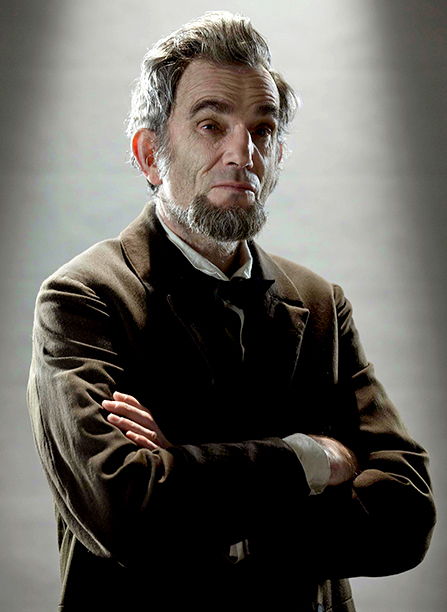
    PHOTOS: (clockwise from left) Day-Lewis as Lincoln; Hopkins as Nixon; poster for “JFK;” Hopkins as John Quincy Adams

  • Doomed Love Movie Music on KWAX Radio

    Doomed Love Movie Music on KWAX Radio

    There’s no love like doomed love. We all know it’s true. Happily ever after is fine for the neighbors. The rest of us flock to “Titanic,” “Casablanca,” and “The Umbrellas of Cherbourg.” The one that got away hangs heaviest on the heart.

    In accordance with Gothic convention, nothing’s hotter than when two people love one another so intensely, they destroy themselves, each other, and everyone else around them. If impediments fan the flames of desire, then death is the greatest impediment of all.

    This week on “Picture Perfect,” it’s an hour of star-crossed lovers who remain connected beyond the mortal plane.

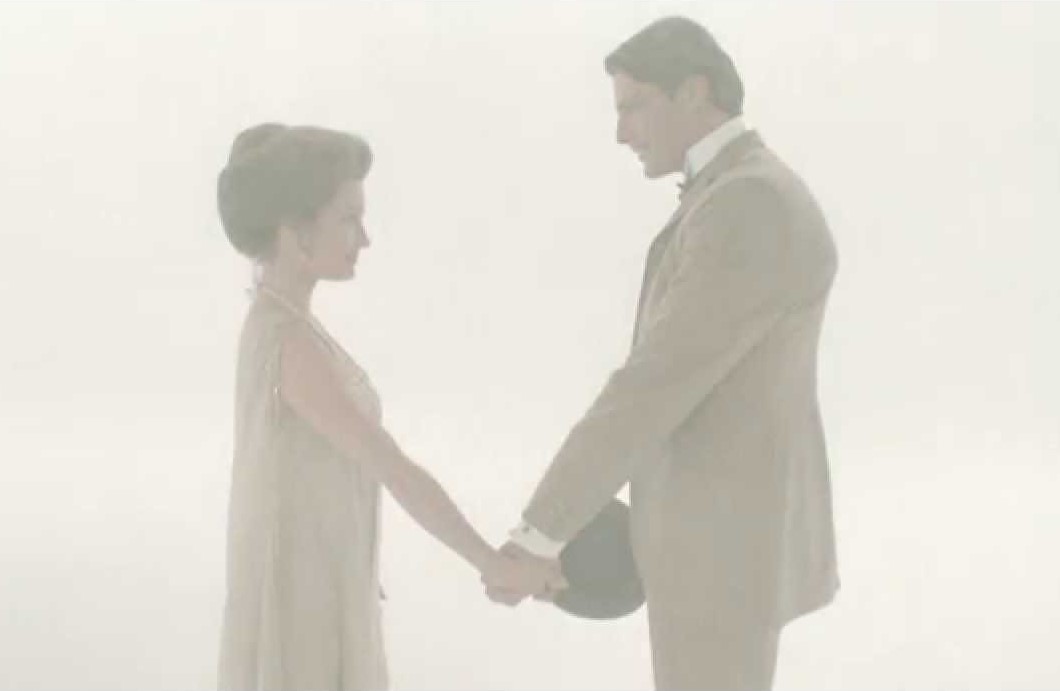
    Join me for selections from “Somewhere in Time” (John Barry), “The Ghost and Mrs. Muir” (Bernard Herrmann), “Always” (John Williams), and “Wuthering Heights” (Alfred Newman).

    If you can’t stand the heat, stay out of the kitchen. We’ll be fanning the flames of desire on “Picture Perfect,” music for the movies, now in syndication on KWAX, the radio station of the University of Oregon!


    Remember, KWAX is on the West Coast, so there’s a three-hour difference for those of you listening in the East. Here are the respective air-times for all three of my recorded shows (with East Coast conversions in parentheses):

    PICTURE PERFECT, the movie music show – Friday on KWAX at 5:00 PM PACIFIC TIME (8:00 PM EST)

    SWEETNESS AND LIGHT, the light music program – ALL NEW! – Saturday on KWAX at 8:00 AM PACIFIC TIME (11:00 AM EST)

    THE LOST CHORD, unusual and neglected rep – Saturday on KWAX at 4:00 PM PACIFIC TIME (7:00 PM EST)

    Stream all three, at the times indicated, by following the link!

    https://kwax.uoregon.edu/

Tag Cloud

Aaron Copland (92) Beethoven (95) Composer (114) Film Music (123) Film Score (143) Film Scores (255) Halloween (94) John Williams (187) KWAX (229) Leonard Bernstein (101) Marlboro Music Festival (125) Movie Music (138) Opera (202) Philadelphia Orchestra (89) Picture Perfect (174) Princeton Symphony Orchestra (106) Radio (87) Ralph Vaughan Williams (85) Ross Amico (244) Roy's Tie-Dye Sci-Fi Corner (290) The Classical Network (101) The Lost Chord (268) Vaughan Williams (103) WPRB (396) WWFM (881)

DON’T MISS A BEAT

Receive a weekly digest every Sunday at noon by signing up here


RECENT POSTS