Tag: Film Scores

  • John Williams Wins Grammy for Helena’s Theme

    John Williams Wins Grammy for Helena’s Theme

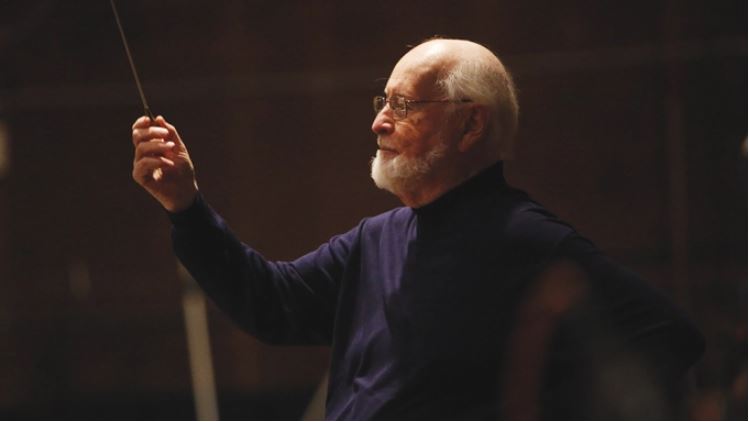
    John Williams adds another Grammy to his buckling mantle, in the category of Best Instrumental Composition, for “Helena’s Theme,” the only good thing to come out of the execrable “Indiana Jones and the Dial of Destiny.”

    Williams was also nominated twice in the category of Score Soundtrack for Visual Media, for both “Indiana Jones” and “The Fabelmans.” This brings the composer’s career Grammy tally to 26 wins and 76 nominations.

    Ludwig Göransson won the Score Soundtrack award for his overbearing music for “Oppenheimer.” It’s not been a great year for film music, folks.

    In truth, I could care less about the Grammys – as apparently the Grammys could care less about classical music – but if they can sell a few more records or bestow a little more prestige on classical artists, then good for the artists.

    Feel free to Google the rest of the results.


    Grammy Award-winning “Helena’s Theme,” arranged for Anne-Sophie Mutter

    I prefer it in its original guise for orchestra (as if I could get any grumpier)

    Congratulations, John Williams.

  • Himalayan Adventures in Classic Film Scores

    Himalayan Adventures in Classic Film Scores

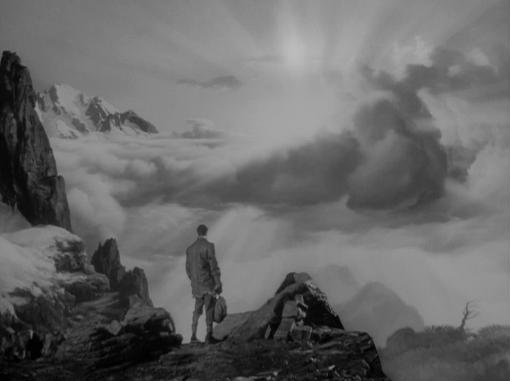
    This week on “Picture Perfect,” we journey through the awe-inspiring landscapes of India and Tibet, even as we feel our way to the inner realms of spirit and psyche, with an hour of Himalayan adventures.

    The Himalayas, in film, have frequently been the source of enlightenment; though occasionally their overwhelming influence has also led to madness. Intriguingly, the latter is the case in the Powell-Pressburger classic, “Black Narcissus” (1947). Psychological and emotional tensions abound in this tale of repressed nuns struggling to maintain their composure in a voluptuous Himalayan valley.

    The stunning cinematography was by Jack Cardiff, and Brian Easdale (of “The Red Shoes” fame) wrote the music. Incredibly, the entire film was shot in England, mostly at Pinewood Studios. From a purely visual standpoint, “Black Narcissus” must be one of the most beautiful films ever made. It’s also one of the craziest, with unlikely object-of-desire Mr. Dean driving the sisters to the brink.

    The Himalayas also form the backdrop to “Seven Years in Tibet” (1997), based on a memoir of Austrian mountaineer Heinrich Harrer. Harrer escapes from a British internment camp in India during the Second World War. He travels across Tibet to its capital, Lhasa, where he eventually becomes the tutor of the 14th Dalai Lama. In the film, Brad Pitt plays Harrer. John Williams wrote the music, and Yo-Yo Ma performs the cello solos.

    “The Razor’s Edge” (1946) tells the story of a traumatized World War I veteran, who sets off in search of some kind of transcendent meaning to his existence. He finds it in India, at a Himalayan monastery. The 1946 adaptation of W. Somerset Maugham’s novel (which he claimed was thinly-veiled fact) features Tyrone Power, Gene Tierney, and Ann Baxter. The music is by Alfred Newman, who will conduct a selection from his score.

    Finally, we’ll hear a suite from the Frank Capra classic, “Lost Horizon” (1937). Based on the book by James Hilton, the film stars Ronald Colman and an outstanding supporting cast, including Jane Wyatt, Thomas Mitchell, Edward Everett Horton, H.B. Warner, and Sam Jaffe. The novel, and the film, brought the term “Shangri-La” into popular usage, a Utopian paradise hidden in a secluded Himalayan valley, a place of ageless beauty and serenity.

    “Lost Horizon” provided composer Dimitri Tiomkin (a pupil of Alexander Glazunov) with his first major project. The result is one of his most colorful scores. The recording is one of the gems of RCA’s Classic Film Scores series, originally issued in the early 1970s. Made in the presence of the composer, it features 157 performers, with the chorus standing on a platform behind the conductor, Charles Gerhardt, and the various percussionists stationed in the encircling balcony.

    I can’t guarantee that you’ll find enlightenment, but there will be plenty to awe and inspire in these Himalayan adventures, on “Picture Perfect,” music for the movies, now in syndication on KWAX, the radio station on the University of Oregon!


    Remember, KWAX is on the West Coast, so there’s a three-hour difference for those of you listening in the East. Here are the respective air-times for all three of my recorded shows (with East Coast conversions in parentheses):

    PICTURE PERFECT, the movie music show – Friday on KWAX at 5:00 PM PACIFIC TIME (8:00 PM EST)

    SWEETNESS AND LIGHT, the light music program – ALL NEW! – Saturday on KWAX at 8:00 AM PACIFIC TIME (11:00 AM EST)

    THE LOST CHORD, unusual and neglected rep – Saturday on KWAX at 4:00 PM PACIFIC TIME (7:00 PM EST)

    Stream all three, at the times indicated, by following the link!

    https://kwax.uoregon.edu/
  • John Williams’ 54th Oscar Nomination

    John Williams’ 54th Oscar Nomination

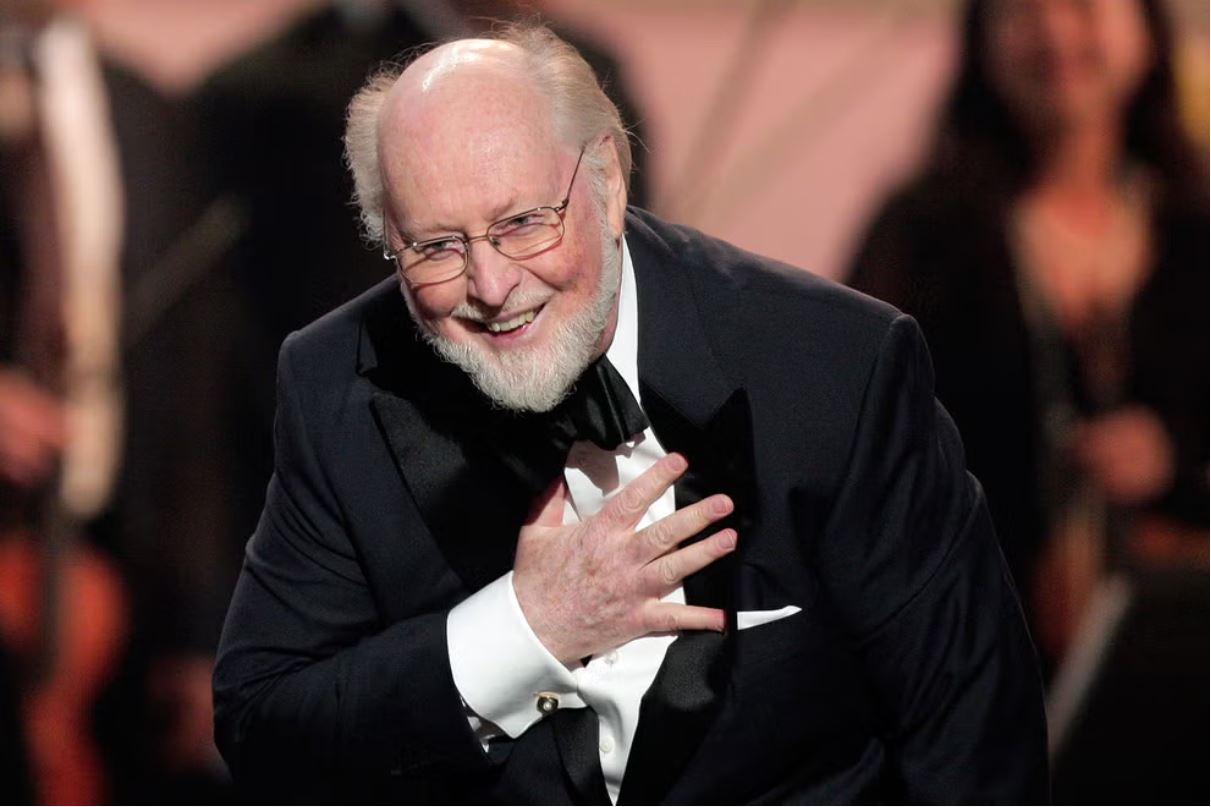
    This year’s Academy Awards nominees were announced this morning, and sure enough, John Williams has earned yet another nod, for his score to “Indiana Jones and the Dial of Destiny.” Going into today, Williams was the most-nominated person alive. Now he’s even MORE the most-nominated (with the tally at 54). He also happens to be the second most-nominated person in Oscar history, after only Walt Disney (at 59).

    The other nominees in the category of Best Original Score are Laura Karpman (“American Fiction”), Robbie Robertson (“Killers of the Flower Man”), Ludwig Göransson (“Oppenheimer”), and Jerskin Fenrix (“Poor Things”).

    There’s a good possibility that whatever wins will do so for more than purely musical considerations. But that seems to be how it’s been for many years. The score for “Oppenheimer” is ludicrously overbearing.

    In any case, it’s nice to see Williams handed another feather for his nest, even though his latest Indiana Jones music will not win. Or at least I hope it won’t. The film itself was godawful, and Disney has done all it can to be sure that your average consumer can’t get a hold of a physical copy of the soundtrack. A limited edition CD was made available for pre-order months in advance of the film’s release. If you didn’t know about it, you were welcome to spend hundreds of dollars for it on the collector’s market.

    Merciful Disney has since decided to give everyone a second chance and make it available again as part of an expensive box set of all the Indiana Jones scores, duplicating the content of the previously-released soundtracks for all the other films. Thanks for nothing.

    Williams should have automatically won for just about every year from at least 1975 to 1982. Nevertheless, he has been the recipient of five Oscars, for “Fiddler on the Roof” (adaptation of the stage musical by Jerry Bock & Sheldon Harnick), “Jaws,” “Star Wars,” “E.T. The Extra-Terrestrial,” and “Schindler’s List.” The last bestowed was in 1994.

    It would be nice for him to get an honorary Oscar at some point – he’ll be 92 next month – but it wouldn’t be televised anyway, and Williams is doing just fine. Oscar needs John Williams more than John Williams needs him.

  • Tudor Movie Music: “Picture Perfect” on KWAX

    Tudor Movie Music: “Picture Perfect” on KWAX

    This week on “Picture Perfect,” it’s an hour of tunes for the Tudors.

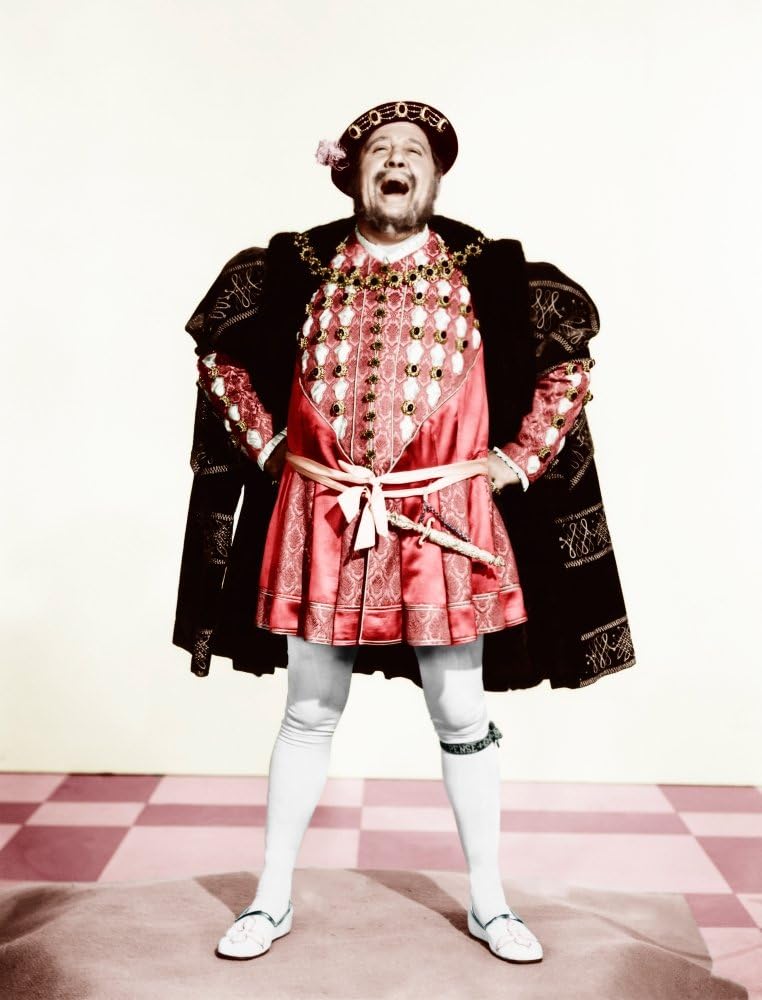
    We’ll hear selections from “Young Bess” (1953), with Jean Simmons as the future Elizabeth I. The colorful and entertaining cast also includes Stewart Granger, Deborah Kerr, and most notably Charles Laughton, who reprises his memorable characterization of Henry VIII. Laughton was honored with an Academy Award for Best Actor for playing Henry in the 1933 film, “The Private Life of Henry VIII.” Miklós Rózsa’s score conjures the era of the great MGM Technicolor spectacles.

    By the time of the events portrayed in “Mary, Queen of Scots” (1971), Elizabeth already wears the crown, albeit uneasily, due to the perceived threat of her first cousin once removed. Vanessa Redgrave is Mary and Glenda Jackson is Elizabeth, with a supporting cast that includes Timothy Dalton, Nigel Davenport, Patrick McGoohan, Trevor Howard, and Ian Holm. As seems to be the custom in dramatic interpretations of the historical events, the film features several fictitious encounters between the queens, even though in reality the two never met. The poignant score is by John Barry.

    “Anne of the Thousand Days” (1969) tells the story of Henry’s doomed second wife, Anne Boleyn. This time Richard Burton plays the king. Anne is played by Genevieve Bujold. Despite mixed reviews, the film was nominated for ten Academy Awards and recognized for its exceptional costumes. Among the other nominees was Georges Delerue for his period-flavored music.

    Finally, in a lighthearted change of pace from all the intrigue and execution, we turn to a big screen adaptation of Mark Twain’s “The Prince and the Pauper” (1937). Set in the time of Prince Edward (later Edward VI), Twain’s novel plays on the conceit that the heir apparent, at some point, becomes confused with a commoner, who happens to bear an uncanny resemblance to him.

    Top-billed Errol Flynn is really a supporting player as the devil-may-care Miles Hendon, who throws in his lot with the scraggly-looking prince, though he hardly believes his claims. Though it would still be a year until the release of “The Adventures of Robin Hood,” Flynn was already well on his way to becoming the screen’s quintessential swashbuckler, thanks to his turn in “Captain Blood” (1935). He easily dominates the film, and it’s a treat to see him duel with his old pal Alan Hale.

    Montagu Love plays Henry VIII, though he’s upstaged by a scheming Claude Rains as Edward Seymour, the Earl of Hertford. Composer Erich Wolfgang Korngold follows Flynn all the way, his music full of swagger and fun.

    Help yourself to a joint of mutton, and hang on to your heads! It’s time for the Tudors, on “Picture Perfect,” music for the movies, now in syndication on KWAX, the radio station of the University of Oregon!

    Remember, KWAX is on the West Coast, so there’s a three-hour difference for those of you listening in the East. Here are the respective air-times for all three of my recorded shows (with East Coast conversions in parentheses):

    PICTURE PERFECT, the movie music show – Friday on KWAX at 5:00 PM PACIFIC TIME (8:00 PM EST)

    SWEETNESS AND LIGHT, the light music program – ALL NEW! – Saturday on KWAX at 8:00 AM PACIFIC TIME (11:00 AM EST)

    THE LOST CHORD, unusual and neglected rep – Saturday on KWAX at 4:00 PM PACIFIC TIME (7:00 PM EST)

    Stream all three, at the times indicated, by following the link!

    https://kwax.uoregon.edu/
  • Comic Strip Heroes Music From the Movies on KWAX

    Comic Strip Heroes Music From the Movies on KWAX

    Get out your Silly Putty! There will be plenty of vibrant colors for you to enjoy this week on “Picture Perfect,” when the focus will be on comic adventurers – as in heroes from the funnies.

    We’ll have music from movies inspired by the two-dimensional cliffhangers of newspaper favorites Prince Valiant, The Phantom, and Dick Tracy, as well as the longer-form, Golden Age adventures of Tintin.

    “Prince Valiant” (1954) brings to life Hal Foster’s enduring Sunday strip about the exploits of a Viking prince at the court of King Arthur. Robert Wagner dons the signature page-boy haircut at the head of a hodge podge cast that also includes Janet Leigh, James Mason, Sterling Hayden, and Victor McLaglen (as Val’s Viking pal Boltar). The film also happens to feature one of Franz Waxman’s most rousing scores, clearly a prototype for the kind of music that later made John Williams a household name.

    Then Billy Zane is “The Ghost Who Walks,” in a big screen adaptation of Lee Falk’s “The Phantom” (1996). Like Batman, The Phantom harnesses personal tragedy – in his case, the murder of his father – to a thirst for justice. He also happens to be part of an ancient lineage of Phantoms, who don the purple suit and fight crime from a secluded skull cave in a remote African country. The memorable, though somewhat monothematic, score is by David Newman, one of the sons of legendary Hollywood composer Alfred Newman.

    Warren Beatty directs an amusing adaptation of Chester Gould’s “Dick Tracy” (1990), replete with primary color production design and meticulously applied prosthetic makeup, transforming some of the most respected actors of the day (including Al Pacino, Dustin Hoffman, and James Caan) into a live-action Rogue’s Gallery. Both design and makeup were recognized with Academy Awards, as was Stephen Sondheim, for his original song “Sooner or Later (I Always Get My Man),” sung in the film by Madonna. We won’t hear Sondheim’s song, but we will hear some of Danny Elfman’s underscore, which harkens back to Hollywood’s Golden Age.

    Finally, we’ll turn from American newspaper strips to the comic albums of Belgian cartoonist Hergé, and his most famous creation, Tintin, an intrepid journalist whose stories seem always to embroil him in globetrotting adventures. Developed for the screen by Steven Spielberg and Peter Jackson, “The Adventures of Tintin” (2011) was shot as 3-D motion capture animation.

    After 50 years in the business, during which he wrote music for all manner of films, in virtually every genre, John Williams finally got a crack at scoring an animated feature. The result was a double Academy Award nomination, as Williams had also written the music that year for Spielberg’s “War Horse.” Not bad for a 79 year-old composer.

    Unfortunately, “Tintin” never gained the kind of traction with the public that the filmmakers had hoped for, otherwise the score would certainly be much better known, as it is cut from the same cloth – and is of the same high quality – as those for the “Star Wars,” Indiana Jones, and Harry Potter series.

    We’ll see you in the funny pages, this week on “Picture Perfect,” music for the movies, now in syndication on KWAX, the radio station of the University of Oregon!


    Remember, KWAX is on the West Coast, so there’s a three-hour difference for the Trenton-Princeton area. Here are the respective air-times of my recorded shows (with East Coast conversions in parentheses):

    PICTURE PERFECT, the movie music show – Friday on KWAX at 5:00 PACIFIC TIME (8:00 PM EST)

    THE LOST CHORD, unusual and neglected rep – Saturday on KWAX at 4:00 PACIFIC TIME (7:00 PM EST)

    Stream them here!

    https://kwax.uoregon.edu/

Tag Cloud

Aaron Copland (92) Beethoven (95) Composer (114) Film Music (123) Film Score (143) Film Scores (255) Halloween (94) John Williams (187) KWAX (229) Leonard Bernstein (101) Marlboro Music Festival (125) Movie Music (138) Opera (202) Philadelphia Orchestra (89) Picture Perfect (174) Princeton Symphony Orchestra (106) Radio (87) Ralph Vaughan Williams (85) Ross Amico (244) Roy's Tie-Dye Sci-Fi Corner (290) The Classical Network (101) The Lost Chord (268) Vaughan Williams (103) WPRB (396) WWFM (881)

DON’T MISS A BEAT

Receive a weekly digest every Sunday at noon by signing up here


RECENT POSTS