Tag: György Ligeti

  • Hungary’s Forgotten Composers: Dohnányi & Ligeti

    Hungary’s Forgotten Composers: Dohnányi & Ligeti

    When it comes to the whole Hungarian nationalist movement, Béla Bartók and Zoltán Kodály would get all the glory. Sure, they did a lot of the legwork, heading out into the field in a race against time to document authentic folk traditions before they were swept away by industrialization. But as director of the Budapest Academy of Music and music director of the Budapest Philharmonic Orchestra, Ernő Dohnányi (1877-1960) would exert as much influence over his country’s musical development as that of his folk music mad friends and contemporaries.

    On the next “Music from Marlboro,” we’ll give Dohnányi his due. We’ll also hear music by György Ligeti, a composer who survived several totalitarian regimes to become one of the leading composers of the second half of the 20th century.

    Dohnányi himself would become the target of character assassination campaigns following World War II. Painted as a Nazi sympathizer by his enemies, he would be investigated and cleared by the U.S. Military Government several times. He has since been defended as a forgotten hero of Holocaust resistance. It was through Dohnányi’s administrations that countless Jewish musicians survived. Also, between the wars, he went to bat for Kodály, a leftist, by refusing to fire him from the Budapest Academy. As a result, Dohnányi too lost his position, although he was later reinstated. Nevertheless, he continued to be eyed with suspicion, and his reputation never fully recovered.

    Equally fatal is the fact that much of his music bears a more cosmopolitan stamp than that of the more blatantly “Hungarian” output of his peers. His composition teacher, the German-born Hans von Koessler (known in Hungary as János Koessler) was a cousin of Max Reger. Of course, Koessler also taught Bartók and Kodály. But Dohnányi was perfectly happy nestled in the world of Brahms. For his international career, he adopted the name Ernst von Dohnányi.

    Dohnányi’s Piano Quintet in C minor, completed in June of 1895, one month before his 18th birthday, earned Brahms’ stamp of approval. We’ll hear it performed at the 1977 Marlboro Music Festival, by pianist Stephanie Brown, violinists Joseph Genualdi and Mayuki Fukuhara, violist Philipp Naegele, and cellist Lisa Lancaster.

    György Ligeti (1923-2006) was born in Transylvania. If anything, his hardships proved even more severe: most of his family was wiped out in the Holocaust, he was conscripted into a forced labor brigade, and he lived for a time under strict communist rule. He survived the violent Soviet putdown of the Hungarian Revolution, and finally escaped with his on-again/off-again wife in a pair of mail sacks, leaping off a night train and crawling for miles through the mud to find safety in Vienna.

    Ligeti was that rare bird: an avant-garde composer whose music could actually inspire affection. He rocketed to broader fame when some of his works were used, without permission, in Stanley Kubrick’s “2001: A Space Odyssey.”

    The first of Ligeti’s three string quartets, subtitled “Métamorphoses nocturnes,” was written in 1953-54, prior to his flight from Hungary. The work was heavily influenced by Bartók; the composer György Kurtág memorably described it as “Bartók’s seventh string quartet.” Ligeti himself characterized that phase of his career as “prehistoric.” Although performances of Bartók’s quartets were banned under the communist regime, Ligeti was familiar with them through the study of their scores.

    Ligeti’s quartet is cast in one continuous movement, but subdivided into seventeen contrasting sections. We’ll hear it performed at the 1996 Marlboro Music Festival by violinists Soovin Kim and Catherine Cho, violist Kirsten Johnson, and cellist Siegfried Palm.

    That’s two contrasting works by Hungarian composers buffeted by war and politics, on the next “Music from Marlboro,” this Wednesday evening at 6:00 EST, on WWFM – The Classical Network.

    Marlboro School of Music and Festival: Official Page


    “I am in a prison: one wall is the avant-garde, the other wall is the past, and I want to escape.” – György Ligeti

  • Romania Mania Unearthing Musical Gems

    Romania Mania Unearthing Musical Gems

    For a country so steeped in music, George Enescu has done an awful lot of the heavy lifting. Regarded as Romania’s most gifted musical polymath, Enescu exploded onto the international scene at the age of 19 with his world famous “Romanian Rhapsody No. 1.” Perhaps even more impressive, his “Romanian Poem,” a half-hour expanse for chorus and orchestra, was composed four years earlier.

    But Enescu was also a gifted violin prodigy, a pianist, a conductor, and a notable teacher. Although we are exposed to a shamefully small proportion of his compositional output, at least much of it has been recorded, and his name is secure in the classical music pantheon. This Sunday night on “The Lost Chord,” we’ll look beyond Enescu to hear music by three of his compatriots, only one of whom managed to achieve a reputation beyond the borders of his homeland.

    George Stephănescu (1843-1925) was an important figure in the development of Romanian opera. He founded the nation’s first opera company in 1885. He is also credited with having composed the first Romanian symphony. Stephănescu conducted at the National Theater and taught at the Bucharest Academy of Music. His “National Overture” of 1876 reflects his patriotic concerns.

    By contrast, György Ligeti (1923-2006) was destined generally to be a bit of an outlier. Born into a Jewish family in an ethnically Hungarian region of Transylvania, Ligeti went on to become one of the most important composers of his generation, but much of his music is in a style which would be deemed “avant-garde.” But he also had his playful side. In 1951, he wrote his “Concert românesc” (“Romanian Concerto”), a wholly accessible and little-known work based on actual Romanian folk tunes that he had studied at the Folklore Institute in Bucharest. Despite this being one of his most overtly delightful works, the piece was banned after a single rehearsal in Bucharest and was not heard publicly until 1971. “Totalitarian regimes do not like dissonances,” he observed ruefully.

    Finally, Paul Constantinescu (1909-1963) was part of a generation of Romanian composers who came of age in the shadow of Enescu. He composed in most musical forms: opera, ballet, oratorio, incidental music, symphonic, chamber and choral music, and music for film, yet he remains little-known in the West. His concertante output includes works for violin, cello, piano and harp, in addition to a concerto for string orchestra. We’ll hear Constantinescu’s Piano Concerto, from 1952.

    I hope you’ll join me for this neglected music from Southeast Europe. That’s “Romania Mania,” this Sunday night at 10:00 EDT, on WWFM – The Classical Network and wwfm.org.

  • Rued Langgaard Eccentric Genius Rediscovered

    Rued Langgaard Eccentric Genius Rediscovered

    Even by composer standards, Rued Langgaard (1893-1952) was a little bit of a strange bird. Despite a promising start – born to musical parents, a precocious childhood, meetings with major conductors, and a symphony performed by the Berlin Philharmonic – his personal and creative eccentricities worked against him.

    Langgaard followed his personal muse deep into the realm of late Romanticism at a time when most of the musical world was exploring modernist territory. Though he was given a state grant at 30, he failed to secure a permanent job until the age of 46, as an organist at the cathedral in Ribe, the oldest town in Denmark – which somehow seems appropriate for this most anachronistic of Danish outsiders.

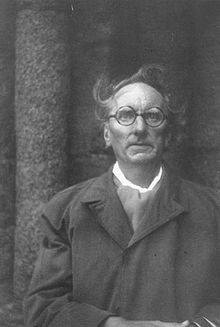
    An eccentric, shabby figure with wild hair, Laangaard died in Ribe 13 years later, in 1952, just shy of his 59th birthday, still largely unrecognized as a composer.

    His reputation would not begin to gain traction for another 16 years. In all, he composed over 400 works, including 16 symphonies – which bear evocative titles such as “Yon Hall of Thunder” and “Deluge of the Sun” – and an opera, “Antikrist.”

    It was in 1968 that no less a personage than György Ligeti found himself on a jury alongside Danish composer Per Nørgård. In this capacity, he examined a large number of new scores by Scandinavian composers. Unbeknownst to his fellow jurors, Nørgård had slipped in the score of Langgaard’s “Music of the Spheres.” Ligeti became captivated by what he found. When the ruse was revealed, he exclaimed, with a twinkle in his eye, “Gentlemen, I have just discovered that I am a Langgaard epigone!”

    Langgaard had anticipated some of the technical aspects – tone clusters, layers, and so forth – which would appear in Ligeti’s avant garde experiments of the 1960s, in works such as “Atmosphères.”

    Hear “Music of the Spheres,” alongside Langgaard’s String Quartet No. 3, this week on “The Lost Chord.” That’s “Rued Awakenings,” this Sunday night at 10:00 EDT, on WWFM – The Classical Network and wwm.org.

  • Conlon Nancarrow’s Wild Player Piano Music

    Conlon Nancarrow’s Wild Player Piano Music

    Hope you’ve had your caffeine this morning. If you haven’t, Conlon Nancarrow will wake you up.

    Nancarrow was one of the first composers to treat musical instruments as if they were machines, rigging them so that they could perform in a manner far beyond human capability. He worked his experiments in virtual isolation, living in Mexico (where he fled to escape harassment for his communist affiliations) since the 1940s.

    He remained largely unrecognized until the late ‘60s, when Columbia released an album of his music. Indeed, it could be said he wasn’t terribly well known until recordings of his player piano pieces began to appear, on the 1750 Arch label, about ten years later. György Ligeti lauded Nancarrow as “the greatest discovery since Webern or Ives… the best of any composer living today.”

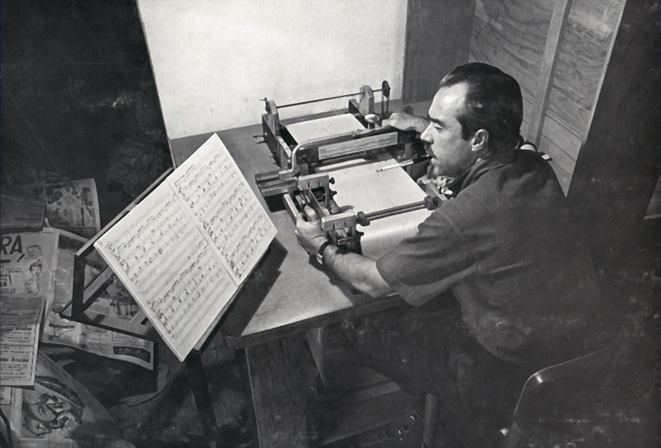
    In 1947, Nancarrow acquired a custom-built, manual punching machine, which enabled him to create his own piano rolls. It was very meticulous work, very slow. He also souped-up his player pianos, increasing their dynamic range, and covering the hammers with materials like leather and metal to create a more percussive sound.

    While his later pieces tend to be abstract, a lot of them extremely intricate canons, his early experiments emulate jazz. Drive your coworkers batty with this selection from Nancarrow’s Study No. 3 for Player Piano, known as the “Boogie-Woogie Suite.”

    https://www.youtube.com/watch?v=Kdm04Rz3wTk

    Happy birthday, Conlon Nancarrow (1912-1997)!


    PHOTO: Nancarrow rolling with it, ca. 1955

  • Rued Langgaard: A Rediscovered Genius

    Rued Langgaard: A Rediscovered Genius

    Here we are again, the birthday of Rued Langgaard. The months just fly by, don’t they?

    Langgaard lived from 1893 to 1952. Despite a promising start – born to musical parents, a prodigious childhood, meetings with major conductors, and a symphony performed by the Berlin Philharmonic – his personal and creative eccentricities worked against him.

    Langgaard was 46 by the time he managed to obtain a permanent job, as an organist at the cathedral in Ribe. It was the oldest town in Denmark, and situated far, far from Copenhagen, the center of Danish musical life. He would die in Ribe at the age of 59.

    Langgaard composed over 400 pieces. Perpetually out of step with the times, and particularly with the tastes of his fellow Danes, performances of his music were scarce. He found himself ignored by the musical establishment, with the result that his achievements really only started to be recognized in the 1960s – 16 years after his death.

    It was in 1968 that no less a personage than György Ligeti found himself on a jury alongside Danish composer Per Nørgård. In this capacity, he examined a large number of new scores by Scandinavian composers. Unbeknownst to his fellow jurors, Nørgård had slipped in the score of Langgaard’s “Music of the Spheres.” Ligeti became captivated by what he found. When the ruse was revealed, he exclaimed, with a twinkle in his eye, “Gentlemen, I have just discovered that I am a Langgaard epigone!”

    Langgaard had anticipated some of the technical aspects – tone clusters, layers, and so forth – which would appear in Ligeti’s avant garde experiments of the 1960s, in works such as “Atmosphères.”

    It was a Rued awakening that was long overdue.

    Langgaard’s “Music of the Spheres” (1918):
    https://www.youtube.com/watch?v=j959i5k6RjM

    Ligeti’s “Atmosphères” (1961):
    https://www.youtube.com/watch?v=aI0P1NnUFxc


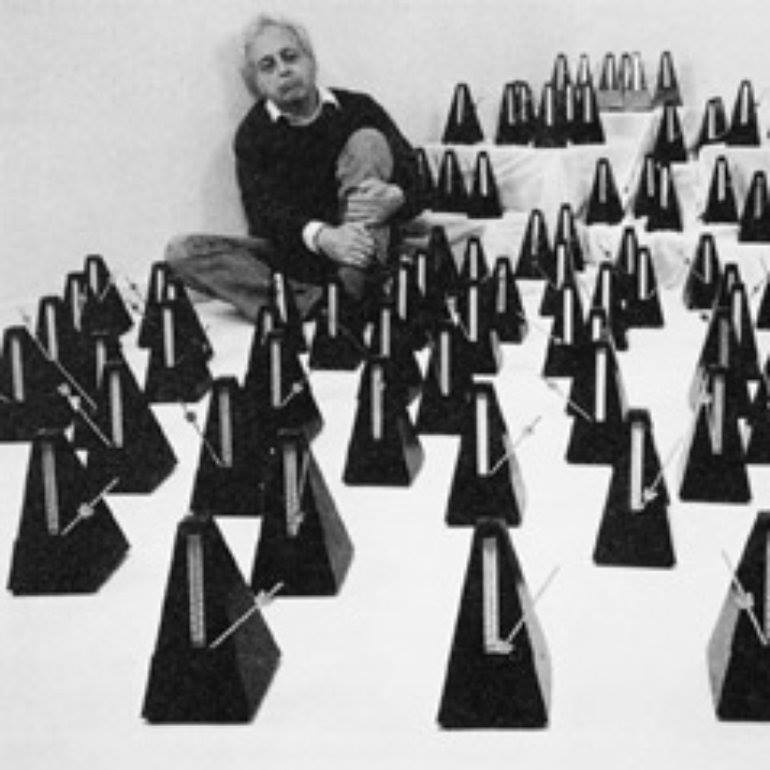
    PHOTOS: Kindred eccentrics, Rued Langgaard (top) and György Ligeti

Tag Cloud

Aaron Copland (92) Beethoven (95) Composer (114) Film Music (123) Film Score (143) Film Scores (255) Halloween (94) John Williams (187) KWAX (229) Leonard Bernstein (101) Marlboro Music Festival (125) Movie Music (138) Opera (202) Philadelphia Orchestra (89) Picture Perfect (174) Princeton Symphony Orchestra (106) Radio (87) Ralph Vaughan Williams (85) Ross Amico (244) Roy's Tie-Dye Sci-Fi Corner (290) The Classical Network (101) The Lost Chord (268) Vaughan Williams (103) WPRB (396) WWFM (881)

DON’T MISS A BEAT

Receive a weekly digest every Sunday at noon by signing up here


RECENT POSTS