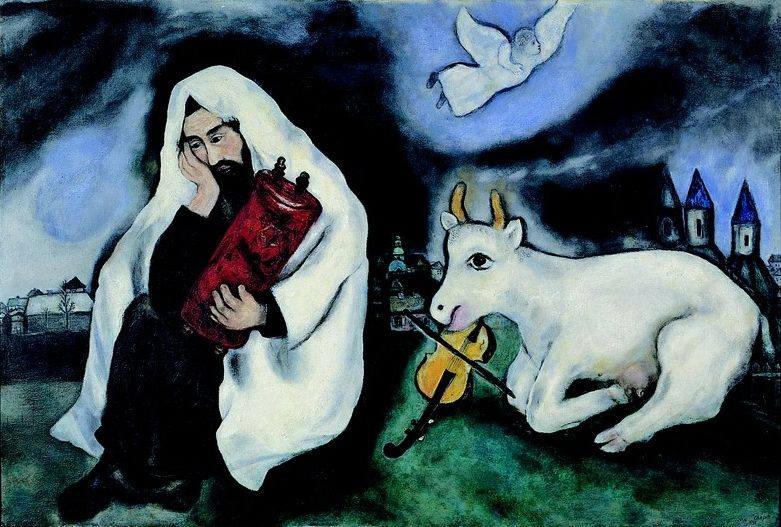
Tag: Jewish Music

  • Rosh Hashanah Gershwin’s Jewish Soul

    Rosh Hashanah Gershwin’s Jewish Soul

    Shana tova! Rosh Hashanah began last night at sundown. To my Jewish friends, best wishes for a good and sweet 5783. Apples and honey all around.

    This year’s observance happens to coincide with the birthday of George Gershwin (born Jacob Gershowitz to Jewish immigrant parents who settled on New York City’s Lower East Side).

    Many sources claim that Gershwin, while culturally Jewish, was not particularly observant. Nevertheless, Kitty Carlisle recollected a zany Seder at the Gershwin home with Oscar Levant in attendance; Gershwin was an active supporter of Jewish charities; allegedly he wouldn’t marry Kay Swift, his lover of over ten years, because she wasn’t Jewish (Gershwin’s mother disapproved); and following his untimely death at the age of 38, he was remembered in bicoastal Jewish funeral services.

    Furthermore, sharp-eared listens with some familiarity with Jewish tradition have identified Jewish themes and motifs in his music. It’s been remarked that you could keep Gershwin out of shul, but you couldn’t keep shul out of Gershwin. Here’s an interesting article on the subject.

    George Gershwin’s Jewish Music

    Sadly, we’ll never know what an abandoned opera on Szymon Ansky’s “The Dybbuk” would have sounded like. (It was scrapped because of copyright issues.)

    Early on, Gershwin expressed interest in writing for the Yiddish theater. He even made some piano rolls of Yiddish songs. Here’s one from 1917, a rendition of a 1903 Yiddish theater tune by Meyerowitz titled “Gott un Sein Mishpet Is Gerecht.”

    Happy birthday, George Gershwin, and have a sweet New Year!
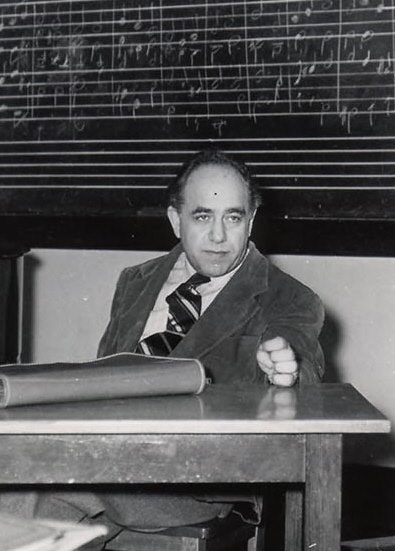
  • Ferdinand Hiller

    Ferdinand Hiller

    Who was Ferdinand Hiller, and what does he have to do with the most famous setting of “Kol Nidre” in all of classical music?

    Hiller, born to Jewish parents in 1811 (his father changed his name from Hildesheim), was a child prodigy. By 10, he was playing Mozart piano concertos in public, and by 12, he completed his first original composition. As a child, he met Felix Mendelssohn, who was two years his senior. Their friendship deepened in their teens and endured for over 20 years. Eventually, Hiller succeeded Mendelssohn as director of the Leipzig Gewandhaus Orchestra, which likely precipitated a rapid cooling between them. Within four years, Mendelssohn was dead at the age of 38.

    Hiller, who nearly doubled his friend’s lifespan (he died in 1885), composed in all forms – opera, symphony, concerto, chamber and instrumental works, and choral music, including an oratorio, “The Destruction of Jerusalem.” An outstanding pianist, he became the dedicatee of Robert Schumann’s Piano Concerto. Chopin also dedicated his three Nocturnes, Op. 15, to him.

    Hiller was a forceful writer on music and an influential teacher. His star pupil was Max Bruch, who was not Jewish. Bruch became acquainted with the cantorial chant “Kol Nidre” after being introduced by Hiller to the Berlin hazzan, Abraham Lichtenstein. In 1880, the same year that Bruch composed his “Scottish Fantasy” for the violinist Pablo de Sarasate, he embarked on his famous cello elegy.

    “Even though I am a Protestant, as an artist I deeply felt the outstanding beauty of these melodies,” Bruch wrote in 1889. He uses the plural because the second section of the work is a treatment of a setting by Isaac Nathan of Lord Byron’s “Oh! Weep for those that wept by Babel’s stream.”

    “Kol Nidre” – the traditional prayer, not the cello work – opens the evening service on Yom Kippur. The Day of Atonement, the holiest day on the Jewish calendar, begins tonight at sunset.


    Bruch, “Kol Nidrei”

    Nathan’s setting of Byron, which supplies the work’s B-section.

    Selections from Hiller’s neglected oratorio, “The Destruction of Jerusalem”

    His once popular Piano Concerto No. 2

    An absorbing article on the power, influence, and universality of “Kol Nidre”

    https://www.timesofisrael.com/how-the-haunting-kol-nidre-melody-harnessed-the-power-to-convert/


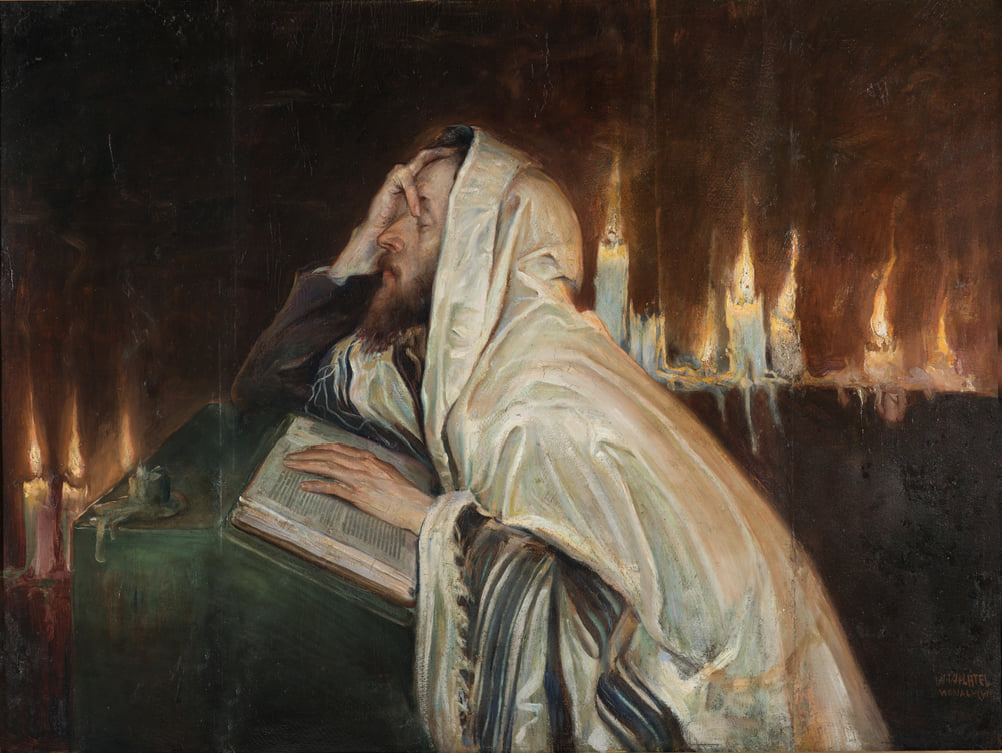
    IMAGES (counterclockwise from top): “Kol Nidre” by Wilhelm Wachtel; Ferdinand Hiller; Janos Starker’s classic recording of “Kol Nidrei;” and its composer, Max Bruch

  • Yom HaShoah Zeisl’s Requiem Remembering the Holocaust

    Yom HaShoah Zeisl’s Requiem Remembering the Holocaust

    Yom HaShoah…

    Jewish composer Eric Zeisl fled Austria following the Anschluss in 1938. He went first to Paris, and then New York City. He finally settled in Hollywood, where he found work on a studio assembly line, contributing (often uncredited) to film scores like “The Postman Always Rings Twice” and “Abbott and Costello Meet the Invisible Man.”

    At last, he was able to secure some academic appointments that allowed him to return to serious composition. Zeisl’s uplifting “Requiem Ebraico” (1944-5), a setting of Psalm 92, is dedicated to the memory of his “dear father and other victims of the Jewish tragedy in Europe.”

    The piece is about 22 minutes in length, but is posted on YouTube in multiple segments. The files should run continuously, one into another, when you follow the link. Hopefully you won’t be bedeviled by ads.

  • Hanukkah Music on The Lost Chord

    Hanukkah Music on The Lost Chord

    Hanukkah begins at sunset. Get ready for the eight-day Festival of Lights. This Sunday night on “The Lost Chord,” I hope you’ll join me for music on Jewish themes and by Jewish composers, including “Aspects of a Great Miracle” by Michael Isaacson, “Three Hassidic Dances” by Leon Stein,” and “The Klezmer Concerto” by Ofer Ben-Amots. Enjoy your fill of light and latkes, on “Pieces of Eight,” this Sunday night at 10:00 EST, on WWFM – The Classical Network and wwfm.org.

  • Yom Kippur Music on WWFM

    Yom Kippur Music on WWFM

    Yom Kippur, the Day of Atonement, begins at sundown. To mark the occasion, the holiest day on the Jewish calendar, I’ll present Jacob Weinberg’s String Quartet, Op. 55, which incorporates melodies for the High Holy Days; Enest Bloch’s moving “Israel Symphony;” Joseph Joachim’s “Hebrew Melodies;” David Stock’s “Yizkor;” and Emil Nikolaus von Reznicek’s “Symphonic Variations on ‘Kol Nidre.’” It all begins at 2 p.m. EDT, on WWFM – The Classical Network and wwfm.org. G’mar Hativa Tova.

Tag Cloud

Aaron Copland (92) Beethoven (95) Composer (114) Film Music (123) Film Score (143) Film Scores (255) Halloween (94) John Williams (187) KWAX (229) Leonard Bernstein (101) Marlboro Music Festival (125) Movie Music (138) Opera (202) Philadelphia Orchestra (89) Picture Perfect (174) Princeton Symphony Orchestra (106) Radio (87) Ralph Vaughan Williams (85) Ross Amico (244) Roy's Tie-Dye Sci-Fi Corner (290) The Classical Network (101) The Lost Chord (268) Vaughan Williams (103) WPRB (396) WWFM (881)

DON’T MISS A BEAT

Receive a weekly digest every Sunday at noon by signing up here


RECENT POSTS