Tag: KWAX

  • Rejected Film Scores: Herrmann & Hitchcock

    Rejected Film Scores: Herrmann & Hitchcock

    Rejection! Any film composer of reasonable experience has, at one time or another, had his or her music replaced. It’s an occupational hazard. Poor test screenings, creative differences, interpersonal difficulties, and producer panic have all contributed to the rejection of original film scores. Since music is usually the last ingredient in the creation of a film, it is also the most vulnerable to change. This week on “Picture Perfect,” we’ll work through the pain to lavish some belated respect on the efforts of four eminently- (perhaps over-) qualified composers.

    A strong argument could be made that there was no greater film composer than Bernard Herrmann. Of the eight films he worked on with Alfred Hitchcock, three are indisputable masterpieces: “Vertigo,” “North by Northwest,” and “Psycho” (Hitch’s biggest box office success).

    However, things began to change within the studio system, and Hitchcock became increasingly insecure. The emphasis shifted more and more to the bottom line, and the mounting pressure extended to every aspect of his subsequent films.

    After “Marnie,” only a moderate success with audiences, Hitchcock became desperate for another hit. It was the studio’s thinking that its music scores should forthwith be attuned to a younger sensibility. In particular, the suits were interested in a hit single that they could use to help promote the film. All of a sudden, Herrmann’s reliance on a symphony orchestra was perceived as terribly old fashioned.

    By the time Hitchcock and Herrmann began work on “Torn Curtain,” in 1966, the tension between director and composer neared the breaking point. When Hitch learned Herrmann hadn’t produce what he had requested, the composer was fired halfway through the first day’s recording sessions. Of course, Herrmann had defied Hitch before – when the director instructed him that the shower scene in “Psycho” should play without music!

    Herrmann’s replacement was John Addison, who was a hot commodity at the time, having won the Academy Award in 1963 for his music for Tony Richardson’s freewheeling adaptation of “Tom Jones.” Ironically, instead of going “popular,” as the studio wanted, save for one incongruous, Mancini-esque song at the end, Addison did what all of Hitch’s subsequent composers did – he emulated Herrmann. “Torn Curtain” failed to gain traction with younger audiences, and the film was not a success.

    Herrmann and Hitchcock would never work together again. The “Torn Curtain” debacle spelled the end of one of the greatest artistic partnerships in all of cinema. Chalk it up to another boneheaded decision by management.

    I hope you’ll join me for selections from Herrmann’s original, rejected score, alongside jettisoned music for “2001: A Space Odyssey” (by Alex North), “Edge of Darkness” (John Corigliano), and “The Battle of Britain” (Sir William Walton).

    Take it from a guy who knows a thing or two about rejection. We’ll show some belated appreciation for these talented, seasoned professionals who got the shaft, when we savor an hour of their rejected scores, on “Picture Perfect,” music for the movies, now in syndication on KWAX, the radio station of the University of Oregon!


    Remember, KWAX is on the West Coast, so there’s a three-hour difference for those of you listening in the East. Here are the respective air-times for all three of my recorded shows (with East Coast conversions in parentheses):

    PICTURE PERFECT, the movie music show – Friday on KWAX at 5:00 PM PACIFIC TIME (8:00 PM EASTERN)

    SWEETNESS AND LIGHT, the light music program – ALL NEW! – Saturday on KWAX at 8:00 AM PACIFIC TIME (11:00 AM EASTERN)

    THE LOST CHORD, unusual and neglected rep – Saturday on KWAX at 4:00 PM PACIFIC TIME (7:00 PM EASTERN)

    Stream all three, at the times indicated, by following the link!

    https://kwax.uoregon.edu/


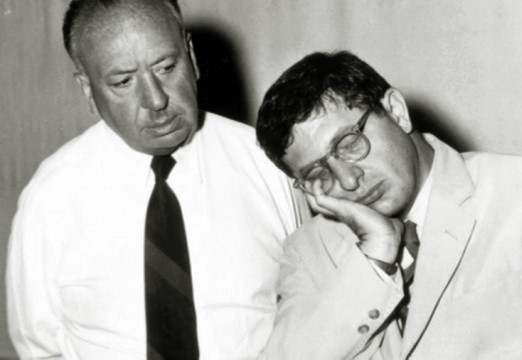
    PHOTO: Hitch and Herrmann – who’d have predicted anything could have gone wrong?
  • Easter with Vaughan Williams and Metaphysical Poets

    Easter with Vaughan Williams and Metaphysical Poets

    For me, it just isn’t Easter until I’ve heard Ralph Vaughan Williams’ “Five Mystical Songs.” I defy anyone not to be uplifted by the opening song of the cycle, titled, well, “Easter.” The songs are settings of poems by George Herbert (1593-1633). This week on “The Lost Chord,” we’ll hear a classic recording, with bass-baritone John Shirley-Quirk, as part of a program devoted to the 17th century metaphysical poets.

    We’ll also hear William Alwyn’s “Lyra Angelica” of 1954, a harp concerto inspired by Giles Fletcher’s epic poem of 1610, “Christ’s Victorie and Triumph.” The composer regarded it as his most beautiful piece, and I am inclined to agree. The work likely received its widest exposure when Michelle Kwan elected to skate to it during the 1988 Olympics.

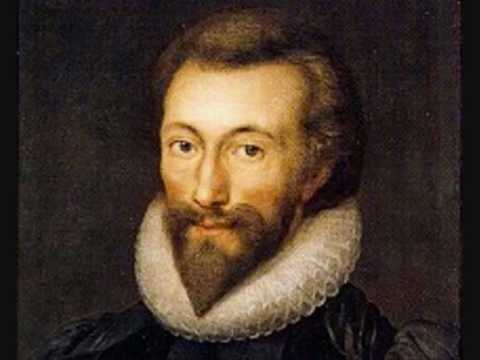
    Finally, we’ll have a lute song setting by John Hilton of a poem by John Donne, “Wilt thou forgive that sinne,” from an album on the Harmonia Mundi label, titled “The Rags of Time.”

    I hope you’ll join me for “Donne Deal” – an hour of metaphysical therapy – on “The Lost Chord,” now in syndication on KWAX, the radio station of the University of Oregon!


    Remember, KWAX is on the West Coast, so there’s a three-hour difference for those of you listening in the East. Here are the respective air-times for all three of my recorded shows (with East Coast conversions in parentheses):

    PICTURE PERFECT, the movie music show – Friday on KWAX at 5:00 PM PACIFIC TIME (8:00 PM EASTERN)

    SWEETNESS AND LIGHT, the light music program – ALL NEW! – Saturday on KWAX at 8:00 AM PACIFIC TIME (11:00 AM EASTERN)

    THE LOST CHORD, unusual and neglected rep – Saturday on KWAX at 4:00 PM PACIFIC TIME (7:00 PM EASTERN)

    Stream all three, at the times indicated, by following the link!

    https://kwax.uoregon.edu/

  • Easter Parade Music Sweetness and Light KWAX

    Easter Parade Music Sweetness and Light KWAX

    Bring down the hatboxes and polish up your shoes. It’s nearly time to take a stroll down the avenue!

    I hope you’ll join me this morning on “Sweetness and Light” for a good old-fashioned Easter Parade. We’ll enjoy a veritable bouquet of graceful melodies, turned-out as boulevardiers, flirts, dandies, and dog walkers.

    Gentlemen, tip your hats, and, ladies, model your bonnets, as we partake in a leisurely promenade on a lovely spring morning.

    Start your day with a light music Easter Parade on “Sweetness and Light,” this Saturday morning at 11:00 EDT/8:00 PDT, exclusively on KWAX, the radio station of the University of Oregon!

    Stream it, wherever you are, at the link:

    https://kwax.uoregon.edu/

  • Movie Music Faith & Film on KWAX

    Movie Music Faith & Film on KWAX

    This week on “Picture Perfect,” in this season of wall-to-wall Biblical epics, enjoy a bit of counterprogramming in the form of music from films about faith, conscience, and grappling with self-abnegation.

    Bruce Bereford’s “Black Robe” (1991), based on a novel by Irish-Canadian writer Brian Moore, tells the tale of a Jesuit priest who treks through 1500 miles of Canadian wilderness on a mission to convert the native tribes of the Huron and the Algonquin. The evocative score is by Georges Delerue.

    “Black Narcissus” (1947), a Powell-Pressburger classic, is one of those startling films that just sort of sneaks up on you. Psychological tension abounds in a tale of repressed nuns struggling to maintain their composure in a voluptuous Himalayan valley. Eventually, the wheels begin to spin off the tracks, to spinetingling effect. The stunning cinematography is by Jack Cardiff. Incredibly, the entire film was shot in England, mostly on soundstages at Pinewood Studios. The music is by Brian Easdale, of “The Red Shoes” fame.

    Audrey Hepburn gives one of her most impressive performances in Fred Zinnemann’s “The Nun’s Story” (1959). A young woman enters a convent of sister-nurses and undergoes many trials in the hopes of becoming a missionary in the Belgian Congo. The film also features Peter Finch, Edith Evans, Peggy Ashcroft, and, in a memorable early role, an unhinged Colleen Dewhurst. The music is by Franz Waxman.

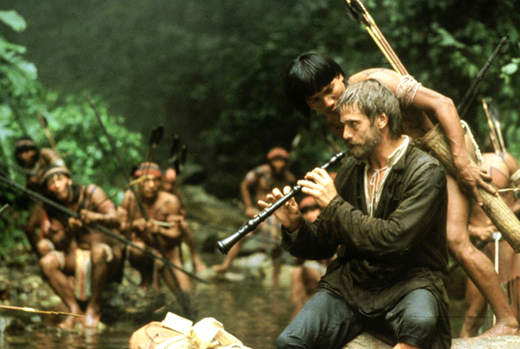
    Finally, Ennio Morricone composed one of his most-beloved scores for “The Mission” (1986). Jeremy Irons plays a Jesuit priest, who ventures into the South American rainforest to convert the Guarani to Christianity. Robert DeNiro is a reformed slave hunter, who seeks redemption. The moving music has received a great deal of exposure over the years through its use in television commercials and by figure skaters, who have made “Gabriel’s Oboe” a recognizable hit.

    Join me in seeking grace in an imperfect world, with music from films about nuns and missionaries this week, on “Picture Perfect,” music for the movies, now in syndication on KWAX, the radio station of the University of Oregon!


    Remember, KWAX is on the West Coast, so there’s a three-hour difference for those of you listening in the East. Here are the respective air-times for all three of my recorded shows (with East Coast conversions in parentheses):

    PICTURE PERFECT, the movie music show – Friday on KWAX at 5:00 PM PACIFIC TIME (8:00 PM EASTERN)

    SWEETNESS AND LIGHT, the light music program – ALL NEW! – Saturday on KWAX at 8:00 AM PACIFIC TIME (11:00 AM EASTERN)

    THE LOST CHORD, unusual and neglected rep – Saturday on KWAX at 4:00 PM PACIFIC TIME (7:00 PM EASTERN)

    Stream all three, at the times indicated, by following the link!

    https://kwax.uoregon.edu/

  • Old Meets New Classical Music on KWAX

    Old Meets New Classical Music on KWAX

    In music, as in most things, progress can sometimes seem a mite overrated. In any case, at the risk of teetering into banality, we must acknowledge that the more things change, the more they stay the same. This week on “The Lost Chord,” it seems especially so, when composers of the past 100 years look back to the 18th century.

    We’ll hear somewhat contemporary works indebted to earlier times, including Lord Berners’ “Fugue for Orchestra,” Norman Dello Joio’s “Salute to Scarlatti,” Ilja Hurník’s “Sonata da camera,” John Corigliano’s “Chaconne” from “The Red Violin,” and Percy Grainger’s “Blithe Bells,” after Johann Sebastian Bach.

    Raise a toast to backward thinking (and I mean that purely facetiously) with new wine in old bottles, on “Déjà Vu All Over Again,” on “The Lost Chord,” now in syndication on KWAX, the radio station of the University of Oregon!


    Remember, KWAX is on the West Coast, so there’s a three-hour difference for those of you listening in the East. Here are the respective air-times for all three of my recorded shows (with East Coast conversions in parentheses):

    PICTURE PERFECT, the movie music show – Friday on KWAX at 5:00 PM PACIFIC TIME (8:00 PM EASTERN)

    SWEETNESS AND LIGHT, the light music program – ALL NEW! – Saturday on KWAX at 8:00 AM PACIFIC TIME (11:00 AM EASTERN)

    THE LOST CHORD, unusual and neglected rep – Saturday on KWAX at 4:00 PM PACIFIC TIME (7:00 PM EASTERN)

    Stream all three, at the times indicated, by following the link!

    https://kwax.uoregon.edu/

Tag Cloud

Aaron Copland (94) Beethoven (95) Composer (114) Film Music (149) Film Score (143) Film Scores (255) Halloween (97) John Williams (197) KWAX (232) Leonard Bernstein (105) Marlboro Music Festival (125) Movie Music (164) Mozart (91) Opera (215) Philadelphia Orchestra (90) Picture Perfect (174) Princeton Symphony Orchestra (110) Radio (90) Ross Amico (244) Roy's Tie-Dye Sci-Fi Corner (290) The Classical Network (101) The Lost Chord (269) Vaughan Williams (107) WPRB (397) WWFM (881)

DON’T MISS A BEAT

Receive a weekly digest every Sunday at noon by signing up here


RECENT POSTS