Tag: Leon Botstein

  • Bard Music Festival: Rediscoveries Online

    Bard Music Festival: Rediscoveries Online

    I know I have a tendency to talk a lot about Bard College. But it deserves to be talked about! Always a lot of interesting things happening there, on its bucolic campus within sight of the Catskills.

    Yesterday, in conjunction with Nadia Boulanger’s birthday, I mentioned its summer music festival, which is a mecca, or should be, for anyone interested in live performance of rarely-heard, largely forgotten, and totally worthwhile music, presented over an immersive fortnight of concerts, lectures, and panels. Ordinarily, there’s a lot else going on, on Bard campus, all summer long.

    “Nadia Boulanger and Her World” was to have been the focus of this year’s festival. Because of COVID, that has been postponed until next summer. But as you know, Nature abhors a vacuum (even as she may adore a pandemic), so in the meantime Bard has stepped up with some very enticing virtual programs, which it is presenting under the title “Out of the Silence: Bard Music Festival Rediscoveries.”

    This series of live-streamed concerts includes works by classic, though underexposed, Black composers, alongside musical staples for string orchestra by Dvořák, Mendelssohn, Bartók, and Tchaikovsky. These are performed by the college’s resident ensemble, The Orchestra Now (TŌN), under the direction of Leon Botstein and his associates. Botstein is music director of the American Symphony Orchestra and president of Bard College.

    The programs are presented on Saturdays at 5:30 pm EDT, with preconcert panels offered an hour before. Since it is not always the best hour for me to be listening, I am delighted to find that past concerts in the series are being archived online.

    Here’s Program Two, with an introductory composers’ round table, featuring Adolphus Hailstork, Jessie Montgomery, Alvin Singleton, and Joan Tower. The music-making – which includes Montgomery’s “Strum,” Singleton’s “After Choice,” Hailstork’s “Sonata da Chiesa” (highly recommended), and Dvořák’s “Serenade for Strings” – begins around the 58-minute mark.

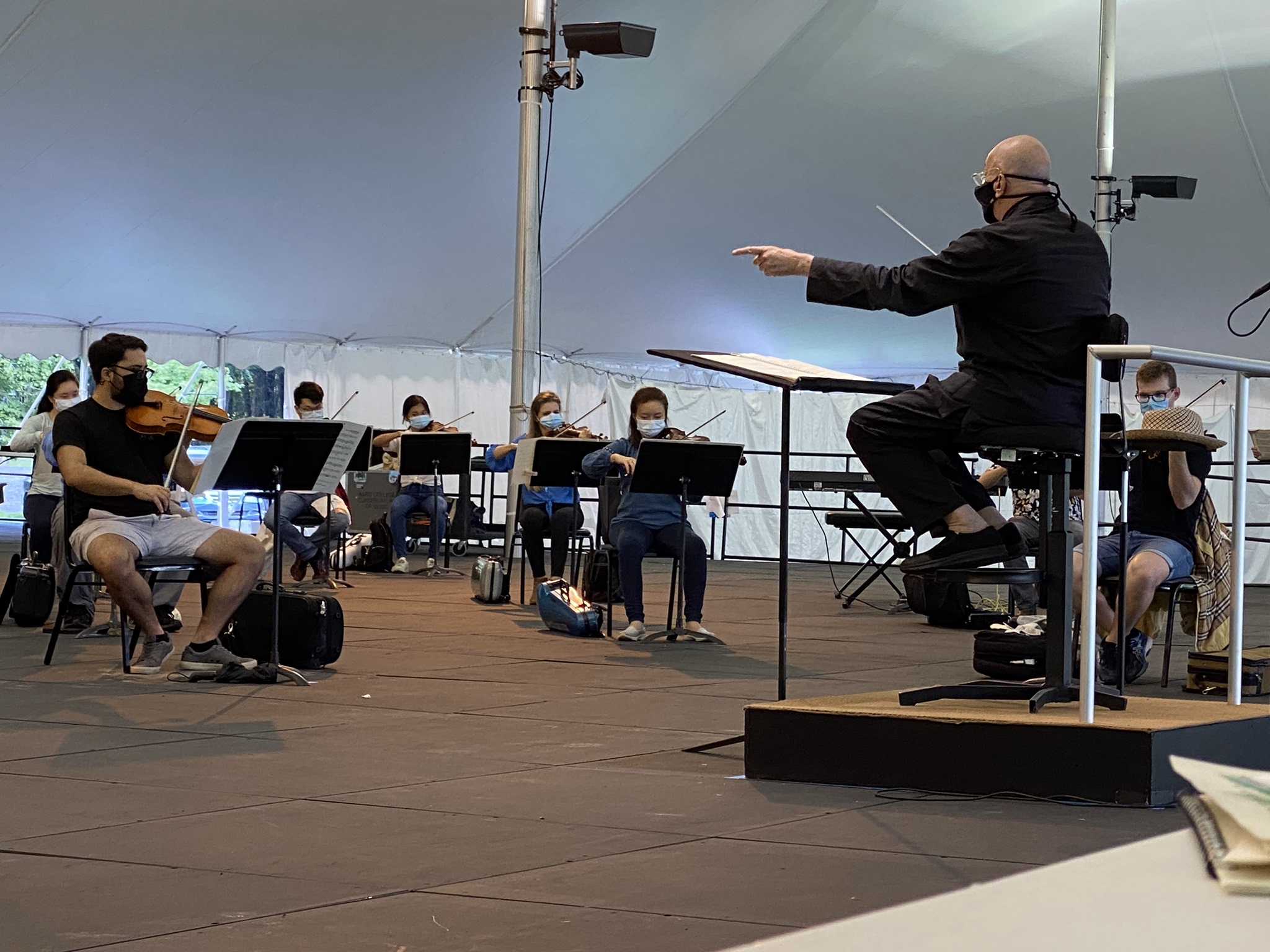
    As you can see, they’ve figured out a way to present these concerts safely, outdoors, with strings appropriately distanced, and no potential for airborne contagion by way of plumes from wind or brass instruments.

    Again, the next program in the series will be presented this Saturday. Here’s a link for free reservations for the remaining concerts:

    https://tickets.fishercenter.bard.edu/2392/2396

    Since the coronavirus shutdown, Bard has been extraordinarily generous with its archival material, sharing video of orchestral and opera performances from past festivals. In many of these, Botstein conducts the ASO. You’ll find much to choose from here:

    https://fishercenter.bard.edu/upstreaming/

    Times are tough for artists, as they are for everybody else. If you enjoy these offerings, or any of the virtual streams posted by other musicians and organizations, please consider supporting them with your contribution. Even a little bit means something, if everybody chips in.


    Masked and distanced: The Bard musicians in rehearsal

    Fisher Center at Bard

  • Stream Ethel Smyth’s “The Wreckers” Online

    Stream Ethel Smyth’s “The Wreckers” Online

    Bard College is now streaming its 2015 production of Dame Ethel Smyth’s “The Wreckers.”

    This English seaside opera predates Benjamin Britten’s “Peter Grimes” by decades, a tale of doomed love set against the backdrop of plundering land pirates, who lure unsuspecting ships onto the rocks of coastal Cornwall. The “pirates,” in this instance, are common villagers who justify their misdeeds as righteous Methodists. (Alas, some things never change.)

    “The Wreckers,” Smyth’s third opera, is a product of the so-called English musical renaissance, a flowering that took place around the turn of last century, after an alleged dearth of native talent that reached back centuries – tradition holds, since the death of Henry Purcell – a charge that really was without basis. In 1904, Germany had only just derided England as “Das Land ohne Musik” (“The Land without Music”). Ironic, then, that “The Wreckers” would be given its first performance there, in Leipzig, in German translation, in 1906.

    Why the timidity, England? Smyth’s second opera, “Der Wald,” which also received its premiere in Germany, had made it as far as New York City’s Metropolitan Opera in 1903. It would be the only opera by a woman composer presented by the Met for over a century! Why no performances at home? Eventually, “The Wreckers” would receive its English premiere in 1909, under the direction of Sir Thomas Beecham.

    Smyth was not only a formidable talent, she was a formidable personality. Few were the men who could stand up to this tweed-wearing, cigar-smoking suffragette. After Smyth was arrested for putting out the windows of politicians who opposed a woman’s right to vote, Beecham visited her in prison, only to find her leading her sisters-in-arms in an anthem she composed, “March of the Women,” which she conducted through the bars of her cell with a toothbrush.

    Beecham would conduct “The Wreckers” again in 1934 to celebrate Smyth’s 75th birthday. Sadly, by then she was unable to enjoy it, as by that time she was stone deaf.

    Leon Botstein led the first U.S. performance of the opera, with the American Symphony Orchestra, in New York City, as recently as 2007! These forces brought “The Wreckers” to Bard College, of which Botstein is president, and where he is co-director each summer of the Bard Music Festival.

    This year’s festival, which was to have been devoted to another remarkable woman, Nadia Boulanger, has been postponed to the summer of 2021.

    For now, enjoy Dame Ethel Smyth’s “The Wreckers”:

    https://fishercenter.bard.edu/events/ups-the-wreckers/?utm_source=wordfly&utm_medium=email&utm_campaign=2020-06-24-UPS-Wreckers&utm_content=version_A#the-wreckers

    A talk about the opera, with Leon Botstein:

    https://fishercenter.bard.edu/events/ups-the-wreckers/?utm_source=wordfly&utm_medium=email&utm_campaign=2020-06-24-UPS-Wreckers&utm_content=version_A#opera-talk

  • Strauss’ “Love of Danae” Rare Opera Online

    Strauss’ “Love of Danae” Rare Opera Online

    On Richard Strauss’ birthday, enjoy this production of the rarely-heard opera “Die Liebe der Danae” (“The Love of Danae”), a comedy after Hugo von Hofmannsthal (libretto by Joseph Gregor), steeped in Greek mythology.

    The powerful god Jupiter and the lowly donkey driver Midas compete for the love of the beautiful Danae. According to the promotional material, “The story is a Mozartean blend of comedy, romance, and drama on the themes of transformation and the acceptance of life’s changes, all brilliantly illuminated by Strauss’s orchestral mastery.” The production is a collaboration of stage director Kevin Newbury and architect Rafael Viñoly.

    True to the mission of Bard SummerScape, this is the first time the opera has ever been staged in New York. The performance took place at Bard College in 2011. The American Symphony Orchestra is conducted by Leon Botstein:

    Some background and a brief synopsis of the opera:

    https://en.wikipedia.org/wiki/Die_Liebe_der_Danae

    Unfortunately, because of the COVID-19 pandemic, this year’s Bard Music Festival, which was to have focused on Nadia Boulanger and her world, has been postponed until the summer of 2021.

    You’ll find more information at the website of Fisher Center at Bard, https://fishercenter.bard.edu/summerscape/.

  • Bard Music Festival Discovering Neglected Gems

    Bard Music Festival Discovering Neglected Gems

    Eureka!

    I feel like a classical music prospector who’s struck the motherlode of unusual and neglected repertoire!

    The Bard Music Festival, held each summer at Bard College in sylvan upstate New York, is the crown jewel of Bard SummerScape, a broader celebration of the arts. The festival’s primary focus is on a specific composer and his or her world. So even if the star attraction is, say, Rimsky-Korsakov, Sibelius, or Carlos Chávez, a significant amount of the programming is devoted to that composer’s contemporaries, influences, and successors.

    No word yet on whether or not the Bard Music Festival will decide to move ahead with this summer’s projected celebration of Nadia Boulanger. But judging from the facts that just about every other music festival in North America has already cancelled, and that Bard College is located just two hours north of New York City, I’m not holding my breath (except around other people, especially at the grocery store).

    In the meantime, Bard is finding ways to connect with audiences beyond its idyllic campus, and I am pumped to have tapped into this treasure trove of past Bard performances, especially of the operas (read on).

    Traditionally, musicians of the American Symphony Orchestra have formed the core of the Bard Festival Orchestra (Leon Botstein, the president of Bard College, serves as artistic director of both), though in recent years, a number of the concerts have also been performed by Bard’s resident orchestra, The Orchestra NOW.

    Some of ASO’s contributions, Bard-related and otherwise, can now be streamed from the orchestra’s website:

    ASO Online

    In addition, every week, the Fisher Center at Bard is sharing a page of content based on the outstanding work the festival has done in reviving the neglected output of a number of deserving composers. This week, the focus is on Sergei Taneyev:

    https://fishercenter.bard.edu/upstreaming/

    Nadia Boulanger is the first woman to be selected as the focal point of Bard proper (though Grazyna Bacewicz was the subject of a satellite festival in San Francisco, Bard Music West, last year, and works by women composers – including Nadia’s sister, Lili – have been included as a matter of course in regular Bard programming). Boulanger’s influence, as one of the great pedagogues of the 20th century, was enormous. She was particularly influential in the artistic development of innumerable American composers. So when the festival does come to pass, the repertoire should be notably diverse and, as always, fascinating.

    For more information, visit https://fishercenter.bard.edu/bmf/

  • Korngold Film Music at Bard Music Festival

    Korngold Film Music at Bard Music Festival

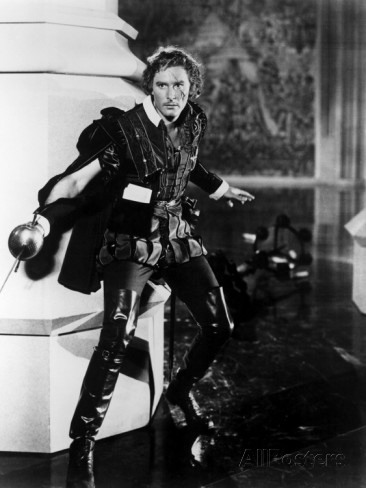
    Is Erich Wolfgang Korngold my favorite film composer? Quite possibly, yes. In fact, he’s one of my favorite composers, period. Chalk it up to a childhood misspent in the company of Errol Flynn and Bette Davis.

    I’m especially excited, then, that Korngold will be the focus of this year’s Bard Music Festival. The festival, now in its 30th year, will be held over two weekends – from August 9 through August 11, and August 16 through August 18 – at Bard College, in upstate New York. Concert programs, talks, and panel discussions will examine every aspect of Korngold’s output, including an ample representation of his film music and that of some of his colleagues.

    This week on “Picture Perfect,” my guest will be conductor Leon Botstein, president of Bard College and co-director of the Bard Music Festival. Dr. Botstein will join me in previewing some of the festival’s highlights and providing commentary on this most fascinating composer, who, as one of classical music’s greatest prodigies, had one foot in Old Vienna and the other in New World Hollywood.

    As a kind of special preamble to the festival, Korngold’s opera, “Das Wunder der Heliane” – “The Miracle of Heliane” – will be presented in a fully staged production, in its U.S. premiere, starting tonight and running through August 4, again on the campus of Bard College. Korngold’s most famous opera, “Die tote Stadt,” will be performed semi-staged, as the festival’s finale, on August 18. For more information, visit fishercenter.bard.edu.

    Then strike for the shores of Dover! It’s an hour of Korngold’s film music on “Picture Perfect,” music for the movies, this Friday evening at 6:00 EDT, on WWFM – The Classical Network and wwfm.org.

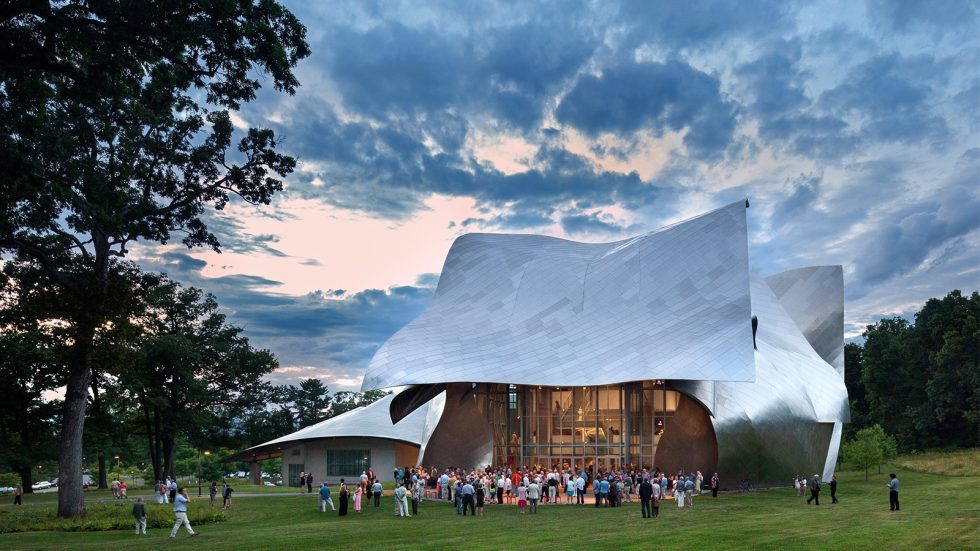
    Richard B. Fisher Center for the Performing Arts

Tag Cloud

Aaron Copland (93) Beethoven (95) Composer (114) Film Music (125) Film Score (143) Film Scores (255) Halloween (94) John Williams (189) KWAX (229) Leonard Bernstein (101) Marlboro Music Festival (125) Movie Music (140) Opera (202) Philadelphia Orchestra (89) Picture Perfect (174) Princeton Symphony Orchestra (106) Radio (87) Ralph Vaughan Williams (85) Ross Amico (244) Roy's Tie-Dye Sci-Fi Corner (290) The Classical Network (101) The Lost Chord (268) Vaughan Williams (103) WPRB (396) WWFM (881)

DON’T MISS A BEAT

Receive a weekly digest every Sunday at noon by signing up here


RECENT POSTS