Tag: Leon Botstein

  • Korngold’s Birthday & Bard Music Festival

    Korngold’s Birthday & Bard Music Festival

    Happy birthday, Erich Wolfgang Korngold!

    I am so excited to have just gotten off the phone with Leon Botstein. Botstein, who is president of Bard College, is also co-artistic director of the Bard Music Festival, held each summer on the campus of Bard College in Annandale-on-Hudson, NY. This year, the festival’s focus will be on “Korngold and His World.”

    Tune in this afternoon for some of Dr. Botstein’s insights into Korngold the composer, as we talk just a bit about the festival, which will take place this year over two weekends: August 9-11 and August 16-18.

    Then watch this space for news of upcoming installments of “Picture Perfect” and “The Lost Chord,” which will include more of Botstein’s comments on Korngold’s significance as a composer for opera house, concert hall, and film.

    The Bard Music Festival will encompass a veritable cornucopia of Korngold, including the composer’s two greatest operas – a concert performance of “Die tote Stadt,” which will round out the festival, on August 18, and a fully-staged production of “Das Wunder der Heliane,” which will act as a kind of preamble to the festival proper, from July 26 to August 4. Leon Botstein will conduct. As has been the case with so much music performed at Bard, “Heliane” is an opera that has never before received a staging in the United States.

    The festival will shine light on all aspects of Korngold’s art, by way of his own work for different media (including a performance, with film, of selections from “The Adventures of Robin Hood”), and music by his contemporaries, those he influenced and those who were influenced by him.

    You can find at more about “Das Wunder der Heliane” and the Bard Music Festival by visiting fishercenter.bard.edu.

    Then tune in today, in the 4:00 hour EDT, to hear portions of my conversation with Dr. Botstein – with more to come on future episodes of “Picture Perfect” and “The Lost Chord” – on WWFM – The Classical Network and wwfm.org.

    The Richard B. Fisher Center for the Performing Arts at Bard College

  • Bard’s Rimsky-Korsakov Festival Explored

    Bard’s Rimsky-Korsakov Festival Explored

    Fresh off the stalk of this year’s Bard Music Festival, it’s Nikolai Rimsky Korn-on-the-kob. Okay, it’s really Rimsky-Korsakov, but after a weekend in rural Upstate New York, how could I resist?

    “Rimsky-Korsakov and His World” is the focus of this year’s festival, Bard’s 29th. In classic Bard fashion, artistic co-directors Leon Botstein – president of Bard College, music director of the American Symphony Orchestra, and founder of The Orchestra Now – and musicologist Christopher H. Gibbs have assembled two weekends’ worth of stimulating programs, slanted toward lesser-known repertoire by its subject, his contemporaries, his influences, and those he influenced, with a few of his imperishable classics (“Scheherazade,” the “Russian Easter Festival Overture”) tossed into the mix. Highlights are too many to list, but the festival will conclude its second weekend on Sunday with a concert performance of “The Tsar’s Bride,” one of Rimsky’s 15 operas. How often do we get to hear it?

    Join me this afternoon, following today’s Noontime Concert, for some of the repertoire presented on this year’s 29th Annual Bard Music Festival: Rimsky-Korsakov and His World, including Rimsky’s Piano Concerto, Mikhail Glinka’s Sextet in E-flat major, Sergei Taneyev’s Symphony No. 4, and Modest Mussorgsky’s “Pictures at an Exhibition,” in its original version, which I’ll be featuring in a new recording with Clipper Erickson, piano.

    You’ll find more information about this one-of-a-kind festival, which skillfully walks the line between scholarship and entertainment, by visiting fishercenter.bard.edu/bmf/

    The music may not be in a hurry, but it’s definitely Russian, this afternoon between 1 and 4 p.m. EDT, on WWFM – The Classical Network and wwfm.org.

    Next summer’s focus: Erich Wolfgang KORNgold!

  • A World Requiem Forgotten Memorial Day Music

    A World Requiem Forgotten Memorial Day Music

    For Veterans Day, here’s a piece of music that could serve double-duty, for both today and Memorial Day. Sadly, it is almost never performed at all.

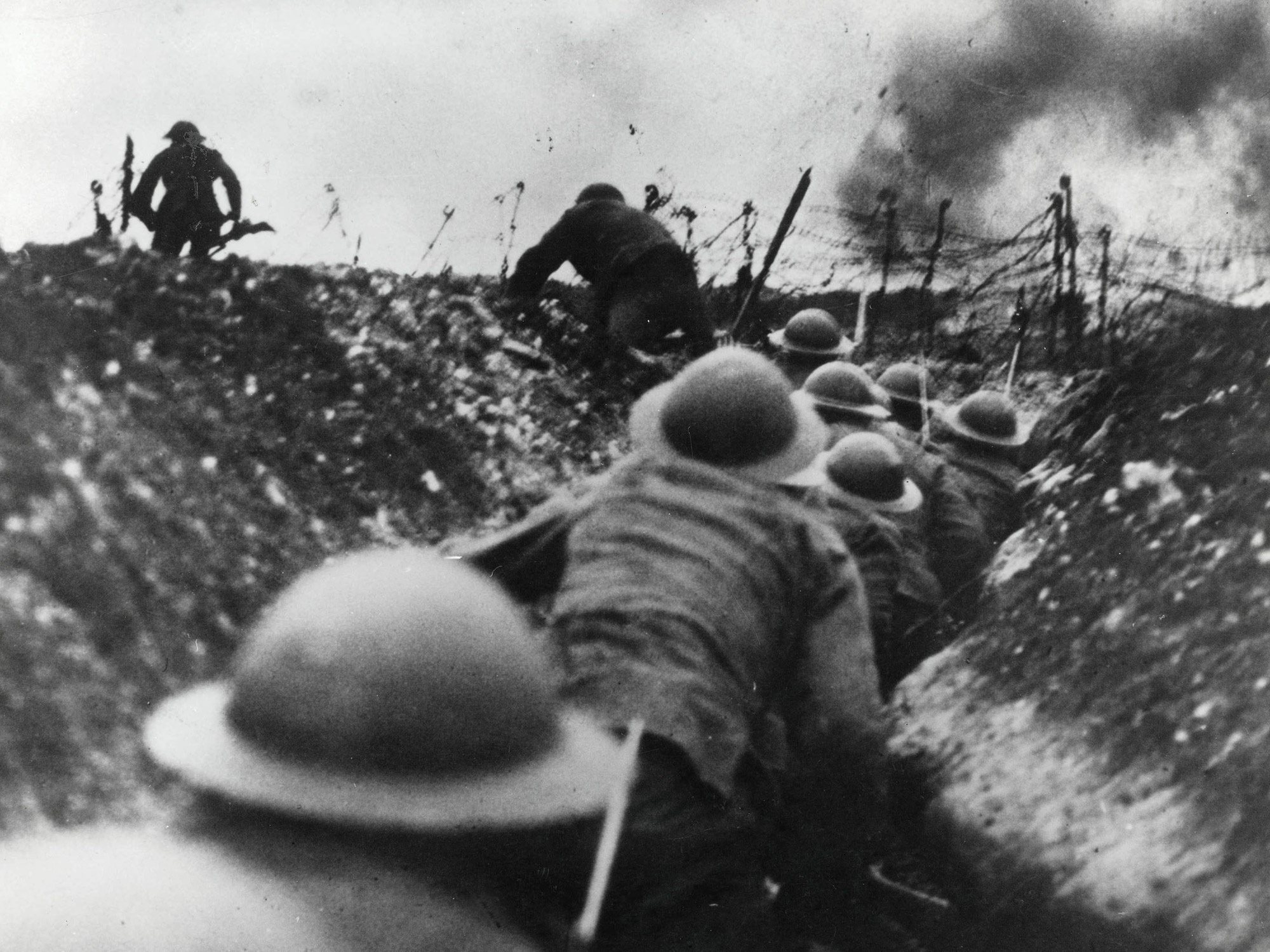
    John Foulds composed his massive oratorio, “A World Requiem,” between 1919 and 1921 to honor the memory of all those – of whatever nation – who fell during WWI. The text, in English, was assembled by his wife, Maud MacCarthy, the work’s dedicatee, who compiled it from the Requiem Mass, sundry Biblical passages, selections from John Bunyan’s “The Pilgrim’s Progress,” a poem by Kabir, and her own original material.

    The oratorio falls into 20 movements (in two parts of ten each) for soloists, massed choirs (including children’s choirs), large orchestra, offstage instrumentalists, and organ. A progressive tonal framework is spiced with quarter tones, cluster chords and certain repetitive sequences.

    It was first performed on Armistice Night (now Veterans Day in the United States), November 11, 1923, in Royal Albert Hall, by up to 1,250 musicians. The work was embraced by the public, though critical reaction was mixed. Subsequent performances took place from 1924 to 1926 as part of a Festival of Remembrance. Then the work lay neglected for some 80 years until revived in 2007 by the forces in this recording, under the direction of the indefatigable Leon Botstein.

    Part I

    1 I Requiem – 8:44
    2 II Pronuntiatio – 4:05
    3 III Confessio – 5:46
    4 IV Jubilatio – 5:06
    5 V Audite – 7:04
    6 VI Pax – 3:53
    7 VII Consolatio – 5:08
    8 XIII Refutatio – 0:38
    9 IX Lux Veritatis – 1:19
    10 X Requiem 3:25

    45:08

    Part II

    1 XI Laudamus – 6:30
    2 XII Elysium – 6:24
    3 XIII In Pace – 3:17
    4 Hymn of the Redeemed – 4:37
    5 XIV Angeli – 3:27
    6 XV Vox Dei – 3:07
    7 XVI Adventus – 4:01
    8 XVII Vigilate – 2:03
    9 XVIII Promissio et Invocatio – 7:30
    10 XIX Benedictio – 1:41
    11 XX Consummatus 2:06

    44:50

    Thank you to those who served.

  • Foulds’ World Requiem on WPRB

    Foulds’ World Requiem on WPRB

    Coming up on WPRB in the 9:00 hour EDT: John Fould’s “A World Requiem.”

    Scored for a mass of soloists, choristers and orchestral musicians to rival those of Mahler’s “Symphony of a Thousand,” the Requiem was conceived by Foulds as a memorial to the dead of all nations in the wake of the First World War. It was given its first performance at Royal Albert Hall on Armistice Night, November 11, 1923. It then lay in neglect for 80 years, until its resurrection by Leon Botstein, who conducted the work’s revival at Royal Albert Hall on November 11, 2007. We’ll hear his recording of the piece, which was issued two months later, on the Chandos label.

    Listen now to WPRB103.3 FM or wprb.com. We remember the soldiers who laid down their lives in combat and the unfortunate civilians who were collateral casualties, in our salute to the musical dead of all countries, for Memorial Day, on Classic Ross Amico.

  • Bruch’s Odysseus Rediscovered

    Bruch’s Odysseus Rediscovered

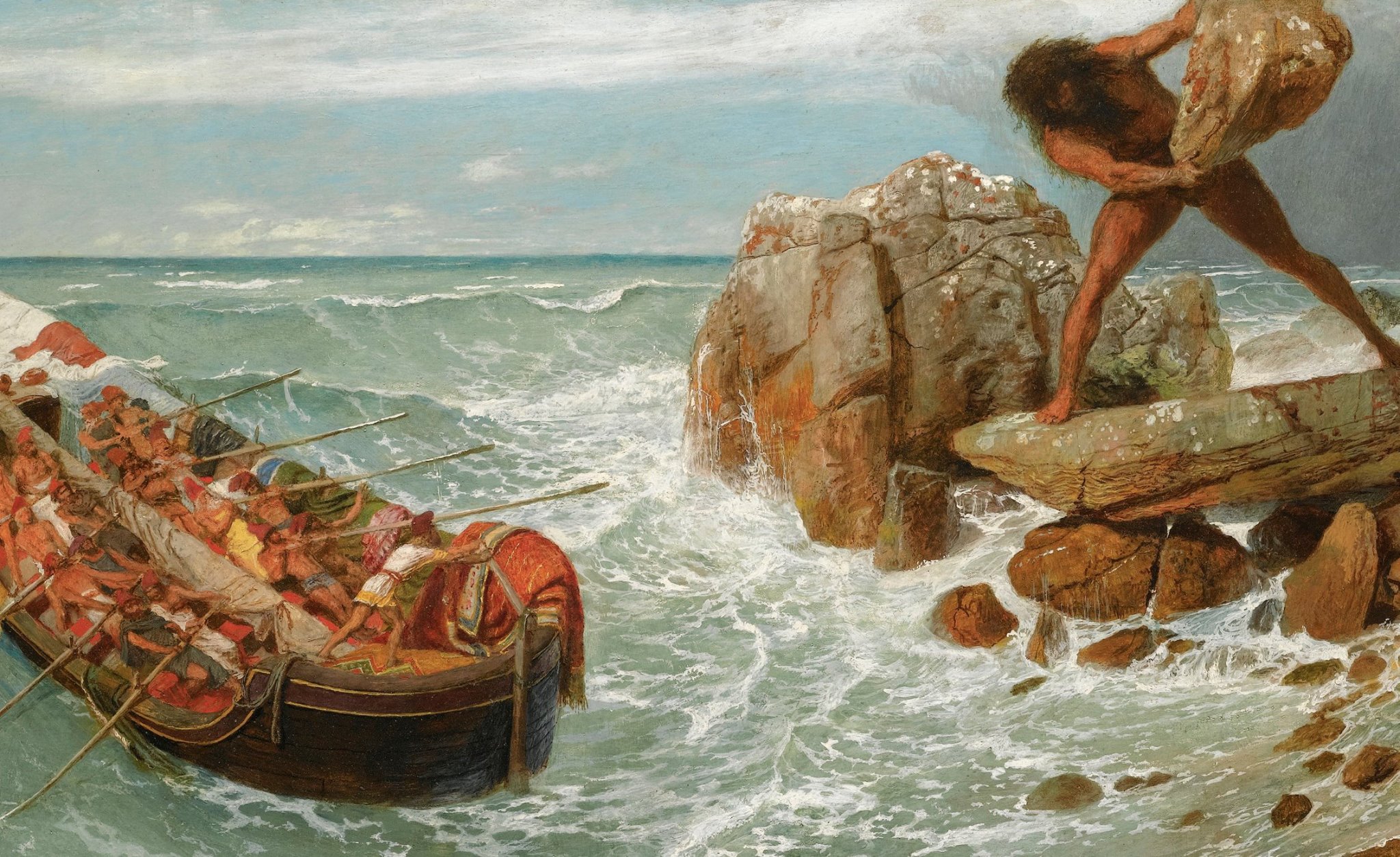
    It says something about how highly regarded was Max Bruch’s “Odysseus” that none other than Johannes Brahms selected it for his farewell performance in 1875 as Director of the Society of the Friends of Music in Vienna. Bruch’s oratorio racked up an impressive number of performances. Within two years of its premiere in 1873, it was given no less than 45 times. In fact, in Bruch’s heyday, the work was considered second in excellence only to his imperishable Violin Concerto No. 1 in G minor.

    Yet by the time of the composer’s death, in 1920, he was considered an artifact of a bygone era. “Odysseus” was a relic of the 19th century, and in the 19th century it would remain, until liberated by musicologist and conductor Leon Botstein in the late 1990s. Thanks to Botstein, we’ll get to enjoy the complete oratorio today on WPRB, as we listen to a full morning of music inspired by Homer.

    Bruch’s oratorio perhaps unforgivably omits the cathartic bloodletting at the tale’s climax, when Odysseus slays his wife’s unwanted suitors, who have overrun his home in his absence. But Benjamin Britten was not so squeamish. Britten embraced all the inherent drama and adventure of epic vengeance in his music for radio, “The Rescue of Penelope.” We’ll cap the morning with this full-blooded work, which will be narrated by Dame Janet Baker.

    Along the way, we’ll also have music by Gabriel Fauré, Marc-Antoine Charpentier, Ernst Boehe, Jean-Philippe Rameau, Jacques Offenbach, John Harbison, Hector Berlioz, and Jerome Moross, among others.

    There will be more wine for Polyphemus, from 6 to 11 EDT, on WPRB 103.3 FM and at wprb.com. We’re always trying hard to rock your world, on Classic Ross Amico.

Tag Cloud

Aaron Copland (93) Beethoven (95) Composer (114) Film Music (125) Film Score (143) Film Scores (255) Halloween (94) John Williams (189) KWAX (229) Leonard Bernstein (101) Marlboro Music Festival (125) Movie Music (140) Opera (202) Philadelphia Orchestra (89) Picture Perfect (174) Princeton Symphony Orchestra (106) Radio (87) Ralph Vaughan Williams (85) Ross Amico (244) Roy's Tie-Dye Sci-Fi Corner (290) The Classical Network (101) The Lost Chord (268) Vaughan Williams (103) WPRB (396) WWFM (881)

DON’T MISS A BEAT

Receive a weekly digest every Sunday at noon by signing up here


RECENT POSTS