Tag: Leon Botstein

  • Vaughan Williams at the Bard Music Festival

    Vaughan Williams at the Bard Music Festival

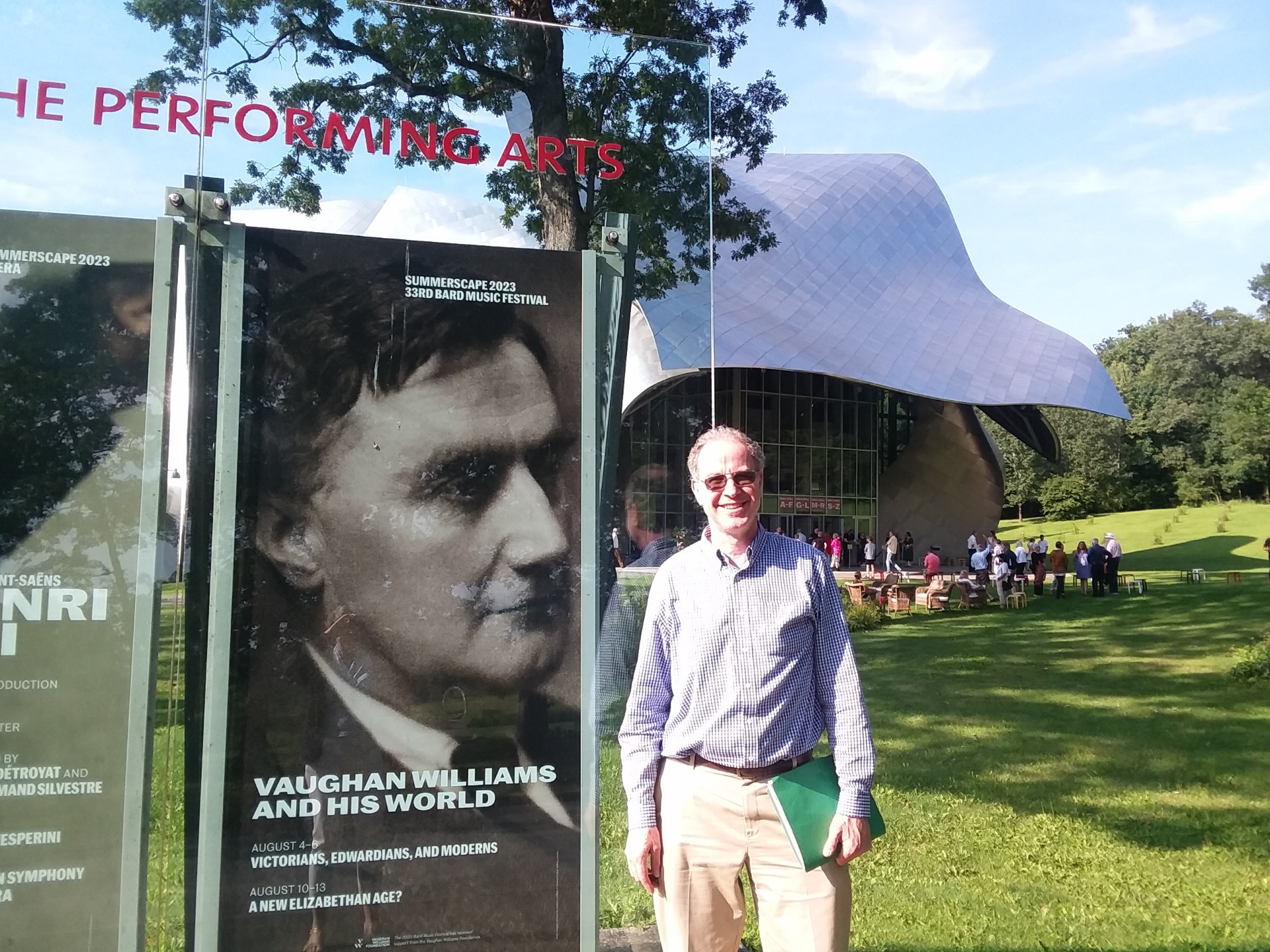
    When Byron Adams caught sight of me during intermission at the opening concert of this year’s Bard Music Festival, he took my hand and said, “Well, we finally did it!” – suggesting we had been co-conspirators. Which in a sense is true. I knew immediately what he meant, as we had both been lobbying for Vaughan Williams to be the focus of the festival for years.

    For his part, Byron, a longtime scholar of English music, had the ear of his colleague, festival co-artistic director Leon Botstein. For my part, I made it a point to suggest the composer whenever I happened to see or interview Botstein.

    Byron paid me a terrific compliment when he told me that it was I that had made this year’s Bard Music Festival possible. I asked him why, and he said it was because of an email I had written. However, when I inquired if my name specifically had been mentioned, he confessed it had not – but it was because of people like me, who presumably pushed for it, that Vaughan Williams was made the subject of this year’s festival. Well, okay, I’ll take that, even if it’s manufactured glory. It will give me my moment to humble brag about it on Facebook.

    Byron, emeritus professor of musicology at University of California, Riverside – as well as scholar in residence and regular advisor at the Bard Music Festival – is co-editor (with Daniel M. Grimley of Oxford University) of this year’s tie-in book of essays, “Vaughan Williams and His World,” published by University of Chicago Press.

    Last week, Byron was interviewed about the festival for WAMC Northeast Public Radio. He beautifully encapsulates who Vaughan Williams was, and the composer’s significance, and manages to give a concise overview of the festival in only 11 minutes! Kudos also to host Sarah LaDuke for this intelligent conversation:

    https://www.wamc.org/podcast/the-roundtable/2023-08-03/the-33rd-bard-music-festival-vaughn-williams-and-his-world?fbclid=IwAR15hcZLgsxLOXoDvDtkd3MYeLU_g-rtd6jLQQgAbPlCwq69XR2KHDi9JYU

    The Bard Music Festival will resume this weekend at Bard College in Annandale-on-Hudson, NY, with a couple of special supplementary events taking place at Church of the Messiah in Rhinebeck on Thursday evening and Friday afternoon. Some of the concerts will be livestreamed. The complete schedule is posted here:

    https://fishercenter.bard.edu/whats-on/programs/bard-music-festival/

    Fisher Center at Bard

  • Bard Music Festival: Vaughan Williams Immersion

    Bard Music Festival: Vaughan Williams Immersion

    Here’s some of the merch from this year’s Bard Music Festival. Of course, I already own most of the CDs. A particularly nice showing for those on Albion Records, the recording branch of the Ralph Vaughan Williams Society. Attractive design for the festival t-shirt, with a lark ascending, naturally, against a background of sky blue. I’m not a t-shirt guy, but I picked one up for the archive. Reading Eric Saylor’s Vaughan Williams book now. Saylor is one of this year’s resident scholars.

    Of this past weekend’s concerts, Saturday night was the clear champion, with The Orchestra Now (TŌN) performing “Job, A Masque for Dancing” (with projections of the Blake illustrations), the Concerto for Two Pianos (with Danny Driver and Piers Lane the soloists), and the Symphony No. 4. Co-artistic director Leon Botstein conducted. “Job,” in particular, was sublime. Orchestras in the United States should hang their heads in shame for not programming this music.

    Friday evening too had its rewards. I never much cared for Vaughan Williams’ “Concerto Accademico” on record, but hearing it played in person, with Grace Park the violinist, made me a convert. The “Serenade to Music” was luminously transcendent. The vocal soloists were all excellent, but soprano Brandie Sutton took it to the next level. What a presence, and what a voice!

    It was also an inspired idea to open the festival with a communal singing of Vaughan Williams’ hymn “Down Ampney” (“Come Down, O Love Divine”), as one of the composer’s great achievements was his revitalization of the “The English Hymnal.” The man truly left his imprint on every musical facet of his time.

    The Saturday morning panel, “Composer and Nation,” was also very special, with Saylor, Botstein, and Princeton University’s Deborah Nord participating. The discussion was moderated by Richard Aldous. The Bard Music Festival rewards on many levels, paying dividends on however much one decides to invest in it. If you’re there to take in some concerts of largely underexposed music, there’s plenty to enjoy. But if you want to dig a little deeper, the panels and pre-concert talks can be both absorbing and rewarding, and Saturday morning’s was among the best I’ve attended.

    The daytime chamber concerts brought many pleasures, including exemplary performances of Samuel Coleridge-Taylor’s Clarinet Quintet (with clarinetist Todd Palmer) and Herbert Howells’ Piano Quartet (with pianist Danny Driver). Nicholas Phan was on hand yesterday afternoon to sing Vaughan Williams’ “On Wenlock Edge” (with pianist Piers Lane). All three works featured members of the Ariel Quartet, surely the hardest-working chamber ensemble at this year’s festival.

    Next weekend’s concerts are primed to be a series of “Holy Grails” for fans of the composer. Featured highlights will include a concert of English string classics, RVW’s Symphony No. 8 and “Sinfonia Antartica” [sic], and the Falstaff opera “Sir John in Love.” Of course, there will be plenty of chamber music during the day. This year, there will also be a couple of supplementary concerts held at the Church of the Messiah in Rhinebeck on Thursday evening and Friday afternoon (including a performance of the Mass in G minor).

    “Vaughan Williams and His World” continues at Bard College, in Annandale-on-Hudson, NY, through August 13. You’ll find the complete schedule at the link.

    https://fishercenter.bard.edu/whats-on/programs/bard-music-festival/

    More photos tomorrow!

    Fisher Center at Bard

  • Vaughan Williams Livestream from Bard College

    Vaughan Williams Livestream from Bard College

    Adore the music of Ralph Vaughan Williams but can’t make it to this year’s Bard Music Festival? Some of the concerts will be made available via livestream. The lark ascends at Bard College in Annandale-on-Hudson, NY, August 4 -13. If you’re trapped in the Antarctic, watch online for a modest fee.

    Please note the concerts can be viewed in real-time only, and not on demand. So reserve your tickets, and don’t be late!

    https://fishercenter.bard.edu/whats-on/programs/upstreaming/


    FRIDAY, AUGUST 4, at 7 PM
    PROGRAM ONE – VAUGHAN WILLIAMS: BECOMING AN ENGLISH COMPOSER

    Down Ampney (Come Down, O Love Divine) from “The English Hymnal” (1906)

    Quintet for piano and strings in C minor (1903)

    Fantasia on a Theme of Thomas Tallis (1910)

    Concerto in D minor for violin and strings (1925)

    Serenade to Music (1938)

    O taste and see (1953)

    Songs

    Selections from “Five English Folk Songs” (1913)

    Old Hundredth Psalm Tune (1953)

    Horszowski Trio and guests; William Ferguson, tenor; Theo Hoffman, baritone; Renée Anne Louprette, organ; Grace Park, violin; Sun-Ly Pierce, mezzo-soprano; Brandie Sutton, soprano; Bard Festival Chorale, James Bagwell, music director; The Orchestra Now (TŌN) conducted by Leon Botstein, music director


    SATURDAY, AUGUST 5, at 8 PM
    PROGRAM THREE: THE SYMPHONY AND COMPOSING FOR THE STAGE

    Job, A Masque for Dancing (1930)

    Concerto in C, for two pianos and orchestra (1931, rev. 1947)

    Symphony No. 4 in F Minor (1934)

    Danny Driver & Piers Lane, pianos; The Orchestra Now (TŌN) conducted by Leon Botstein


    SUNDAY, AUGUST 6 at 5 PM
    PROGRAM SIX: LONDON CALLING! FUN IN COCKAIGNE!

    A celebration of Music Hall and pop traditions from Gilbert and Sullivan to the Beatles, including works by Arthur Sullivan (1842–1900), Roger Quilter (1877–1953), Percy Grainger (1882–1961), Gerald Tyrwhitt-Wilson, Lord Berners (1883–1950), Eric Coates (1886–1957), Ivor Novello (1893–1951), Noël Coward (1899–1973), Arthur Benjamin (1893–1960), and others, with selections from Vaughan Williams’ “The Poisoned Kiss” (1927–29; rev.)

    Martin Luther Clark, tenor; Theo Hoffman, baritone; Sun-Ly Pierce, mezzo-soprano; Ann Toomey, soprano; Bard Festival Ensemble; and others


    FRIDAY, AUGUST 11, at 8 PM
    PROGRAM SEVEN – THE LARK ASCENDING: BRITISH MUSIC FOR SMALL ORCHESTRA

    Ralph Vaughan Williams (1872–1958)
    Five Variants of “Dives and Lazarus” (1939)

    Edward Elgar (1858–1934)
    Serenade for Strings, Op. 20 (1896)

    Ralph Vaughan Williams (1872–1958)
    Flos Campi (1925)

    Grace Williams (1906–77)
    Elegy for String Orchestra (1936, rev. 1940)

    Ralph Vaughan Williams (1872–1958)
    The Lark Ascending (1914, orch. 1921)

    Peter Warlock (1894–1930)
    Capriol Suite (1926)

    Frederick Delius (1862–1934)
    Two Aquarelles (1932)

    Gustav Holst (1874–1934)
    St. Paul’s Suite, Op. 29, No.2 (1913)

    Luosha Fang, viola; Bella Hristova, violin; members of the Bard Festival Chorale, James Bagwell, choral director; The Orchestra Now (TŌN) conducted by James Bagwell and Zachary Schwartzman


    SATURDAY, AUGUST 12, AT 8 PM
    PROGRAM NINE: A NEW ELIZABETHAN AGE

    Elizabeth Maconchy (1907–94)
    Proud Thames, coronation overture (1953)

    William Walton (1902–83)
    Partita for Orchestra (1957–58)

    Ralph Vaughan Williams (1872–1958)
    Symphony No. 8 in D Minor (1955)

    Jean Sibelius (1865–1957)
    Andante Festivo (1922/1938)

    Ralph Vaughan Williams (1872–1958)
    “Sinfonia Antartica” (Symphony No. 7) (1952)

    Brandie Sutton, soprano; members of the Bard Festival Chorale, James Bagwell, choral director; American Symphony Orchestra conducted by Leon Botstein, music director


    SUNDAY, AUGUST 13, at 3 PM
    PROGRAM ELEVEN – VAUGHAN WILLIAMS AND SHAKESPEARE

    “Sir John in Love” (1928), after Shakespeare’s “The Merry Wives of Windsor”

    Bard Festival Chorale, James Bagwell, choral director; American Symphony Orchestra conducted by Leon Botstein

    In order of vocal appearance:

    William Ferguson, tenor, as Robert Shallow
    Theo Hoffman, baritone, as Sir Hugh Evans
    Martin Luther Clark, tenor, as Master Slender
    Maximillian Jansen VAP ’21, tenor, as Peter Simple
    Troy Cook, baritone, as Page
    Craig Colclough, bass-baritone, as Sir John Falstaff
    Julius Ahn, tenor, as Bardolph
    Tyler Duncan, baritone, as Corporal Nym
    Kevin Thompson, bass, as Pistol
    Brandie Sutton, soprano, as Anne Page
    Ann Toomey, soprano, as Mrs. Page
    Sarah Saturnino, mezzo-soprano, as Mrs. Ford
    Joshua Blue, tenor, as Fenton
    John Brancy, baritone, as Dr. Caius
    Justin Hopkins, bass-baritone, as Rugby
    Lucy Schaufer, mezzo-soprano, as Mrs. Quickly
    Lucia Lucas, baritone, as Host of the Garter Inn
    William Socolof, bass-baritone, as Ford


    Pre-concert talks will be offered before some of the events. It’s unclear whether or not these will be included as part of the livestreams. It might be worthwhile to check-in a little early.

    Fisher Center at Bard

  • Bard Music Fest Focuses on Rachmaninoff

    He was a visiting scholar at the Bard Music Festival in 2018, an event devoted to Nikolai Rimsky-Korsakov and “his world.” A mere blip in Taruskin’s career, but he was awarded an honorary degree from the college’s president, and the festival music director, Leon Botstein. Rachmaninoff will be the focus of this year’s festival, August 5-14. For more information, follow the link (in no way associated with Taruskin’s obituary).

    https://fishercenter.bard.edu/whats-on/programs/bard-music-festival/

  • John Foulds’ Lost World Requiem Rediscovered

    John Foulds’ Lost World Requiem Rediscovered

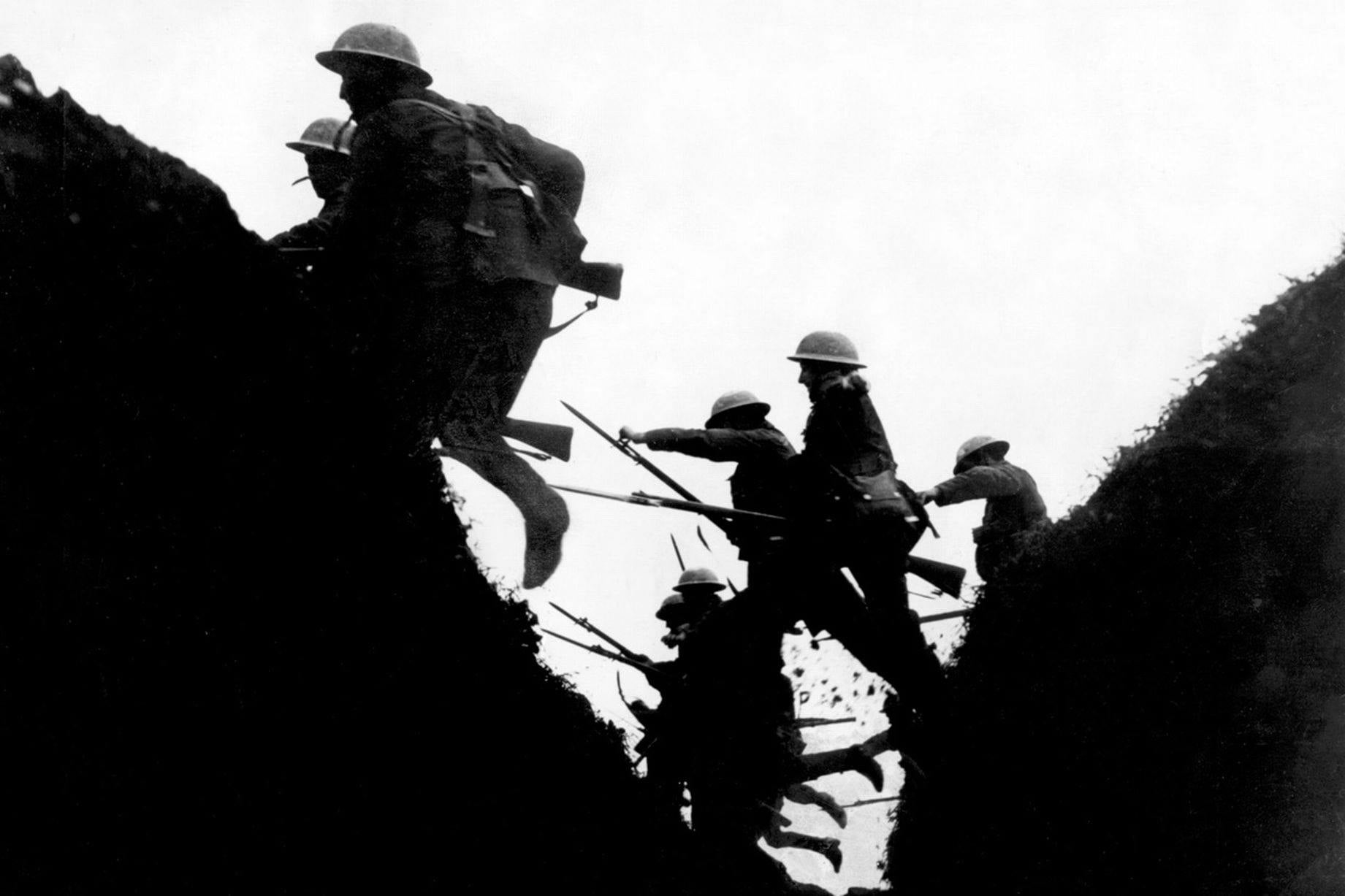
    It was on November 11, 1918 – the eleventh hour of the eleventh day of the eleventh month – that representatives of the Allied Forces and Germany sat down to sign the Armistice that concluded hostilities on the Western Front, formally ending the “War to End All Wars.”

    Five years later, John Foulds’ “A World Requiem,” conceived as a memorial to the dead of all nations, was given its first performance, on November 11th, 1923. The work was embraced by the public, though critical reaction was mixed. Subsequent performances took place from 1924 to 1926 as part of a Festival of Remembrance. After that, it lay unheard for some eight decades, until resurrected by conductor Leon Botstein.

    Botstein has dusted off more than his share of worthy curiosities over the years, though few more ambitious than “A World Requiem.” A performance of the 90-minute piece requires up to 1,250 musicians. The work’s world premiere recording, on the Chandos label, was taken from a live concert presented on Armistice Day 2007, at the venue in which the work was first heard, Royal Albert Hall London.

    The Requiem’s texts were derived from various spiritual sources by the composer’s wife, Maud MacCarthy, built on fragments from the Requiem Mass, as well as writings of John Bunyan and the Hindu poet Kabir. The overall tone is more Brahms than Britten. Part One of the oratorio promises peace and rest; Part Two conveys radiant visions of paradise.

    I had assumed that the work’s neglect had to do with the dual concerns of cost and evolving musical taste. However, around the time of the Requiem’s revival, it was discovered that performances may actually have been suppressed by the BBC, possibly at the instigation of Sir Adrian Boult – this despite the fact that Foulds donated all proceeds to the poppy appeal for the British legion. You can read more about the alleged “banning” of the Requiem here:

    https://www.manchester.ac.uk/discover/news/article/?id=3156

    Across the pond and closer to home, in 1954, at the urging of U.S. veterans, Armistice Day was renamed Veterans Day. Though the intent of the holiday is frequently confused with that of Memorial Day, Veterans Day is a time to honor ALL military veterans, not just those who died in service to their country.

    Foulds’ gargantuan oratorio could serve double-duty. Sadly, it is almost never performed at all.

    The oratorio falls into 20 movements (two parts subdivided into ten each) for soloists, massed choirs, including children’s choirs, large orchestra, offstage instrumentalists, and organ. A progressive tonal framework is spiced with quarter tones, cluster chords, and certain repetitive sequences.

    War’s the pity. Always remember, and thank you to those who served.

    Part I

    1 I Requiem – 8:44
    2 II Pronuntiatio – 4:05
    3 III Confessio – 5:46
    4 IV Jubilatio – 5:06
    5 V Audite – 7:04
    6 VI Pax – 3:53
    7 VII Consolatio – 5:08
    8 XIII Refutatio – 0:38
    9 IX Lux Veritatis – 1:19
    10 X Requiem 3:25

    45:08

    Part II

    1 XI Laudamus – 6:30
    2 XII Elysium – 6:24
    3 XIII In Pace – 3:17
    4 Hymn of the Redeemed – 4:37
    5 XIV Angeli – 3:27
    6 XV Vox Dei – 3:07
    7 XVI Adventus – 4:01
    8 XVII Vigilate – 2:03
    9 XVIII Promissio et Invocatio – 7:30
    10 XIX Benedictio – 1:41
    11 XX Consummatus 2:06

    44:50

Tag Cloud

Aaron Copland (93) Beethoven (95) Composer (114) Film Music (125) Film Score (143) Film Scores (255) Halloween (94) John Williams (189) KWAX (229) Leonard Bernstein (101) Marlboro Music Festival (125) Movie Music (140) Opera (202) Philadelphia Orchestra (89) Picture Perfect (174) Princeton Symphony Orchestra (106) Radio (87) Ralph Vaughan Williams (85) Ross Amico (244) Roy's Tie-Dye Sci-Fi Corner (290) The Classical Network (101) The Lost Chord (268) Vaughan Williams (103) WPRB (396) WWFM (881)

DON’T MISS A BEAT

Receive a weekly digest every Sunday at noon by signing up here


RECENT POSTS