Tag: Louise Farrenc

  • Bard Music Festival Livestream Berlioz

    Bard Music Festival Livestream Berlioz

    I still have a few posts about the Bard Music Festival left in my quiver, which I promise to share in the coming days. One aspect of the festival I do want to mention – which so far I have failed to do – is that evening concerts at the Fisher Center for the Performing Arts are available for livestreaming. Keep that in mind when taking a gander at this weekend’s schedule. These include Programs Seven (a more intimate lead-in to Weekend Two, the most prominent offering being Liszt’s transcription of Berlioz’s “Harold in Italy” for viola and piano), Nine (featuring Louise Farrenc’s Symphony No. 3 and Joachim Raff’s Symphony No. 10 “Autumn”), and Eleven (a complete performance of Berlioz’s “The Damnation of Faust”). No need to bargain your soul in following the link:

    https://fishercenter.bard.edu/whats-on/programs/bard-music-festival/

    “Berlioz and His World” will continue at Bard College in Annandale-on-Hudson, NY, through Sunday.

    Fisher Center at Bard

  • Ernest Reyer Wagner’s French Rival

    Ernest Reyer Wagner’s French Rival

    While Debussy and the French Impressionists led a revolt against Wagnerism in music, there were others among their countrymen who were enthralled by the power of Wagner’s vision.

    One of these was Ernest Reyer, whose family name was Rey, but he added the “er” to appear more Germanic! Reyer, born 200 years ago today, set his own version of the Siegfried story, as related in the Scandinavian Volsunga Saga, which, by way of the “Nibelungenlied,” also provided the basis for Wagner’s “Ring.” But Reyer’s approach to the tale was in the tradition of French grand opera.

    The resultant “Sigurd,” composed between 1862 and 1867, was very popular with the French during its initial production at the Paris Opera in 1885. Earlier plans to present it there had fallen through, so that the work received its world premiere in Brussels in 1884. It was also heard in Covent Garden, Lyon, Monte Carlo and, before the end of the century, the French Opera House in New Orleans and La Scala Milan.

    What’s interesting is that in the end Reyer’s music seems to bear more resemblance to Berlioz than it does to Wagner. Unable to live on the proceeds from his operas, he actually succeeded Berlioz as music critic at the Journal des débats.

    Reyer’s early musical studies were overseen by his aunt, Louise Farrenc, the only woman on the faculty of the Paris Conservatory (beginning in 1842!). He rubbed shoulders with Gustave Flaubert and Théophile Gautier (writing operas on texts of both), but he felt equally at home playing dominoes with the peasantry of Provençal. He claimed that the best source of inspiration was his pipe.

    Happy 200, Ernest Reyer (1823-1909)!


    Overture to “Sigurd”:

    Sigurd’s entrance:

  • Rediscovering Louise Farrenc & Neglected Romantics

    Rediscovering Louise Farrenc & Neglected Romantics

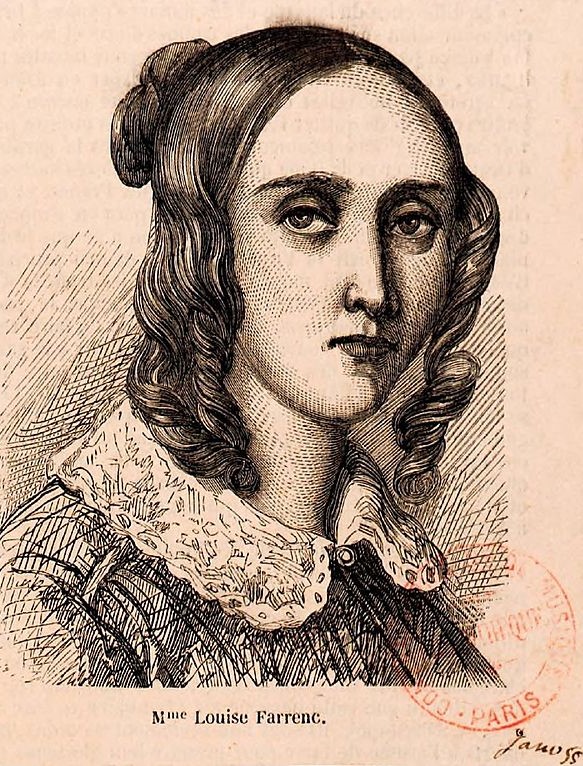
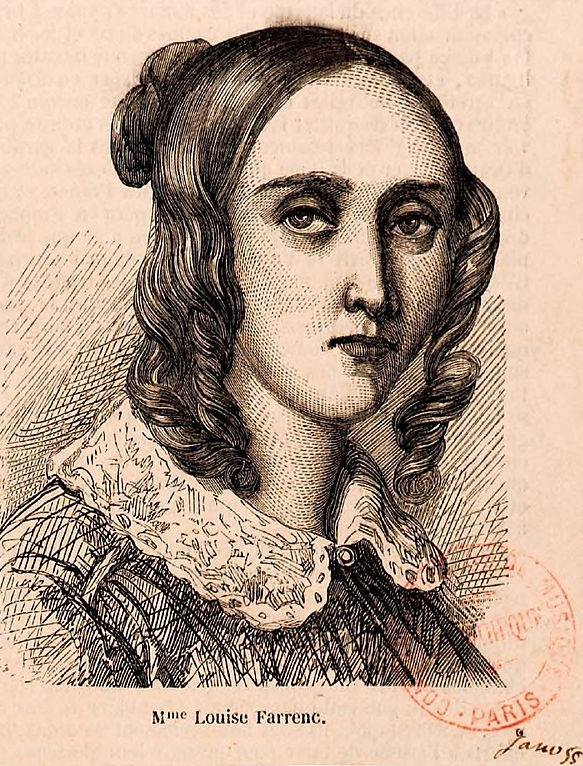
    Nearly 150 years after her death, composer Louise Farrenc is finally coming into her own. Farrenc (1804-1875) was the only female professor at the Paris Conservatory during the whole of the 19th century. Of course, she was only allowed to teach women.

    This Sunday night on “The Lost Chord,” we’ll hear Farrenc’s remarkable Third Symphony, on a program of music by three neglected French Romantics.

    A pupil of Moscheles (teacher of Mendelssohn) and Hummel (who studied with Mozart), Farrenc was a formidable pianist, who also took private lessons with Conservatory professor Anton Reicha. She paused in her career as a performer in order to start a successful publishing house, with her husband, Éditions Farrenc, which flourished for nearly 40 years.

    Beginning in 1842, Farrenc was finally accepted it into the Paris Conservatory, as a professor. There, she taught piano, but not composition. However, her stature was such that she was able to demand – and receive – equal pay.

    We’ll also hear music by Augusta Holmès (1847- 1903), French composer of Irish ancestry. Holmès received encouragement from Liszt and Wagner, as well as multiple marriage proposals from Saint-Saëns (which she declined). She became a pupil of César Franck. It’s said that Franck’s Piano Quintet enshrines the teacher’s ardent longing for his student. Saint-Saëns, who participated in the work’s scandalous premiere, was not amused.

    Holmès will be represented by her symphonic poem “Andromède,” from 1883. Andromeda, you may recall from Greek mythology, is the daughter of Cassiopeia, who incurs the wrath of the gods when she brags of Andromeda’s extraordinary beauty (comparing her favorably to the Nereids). Andromeda is chained to a rock as a sacrifice to a sea serpent, but rescued from her fate by Perseus, who arrives just in the nick of time, astride the winged horse Pegasus and bearing the severed head of the Gorgon Medusa, with which he turns the serpent to stone.

    Finally, Marie Gandval (1830-1907) studied with Flotow, then Chopin, and later Saint-Saëns. Saint-Saëns dedicated his Christmas Oratorio to her. She was the most frequently performed composer on concerts of the Société Nationale de Musique. The Société was founded by Saint-Saëns with an aim to promote orchestral music, which he found underserved in opera-mad France, where orchestras were tied to the theatres. Grandval herself was a composer of opera and choral music, but tonight there will be just enough time for her “Deux pièces” for oboe, cello and piano.

    Look for the women on “Cherchez la Femme,” this Sunday night at 10:00 EST, on WWFM – The Classical Network and wwfm.org.

  • Farrenc’s Third Symphony Shines in Philly

    Farrenc’s Third Symphony Shines in Philly

    After attending a performance of Louise Farrenc’s Second Symphony by The Philadelphia Orchestra back in February 2020 (only weeks before everything would be shut down due the pandemic), I tagged the organization on Facebook, lauding its decision to include it in its programs and urging them to tackle Farrenc’s Third. The most compelling of her symphonies, the Third is bold and energetic, and it’s got some genuinely good tunes. I’ve played it on the radio many times. And now, lo and behold, here it is, this weekend, on a series of concerts with Brahms’ Piano Concerto No. 2.

    If you’re unfamiliar with Farrenc, she was the only female professor at the Paris Conservatory during the whole of the 19th century. A pupil of Moscheles (teacher of Mendelssohn) and Hummel (who studied with Mozart), she was a formidable pianist, who also took private lessons with Conservatory professor Anton Reicha. She paused in her career as a performer in order to start a successful publishing house with her husband, Éditions Farrenc, that flourished for nearly 40 years.

    In 1842, at the age of 38, Farrenc was finally hired as a professor at the Conservatory. There, she taught piano, but not composition. And she was only allowed to teach women. However, her stature was such that she was able to demand – and receive – equal pay.

    Before the Philadelphia performance of her Second Symphony, I have only ever encountered her works on recordings, issued on some of the more enterprising independent labels.

    With apologies to Brahms, a marvelous composer, but so insanely overexposed that his Second Piano Concerto appears on no less than three series of concerts in my area within a month (by the New Jersey Symphony, the Princeton Symphony Orchestra, and of course Philadelphia), I will be rocketing in to Philly this afternoon to attend the first half of today’s matinee, then will be on the road back at intermission, arriving home in time to enjoy a cup of coffee and get ready for tonight’s appearance on Roy’s Tie-Dye Sci-Fi Corner.

    Brahms is great, but he only wrote so many concertos (four, to be exact, and – even more abused – an equal number of symphonies). I’m not discouraging anyone from attending the second half of the Philadelphia concerts. The Second Piano Concerto is an inspiring piece, and the soloist, Seong-Jin Cho, was First Prize winner at the Chopin International Competition in Warsaw in 2015. But this month, he’s also in competition with Daniil Trifonov (with the New Jersey Symphony) and Inon Barnatan (with the Princeton Symphony Orchestra) in this repertoire. And they’re both performing in my hometown.

    BTW, the Philadelphia ticket was only $22 (before the handling fee). So don’t think you have to mortgage your house in order to hear some good music. This isn’t like attending a rock concert or a baseball game.

    The program will be presented at the Kimmel Center for the Performing Arts, Broad & Spruce Sts., today at 2 p.m. and tomorrow at 8 p.m. For more information, visit philorch.org.

    Thank you, Philadelphia Orchestra. I just want to let you know that it is Farrenc, not Brahms, that pulled me in!

  • Louise Farrenc Rediscovered Composer

    Louise Farrenc Rediscovered Composer

    Nearly 150 years after her death, composer Louise Farrenc is finally coming into her own. Farrenc (1804-1875) was the only female musician on the faculty of the Paris Conservatory during the whole of the 19th century. Of course, she was only allowed to teach women.

    This Sunday night on “The Lost Chord,” we’ll hear Farrenc’s remarkable Third Symphony, on a program of music by three neglected French Romantics.

    A pupil of Moscheles (teacher of Mendelssohn) and Hummel (who studied with Mozart), Farrenc was a formidable pianist, who also took private lessons with Conservatory professor Anton Reicha. She paused in her career as a performer in order to start a successful publishing house, with her husband, Éditions Farrenc, which flourished for nearly 40 years.

    Beginning in 1842, Farrenc was finally accepted it into the Paris Conservatory, as a professor. There, she taught piano, but not composition. However, her stature was such that she was able to demand – and receive – equal pay.

    We’ll also hear music by Augusta Holmès (1847- 1903), French composer of Irish ancestry. Holmès received encouragement from Liszt and Wagner, as well as multiple marriage proposals from Saint-Saëns (which she declined). She became a pupil of César Franck. It’s said that Franck’s Piano Quintet enshrines the teacher’s ardent longing for his student. Saint-Saëns, who participated in the work’s scandalous premiere, was not amused.

    Holmès will be represented by her symphonic poem “Andromède,” from 1883. Andromeda, you may recall from Greek mythology, is the daughter of Cassiopeia, who incurs the wrath of the gods when she brags of Andromeda’s extraordinary beauty (comparing her favorably to the Nereids). Andromeda is chained to a rock as a sacrifice to a sea serpent, but rescued from her fate by Perseus, who arrives just in the nick of time, astride the winged horse Pegasus and bearing the severed head of the Gorgon Medusa, with which he turns the serpent to stone.

    Finally, Marie Gandval (1830-1907) studied with Flotow, then Chopin, and later Saint-Saëns. Saint-Saëns dedicated his Christmas Oratorio to her. She was the most frequently performed composer on concerts of the Société Nationale de Musique. The Société was founded by Saint-Saëns with an aim to promote orchestral music, which he found underserved in opera-mad France, where orchestras were tied to the theatres. Grandval herself was a composer of opera and choral music, but tonight there will be just enough time for her “Deux pièces” for oboe, cello and piano.

    Look for the women on “Cherchez la Femme,” this Sunday night at 10:00 EDT, on WWFM – The Classical Network and wwfm.org.

Tag Cloud

Aaron Copland (92) Beethoven (95) Composer (114) Film Music (123) Film Score (143) Film Scores (255) Halloween (94) John Williams (187) KWAX (229) Leonard Bernstein (101) Marlboro Music Festival (125) Movie Music (138) Opera (202) Philadelphia Orchestra (89) Picture Perfect (174) Princeton Symphony Orchestra (106) Radio (87) Ralph Vaughan Williams (85) Ross Amico (244) Roy's Tie-Dye Sci-Fi Corner (290) The Classical Network (101) The Lost Chord (268) Vaughan Williams (103) WPRB (396) WWFM (881)

DON’T MISS A BEAT

Receive a weekly digest every Sunday at noon by signing up here


RECENT POSTS