Tag: Louise Farrenc

  • Louise Farrenc NPR Theme Rediscovered

    Louise Farrenc NPR Theme Rediscovered

    I leave many windows open on my computer. Dozens. Whenever I read anything of interest, I am more likely just to leave it up and open another screen than to bookmark, since bookmarking virtually guarantees I will never again return to whatever it is I’ve saved.

    Be that as it may, I was just cleaning out some of those open screens, when I came across this article on Louise Farrenc, which I probably read around the time the Philadelphia Orchestra performed her Second Symphony. I’ve always been fond of Farrenc’s music, but I was unfamiliar with her Piano Quintet No. 2. The writer makes the astute observation that one of the themes eerily anticipates that for NPR’s “All Things Considered.”

    https://www.iowapublicradio.org/post/1840-she-wrote-all-things-considered-theme-louise-farrenc-how-female-genius-can-flourish#stream/0

    Here’s a link to the entire piece. The “All Things Considered” theme appears for the first time at the 47-second mark.

    Farrenc, a virtuoso pianist, was the only female professor at the Paris Conservatory in the whole of the 19th century. Of course, she was only allowed to teach women – and just piano, not composition.

    She and her husband, the flutist Aristide Farrenc, founded Éditions Farrenc, for almost 40 years one of the leading music publishers in France. Together, they edited the successful series, “Le trésor des pianistes,” which included works originally written for harpsichord by Bach, Couperin, Handel, Rameau, Scarlatti, and others, and sonatas for pianoforte by C.P.E. Bach, Beethoven, Chopin, Clementi, Dussek, Haydn, Hummel, and Weber.

    Following Aristide’s death in 1865, Louise continued to oversee the series until its 20th and final volume in 1872. Later, three additional volumes were added of music which had previously been published in the early 19th century.

    She was a remarkable figure. Do yourself a favor and familiarize yourself with her Symphony No. 3, recorded at least three times under studio conditions. This is but an excerpt conducted by Johannes Goritzki, whose commercial recording on CPO is very good.
  • Philly Orchestra Farrenc Shines Beyond Beethoven

    Philly Orchestra Farrenc Shines Beyond Beethoven

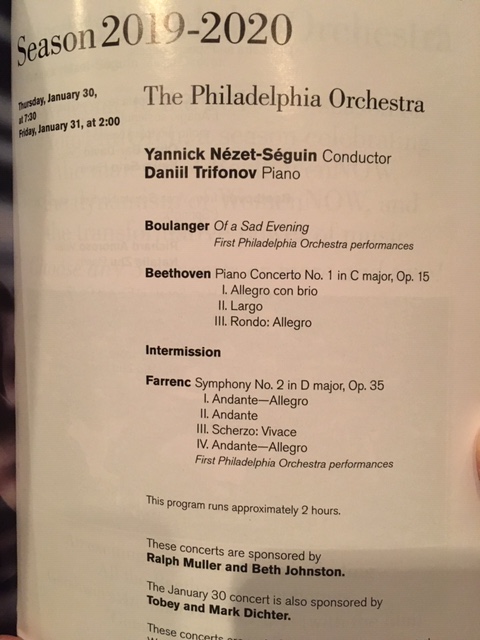
    Very interesting program at The Philadelphia Orchestra this weekend. Naturally, all promotions emphasize Trifanov and Beethoven (after all, they want to get butts in the seats), but I would like to shower the entire organization with rose petals for allowing the bulk of the concert to be devoted to music by Lili Boulanger and especially Louise Farrenc.

    If you’re unfamiliar with Farrenc, she was the only female professor at the Paris Conservatory in all of the 19th century. I have a preference for her Third Symphony, myself, but it was so good to be able to hear the Second performed live. It doesn’t always have to be Berlioz (her exact contemporary), for as much as I enjoy his music!

    Yannick, please check out Farrenc’s Symphony No. 3. And more adventurous programming, please! I understand the importance of new commissions for women composers, but there is still also plenty of worthwhile music by historical women that right now can only be experienced through recordings.

    The next time you have the urge to do Elgar, try your hand at Ethel Smyth. The overture to “The Wreckers” would make for a dynamic curtain-raiser. The “Serenade in D” is a symphony in all but name, with some pretty good tunes. If you prefer Czech, try Vítězslava Kaprálová. She inhabits a similar sound world to that of Martinu. And Poland’s Grazyna Bacewicz can stand toe-to-toe with just about any of the 20th century’s greatest composers.

    For the present, thank you, Philadelphia, for performing Boulanger and Farrenc. Now there are more, and perhaps even greater, treasures to be mined.

    As for the Beethoven concerto, of course the solo part held no terrors for Daniil Trifanov, the Rachmaninoff pianist du jour. But the orchestra also played with plenty of punch, under the muscular direction of Yannick Nézet-Séguin, and bubbled over with dynamism to the driving timpani of Angela Zator Nelson.

    The program is presented under the umbrella of the orchestra’s BeethovenNOW series. I’d be dismissive of the venture as a tired rehash of music that already gets raked over every year, all over the world, but if these musicians are energized by Beethoven the way they were on Thursday, then it will all probably be worth hearing, even by a jaded old bastard like myself. You can find more information at the orchestra’s website, philorch.org.

    PLEASE NOTE: For remaining performances of this particular program, tonight at 8 p.m. and tomorrow at 2 p.m., Trifanov will swap out Beethoven’s Piano Concerto No. 1 for the Piano Concerto No. 5, the popular “Emperor.”

    I am not able to access the review, since it’s paywalled, but if you already subscribe to the Philadelphia Inquirer, you can check out David Patrick Stearns’ impressions of the Thursday concert. From the headline, it looks as if he too was pleased to be able to hear Farrenc.

    https://www.inquirer.com/arts/philadelphia-orchestra-beethoven-now-daniil-trifonov-yannick-20200131.html

  • French Women Composers Rediscovered

    French Women Composers Rediscovered

    On this last Sunday of Women’s History Month, we travel to France on “The Lost Chord” for an hour of neglected music by female composers.

    We’ll hear from Augusta Holmès (1847- 1903), French composer of Irish ancestry. Holmès received encouragement from Liszt and Wagner, as well as multiple marriage proposals from Saint-Saëns (which she declined). She became a pupil of César Franck. It’s said that Franck’s Piano Quintet enshrines the teacher’s ardent longing for his student. Saint-Saëns, who participated in the work’s premiere, was not amused.

    Holmès will be represented by her symphonic poem “Andromède,” from 1883. Andromeda, as you may recall from Greek mythology, is at the receiving end of divine envy because of her extraordinary beauty. She is chained to a rock as a sacrifice to a sea serpent, but rescued from her fate by Perseus, who arrives just in the nick of time, astride the winged horse Pegasus and bearing the severed head of the Gorgon Medusa, with which he turns the serpent to stone.

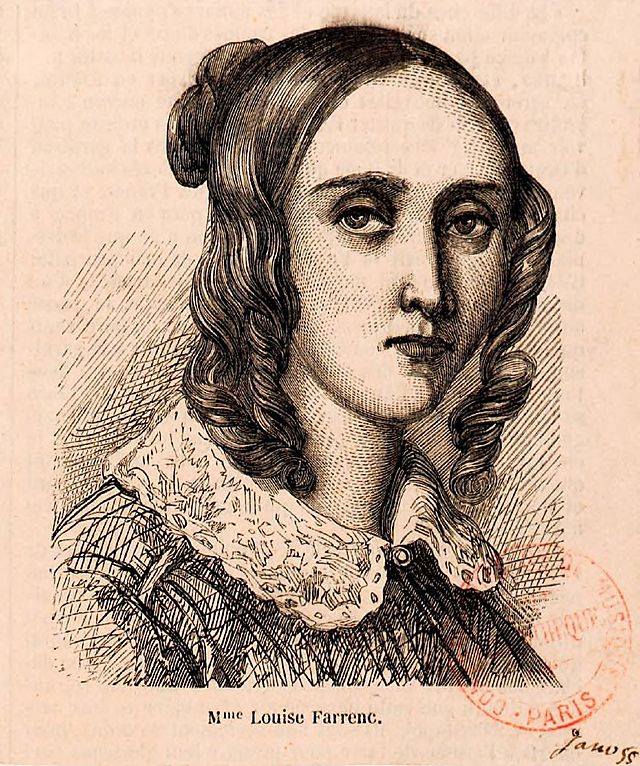
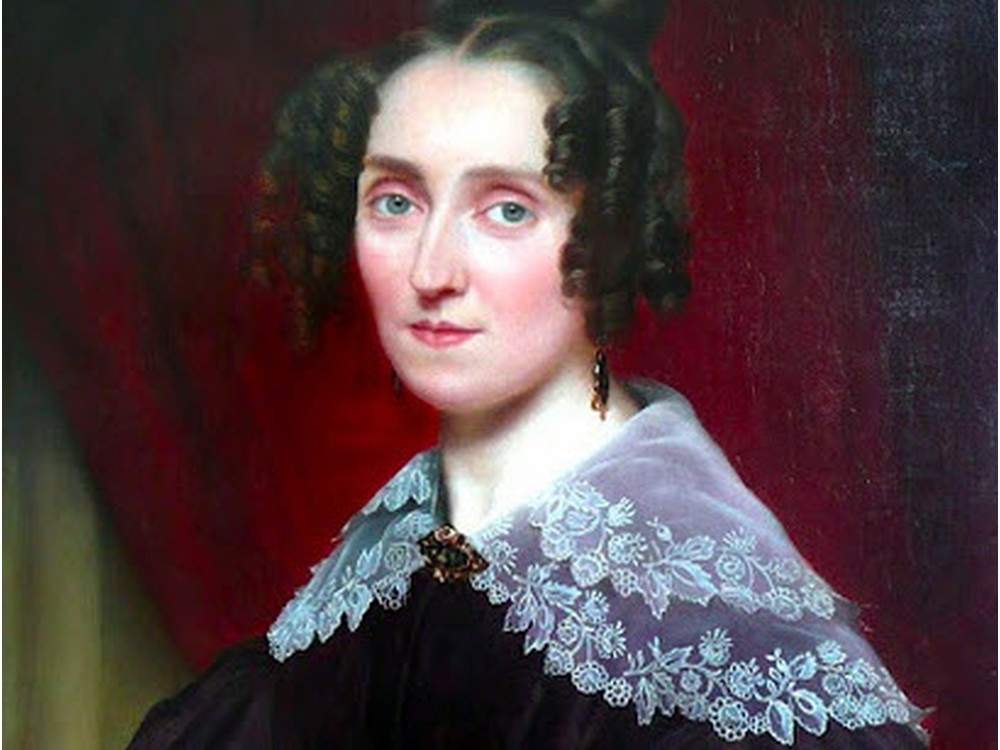
    Louise Farrenc (1804-1875) was remarkable for, among other things, being the only woman on the teaching faculty of the Paris Conservatory during the whole of the 19th century. Beginning in 1842, she served as professor of piano there for 30 years. Of course, she was only allowed to teach women. By the end of the first decade, her stature was such that she was able to demand – and receive – equal pay.

    A pupil of Moscheles (who taught Mendelssohn) and Hummel (who studied with Mozart), she also took composition lessons privately with Anton Reicha, who also taught at the conservatory. She paused in her career as a performer to start a successful publishing house, Éditions Farrenc, which flourished for nearly 40 years. Farrenc composed three symphonies. We’ll hear the third of those tonight.

    Finally, we’ll have music by Marie Gandval (1830-1907). Grandval studied with Flotow, then Chopin, and later Saint-Saëns. Saint-Saëns dedicated his Christmas Oratorio to her. She was the most frequently performed composer on concerts of the Société Nationale de Musique, which Saint-Saëns founded to promote orchestral music, underserved in opera-mad France, where orchestras were tied to the theatres. Grandval herself was a composer of opera and choral music, but we’ll have just enough time for “Deux pièces” for oboe, cello and piano.

    I hope you’ll join me for “Cherchez la Femme,” neglected music by French female composers, this Sunday night at 10:00 EDT, on WWFM – The Classical Network and at wwfm.org.

  • Forgotten Female Composers on WPRB

    Forgotten Female Composers on WPRB

    The “fair sex” wasn’t always treated so fairly. Join me this morning on WPRB, as we listen to neglected works by female composers, who labored at a time when the act of composition was still very much a man’s game.

    We’ll hear a symphony by the only female professor at the Paris Conservatory during the whole of the 19th century; a sizeable piece for piano and orchestra by a composer generally regarded as a miniaturist; music by a woman who tied with Ernest Bloch in a composition contest but finally gave up her creative aspirations due to general indifference to her work; and an assured “serenade” for orchestra by a suffragette who wouldn’t take no for an answer.

    It’s our musical salute to Women’s History Month, this morning from 6 to 11 ET, on WPRB 103.3 FM and at wprb.com. A woman’s place is in the concert hall, on Classic Ross Amico.


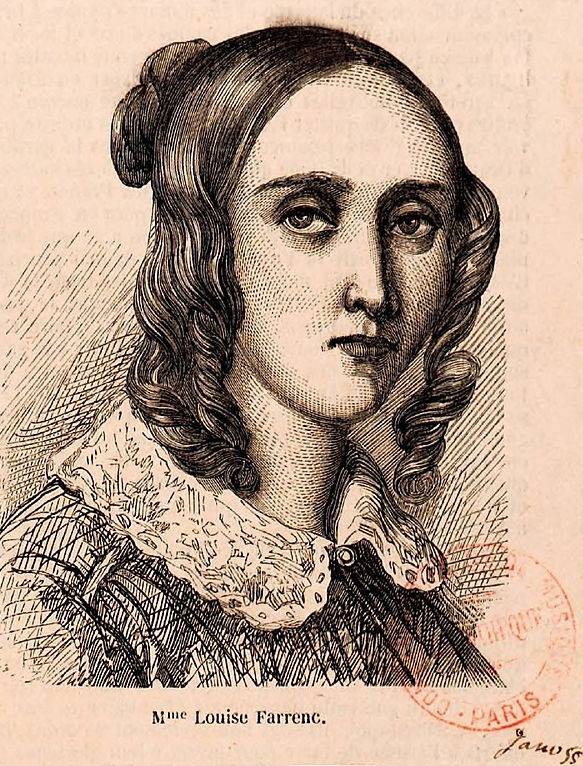
    PORTRAIT: Louis Farrenc was a professor of piano at the Paris Conservatory for 30 years, beginning in 1842. Of course she was only allowed to teach women…

  • Ernest Reyer Forgotten Wagner Rival

    Ernest Reyer Forgotten Wagner Rival

    While Debussy and the French Impressionists led a revolt against Wagnerism in music, there were others among their countrymen who were enthralled by the power of Wagner’s vision.

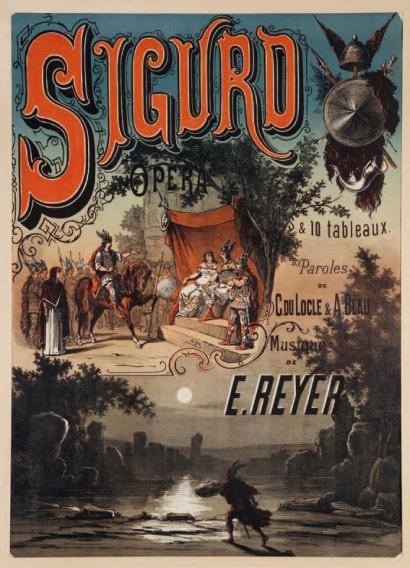
    One of these was Ernest Reyer (who was born Rey, but added the “er” to appear more Germanic). Reyer set his own version of the Siegfried story, as related in the Scandinavian Volsunga Saga, which, by way of the “Nibelungenlied,” also provided the basis for Wagner’s “Ring.” But Reyer’s approach to the tale was in the tradition of French grand opera.

    The resultant “Sigurd,” composed between 1862 and 1867, was very popular with the French during its initial production at the Paris Opera in 1885. Earlier plans to present it there had fallen through, so that the work received its world premiere in Brussels in 1884. It was also heard in Covent Garden, Lyon, Monte Carlo and, before the end of the century, the French Opera House in New Orleans and La Scala Milan.

    What’s interesting is that in the end Reyer’s music seems to bear more resemblance to Berlioz than it does to Wagner. Unable to live on the proceeds from his operas, he actually succeeded Berlioz as music ciritic at the Journal des débats.

    Reyer’s early musical studies were overseen by his aunt, Louise Farrenc, the only woman on the faculty of the Paris Conservatory (beginning in 1842!). He rubbed shoulders with Gustave Flaubert and Théophile Gautier (writing operas on texts of both), but he felt equally at home playing dominoes with the peasantry of Provencal. He claimed that the best source of inspiration was his pipe.

    Happy birthday Ernest Reyer (1823-1909).


    Overture to “Sigurd”:

    Sigurd’s entrance:

Tag Cloud

Aaron Copland (92) Beethoven (95) Composer (114) Film Music (123) Film Score (143) Film Scores (255) Halloween (94) John Williams (187) KWAX (229) Leonard Bernstein (101) Marlboro Music Festival (125) Movie Music (138) Opera (202) Philadelphia Orchestra (89) Picture Perfect (174) Princeton Symphony Orchestra (106) Radio (87) Ralph Vaughan Williams (85) Ross Amico (244) Roy's Tie-Dye Sci-Fi Corner (290) The Classical Network (101) The Lost Chord (268) Vaughan Williams (103) WPRB (396) WWFM (881)

DON’T MISS A BEAT

Receive a weekly digest every Sunday at noon by signing up here


RECENT POSTS