Tag: Mario Castelnuovo-Tedesco

  • Shakespeare’s First Folio 400th & Music

    Shakespeare’s First Folio 400th & Music

    2023 marks the 400th anniversary of the so-called First Folio, a collection of Shakespeare’s plays, published seven years after the author’s death and considered to be one of the most influential books ever issued.

    Although not quite on the same level of significance, this Sunday night on “The Lost Chord,” we’ll devote an hour to music inspired by the Bard – a topic which, of course, could fill many years of such programs – in observation of William Shakespeare’s birthday.

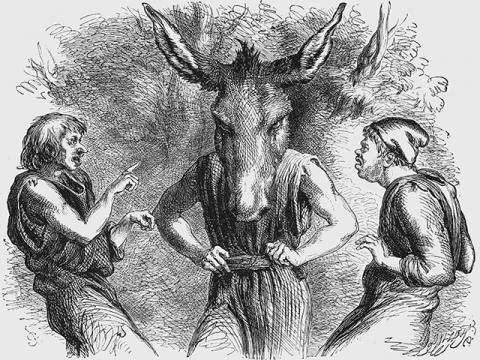
    First, fairy high jinks are a metaphor for the mutability and volatility of the human heart in “A Midsummer Night’s Dream.” We’ll hear two works inspired by Shakespeare’s pixilated comedy.

    English composer Walter Leigh (1905-1942) was killed in action during the Second World War, just shy of his 37th birthday. Like Paul Hindemith, who was his teacher for two years, Leigh thrived on writing music made to order for specific occasions. His incidental music for “A Midsummer Night’s Dream,” first played in open air in 1936, sounds like a throwback to the Restoration period.

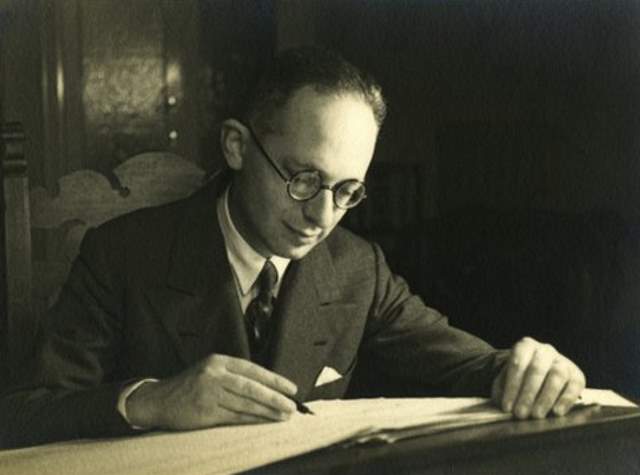
    Italian-born composer Mario Castelnuovo-Tedesco (1895-1968) fled fascism in Europe to settle in California. There, he wrote concertos for Jascha Heifetz, Gregor Piatigorsky and Andrés Segovia. He is particularly well-regarded for his guitar music, having composed nearly 100 works for the instrument. He also worked on about 200 film scores. As a teacher, his students included André Previn, Nelson Riddle, Herman Stein, Henry Mancini, Jerry Goldsmith, and John Williams.

    Over the course of his career, Castelnuovo-Tedesco churned out an extraordinary amount of music inspired by the Bard. He composed an opera after “The Taming of the Shrew,” four dances for “Love’s Labour’s Lost,” 33 Shakespeare songs drawn from the plays, and settings of 35 of the sonnets.

    Between 1930 and 1953, he wrote a number of overtures on Shakespearean themes – at least 11, enough to fill two compact discs, which have been issued on the Naxos label. His overture to “A Midsummer Night’s Dream” dates from 1940.

    Czech composer Josef Bohuslav Foerster (1859-1951) lived a very long life, during which he witnessed, firsthand, many remarkable events in music history. Born in Prague, Foerster worked as a critic in Hamburg, then moved to Vienna, where he became closely acquainted with Gustav Mahler.

    Although he occasionally employed in his works musical inflections of his native land, he wasn’t truly part of the Czech nationalist school embraced by Dvořák and others. Because his music is not as overtly Czech-sounding as some, and because he spent so much of his early career in Germany and Austria, Foerster’s output and reputation were embraced only gradually by his countrymen.

    He returned to Prague in 1918, with the establishment of the Czechoslovak Republic, and found employment there at both the conservatory and university. Gradually, he attained the status of “grand old man” of Czech music.

    He composed his symphonic suite “From Shakespeare” in 1909. Made up of four portraits of prominent female characters from Shakespeare plays, the work consists of a brief introduction, followed by musical meditations on Perdita (from “The Winter’s Tale”), Viola (from “Twelfth Night”), Lady Macbeth (from – well, you know), and finally, Katherina, Petruchio and Eros (from “The Taming of the Shrew”).

    I’ll provide the whipped cream and maraschino cherries. Bring your own straws for “Great Shakes” – celebrating William Shakespeare and 400 years of the First Folio – this Sunday night at 10:00 EDT, on WWFM – The Classical Network and wwfm.org.
  • Mario Castelnuovo-Tedesco: A Musical Journey

    Mario Castelnuovo-Tedesco: A Musical Journey

    Things had already been heating up for Mario Castelnuovo-Tedesco for some time. His music was banned from radio and performances of his works were cancelled, well before the passage of Italian racial laws in 1938. Castelnuovo-Tedesco was a Jew living in Mussolini’s Italy. He finally emigrated in 1939, when Arturo Toscanini, who loathed fascism, sponsored the composer’s passage to the United States.

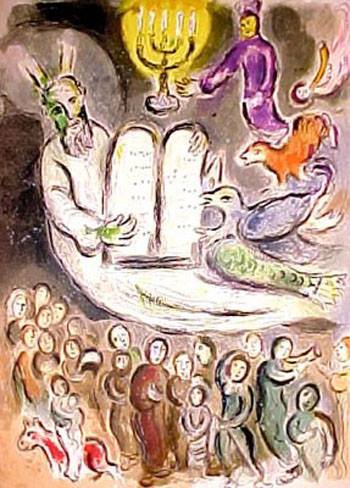
    Castelnuovo-Tedesco’s music was embraced by Jascha Heifetz and Andrés Segovia, among others. His Violin Concerto No. 2, “The Prophets,” was given its first performance at Carnegie Hall, with Heifetz the soloist and Toscanini on the podium, in 1933. Its three movements are named for the Biblical figures Isaiah, Jeremiah, and Elijah.

    I always make it a point to listen to this piece every year around Passover (which this year begins on Wednesday at sunset), but Castelnuovo-Tedesco is a composer whose music is unfailingly enjoyable in all seasons.

    Furthermore, anyone who loves film music owes an incalculable debt to him. He wrote music for some 200 movies (including “And Then There Were None,” with Barry Fitzgerald, and “The Loves of Carmen,” with Rita Hayworth), and as a teacher, his students included André Previn, Nelson Riddle, Herman Stein, Henry Mancini, Jerry Goldsmith, and John Williams.

    So thank you, and happy birthday, Mario C-T!


    Violin Concerto No. 2 “The Prophets”

    Segovia masterclass on the Guitar Concerto No. 1

    Radio interview with Segovia and the composer

    Toscanini conducts an adventurous program, including Castelnuovo-Tedesco’s “Overture to a Fairy Tale” (which, if I’m not mistaken, is the same as his “Midsummer Night’s Dream Overture”)

  • Passover Celebration on WWFM Today

    Passover Celebration on WWFM Today

    Pesach Sameach! Passover begins at sunset.

    Join me this afternoon, when among our featured works will be Mario Castelnuovo-Tedesco’s Violin Concerto No. 2, subtitled “The Prophets,” ballet music from Rossini’s “Moses,” and Wojciech Kilar’s “Exodus.”*

    We’ll also celebrate the birthdays today of conductor and composer Victor de Sabata, cellist and composer Auguste Franchomme, and pianist and composer Eugen d’Albert.

    Join me for an afternoon of unleavened entertainment, from 4 to 7 p.m. EDT, on WWFM – The Classical Network, and at wwfm.org.


    For more Passover music, join me tomorrow, immediately following the noontime concert (probably around 1:40 p.m.), for Paul Dessau’s oratorio “Haggadah shel Pesach.”

  • Fascism, Film Scores & “Lucia” Highlights

    Fascism, Film Scores & “Lucia” Highlights

    An Italian Jewish composer who fled fascism in Europe. A conductor who refused to apologize for his “robust leadership style,” and instead opted to resign from the Swedish Royal Opera. Both wound up in the United States.

    Mario Castelnuovo-Tedesco settled in Hollywood, where he continued to compose concert music for Andres Segovia and Jascha Heiftez and embarked on a side career of writing scores for films like “And Then There Were None” (1945) and “The Loves of Carmen” (1948).

    Sixten Ehrling took over the reins of the Detroit Symphony Orchestra from departing principal conductor Paul Paray. He also taught at the Juilliard School, where his pupils included Myung-Whun Chung, JoAnn Falletta, and Andrew Litton.

    I hope you’ll join me this afternoon, as we celebrate the birthdays of Castelnuovo-Tedesco and Ehrling, alongside that of American pianist Garrick Ohlsson.

    At 5:00, I’ll be joined by Jerry Kalstein and Dora Schnur of Boheme Opera NJ, who will tell us a bit about the company’s upcoming production of “Lucia di Lammermoor.” “Lucia” will be performed at The College of New Jersey’s TCNJ-Kendall Hall on Friday at 8 p.m. and Sunday at 3 p.m. To bookend our conversation, we’ll enjoy a couple selections from Donizetti’s opera, including the famous Act II sextet.

    Round out your workday and enliven your afternoon commute with great music from a variety of sources, from 4 to 7 p.m. EDT on WWFM – The Classical Network and wwfm.org.
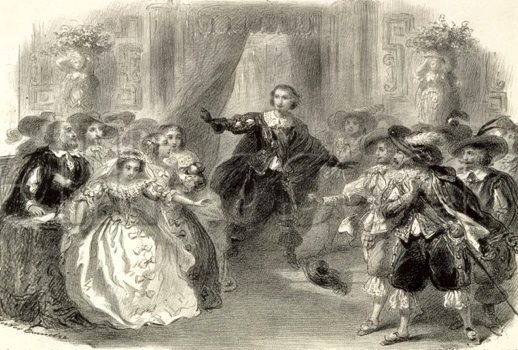

    Act I “Lucia” finale: Chi mi fren-etic

  • Shakespeare’s Dream Music on The Lost Chord

    Shakespeare’s Dream Music on The Lost Chord

    What fools these mortals be!

    Fairy high jinks become a metaphor for the mutability and volatility of the human heart, in “A Midsummer Night’s Dream.” This Sunday night on “The Lost Chord,” we’ll have two works inspired by Shakespeare’s pixilated comedy.

    English composer Walter Leigh (1905-1942) was killed in action during the Second World War, just shy of his 37th birthday. Like Paul Hindemith, who was his teacher for two years, Leigh thrived on writing music made to order for specific occasions. His incidental music for “A Midsummer Night’s Dream,” first played in open air in 1936, sounds like a throwback to the Restoration period.

    The Italian-born composer Mario Castelnuovo-Tedesco (1895-1968) fled fascism in Europe to settle in California. There, he wrote concertos for Jascha Heifetz, Gregor Piatigorsky and Andrés Segovia. He was probably best known for his guitar music. In all, he composed nearly 100 works for the instrument. During the war, he also worked on some 200 film scores.

    Over the course of his career, he churned out an extraordinary amount of music inspired by the Bard. He composed an opera after “The Taming of the Shrew,” four dances for “Love’s Labour’s Lost,” 33 Shakespeare songs drawn from the plays, and settings of 35 of the sonnets.

    Between 1930 and 1953, he wrote a number of overtures on Shakespearean themes – at least 11, enough to fill two compact discs, which have been issued on the Naxos label. He composed his overture to “A Midsummer Night’s Dream” in 1940.

    The Czech composer Josef Bohuslav Foerster (1859-1951) lived a very long life, during which he witnessed, firsthand, many remarkable events in music history. Born in Prague, Foerster worked as a critic in Hamburg, then moved to Vienna, where he became closely acquainted with Gustav Mahler.

    Although he occasionally employed in his works musical inflections of his native land, he wasn’t truly part of the Czech nationalist school embraced by Dvořák and others. Because his music is not as overtly Czech-sounding as some, and because he spent so much of his early career in Germany and Austria, Foerster’s output and reputation were embraced only gradually by his countrymen.

    He returned to Prague in 1918, with the establishment of the Czechoslovak Republic, and found employment there at both the conservatory and university. Gradually, he assumed the position of venerated “grand old man” of Czech music.

    He composed his symphonic suite “From Shakespeare” in 1909. Made up of four portraits of prominent female characters from Shakespeare plays, the work consists of a brief introduction, followed by musical reflections on Perdita (from “The Winter’s Tale”), Viola (from “Twelfth Night”), Lady Macbeth (from – well, you know), and finally, Katherina, Petruchio and Eros (from “The Taming of the Shrew”).

    I hope you’ll join me for “A Bier for the Bard” – commemorating the 400th anniversary of the death of William Shakespeare – this Sunday night at 10:00 EDT, with a repeat Wednesday evening at 6; or that you’ll listen to it later as a webcast, at wwfm.org.

    #Shakespeare400

Tag Cloud

Aaron Copland (92) Beethoven (95) Composer (114) Film Music (123) Film Score (143) Film Scores (255) Halloween (94) John Williams (187) KWAX (229) Leonard Bernstein (101) Marlboro Music Festival (125) Movie Music (138) Opera (202) Philadelphia Orchestra (89) Picture Perfect (174) Princeton Symphony Orchestra (106) Radio (87) Ralph Vaughan Williams (85) Ross Amico (244) Roy's Tie-Dye Sci-Fi Corner (290) The Classical Network (101) The Lost Chord (268) Vaughan Williams (103) WPRB (396) WWFM (881)

DON’T MISS A BEAT

Receive a weekly digest every Sunday at noon by signing up here


RECENT POSTS