Tag: Milton Babbitt

  • Milton Babbitt Beyond the Monster Myth

    Milton Babbitt Beyond the Monster Myth

    The headline read “Who Cares if You Listen?” And the notoriety was instant and long-lasting.

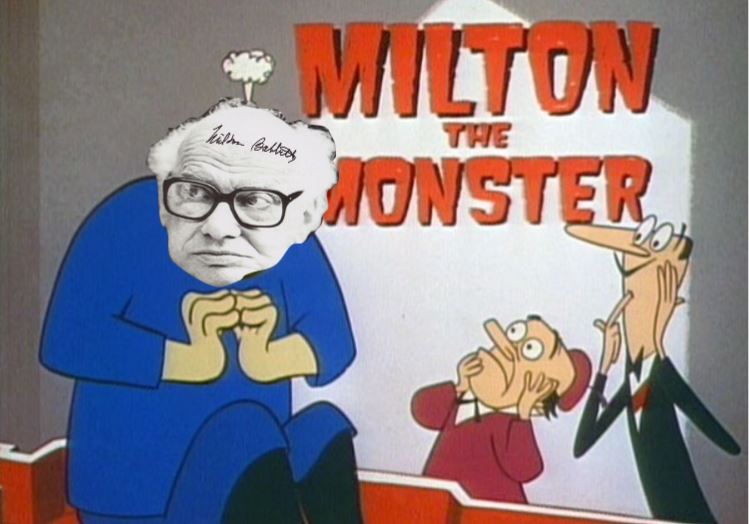
    All at once, Milton Babbitt was a musical monster.

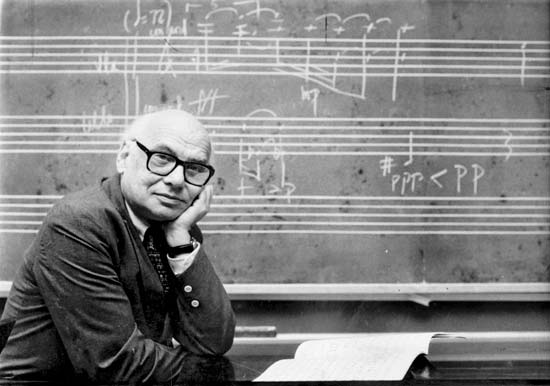
    Babbitt, a staple at Princeton University for many years, was born in Philadelphia on this date in 1916. He received lasting blowback from angry villagers wielding torches and pitchforks for an essay he wrote for High Fidelity magazine, which bore the title stated above.

    Unfortunately, the headline wasn’t Babbitt’s. It was actually an editorial decision. Babbitt’s original title had been “The Composer as Specialist” – not nearly as eye-catching or provocative. Today, we might describe it as clickbait. But it stuck like Karloff’s neck-bolts, as both a source of animation and a signal of abnormality, branding him in the eyes of the superstitious rabble as an outcast to be feared.

    Also, it is kind of arrogant.

    While it’s true that Babbitt frequently composed in a serial style, which might be off-putting to some coming to it for the first time, his music is often fairly lucid, without undo congestion and with a minimum of soul-crushing dissonances. On the contrary, he often achieved a paradoxical simplicity under the guise of complexity.

    In the 1960s, Babbitt became interested in electronic music, apparently for its rhythmic precision, as opposed to any unusual timbral considerations. I find it endearing that he was also fond of jazz and musical theater and that late in life he enjoyed a friendship of sorts with film composer John Williams. (They bonded over Bernard Herrmann.) His one-time student, Stephen Sondheim, characterized him as “a frustrated show composer.”

    Babbitt himself was a saxophonist. In 1946, he penned a musical, “Fabulous Voyage,” a retelling of Homer’s “The Odyssey.”

    Yes, we all have our off-days, but the lasting impression Babbitt left on his students and colleagues seems to be that he was largely a warm and personable human being. He loved Broadway, beer, and football. Simple pleasures for someone portrayed as so lofty, he didn’t give a hang if you listened.

    Babbitt was the recipient of an honorary Pulitzer Prize in 1982. He died in Princeton in 2011, at the age of 94.

    Listen to “Penelope’s Night Song” from “Fabulous Voyage” and tell me if it seems to you like the product of a rampaging monster.

    “Composition for Twelve Instruments” (1948):

    “Reflections” (1974) for piano and synthesized tape:

    Milton Babbitt on electronic music:

    John Williams talks Babbitt in The New Yorker

    https://www.newyorker.com/culture/persons-of-interest/the-force-is-still-strong-with-john-williams?fbclid=IwAR1gsLDyvvw7MFV_1NTP2OYNFwkYSOqHhiwBatZFtCT1FFYe4qWw6pt0Ems

    If you’re interested in learning more about Princeton’s important role in the history of computer music and haven’t done so yet, do check out this podcast, produced by the Princeton University Engineering Department.

    Composers & Computers, a podcast

    I profiled the podcast’s creator, Aaron Nathans, in September for the Princeton weekly U.S. 1.

    https://www.communitynews.org/princetoninfo/artsandentertainment/a-good-ear-for-stories-and-electronic-music-inspires-a-princeton-podcast/article_93780110-3384-11ed-93a9-1ba8b9106ed7.html?fbclid=IwAR0vF9aavdWS2hecaAE5XkVs62EOYFY9fFHcQYRVr1jReBT6_-WFPuPoyyg

    A refresher on “Milton the Monster”

    “Milton the Monster” Mixed Horror with Humor

    Happy birthday, Milton Babbitt!

  • Milton Babbitt’s Lost Film Score Rediscovered

    Milton Babbitt’s Lost Film Score Rediscovered

    Yesterday, in writing about experimental composer Milton Babbitt on his birthday, I remarked upon his softer side, as “a frustrated show composer” (according to Stephen Sondheim, a Babbitt pupil), a lover of jazz, an admirer of the film scores of Bernard Herrmann, and a friend of John Williams. I was interested to discover that Babbitt himself had scored a film, “Into the Good Ground” (1949), which also includes selections from Handel’s “Messiah” performed by the First Methodist Church Choir of Germantown, PA (a neighborhood in Babbitt’s hometown of Philadelphia).

    Whether or not you find the content agreeable – the film was produced by Pathescope for the Presbyterian Church and its publishing branch, Westminster Press, so you can expect a good sermon – it is very interesting to hear what Babbitt does with it. I find it very much in the tradition of the film work undertaken by Aaron Copland and Virgil Thomson for the WPA and Richard Arnell for the U.S. Department of Agriculture.

    I would love to hear the score free from the film, perhaps worthy of inclusion in the series of music for short subjects recorded by the PostClassical Ensemble (so far documenting works by Aaron Copland, Silvestre Revueltas, and Virgil Thomson)? You’ll find the albums on CD and freshly-recorded scores issued with the films on DVD at the link, all highly recommended.

    https://www.postclassical.com/discography

    There’s certainly plenty of other material out there, including Richard Arnell’s music for Robert Flaherty’s “The Land” and Ulysses Kay’s score for “The Quiet One.” It’s niche market, to be sure, but a fascinating corner of our musical heritage, now largely forgotten.

  • Milton Babbitt Serial Simplicity

    Milton Babbitt Serial Simplicity

    Who cares if you read this?

    Milton Babbitt, a staple at Princeton University for many years, was born in Philadelphia on this date in 1916. Babbitt gained widespread notoriety for an essay he wrote for High Fidelity magazine, titled “Who Cares If You Listen?” It turns out the provocative stance was actually the result of an editorial decision, and that Babbitt’s original title had been “The Composer as Specialist” – not likely to generate nearly as much controversy.

    While he frequently composed in a serial style, Babbitt’s music is often fairly lucid, without undo congestion and with a minimum of soul-crushing dissonances. On the contrary, he often achieved a paradoxical simplicity under the guise of complexity.

    In the 1960s, Babbitt became interested in electronic music, apparently for its rhythmic precision, as opposed to any unusual timbral considerations. I find it endearing that he was also fond of jazz and musical theater and that late in life he enjoyed a friendship of sorts with film composer John Williams. (They bonded over Bernard Herrmann.) His one-time student, Stephen Sondheim characterized him as “a frustrated show composer.”

    Babbitt himself was a saxophonist. In 1946, he penned a musical, “Fabulous Voyage,” a retelling of Homer’s “The Odyssey.”

    He was the recipient of an honorary Pulitzer Prize in 1982. Babbitt died in Princeton in 2011, at the age of 94.

    Listen here for “Penelope’s Night Song” from “Fabulous Voyage”:

    https://soundcloud.com/phillipc…/penelopes-night-song-from

    “Composition for Twelve Instruments” (1948):

    “Reflections” (1974) for piano and synthesized tape:

    Milton Babbitt on electronic music:

    John Williams talks Babbitt in The New Yorker

    https://www.newyorker.com/culture/persons-of-interest/the-force-is-still-strong-with-john-williams?fbclid=IwAR1-ndYl2wO4btjBdjgEBam70F8tEE7mLR51ykWmV5VHqb8ZcI5L_SgO5qI

    If you’re interested in learning more about Princeton’s important role in the history of computer music and haven’t done so yet, do check out this podcast, produced by the Princeton University Engineering Department.

    Composers & Computers, a podcast

    I profiled the podcast’s creator, Aaron Nathans, in September for the Princeton weekly U.S. 1.

    https://www.communitynews.org/princetoninfo/artsandentertainment/a-good-ear-for-stories-and-electronic-music-inspires-a-princeton-podcast/article_93780110-3384-11ed-93a9-1ba8b9106ed7.html

    Happy birthday, Milton Babbitt!

  • Princeton’s Lost Music: A Digital History

    Princeton’s Lost Music: A Digital History

    60 years ago, Princeton University engineers noticed members of the music department, staring agog at a recently-installed computer. It wasn’t long before a not-so-unlikely alliance was formed that helped to change history. New Jersey’s role in the creation of digital music is the subject of a new podcast, “Composers & Computers.”

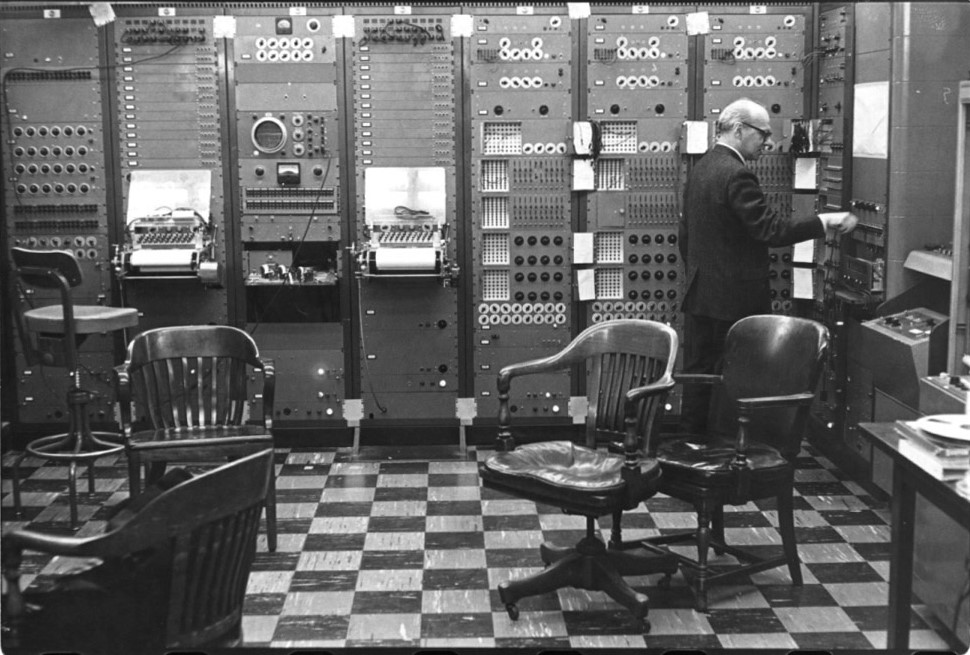
    The accessible, absorbing presentation illuminates the work of engineers at RCA Laboratories in Princeton in the 1950s, Princeton music faculty at the Columbia-Princeton Electronic Music Center in New York, and musicians who first entered the computer center in the Princeton University EQuad in 1962, with the intention of harnessing a new IBM 7090 to synthesize music.

    No less than 20 subjects were interviewed for the series, to create an oral history spanning six decades. Commentary, anecdotes, and insights are punctuated and underscored by samples of electronic music, from Milton Babbitt and Charles Wuorinen (his Pulitzer Prize-winning “Time’s Encomium”) to Stevie Wonder and The Beach Boys.

    Aaron Nathans, Digital Media Editor at Princeton’s School of Engineering and Applied Science, is the mastermind behind the podcast. He too is an interesting, multifaceted individual, who became the unexpected co-subject of an article I wrote for this week’s U.S. 1 Newspaper – PrincetonInfo.

    Learn more about electronic music pioneers Milton Babbitt, Godfrey Winham, Paul Lansky, Ken Steiglitz, and their colleagues and students, and the continued vitality of the Princeton computer scene as exemplified by the Princeton Laptop Orchestra and the multidisciplinary experimentation of Naomi Leonard and her “Rhythm Bots.”

    Look for the story in print in area vending machines and local businesses, or find immediate gratification here:

    https://www.communitynews.org/princetoninfo/artsandentertainment/a-good-ear-for-stories-and-electronic-music-inspires-a-princeton-podcast/article_93780110-3384-11ed-93a9-1ba8b9106ed7.html

    The “Composers & Computers” podcast, sponsored by Princeton University’s School of Engineering and Applied Science, can be heard on iTunes, Spotify, Google Podcasts, Stitcher, and other platforms. Show notes, including playlists, sources, rare photos, and podcast audio, are also available at https://engineering.princeton.edu/series/composers-computers-podcast


    ONCE UPON A TIME IN NEW YORK: Princeton composer Milton Babbitt at the Columbia-Princeton Electronic Music Center

  • Milton Babbitt a surprising composer

    Milton Babbitt a surprising composer

    In reading an interview with John Williams in The New Yorker only a few months back, I was amused to discover that he and Milton Babbitt enjoyed a friendship of sorts. I guess Babbitt was a Bernard Herrmann fan. Who knew?

    https://www.newyorker.com/culture/persons-of-interest/the-force-is-still-strong-with-john-williams

    Babbitt, who was born in Philadelphia on this date in 1916, was a fixture at Princeton University for many years. It’s telling that he joined both the music and mathematics faculties there. Later, he also served on the faculty of the Juilliard School.

    He gained widespread notoriety for his essay published under the title “Who Cares If You Listen?” The provocative slant was actually the result of an editorial decision. Babbitt’s original title had been “The Composer as Specialist” – not likely to generate nearly as much controversy.

    Broadly speaking, while he frequently composed in a serial style, his music is fairly lucid, without undo congestion, and with a minimum of soul-crushing dissonances. On the contrary, he often achieved a paradoxical simplicity under the guise of complexity.

    In the 1960s, Babbitt became interested in electronic music, apparently more for its rhythmic precision than for any unusual timbral considerations. I find it endearing to learn that he was also fond of jazz and musical theater. He himself was a saxophonist. In 1946, he penned a musical, “Fabulous Voyage,” a retelling of Homer’s “The Odyssey.”

    Babbitt was the recipient of an honorary Pulitzer Prize in 1982. He died in Princeton in 2011, at the age of 94.


    Listen here for “Penelope’s Night Song” from “Fabulous Voyage”:

    “Composition for Twelve Instruments” (1948):

    “Reflections” (1974) for piano and synthesized tape:

    Milton Babbitt on electronic music:

Tag Cloud

Aaron Copland (92) Beethoven (95) Composer (114) Film Music (123) Film Score (143) Film Scores (255) Halloween (94) John Williams (187) KWAX (229) Leonard Bernstein (101) Marlboro Music Festival (125) Movie Music (138) Opera (202) Philadelphia Orchestra (89) Picture Perfect (174) Princeton Symphony Orchestra (106) Radio (87) Ralph Vaughan Williams (85) Ross Amico (244) Roy's Tie-Dye Sci-Fi Corner (290) The Classical Network (101) The Lost Chord (268) Vaughan Williams (103) WPRB (396) WWFM (881)

DON’T MISS A BEAT

Receive a weekly digest every Sunday at noon by signing up here


RECENT POSTS