Tag: Milton Babbitt

  • Princeton Reunions Weekend Music on WPRB

    Princeton Reunions Weekend Music on WPRB

    Tomorrow, get ready for a ton of princely music on WPRB, as we kick off Princeton University Reunions Weekend with a morning full of works composed or performed by Princeton faculty and alumni.

    Needless to say, Princeton University has had an exceptionally rich musical history, between the mid-century experimentalists, the visiting professors and talented students from around the world, and at least two Pulitzer Prize winners (three if you count Milton Babbitt’s lifetime achievement award). The scene remains vibrant, and we’ll hear works representative of Princeton’s current faculty composers and performers. Music by Babbitt, Paul Lansky, Steven Mackey, and Roger Sessions will be presented cheek-by-jowl with that of Johann Sebastian Bach, Camille Saint-Saëns, Isaac Albéniz, and Benjamin Britten.

    We’ll have the eye of The Tiger, or at least his or her ear, as we present music composed and performed by Princeton University faculty and alumni, this Thursday morning from 6 to 11 EDT on WPRB 103.3 FM and wprb.com. Orange is the color of our true love’s hair, on Classic Ross Amico.


    You’ll find more about this year’s Reunions, including a complete schedule of events, when following this link:

    http://alumni.princeton.edu/goinback/reunions/2017/

  • Babbitt and Ballet on The Classical Network

    Babbitt and Ballet on The Classical Network

    Where else but on The Classical Network will you hear Milton Babbitt and Léo Delibes within a single afternoon?

    Today’s noontime concert will bring you Babbitt’s “All Set” for jazz ensemble, alongside works by Wolfgang Rihm, David Rakowski, Curt Cacioppo, Ingrid Arauco, and Robert Capanna, all performed by the Philadelphia-based Network for New Music.

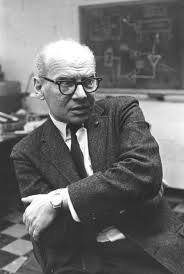
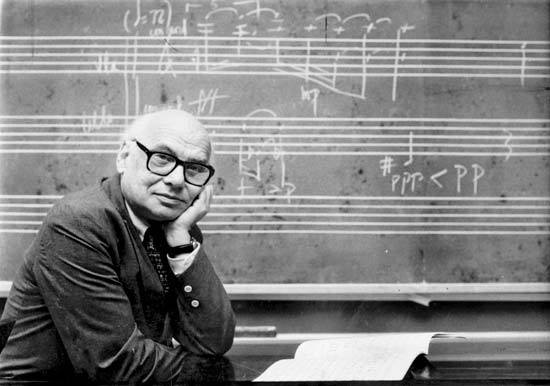
    Babbitt, a longtime faculty member at Princeton University, was born in Philadelphia in 1916. A pioneer of integral serial and electronic music, he became one of the most controversial of composers when an editor at High Fidelity magazine changed the title on an article he had submitted from “The Composer as Specialist” to the more inflammatory “Who Cares If You Listen?” Babbitt was incensed (the article was also aggressively edited), and his critics invoked the title whenever they sought an easy cudgel for the remainder of his career. Though not always easily understood, Babbitt was obviously brilliant and inspirational to generations of rising composers. He received numerous honors, including a Pulitzer Prize citation in 1982. Network for New Music did not shy away from celebrating Babbitt’s centenary during its 2015-2016 season.

    The next program of Network for New Music, now in its 32nd season, will be presented on two concerts, on Sunday at 3 p.m., at the Settlement Music School in Philadelphia, and on March 5 at 3 p.m., at Delaware County Community College’s Large Auditorium, located in the campus’ Academic Building. “Poetry through Music” will include works inspired by Friedrich Hölderlin’s novel “Hyperion,” either directly or by way of a new poem by Susan Stewart, with musical contributions by Georg Friedrich Haas, Gerald Levinson, Andrew Rudin, Eliza Brown, Benjamin Krause, Robert Capanna, and Ke-Chia Chen.

    Following the noon concert we’ll do a one-eighty and listen to one of the most ingratiatingly melodic ballets in the repertoire, a complete recording of Léo Delibes’ “Coppélia,” on this, Delibes’ birthday. Sure, “Coppélia” is overflowing with earworms that will ruin the rest of your day (and boy, do I hate the term earworm), but in actuality it is a terrible adaptation of one of the most effective of E.T.A. Hoffmann’s weird tales of mechanism and madness, a story called “The Sandman.” I prefer good old fashioned paper to reading online, but here’s a link, if you think it won’t take something away from it for you to read it on your computer.

    http://germanstories.vcu.edu/hoffmann/sand_e.html

    The anodyne libretto, by Charles-Louis-Étienne Nuitter, completely Disneyfies the subject matter, but Nuttier must have been on to something. 100 of his 500 libretti were produced, taken up by composers such as Offenbach, Lalo, and Lecocq. His opera translations from German and Italian into French were praised by Wagner and Verdi. He also worked as an archivist, though at the end of the day, it was the law that really paid the bills.

    I hope you’ll join me this afternoon for new music and mindless enjoyment, from 12 to 4 p.m. EST, on WWFM – The Classical Network and at wwfm.org.


    It will be Babbitt and ballet today on The Classical Network

  • NJ Fall Chamber Music Concerts Abound

    NJ Fall Chamber Music Concerts Abound

    With the autumn equinox only days away, chamber music concerts will soon be as numerous as the leaves on your front lawn.

    So Percussion, Concordia Chamber Players’ Chamberfest 2016, the Composers’ Guild of New Jersey’s Milton Babbitt marathon, Princeton University Concerts, McCarter Theatre Center’s classical series, the Downtown Concert Series in Freehold, 1867 Sanctuary at Ewing, the Lenape Chamber Ensemble, chamber music concerts by Riverside Symphonia, recitals by Westminster Choir College of Rider University and Westminster Conservatory of Music, English dances by La Fiocco, Baroque performances by The Dryden Ensemble, and the Guild for Early Music Festival at Grounds For Sculpture all lend color to the third part of my season overview in today’s Trenton Times.

    http://www.nj.com/times-entertainment/index.ssf/2016/09/classical_music_2016-17_concer_2.html

  • Milton Babbitt A Centennial Celebration

    Milton Babbitt A Centennial Celebration

    Today is the 100th anniversary of the birth of Milton Babbitt. Babbitt, born in Philadelphia, was a staple at Princeton University for many years. It’s telling that he joined both the music and mathematics faculties there. Later, he was also on the faculty of the Juilliard School.

    Babbitt gained widespread notoriety for an essay he wrote, titled “Who Cares If You Listen?” It turns out the provocative stance was the result of an editorial decision, and that Babbitt’s original title had been “The Composer as Specialist” – not likely to generate nearly as much interest.

    While he frequently composed in a serial style, his music is usually pretty lucid, without undo congestion and with a minimum of soul-crushing dissonances. In fact, his language could often attain a paradoxical simplicity amidst the appearance of complexity.

    In the 1960s, Babbitt became interested in electronic music, apparently for its rhythmic precision, as opposed to any unusual timbral considerations. I find it endearing that he was also fond of jazz and musical theater. He himself was a saxophonist. In 1946, he penned a musical, “Fabulous Voyage,” a retelling of Homer’s “The Odyssey.”

    Babbitt was the recipient of an honorary Pulitzer Prize in 1982. He died in Princeton in 2011, at the age of 94.

    Listen here for “Penelope’s Night Song” from “Fabulous Voyage”:

    “Composition for Twelve Instruments” (1948):

    “Reflections” (1974) for piano and synthesized tape:

    Milton Babbitt on electronic music:

Tag Cloud

Aaron Copland (92) Beethoven (95) Composer (114) Film Music (123) Film Score (143) Film Scores (255) Halloween (94) John Williams (187) KWAX (229) Leonard Bernstein (101) Marlboro Music Festival (125) Movie Music (138) Opera (202) Philadelphia Orchestra (89) Picture Perfect (174) Princeton Symphony Orchestra (106) Radio (87) Ralph Vaughan Williams (85) Ross Amico (244) Roy's Tie-Dye Sci-Fi Corner (290) The Classical Network (101) The Lost Chord (268) Vaughan Williams (103) WPRB (396) WWFM (881)

DON’T MISS A BEAT

Receive a weekly digest every Sunday at noon by signing up here


RECENT POSTS