Tag: Mozart

  • Bergman’s Enchanting “The Magic Flute”

    Bergman’s Enchanting “The Magic Flute”


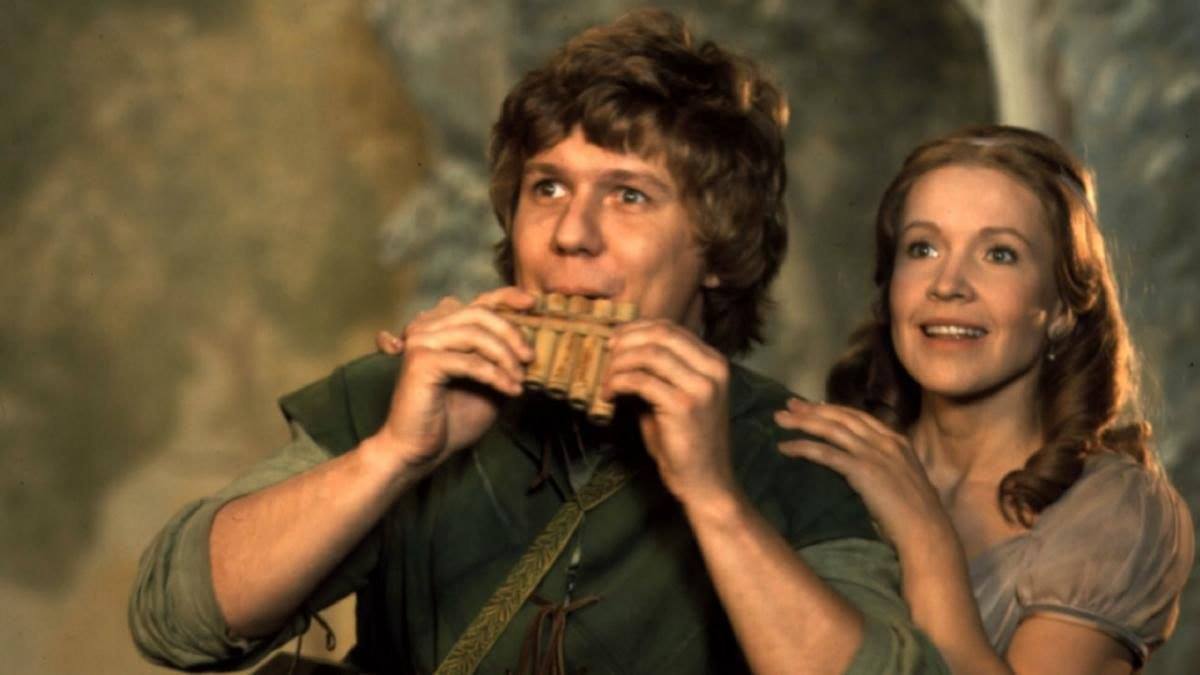
    From time to time, I guess even Ingmar Bergman needed a break from existential dread. How else to explain his delightful adaptation of “The Magic Flute?” Originally intended for television, Bergman’s playful and inventive 1975 film of Mozart’s 1791 singspiel had a lot to do with setting me on the path to become an opera lover.

    The conceit, to set the action as a live performance in the historic Drottningholm Palace Theater (a reproduction, since there were concerns about the actual theater safely accommodating a film crew), is disarming and inspired. All the stagecraft is laid bare. The scenery is evidently painted plywood, the animals are all people in suits, and the characters pause from time to time to hold up little signs with moralistic aphorisms on them as they sing their arias.

    Bergman’s film begins outside the actual theater and then enters the hall during the overture to register the facial expressions of a audience members as they anticipate the curtain rising. Most especially the camera lingers on the eager face of an impressionable young girl. It’s evident that the director would like us to experience it all from her perspective, through a lens of innocence.

    By contrast, we’re also taken backstage, to glimpse Papageno, fallen asleep and nearly missing a cue, Sarastro between acts studying the score to “Parsifal,” and one of Monostatos’ minions reading a Donald Duck comic book.

    Sure, there are moments of despair even here, as a couple of the characters contemplate suicide (we also get a memorable vision of hellfire), but it’s all dispelled in a decisive victory of good over evil, an endorsement of universal brotherhood, and a resolution of unalloyed joy.

    It was Mozart’s librettist, Emanuel Schikaneder, who suggested during rehearsals that Papageno stammer in excitement at the recognition of his desired Papagena, in their famous duet. Here’s what Bergman does with it.

    On Mozart’s birthday anniversary, I think it’s time to revisit this film.

    Behold! Here it is on YouTube.


  • Mozart’s Musical Heist Vatican’s Secret Unlocked

    Mozart’s Musical Heist Vatican’s Secret Unlocked

    When the 14 year-old Mozart perpetrated a daring theft from the most powerful institution in the world, there was no need to circumvent a laser grid by descending on cables from on high.

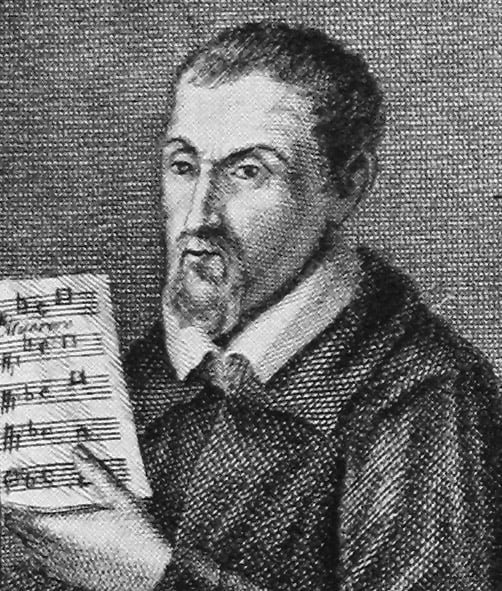
    Mozart and his father attended a Holy Week service at the Vatican in 1770. There, they encountered for the first time Gregorio Allegri’s haunting “Miserere.”

    Allegri composed his setting of Psalm 51 (50) in the 1630s. The piece was intended for exclusive performance in the Sistine Chapel, as part of the Tenebrae service of Holy Wednesday and Good Friday.

    Its conception is a striking one, with two choirs: one intoning a simple chant, and the other, spatially separated, providing ornamentation. The effect of a stratospheric top C makes the “Miserere” one of the most enthralling works in the choral literature of the late Renaissance.

    The Vatican, realizing it had a good thing, forbade performance of the piece or copies of the score to be circulated outside its walls, under pain of excommunication.

    It was Mozart who blithely liberated the piece, copying it down from memory and handing it off to author and music historian Charles Burney, who published it without delay.

    Mozart was summoned before the Pope, and rather than being excommunicated, he was showered with praise for his feat of musical genius. The ban on the “Miserere” was lifted.

    Mission accomplished!


    These portraits, of Allegri (left) and the teenage Mozart, will self-destruct in five seconds

  • Josef Mysliveček The Bohemian on Kanopy

    Josef Mysliveček The Bohemian on Kanopy

    I notice today is the anniversary of the birth of Bohemian composer Josef Mysliveček. Who, you say? Well, I suppose you have to have done a lot of classical radio to really know his stuff. An intimate friend of the Mozarts, Mysliveček in some ways laid the groundwork for Amadeus’ later masterworks. He was insanely popular in Italy and apparently quite a hit with the ladies.

    So yeah, his life fairly screams “motion picture,” but I can’t believe someone was actually able to get backers interested in the project. The resulting film, “The Bohemian” (2022), popped up in my Kanopy recommendations this weekend. I don’t know how it is where you are, but here you can sign up for the service free with your library card.

    It looks like total junk food, but you know I’ll be all over it. You might say, I’ll be Czeching it out soon.

    Happy birthday, Josef Mysliveček!


    “The Bohemian” on Kanopy

    https://www.kanopy.com/en/product/15033207

    The trailer

    Wind Octet No. 2 in E-flat major

    From the opera “L’Olimpiade”

    Cello Concerto in C major

    “Montezuma” (complete opera live)

  • Mozart, a Snow Plow, and Princeton Symphony

    Mozart, a Snow Plow, and Princeton Symphony

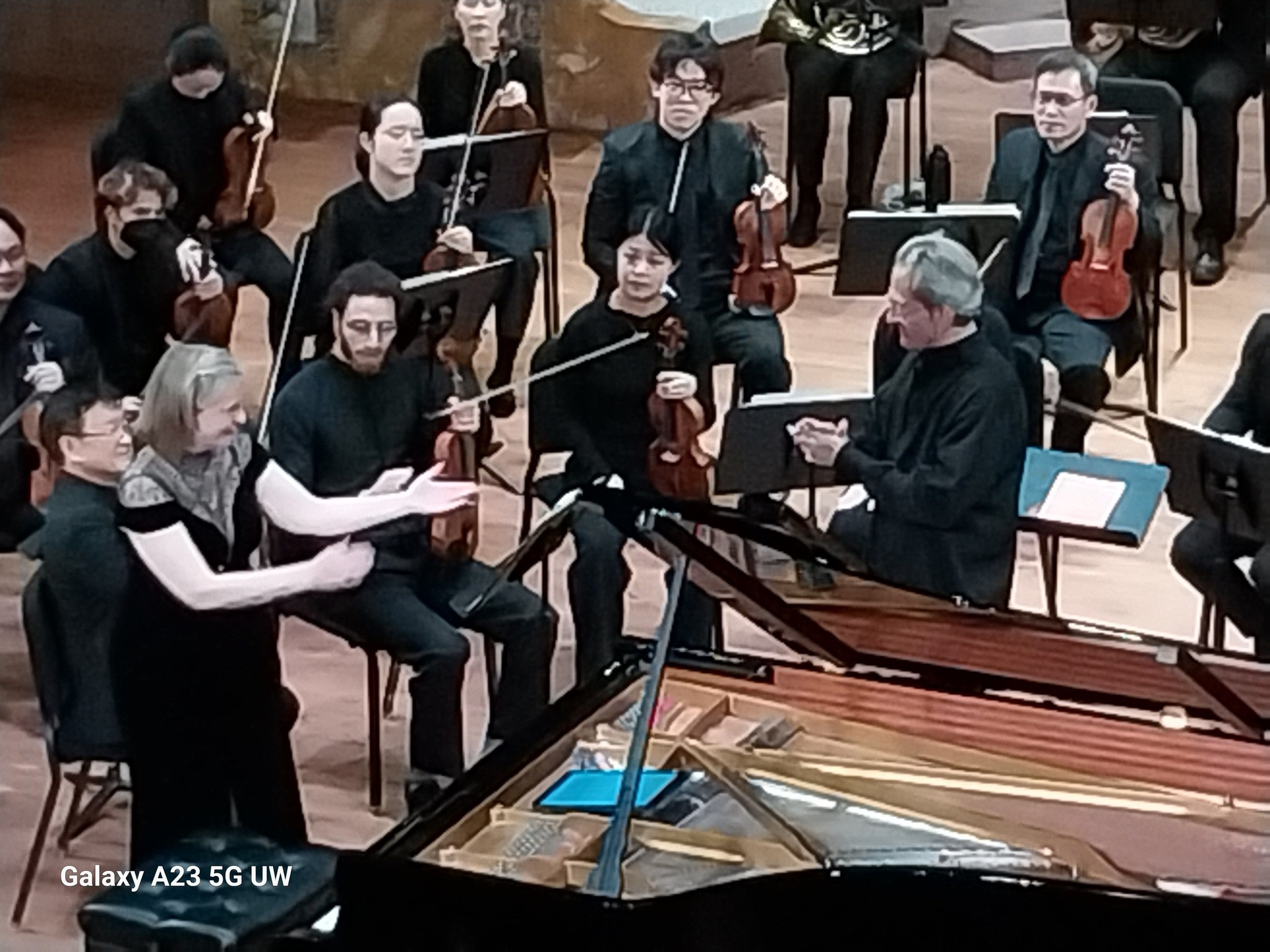
    Mozart’s masterful Symphony No. 39 is a marvel of classical invention. But not even HIS nimble imagination lit on the idea of including a snow plow.

    Last night, on the first of two concerts devoted to a program of the composer’s music, presented by the Princeton Symphony Orchestra at Princeton University’s Richardson Auditorium, a rumbling, scraping basso continuo underscored the work’s last two movements, as a wintry mix was cleared from the parking lot outside the venue. This was especially evident in the silence between movements, though briefly the truck’s back-up alarm did make for a disorienting John Cage-like tug-of-war between everyday and Elysium.

    Not everyone braved the weather last night, so a well-sold house was left with pockets of empty seats. A pity for those who couldn’t be there, as the music-making, on the concert’s first half, especially, was inspired and transporting, with plenty of warmth and glow to keep the sleet and slush at bay.

    Guest conductor Gérard Korsten, forgoing the standard-issue baton in favor of directing with his bare hands, oversaw the orchestra with energy and commitment. Whether I should be crediting him, the musicians, or the music, I’m not sure – perhaps all three – but whatever or whoever was responsible, all the tumblers aligned for some of the most satisfying Mozart I’ve ever heard from this group, which seldom disappoints, but is frequently more successful in Romantic and 20th century repertoire. (A gross generalization, as a concert they did with a barefoot Daniel Rowland that interleaved Vivaldi’s “The Four Seasons” with Astor Piazzolla’s “The Four Seasons of Buenos Aires” in 2016 continues to resonate in my memory.)

    The program opened with punchy and energetic ballet music from the opera “Idomeneo.” It came off so well, I was disappointed to find it was not the full 25-minute suite, but rather only two of the five numbers, with a combined running time of about 14 minutes. Too bad, because I really loved what I heard. The effect was like being awakened in the middle of a beautiful dream.

    But my yearning was short-lived, thankfully, as the highlight of the evening was surely the Piano Concerto No. 20 in D minor – one of only two piano concertos Mozart composed in a minor key – which pretty much fulfilled its ideal with soloist Orli Shaham. Like a poetic alchemist, Shaham turned ivories into pearls, for a performance that balanced the work’s drama and depth, honoring the emotion in the score’s nascent Romanticism while never betraying its Classical poise. The pianist has had a long history with the piece – it was the work that made her want to take up the instrument as a child – but somehow she has managed to keep it fresh and immediate, her involvement evident in every phrase. She silently mouthed passages and swayed to the music and even leaned into the first violins at times, as if to symbolize her sense of oneness with the orchestra. Truly, it was a thing of beauty (with apologies to Keats).

    One of the things I love about the Princeton Symphony Orchestra is how the wind players all actually listen to one another. Last night, principal clarinetist Pascal Archer, always full of animation, was characteristically the focal point of some very sensitive wind playing, musically linking arms with clarinetist Gi Lee and flutist Sooyun Kim; but all the winds – and I should include in this the brass (two horns and two trumpets) – were excellent.

    While the performance of the symphony as whole did not, for me, attain the giddy heights or emotional depth of the concert’s first half, there’s no question it was well-played. Putting principal percussionist Jeremy Levine on period kettle drums may have been a nod to 18th century practice, but authenticity be damned, I missed the anchor of a strong downbeat as those strings rain their torrents of joy!

    Kudos, though, to trumpeters Jerry Bryant (principal) and Thomas Cook, who throughout the evening were consistently fine, both in uniformity and execution – impeccable in their restraint, when necessary – in both “Idomeneo” and the last movement of the symphony. If I could play the trumpet, I would always be tempted to play so that the walls of Jericho would crumble.

    As I know I’ve mentioned before, the prospect of an all-Mozart program seldom gets me excited, but the repertoire, soloist, and conductor for this one filled me with anticipation. It gave me pleasure to set aside my deep-seated cynicism, if only for an evening.

    The program will be repeated, without freezing rain, today, Sunday, at 4 p.m. I suspect tickets really will be scarce. But, who knows, if last night is any indication, there could be a number of stay-at-homes. You can try your luck at princetonsymphony.org.
  • Mozart Overexposure and Rediscovery

    Mozart Overexposure and Rediscovery

    I’m a jaded old bastard, but a fair one, I hope, so I’ll be the first to admit I haven’t always given Mozart a fair shake. There have been times when I’ve had the privilege to attend an all-Mozart concert, and I’ve taken a look at the program and rolled my eyes. What a jerk thing to do. One of the greatest composers who ever lived, whose gift to posterity has been one of sublime beauty, and I’m that ungrateful? The fault, dear Brutus, is not in Mozart, but in myself.

    Part of the problem is that he’s so damned overexposed. Mozart is everywhere. How often in movies has “Eine kleine Nachtmusik” been used as shorthand to signify stuffy lawn parties thrown by the snooty rich? Yet, as a teenager, the music delighted me so, I remember bringing the record with me to school. (The bulk of the album was devoted to the “Jupiter” Symphony.)

    Mozart makes our babies smarter. He’s had chocolates named after him. He’s underscored romantic interludes in “Elvira Madigan” and jealous rivalry in “Amadeus.” He’s reminded prisoners of the persistence of beauty in “The Shawshank Redemption.” His music has been used to sell cars, sneakers, and coffee. It’s been quoted, sampled, and parodied. It’s been assimilated into a collage of our collective cultural detritus.

    On the surface, It’s so easy to digest. And there’s nothing wrong with that. Much of our greatest art tends to appeal on more than one level. It’s accessible on first acquaintance, but it’s also capable of conveying more profound truths. The more you live with it, the more it reveals. That’s what makes it “classic.”

    Beneath the enchanting veneer of beauty, conjured with seeming inevitability – an ordered universe, always fresh, out of the Enlightenment – Mozart reminds us of our humanity, plumbing emotional depths and scaling spiritual heights, affirming the meaning of our existence in manner that cannot be captured in words, all the while delighting the ear.

    The first opera I really got to know (after devouring Gilbert & Sullivan) was “The Magic Flute.” The last concert I ever heard with my mother was of the last three symphonies. I’d go so far as to say that “The Marriage of Figaro” saved my life. For an entire month, I had the great good fortune to work as an intern on a professionally staged production with some major singers, and I got to know the score extraordinarily well. The music was like a life buoy tossed to me across the centuries at a time I struggled to keep my head above choppy waters. To this day, it remains my favorite opera.

    Of course, Mozart has been around for a long time, and as human beings, one of our more regrettable attributes is that even the most breathtaking vistas tend to lose their grip on our attention if we see them every day. We decorate our walls with artwork and pictures and memorabilia, but how often do we notice them? We play music on the radio, but how often do we focus enough to truly listen? It’s nice to have these things in our lives, of course. They lend color to a workaday existence. But we tend to be creatures of the moment, and it doesn’t take much to divert our attention.

    Mozart, we are undeserving of your gifts. Thanks for everything, and happy birthday.

Tag Cloud

Aaron Copland (92) Beethoven (94) Composer (114) Film Music (116) Film Score (143) Film Scores (255) Halloween (94) John Williams (185) KWAX (228) Leonard Bernstein (99) Marlboro Music Festival (125) Movie Music (131) Opera (197) Philadelphia Orchestra (86) Picture Perfect (174) Princeton Symphony Orchestra (106) Radio (86) Ralph Vaughan Williams (85) Ross Amico (244) Roy's Tie-Dye Sci-Fi Corner (290) The Classical Network (101) The Lost Chord (268) Vaughan Williams (99) WPRB (396) WWFM (881)

DON’T MISS A BEAT

Receive a weekly digest every Sunday at noon by signing up here


RECENT POSTS