Tag: Netflix

  • “Frankenstein”: It’s Alive

    “Frankenstein”: It’s Alive

    From some of the computer-generated chaos at the start, I was afraid I wasn’t going to like Guillermo’s del Toro’s “Frankenstein.” I guess I’m still smarting from Robert Egger’s remake of “Nosferatu.” But here my concerns were misplaced. As writer and director, Del Toro definitely puts his own spin on the source material, yet he manages to honor Mary Shelley’s 1818 classic. More importantly, the movie is full of heart. I don’t want to get anyone’s hopes up, but I wound up actually really liking it.

    I hasten to add, Del Toro’s approach is more Shelley than Karloff, even though he turns a lot of the original novel on its head. Don’t go into it expecting any “scares.” This is a movie that explores the nature of humanity and man’s overweening desire to push into the unknown without considering the morality of doing so or assuming responsibility for the consequences. It is, after all, “Frankenstein.”

    But these underpinnings are not simply brushed aside so that the filmmakers can get on with the killings, as is the case with so many of the movies. It has one of two gruesome moments, for sure, but the lens doesn’t linger. Rather, it is a thoughtful, literary, even philosophical movie, with layers of allusions and symbols that fit hand-in-surgical glove with the narrative.

    Oscar Isaac plays the haughty, frustrating scientist, Shelley’s “modern Prometheus,” as maddening as he is mad. His rearing of his creation proves here to be the product of cyclical abuse. The theme is skillfully assimilated and has a nice payoff. Tragedy is woven right into the story, of course, but this is one Frankenstein movie that actually leaves one with a glimmer of hope. Del Toro has loved this story – and “the creature” – since childhood, and clearly he’s internalized everything. Like Victor Frankenstein himself, he’s discovered the source of its life; but unlike Victor he also recognizes its soul.

    I have no idea who Jacob Elordi, who plays the creation, is, but he is a wonder. His performance makes the movie. I note he’s also going to be playing Heathcliff in an impending, overheated adaptation of “Wuthering Heights,” with Margot Robie trading on her “Barbie” good will. From the trailer, it looks as if it totally misses the point of Emily Bronte’s novel. But here, Elordi is excellent. As with “The Shape of Water,” Del Toro proves that he can be much more than simply a technical director, eliciting fine performances from his leads.

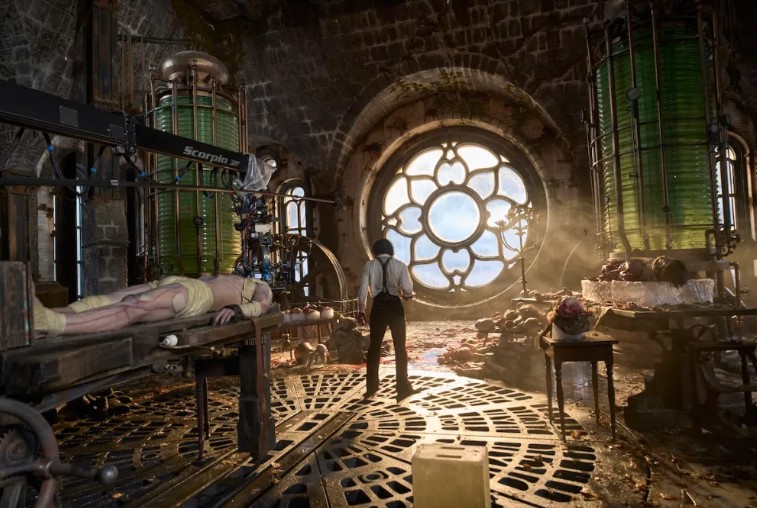
    That said, I would be remiss if I didn’t also mention how sumptuous a production this is. Every detail is fully realized, from the vibrant costumes to the outrageous and eyepopping sets, digital or otherwise. The lavish estates, the streets of Edinburgh, the frozen battlefields, the Thomas Eakins medical theater, the steampunk lab, and the arctic wastelands all look fabulous, often operatically stylized, but all of a piece. The production design more than compensates for a few moments of shaky CGI, with cartoonish flying bodies and pouncing wolves.

    Why, oh why, aren’t they making it easier for people to see this in a theater? This practice of showing a film for a very limited run in just a few venues so that it qualifies for Academy Awards consideration before consigning it to streaming on Netflix as “content” is more monstrous than anything in the movie.

    Beyond the all-too-rare experience these days of enjoying the film on a big screen with an engaged audience, it was such a pleasure to be able to sit there during the end credits and to be able to ruminate on what I had just witnessed to Alexandre Desplat’s evocative score. That is a part of the moviegoing experience that is so tragically undervalued in the streaming age. So much of a movie’s impact is cemented in those few minutes at the end, when you just allow it all to sink in.

    I hope you will follow my advice and don’t google anything about it, if you haven’t done so already. It’s best to experience it fresh. It’s a beautiful movie, visually and emotionally alive, with good performances, and I highly recommend it.

    “Frankenstein” comes to Netflix tomorrow, but if you can see it in a theater, go.
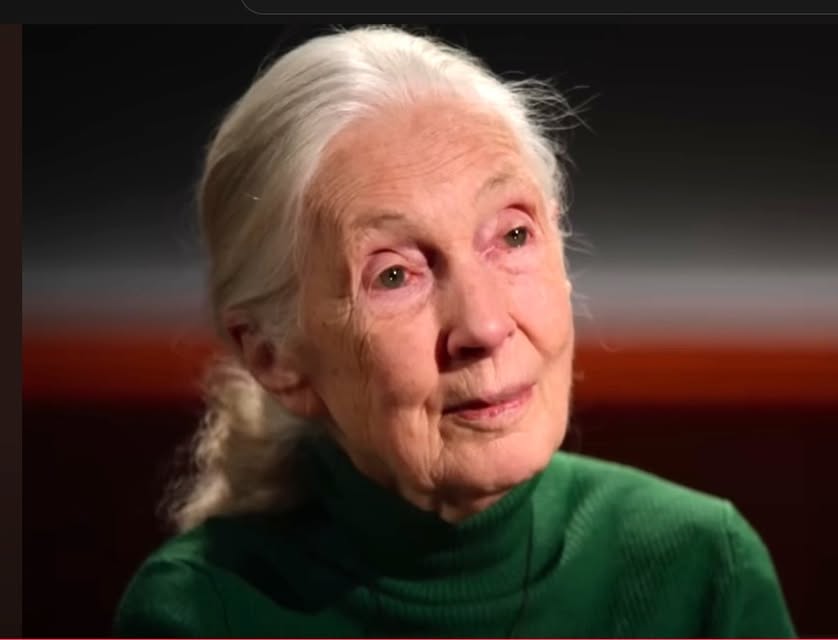
  • Jane Goodall Good for All

    Jane Goodall Good for All

    If you have Netflix and you haven’t watched this yet, you should. It’s 55 minutes very well spent. The interview was recorded with the specific intention to offer it for streaming after Jane Goodall’s death.

    There are few surprises – she was a genuinely good person, and a wise one – but she’s magnetic in her serenity and honesty and insight. In particular, her true last words, after the interviewer gets up and leaves the room at the end and she’s left alone with the remotely-operated cameras, are important for everyone to hear. I don’t care what political axe you may have to grind, if any. If you aren’t touched by her humanity, I am sorry for you.

    I’ve refrained from saying anything about her death, because it’s outside the arts and not really in my wheelhouse – but it is, really, since her mission was always a holistic one and what happens to any of us affects all of us, human or animal.

    Don’t react to anything you may have read in the press or on social media about what she says in the interview. There’s too much tendency in the modern world to have kneejerk reactions to soundbites. Real life isn’t tabloid news, and Jane encourages us to really listen to one another. I hope you will watch and listen and really take it all in.

    There’s no questioning that hers was a life well-lived. I hope her vision of what the Hereafter may hold for her spirit has come to pass. If anyone has earned it, she has.


    Just a clip from “Famous Last Words: Dr. Jane Goodall”:

    On Netflix here:

    https://www.netflix.com/title/82053197

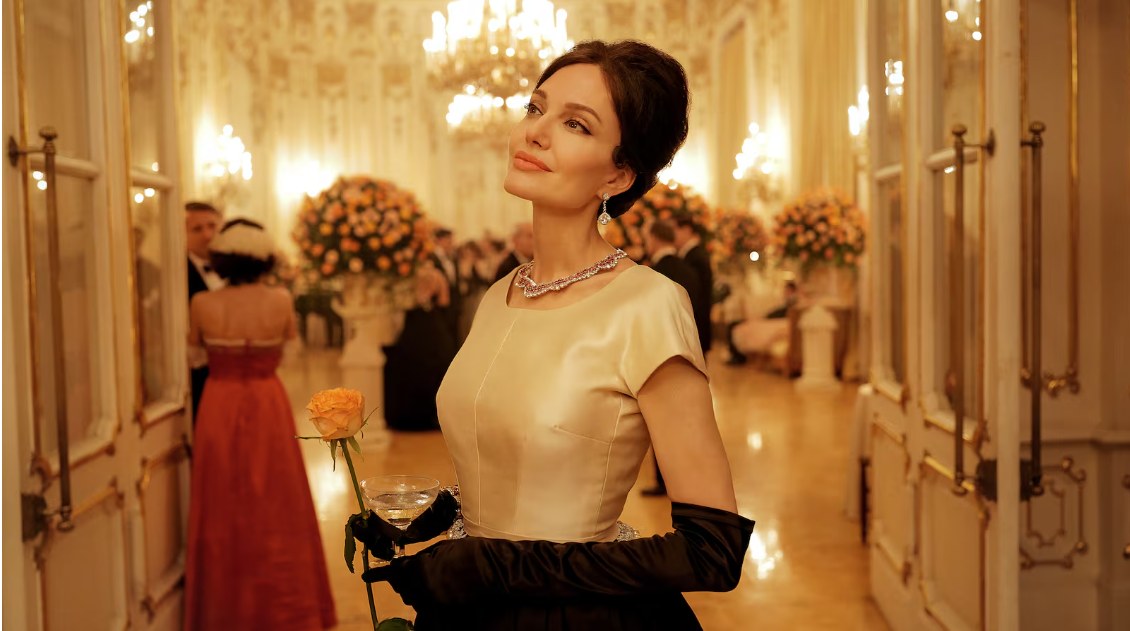
  • Maria Review Angelina Jolie Can’t Save This Callas Biopic

    Maria Review Angelina Jolie Can’t Save This Callas Biopic

    “Maria” is a kind of film that might have been made in the 1960s. Ordinarily, I would mean that as a compliment. Unfortunately, anything that would have once been considered experimental about it was explored more successfully, iconically even, by Fellini and others, over a half century ago. (I just looked up the director, Pablo Larraín, and in 2012, for a poll conducted by Sight & Sound magazine, he named “8 1//2” as one of his favorite films.) In any case, it would have been impossible to make this particular picture back then, since its subject is the last week of the life of super-diva Maria Callas, who died on September 16, 1977. As it stands, it’s a film that too often trades in empty technical exercises and clichés. It doesn’t come across so much as homage as been-there, done-that.

    The pills, the ego, the faded glamor – we’ve seen it all before, only here it’s an opera singer, instead of a rock and roll legend. Elvis Presley died on August 16, exactly one month before Callas did. Most Callas portrayals tend to include something of her caustic manner and imperious nature (see Terence McNally’s “Master Class”). But was she really so much of a Norma Desmond figure? (“Sunset Boulevard” is another one of Larraín’s favorite films.)

    “Maria” has been described as the third in Pablo Larraín’s “Important Women Trilogy” (somebody has to come up with a better name), following “Jackie” (2016), about the grieving Jacqueline Kennedy – whose life, of course, intersected with Callas’, by way of her marriage to Aristotle Onassis – and “Spencer,” about Princess Diana (2021). None of these are straight bio-pics. Rather, they attempt to get at their subjects’ psychological states through artistic means.

    I can’t speak for the success of the others (which I have not seen), but “Maria” rings fairly hollow (not unusual, alas, for films about musicians). That said, Natalie Portman and Kirsten Stewart were both nominated for Oscars for their respective portrayals, which bodes well for Angelina Jolie. Hollywood loves its own, and here Jolie stretches far enough beyond audience expectation that she can’t help but be noticed.

    To be fair, the film does have some good performances (Jolie’s included, given the material she has to work with, her distracting lip injections aside). But it’s generally the quieter parts, the less-flashy ones, assumed by an international cast, that inspire the more satisfying turns. “Maria” is a coproduction of independent film companies in Italy, Germany, England, and the United States, with additional footage shot in Hungary and Greece. Remember when Hollywood used to actually produce these kinds of films?

    Pierfrancesco Favino and Alba Rohrwacher (both Italian) leave lasting impressions, especially the former, as Callas’ long-suffering butler and housemaid, respectively. Haluk Bilginer (Turkish) plays Aristotle Onassis; either that, or a lecherous George Burns. Anyway, he has a good death scene. Stephen Ashfield (Scottish) appears as conductor Jeffrey Tate, minus the spina bifida (perhaps the filmmakers feared blowback if they had attempted such a portrayal?), who I never realized until now bore such a likeness to Elton John. (He didn’t.) There’s also a fabricated conversation with JFK, played by Caspar Phillipson (Danish), all jaw, with a quasi-Kennedy coif, reprising his role from “Jackie.” (Callas did sing at Kennedy’s Madison Square Garden birthday reception in 1962, perhaps upstaged by Marilyn Monroe’s rendition of “Happy Birthday, Mr. President,” also depicted in the film.)

    Kodi Smit-McPhee (Australian) has the most thankless role as Mandrax (named for a drug Callas abuses), a journalist who follows Callas sporadically throughout the film with the conceit of filming a documentary about her. Except he’s an hallucination. The narrative is divided into three parts signified, with an unnecessary and self-reflexive flourish, by the clack of a clapperboard and digitally-added signs of wear and tear, manufactured artifacts of the celluloid era. It works in Alexander Payne’s “The Holdovers.” Not so much here. The whole meta conceit is eye-rollingly pretentious, more like something that would have been perpetrated by a film student as opposed to a director with ten previous films under his belt. The fantasy sequences are similarly trite and come across as the kinds of things that used to turn up in rock videos (for example, an orchestra playing fragile acoustic instruments in the pouring rain).

    I found some of the musical choices, when Callas isn’t on stage, more unconventional, a little peculiar even. I understand this is the world of opera, but often it seems as if the dramatic off-stage moments are somewhat randomly scored with familiar passages. The “Humming Chorus” from “Madama Butterfly” the “Anvil Chorus” from “Il trovatore,” the prelude to “Parsifal.” Yes, Callas sang in these operas, and I may be nitpicking, but she didn’t sing in the choruses, and in the case of “Parsifal,” though she performed a surprising amount of Wagner early in her career, she never sang Kundry after 1950. In any case, it’s not the repertoire that endures in most people’s memories as quintessential Callas. And what’s with the Brian Eno?

    Most unfortunate, the film never successfully manages to convey the Callas mystique. Lest there be any doubt, “Maria” concludes with a montage of genuine footage of Callas herself. She never speaks a word, yet it’s evident from her few minutes of screen time that the filmmakers were unable to capture her essence.

    Tom Volf’s documentary from a few years ago, “Maria by Callas” (2017), gives a much better sense of who she was, through actual performances, TV interviews, home movies, family photographs, private letters, and unpublished memoirs, most of which had never been shown to the public.

    Often during the last half hour or so of “Maria’s” 2 hour and 5 minute running time, I felt like surely it was about to end. Not out of boredom, necessarily. It just felt dramatically as if the film had run its course.

    And in the name of all that’s holy, what’s the deal with the heinous and pervasive practice of these streaming services cutting off their movies mid-credits? It’s bad enough that the movies aren’t given the respect of nationwide theatrical releases anymore (Netflix does its films a disservice in not presenting them in an environment in which a viewer can be totally immersed, as opposed to giving in to an ice cream craving or nodding off on the couch), but whatever immersion one is able to achieve at home is shattered by being jerked out of a sustained illusion of reality that’s been so painstakingly crafted over two or three hours. It’s a frustrating experience, and I am tired of railing against Netflix, Hulu, Tubi, etc., every time it happens.

    It’s especially frustrating in the case of “Maria,” as I was curious to see the microscopic music credits at the end. (No, they’re not listed on IMDB.) So I had to go back, start the movie, and fast-forward through the entire thing again. Thanks, Netflix.

    Anyway, you can add this to the mountain of classical music movies that just don’t get it. Too often “Maria,” the film, comes across as an exercise in style over substance, something that its subject, Callas the artist, never was.

    Watch the film’s trailer here:

    Then that for the superior “Maria by Callas”

  • Extraordinary Attorney Woo: A Korean Delight

    Extraordinary Attorney Woo: A Korean Delight

    Tired of the unrelenting grimness of American entertainment in the 21st century? So am I.

    The last place I would have ever expected to find an antidote is South Korea – especially after the Academy Award winning nightmare that was “Parasite.” Nevertheless, that’s exactly what’s happened. “Extraordinary Attorney Woo” is the sunniest, sweetest, most humane television series I have encountered in a long, long, LONG while.

    The premise has Woo Young-woo, a brilliant rookie attorney with autism spectrum disorder, enter a major firm in Seoul. Her forthright manner and character quirks are at first disconcerting to her colleagues and clients, but Attorney Woo always proves herself to be the smartest person in the room. She’s endearing in her guilelessness, funny and painful in her obliviousness to social cues, and loveable to her core. Furthermore, she is obsessed with whales, and prone to launch into spontaneous soliloquies about them. Every episode contains an “aha” moment, when suddenly she’s struck by a winning insight into a particularly sticky case. Her hair blows back from her face, the epiphany captured in euphoric slow-mo, as the camera glides over her shoulder to metaphoric visions of dolphins playing and whales breaching.

    I’m not sure how the autism community has reacted to this show, but I think it’s great. It’s engagingly written, uniformly well-acted, and beautifully filmed, with lots of light and hope suffusing its world. All the characters are so well-drawn. I love how even the most Machiavellian among them have their redemptive moments.

    If you liked the Tony Shalhoub series “Monk,” about the detective with obsessive compulsive disorder, I think you’ll enjoy this. But even more importantly, it will make you feel good about the world and good about people.

    Given the premise, you might expect it to inspire some reflection on the challenges of living with autism. But the show is also revelatory in that it demonstrates that life, law, and love in Seoul function much the same as they do here. These people could be my neighbors. I WANT them to be my neighbors.

    Why do I literally have to search halfway around the globe to find top-quality entertainment with some humanity? From South Korea, no less, which abuts an unstable nuclear power. What do we have to complain about here? We’re neighbors with Canada! And yet, you’d think from our entertainment that the U.S. is the most miserable hell hole on the face of the planet.

    If there’s a lesson to be gleaned from Attorney Woo, it’s that the world offers many insights and rewards to those who are able to step outside and approach things from another perspective.

    If you have access to Netflix, definitely check this one out. And if there is a choice between dubbed and subtitles, go with the subtitles. The voices and line deliveries are essential to the performances. Every episode is chock full of smiles and tears. But in a good way, not in a sardonic, ironic, bleak, nihilistic way. I’m generally not a “TV” guy, but I have to say, the 16 episodes of “Extraordinary Attorney Woo” is time well-spent. It’s easily the best thing I’ve seen in the past year.

    The inspirational and touching score is by Noh Young-shim. Here’s the show’s opener.


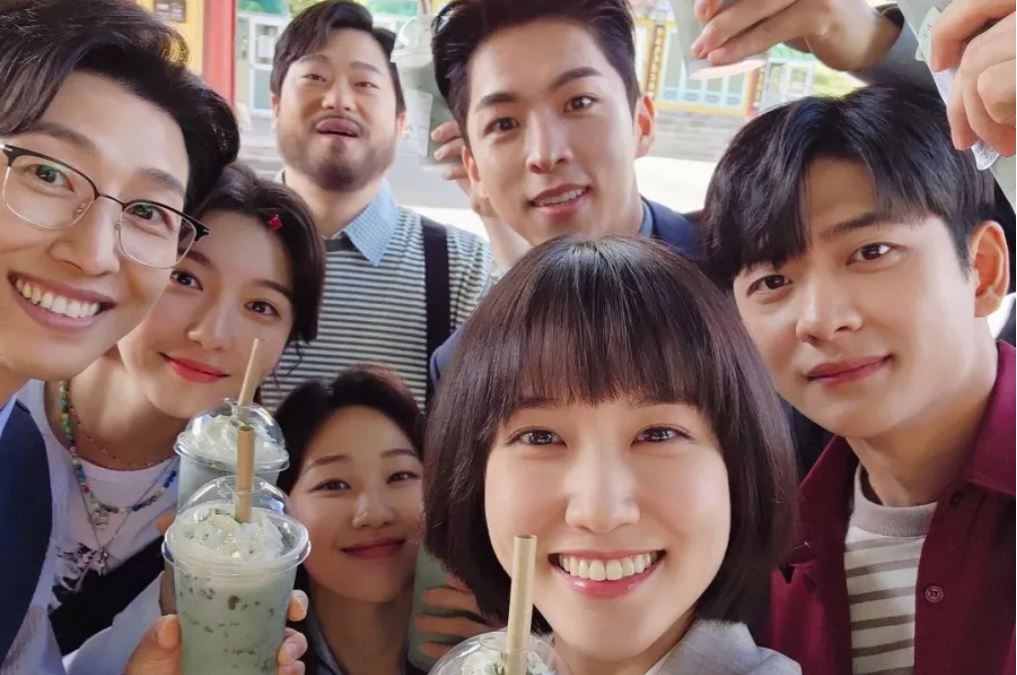
    PHOTO: The cast of refreshing “Woo,” enjoying some refreshment

  • Bathtubs Over Broadway: Hidden Musical Gems

    Bathtubs Over Broadway: Hidden Musical Gems

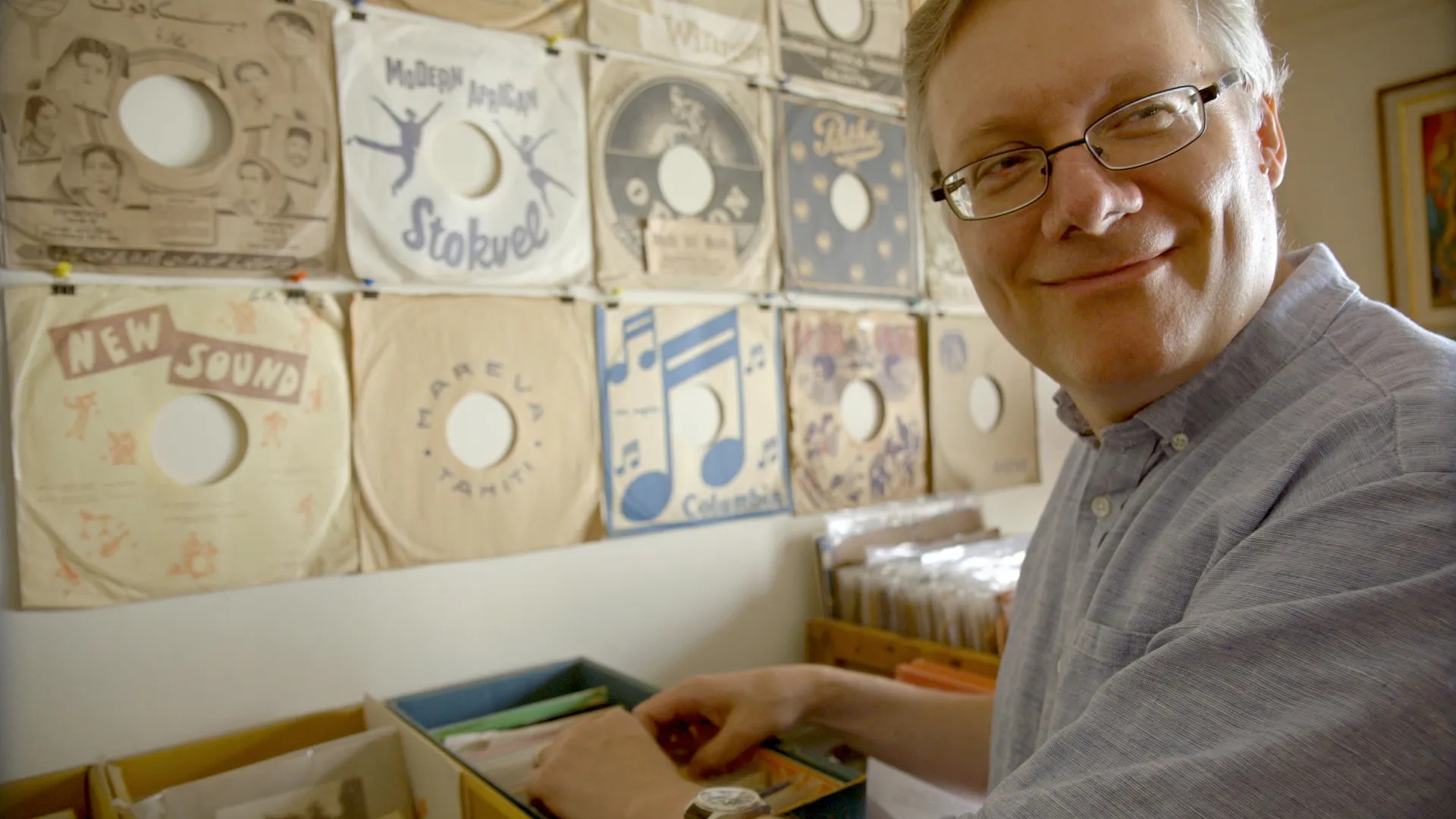
    A couple of weeks ago, one of my prolific music searches brought me to a strange corner of the internet that introduced me to film that was released in 2018 that somehow I had never heard of. Superficially, “Bathtubs Over Broadway” is a documentary about a comedy writer for “The Late Show with David Letterman” who, through his perpetual search for weird LPs to be used as gags on the show, unlocks a world previously unknown to him – that of the industrial musical.

    Industrial musicals were commissioned by America’s great corporations, extolling the magnificence of their products, whether they be tractors, dog food, or bathroom appliances, to be performed as one-offs at national or even regional sales conventions as morale boosters for its employees – mainly hardworking salesmen with unglamorous jobs that often kept them away from the suburban, nuclear family-occupied, pastel homes they were supporting.

    The money and talent lavished on these “shadow musicals” is staggering. The budgets eclipsed those of some of Broadway’s biggest hits. The actors and composers, a number of them future Tony winners, were all drawn from the same pool. Bob Fosse, Tommy Tune, Chita Rivera, Florence Henderson, Tony Randall, Bob Newhart, Hal Linden, Ed McMahon, Martin Short, and the creative forces behind “Fiddler on the Roof,” “Cabaret,” and “The Producers” all worked in industrial musicals. They were lavishly rewarded, I might add. And yet, very few people know of the existence of genre.

    Even if you think you don’t find the subject matter appealing, the film works on multiple levels. It goes without saying that it’s a must for musical theater enthusiasts. But hardcore collectors will totally get the mania of “the quest” and smile knowingly at Steve Young’s encounters with the few quirky people in the world who happen to share the focus of his own particular insanity.

    Furthermore, he makes it his mission to track down a number of the performers and creative artists who actually worked on these musicals. These encounters blossom into real-life friendships, lending the proceedings an unexpected warmth and even poignancy.

    It also makes for fascinating social history. Like any artistic or pop cultural development, the industrial musical holds a mirror to and reflects the realities of the time – in this case, a lost America of the 1950s and ‘60s.

    The entire film is an agreeable 90-minutes well-spent. And I must say, the out-of-left-field meta ending is absolutely perfect.

    I caught it on Netflix a couple of weeks ago. You can watch the trailer here:

    https://www.bathtubsoverbroadway.com/

    “Life can be so rich and wonderful when we step off the logical path and embark on eccentric adventures.” Ain’t that the truth.

Tag Cloud

Aaron Copland (92) Beethoven (95) Composer (114) Film Music (123) Film Score (143) Film Scores (255) Halloween (94) John Williams (187) KWAX (229) Leonard Bernstein (101) Marlboro Music Festival (125) Movie Music (138) Opera (202) Philadelphia Orchestra (89) Picture Perfect (174) Princeton Symphony Orchestra (106) Radio (87) Ralph Vaughan Williams (85) Ross Amico (244) Roy's Tie-Dye Sci-Fi Corner (290) The Classical Network (101) The Lost Chord (268) Vaughan Williams (103) WPRB (396) WWFM (881)

DON’T MISS A BEAT

Receive a weekly digest every Sunday at noon by signing up here


RECENT POSTS