Tag: Netflix

  • Stranger Things 4: Jumped the Shark, Still Good

    Stranger Things 4: Jumped the Shark, Still Good

    Season 4 of “Stranger Things” breathtakingly jumped the shark in innumerable ways. And yet somehow it remained compellingly watchable. Once I was able to get into it, that is. And I have to say, all the classical music on the soundtrack was a very nice bonus.

    I’m aware that the latest season dropped on Netflix some time ago (in two “volumes,” on May 27 and July 1), but after watching the underwhelming first episode – which, for me, ventured a little too eyerollingly into CW Network-style teen angst – I wound up taking a prolonged break. I tune in to “Stranger Things” for the calculated ‘80s nostalgia and monsters from the Upside-Down, thank you.

    Fortunately, at the urging of friends, I finally took it up again in earnest, and sure enough, yet again I found myself caught up in its icky tendrils. It’s been the pattern with this series that there’s been a kind of slow burn at the start that belies the relentless insanity to come. Hats off to the Duffer Brothers, the show’s creators, for their willingness to gamble big, because for as ludicrous as the whole thing has become, they’ve managed to take the series in some truly unexpected directions, while remaining true to its core.

    If you’re unfamiliar with the series, one of its most charming characteristics is the way it raids the pop culture of the 1980s (Steven Spielberg, Stephen King, Dungeons & Dragons and, this season especially, “A Nightmare on Elm Street” and “Poltergeist” ) and rearranges it in fresh ways. Actor Robert Englund, Freddy Krueger himself, has a pivotal cameo.

    The episode that allows everything that’s been presented in the first three seasons to be viewed in a totally different light (from multiple perspectives, even) is a knockout. But I always go in for that sort of thing when it’s done well. Admittedly, not everyone does. I was one of the few who was delighted with the topsy-turvy “Back to the Future Part II.”

    Tonally, Season 4 is all over the place, but that’s kind of become a “Stranger Things” hallmark. Even as the stakes are impossibly high, it’s not afraid to go goofy. For most of its 13-hour running time, the show kept me engaged and laughing.

    And what do you know, in this series driven by demons, conspiracy theory, and the paranormal, the KORNGOLD VIOLIN CONCERTO gets a major showcase in Episode 6, when the gang shows up in Salt Lake City to enlist a computer hacker. Her household turns out to be a mash-up of the kinds of theatricals once staged by the Bronte siblings and the March sisters. Wild children cavort with swords and bows-and-arrows and ruffed collars and pasted-on mustaches, while on a portable record player on the floor spins an LP of Korngold’s concerto.

    According to the show’s timeline (set in 1985), it would have to be either the Heifetz or Perlman recordings, since I believe those were the only performances available then. But I’m skeptical as to whether or not the creative team was so scrupulous as not to employ a recording of more recent vintage. Of course, now the concerto is in the repertoire of every major violinist.

    Erich Wolfgang Korngold, a former prodigy from Vienna, came to Hollywood in the 1930s, where he achieved wider popularity with his swashbuckling film scores for Errol Flynn classics like “Captain Blood,” “The Adventures of Robin Hood,” and “The Sea Hawk.”

    For the average viewer, Kate Bush, Metallica, and Ella Fitzgerald will probably leave the biggest impressions, but Season 4’s soundtrack also sports selections by Verdi, Puccini, Bach, Debussy, Tchaikovsky, and Philip Glass, with Paisiello’s opera “Nina” a major influence on the plot that few will catch. These days, you can’t get much stranger than that!


    Heifetz plays the last movement of Korngold’s Violin Concerto
  • The Crown’s Missing Musician Scandal

    The Crown’s Missing Musician Scandal

    In my post of November 21, 2019, having just watched the first episode of the third season of the Netflix series “The Crown” – the one with a subplot involving Sir Anthony Blunt, Surveyor of the Queen’s Pictures – I wondered, as the timeline crept into the ‘70s and ‘80s, if writer-creator Peter Morgan might include a reference to Malcolm Williamson.

    Williamson, also from the world of the arts, brought further scandal to the Royal Family as a notoriously unreliable Master of the Queen’s Music.

    Since the 17th century, musicians have been appointed Master with the expectation that they would supply music for important milestones in the lives of the Royal Family and for ceremonial occasions. Past Masters of the Queen’s (or King’s) Music have included John Eccles (who served four monarchs), William Boyce, John Stanley, Sir Edward Elgar, Sir Arnold Bax, and Sir Arthur Bliss.

    When Williamson, Australian by birth, was named Bliss’ successor in 1975, already there was grumbling among his peers. Sir William Walton suggested the appointment was politically motivated, a means of “cementing the cracks in the Commonwealth.” Williamson had his share of personal demons, to be sure. He was prone to anxiety and depression, and he was certainly no stranger to the bottle. In his later years, he suffered a series of strokes.

    Unfortunately, he was also horrible with deadlines. He failed to complete a symphony in time for the Queen’s Golden Jubilee in 1977, and his ambitious “Mass for Christ the King,” also intended for the occasion, was delivered late. Significantly, he became the first Master in over a century not to receive a knighthood.

    Following his death in 2003, the parameters of the post were revised. No longer is the appointment to be one for life, but rather for a fixed, ten-year term. The current master is Judith Weir. Weir was appointed in 2015. She is the first woman to hold the position (and yes, she is still referred to as “Master”).

    Alas, having concluded Season 4, I am sorry to say, I detected no reference to Williamson in “The Crown.” Even an exasperated aside, delivered to the Queen, about another unfulfilled commission would have been welcome. But understandably the season was more concerned with the drama surrounding Diana Spencer and an uncanny performance by Gillian Anderson as Margaret Thatcher.

    There was, however, a nice “Easter egg” for classical music aficionados in Episode 8, the episode in which press secretary Michael Shea is given a prominent role. Shea was also a writer of books, and the episode opens with him seated at his typewriter, tapping out the conclusion to his latest literary effort. Nearby, on a turntable, spins Peter Maxwell Davies’ “Farewell to Stromness.”

    Maxwell Davies would serve as Master of the Queen’s Music from 2004 to 2014. He was the first to serve under the new guidelines. An amusing choice since, if anything, Max was an even more colorful figure than Williamson – if perhaps better about meeting deadlines.

    Throw “The Crown” in a blender with “Mozart in the Jungle,” cast Malcolm McDowell as Max, and THAT would be the show I’m looking for.

    Here’s hoping for a cameo in a future episode.


    “Farewell to Stromness”

    An arrangement of the piece was played at the wedding of Charles and Camilla in 2005.

    Max’s String Quartet No. 8, with its allusions to Dowland, dedicated to the Queen on the occasion of her 80th birthday:

    “Kings and Shepherds,” a carol for the Queen:

    Of course, Max gained notoriety in the 1960s for works like “Eight Songs for a Mad King,” inspired by George III.

    Decades later, in 2010, when the police showed up at his door after a protected swan struck a power line over his property in the Orkney Islands, Max invited them in – and offered them swan terrine.

    Only mad Max would set Purcell to a foxtrot. Love the suggestions of the Victrola running down, having to be cranked up, and then the stylus swishing around at the end.


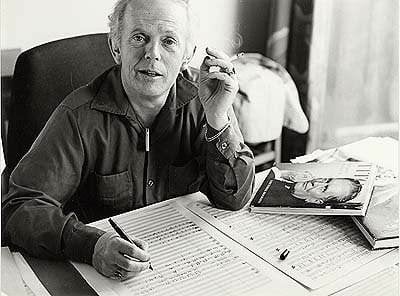
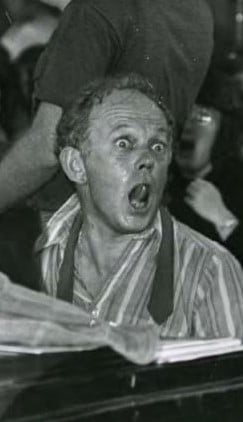
    PHOTOS: Wild Williamson (left) and Mad Max in 1973

  • The Crown: Will Malcolm Williamson Appear?

    The Crown: Will Malcolm Williamson Appear?

    With Netflix having “dropped” (or made available for streaming) its third season of “The Crown,” and with the first episode having already included a subplot involving Sir Anthony Blunt, Surveyor of the Queen’s Pictures, one can only hope for an appearance by Malcolm Williamson.

    If you haven’t seen the series, and you’re a little rusty on your Royals history, I’ll leave it at that, re: Blunt, but suffice it to say that there is plenty of drama inherent in Williamson’s relationship to Buckingham Palace.

    Malcolm Williamson was installed as Master of the Queen’s Music in 1975. Since the 17th century, musicians have held the post with the expectation that they would write music for important milestones in the lives of the Royal Family and for ceremonial occasions. Past Masters of the Queen’s (or King’s) Music have included John Eccles (who served four monarchs), William Boyce, John Stanley, Sir Edward Elgar, Sir Arnold Bax, and Sir Arthur Bliss. The appointment is an honor, to be sure, but the responsibility brings with it a certain amount of pressure.

    When Williamson, Australian by birth, was named the successor to Bliss in 1975, there was grumbling among his colleagues. Sir William Walton attributed the choice to a utilitarian need for “cementing the cracks in the Commonwealth.” He confided to Sir Malcolm Arnold (who most certainly would have brought his own set of problems) that “they had got the wrong Malcolm.” Arnold, a sporadically brilliant composer, was also a manic depressive (and possibly bipolar), who survived alcoholism and multiple suicide attempts.

    Williamson’s great sin was that he was very bad with deadlines (and for that, he certainly has my sympathy). Most particularly, he failed to complete a symphony in time for the Queen’s Golden Jubilee in 1977. His ambitious “Mass for Christ the King,” also intended for the occasion, was also delivered late. Significantly, he was the first Master of the Queen’s (or King’s) Music in over a century not to be knighted.

    Following the Jubilee debacle, his output slowed, though he was seldom unproductive. In all, he wrote seven symphonies, concertos for piano, violin, organ, harp and saxophone, and numerous other orchestral, choral, chamber and instrumental works. Like many of his colleagues, he also composed music for the cinema, for films of varying quality. It’s always amusing to find his name in the opening credits of Hammer productions like “The Brides of Dracula” and “The Horror of Frankenstein.”

    Williamson suffered from ill health in his later years. He too turned to the bottle, and it can only be speculated if depression and the stress of trying to hold his head high as a colonial outsider at the Royal court contributed to his decline. Those close to him assert that toward the end of his life, Williamson never drank, but rather struggled with aphasia, the result of a series of strokes.

    What’s certain is that he was the first non-Briton to be named Master. Following his death in 2003, the parameters of the appointment were revised. The position is no longer one for life, but rather a fixed, ten-year term. Sir Peter Maxwell Davies was the first to serve under the new guidelines. He was succeeded in 2015 by Judith Weir, the first woman to hold the post (and yes, she is still referred to as “Master”).

    Season 3 of “The Crown” dramatizes the Windsor saga up through 1976. Might Season 4 bring a supporting role for Malcolm Williamson? Or will Princess Margaret continue to steal the limelight? If you were the casting director, who would you nominate for the role?

    In the meantime, happy birthday, Malcolm Williamson!


    Malcolm Williamson in conversation with Bruce Duffie:
    http://www.kcstudio.com/williamson2.html

    Williamson performs his attractive Piano Concerto No. 2:

    A rare recording of his Symphony No. 6:

    Theme music for “The Brides of Dracula”:

Tag Cloud

Aaron Copland (92) Beethoven (95) Composer (114) Film Music (123) Film Score (143) Film Scores (255) Halloween (94) John Williams (187) KWAX (229) Leonard Bernstein (101) Marlboro Music Festival (125) Movie Music (138) Opera (202) Philadelphia Orchestra (89) Picture Perfect (174) Princeton Symphony Orchestra (106) Radio (87) Ralph Vaughan Williams (85) Ross Amico (244) Roy's Tie-Dye Sci-Fi Corner (290) The Classical Network (101) The Lost Chord (268) Vaughan Williams (103) WPRB (396) WWFM (881)

DON’T MISS A BEAT

Receive a weekly digest every Sunday at noon by signing up here


RECENT POSTS