Tag: Nordic Music

  • Edvard Grieg: Nordic Masterpieces Rediscovered

    Edvard Grieg: Nordic Masterpieces Rediscovered

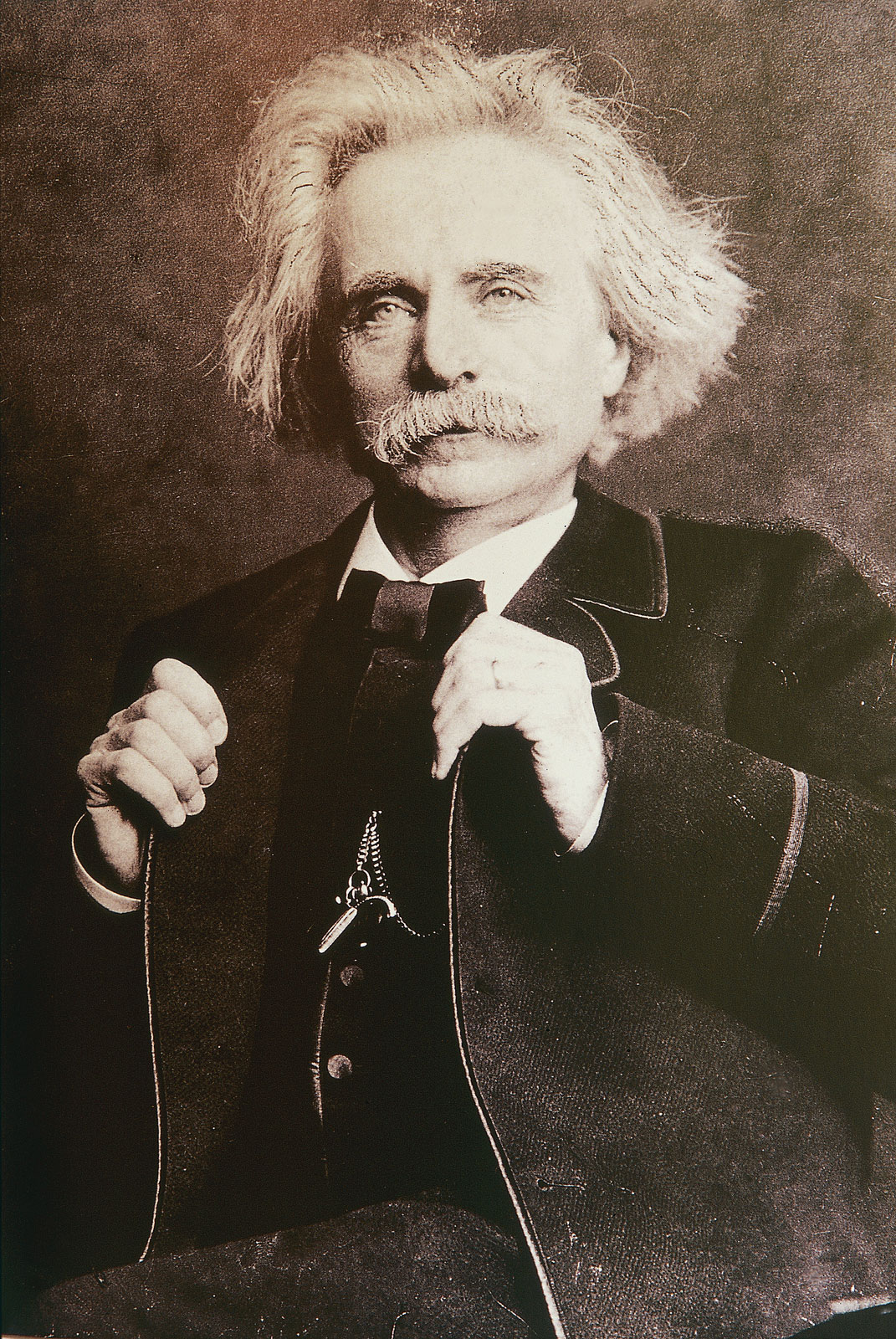
    If Edvard Grieg and Mark Twain got into a knife fight, who would win? Twain, probably. But once Grieg sat down at the piano, there would be no contest. Did this guy ever write a bad note?

    Celebrated as Norway’s greatest composer, Grieg embraced his native folk music, lovingly elevated it, and infused it with an intriguing delicacy, melancholy, and yes, lyricism. Like listening to a Nordic Schubert, you never know when a cloud will break across the fjords. Or perhaps, more to the point, a sunny jaunt across a field of wildflowers will be disrupted by an encounter with a troll.

    The most common criticism leveled against Grieg is that he was essentially a miniaturist. You may as well attack Chopin for being a sloppy orchestrator.

    From his letters, we know that Grieg himself was frustrated by his propensity for shorter works. “Nothing that I do satisfies me,” he wrote, “and though it seems to me that I have ideas, they neither soar nor take form when I proceed to the working out of something big.”

    Claude Debussy was only too happy to kick him when he was down. He famously derided Grieg’s output as so many “pink bonbons filled with snow.” Yet it has been convincingly demonstrated that Debussy owed more than a little to his Norwegian colleague in the writing of his String Quartet in G minor and in some of his own piano miniatures. What is it about Grieg that so galled the Gauls?

    Myself, I could listen to Grieg all day. In fact, I think I will.


    Neeme Järvi conducts the four “Symphonic Dances.” I used the second of these as signature music for an overnight show, back when I was starting out in community radio.

    Emil Gilels plays a selection of the “Lyric Pieces.” Gilels hedged when asked to make the recording, fearing that no one would buy it. Of course, it went on to become one of the great piano classics.

    https://www.youtube.com/watch?v=yMqnGva32Vs

    The husband-and-wife team of Augustin Dumay and Maria João Pires whip up a fair amount of unsuspected passion in the Violin Sonatas. Here’s the full album.

    Arturo Benedetto Michelangeli shatters the stereotype of Grieg as “regional” composer with this volcanic performance of the Piano Concerto in A minor:


    PHOTO: Grieg is great! Happy birthday, master!
  • Exploring Nordic Classical Music Nørholm & Sandström

    Exploring Nordic Classical Music Nørholm & Sandström

    “A symphony must be like the world,” Gustav Mahler once famously declared, “It must embrace everything.”

    Turning that on its head, “the world” becomes a useful metaphor for classical music itself, since the realm music occupies is so broad, so deep, and so varied, it’s impossible for any one of us to possess more than a passing familiarity with even the tiniest fraction of its immeasurable mysteries. That’s part of what I find so appealing. The frontiers are limitless; the content inexhaustible. You can travel as far outside the standard repertoire as your legs or ears will carry you, or you can dig deeply into a symphony by Mozart or Beethoven to marvel at the tiniest cells of their creation.

    It’s fortuitous, perhaps, that Mahler made his observation while on a walk with Jean Sibelius, the All-Father of Nordic music.

    Every once in a while I’ll note the obituary of some vaguely familiar musician, and it will spur me to check out what I can of his or her recorded output. In the case of Danish composer Ib Nørholm, who died on Sunday at the age of 88, his was a name I distantly recollected, probably from a rich vein of LPs, numbering in the hundreds, I inherited back in the days when I ran a used book business in Philadelphia.

    I was remiss in not exploring any of his works, that I can recall, until only this past week. A pupil of Vagn Holmboe, Nørholm composed 13 symphonies. So far, I have listened to Numbers 4, 5 & 9. Number 4, subtitled “Decreation,” is interesting, in that its avant-garde gloss – complete with quasi-sprechtstimme, possibly aleatoric chorus – can’t obscure the work’s Sibelian pedal tones. The recording, on the Kontrapunkt label, also features the composer reciting poetry (in Danish) in the symphony’s final movement.

    Number 5, subtitled “The Elements,” is twelve-tone, and I suppose a little on the severe side, but for anyone with a predilection for the austerity of a certain vein of Nordic music, surprisingly listenable.

    But it is Number 9 that hits the sweet spot for me. Here Nørholm has settled in with a new lyricism, and he feels totally comfortable in his own skin. Not being familiar (as yet) with the rest of his output, this is what I would recommend as a good starting point.

    On the same day, the music world lost Swedish composer Sven-David Sandström. I gather he is mostly known for his works for voice. Perhaps this would be more to your liking:

    Sandström was 76 years-old.

    Neither of these works may be your cup of vodka. But if you clear your head, close your eyes, and just go with them, you may be surprised to discover that you actually find the music rewarding. As a certain quotable Dane once remarked, “There are more things in heaven and Earth, Horatio, than are dreamt of in your philosophy.”


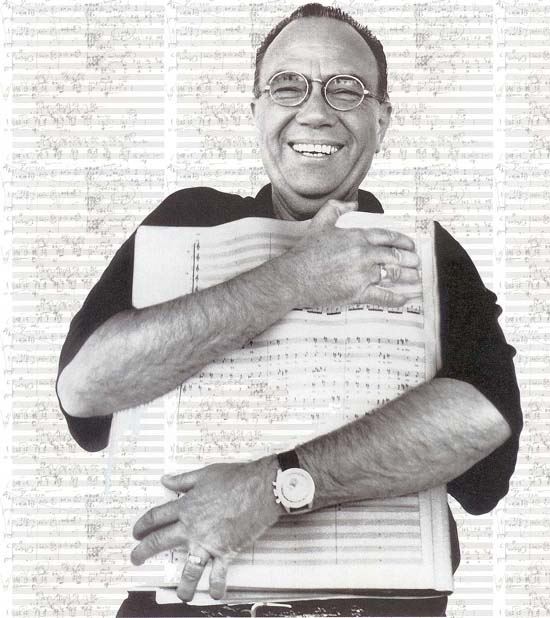
    PHOTO: Sven-David Sandström embraces music

  • Nordic Sounds on The Classical Network Today

    Nordic Sounds on The Classical Network Today

    It will be difficult to ignore the Nordic today on The Classical Network.

    Join me at noon for a broadcast concert featuring Mélomanie, the Delaware-based ensemble that specializes in provocative pairings of early and contemporary works. On the program will be sonatas by Swedish baroque composers Johan Helmich Roman and Johan Joachim Agrell, as well as works for electric violin by Icelander Eva Ingolf and American Mark Hagerty. Ingolf’s “Lava Flow” was inspired by the image of an erupting volcano. Hagerty’s “Raven Thoughts” alludes to Odin’s ravens, Huginn (Thought) and Muninn (Memory). The odd man out will be Sergio Roberto de Oliveira, whose “Angico” was inspired by his family vacation home in the Brazilian mountains.

    Mélomanie’s next concert will be held at The German Society of Pennsylvania, 611 Spring Garden Street, in Philadelphia, on January 29 at 3 p.m. To find out more about Mélomanie, visit the ensemble’s website, at melomanie.org.

    Following the broadcast concert, stick around for a major work by Jean Sibelius. I’ll be especially stoic as I quaff my mead today from noon to 4:00 EST, on WWFM – The Classical Network and at wwfm.org.

  • Nordic Soul Autumn Music Langgaard Rautavaara

    Nordic Soul Autumn Music Langgaard Rautavaara

    This Sunday night on “The Lost Chord,” it’s autumn in the North countries, as well as in the Nordic soul. We’ll test your limits on gratuitous vowels, with music by Danish composer Rued Langgaard and Finnish master Einojuhani Rautavaara.

    Langgaard lived from 1893 to 1952. Despite a promising start – born to musical parents, a prodigious childhood, meetings with major conductors, and a symphony performed by the Berlin Philharmonic – his personal and creative eccentricities worked against him.

    Perpetually out of step with the times, and particularly with the musical tastes of his countrymen, performances of his works were scarce. He found himself ignored by the musical establishment, with the result that his music really only started to be recognized in the 1960s – 16 years after the composer’s death.

    Langgaard was 46 by the time he managed to obtain a permanent job, as an organist at the cathedral in Ribe. It was the oldest town in Denmark, and situated far, far from Copenhagen, the center of Danish musical life. He would die in Ribe at the age of 59.

    He wrote 16 symphonies. The fourth of those bears the subtitle “Fall of the Leaf.” Beyond a simple evocation of autumnal nature, complete with thunderstorms, wind and rain, the symphony is one of moods related to, or symbolized, by autumn. The composer originally called the work “Nature and Thoughts.”

    Rautavaara, Finland’s grand old man of music, died in July at the age of 87. He studied at the Sibelius Academy in Helsinki, under Aare Merikanto, before receiving a scholarship to attend the Juilliard School. Among his teachers in the United States were Vincent Persichetti, Roger Sessions and Aaron Copland. He himself taught for extended periods at the Sibelius Academy.

    As a composer, he wrote eight symphonies, 14 concertos, and nine operas, as well as choral, chamber and instrumental music. His most famous piece is probably his “Cantus Arcticus,” for taped bird song and orchestra.

    Early on, Rautavaara experimented with serialism (though he was never a strictly serial composer), but in the 1960s, he left all that behind. His mature style is frequently one of austere beauty, marked by lyricism and even luminosity. His later works often bear something of a mystical stamp.

    We’ll be listening to music composed in 1999, titled “Autumn Gardens,” Rautavaara’s meditation on beauty in nature and the transience of life.

    I hope you’ll join me for “Fall of the Leif,” autumnal meditations from the North, this Sunday night at 10:00 EST, on WWFM – The Classical Network, and at wwfm.org.


    PHOTOS: Babe magnets Rued Langgaard (left) and Einojuhani Rautavaara

  • Autumn Music from the North: Langgaard & Rautavaara

    Autumn Music from the North: Langgaard & Rautavaara

    So it’s November 1st. All Saints’ Day. Something is seriously wrong with my schedule when I am too busy to write about my favorite day of the year, which is Hallowe’en. Even worse, I couldn’t take any portion of the day simply to relax in front of the television set with Boris Karloff, Bela Lugosi, Vincent Price or Christopher Lee. I shake my fist at the heavens in impotent rage.

    Ah well. I will hope for a more relaxed schedule next year. For now, allow me to thank all of you who supported the station during its recent membership campaign. The station did very good business this week, and we met the challenge that was posed during my “pre-game” show on Wednesday (before the rebroadcast of “The Lost Chord” at 6), so thanks again. I don’t know that it will get me any of my regular shifts back, but thank you all the same.

    Speaking of “The Lost Chord,” I hope you will pardon me if I take this opportunity to tell you a few things about this week’s program. My thesis will be autumn in the North countries, as well as in the Nordic soul – which is another way of saying, we’ll hear two works that deal with natural and metaphorical autumn.

    First we’ll have the Symphony No. 4, subtitled “Fall of the Leaf,” composed in 1916, by the Danish composer Rued Langgaard (he of the impossible-to-pronounce name). Langgaard, an eccentric and an outcast, bucked every trend in Danish music, so that it took well over a decade after his death in 1952, at the age of 59, for his works to begin to gain traction. A number of the symphony’s sections bear descriptive subtitles, such as “Rustle in the Forest;” “Glimpse of Sun;” “Thunderstorm;” “Autumnal;” “Tired;” “Despair;” “Sunday Morning (The Bells);” and “At an End.” Don’t expect sonata-allegro form!

    Then we’ll have a three-movement tone painting by Einojuhani Rautavaara, the grand old man of Finnish music, his “Autumn Gardens,” from 1999. The work is characterized by plenty of late-period Rautavaara lyricism and luminosity. If you enjoy the music of Sibelius and Vaughan Williams, don’t miss it!

    That’s “Fall of the Leif” – autumnal meditations from the North. You can hear it this Sunday night at 10 ET, with a repeat Wednesday evening at 6; or listen to it later as a webcast, at http://www.wwfm.org.

    PHOTO: The Leifs certainly are lovely this time of year

Tag Cloud

Aaron Copland (92) Beethoven (95) Composer (114) Film Music (123) Film Score (143) Film Scores (255) Halloween (94) John Williams (187) KWAX (229) Leonard Bernstein (101) Marlboro Music Festival (125) Movie Music (138) Opera (202) Philadelphia Orchestra (89) Picture Perfect (174) Princeton Symphony Orchestra (106) Radio (87) Ralph Vaughan Williams (85) Ross Amico (244) Roy's Tie-Dye Sci-Fi Corner (290) The Classical Network (101) The Lost Chord (268) Vaughan Williams (103) WPRB (396) WWFM (881)

DON’T MISS A BEAT

Receive a weekly digest every Sunday at noon by signing up here


RECENT POSTS