Tag: Nordic Music

  • Per Nørgård, Influential Danish Composer, Dies at 92

    Per Nørgård, Influential Danish Composer, Dies at 92

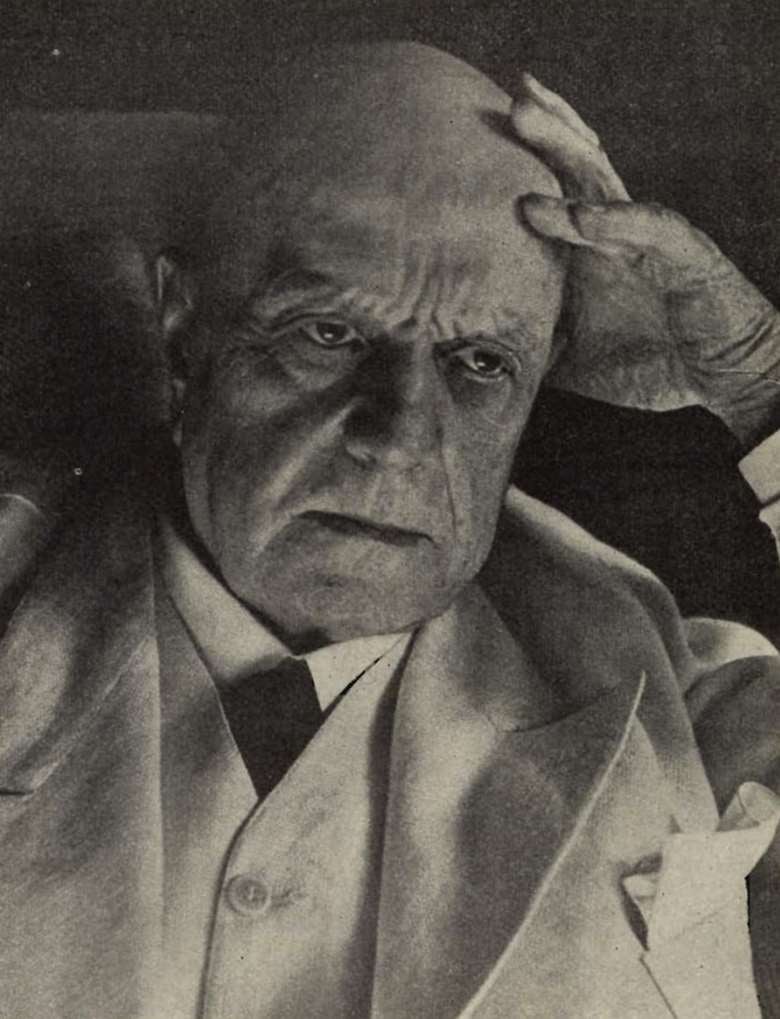
    The prolific Danish composer Per Nørgård has died. In all, the creator of some 400 works, he leaves eight symphonies, six operas, ten concertos, assorted choral works, chamber music (including ten string quartets), and works for solo instrument. Nørgård emerged from the dominant musical influences of the region – Carl Nielsen and Jean Sibelius, mainly, but also that of his teacher, Vagn Holmboe – to immerse himself in central European modernism.

    In 1959, he discovered the infinity series, a serial method from which he developed unifying structural elements in much of his subsequent work. His Symphony No. 3 was the first to apply the method for the integration of melody (such that it is), harmony, and rhythm. “Voyage into the Golden Screen” is considered a landmark of spectral composition. Among his music written for film is that for the international success “Babette’s Feast.”

    By some, he was regarded as the foremost living Nordic composer. All the same, his is probably not the music you’ll want to take with you for your morning commute. It can be an interesting listen in quieter, more introspective moments. That said, I had an extra CD of his Symphonies Nos. 2 & 4 and, like Robert Louis Stevenson’s bottle imp, I couldn’t give it away. You have to give the guy credit for steadfastly following his own muse.

    He is not to be confused with the Finnish composer Pehr Nordgren, who died in 2008. Nørgård was 92 years-old.

    R.I.P.


    “Gennen Torne” (“Through Thorns”) for harp, flute, clarinet, and string quartet – the same combo used for Ravel’s “Introduction and Allegro” (2003)

    Symphony No. 1 – right out of the gate, subtitled “Austera” (“Austere”), undeniably Scandinavian (1953-55)

    “Voyage into the Golden Screen” (1968)

    Symphony No. 3 (1972-75) with chorus

    Symphony No. 8 (2010-11)

    Live performance of the work, with Nørgård acknowledging the orchestra and applause at the end

    Interview with the composer (in Danish), with charming interludes of him performing his juvenilia at the piano, illustrated by cartoons he drew as a kid

  • Nordic Music Delights Sweetness and Light

    Nordic Music Delights Sweetness and Light

    This week on “Sweetness and Light,” it’s a program of lighter music from the northern countries.

    We’ll give poor overworked Edvard Grieg a break, with Norway represented by Johan Halvorsen and the now lesser-known pianist-composer Agathe Backer Grøndahl, a pupil of Franz Liszt.

    From Sweden, we’ll enjoy two versions of Hugo Alfvén’s evergreen “Swedish Rhapsody No. 1” – first, Mantovani’s popular hit from 1953, then with the composer himself conducting, from the very next year, in the first stereo recording ever made in Sweden.

    Speaking of popular hits, we’ll also hear Arthur Fiedler’s bestselling recording of “Jalousie,” by Danish composer Jacob Gade (no relation to Niels Wilhelm Gade), from 1935. Fiedler remade it in stereo, but it’s my show, so I’m keeping it hardcore.

    Also from Denmark, we’ll have a folk-music suite by Percy Grainger. Ah! But Grainger was not from the north, you say. He was born in Australia. Quite true. However, as an energetic pianist and composer of insatiable curiosity, he traveled seemingly everywhere, with a particular fondness for the Scandinavian countries. (His wife was Swedish.)

    But if authentic Danish composers are more your thing, not to worry, we’ll round out the hour with a galop by Hans Christian Lumbye.

    All eyes and ears face north this week on “Sweetness and Light.” I hope you’ll join me for this hour of northern “lights,” this Saturday morning at 11:00 EST/8:00 PST, exclusively on KWAX, the radio station of the University of Oregon!

    Stream it wherever you are at the link:

    https://kwax.uoregon.edu/

  • Nordic Soul Autumn Music Langgaard Rautavaara

    Nordic Soul Autumn Music Langgaard Rautavaara

    Don’t forget to turn your clocks back tonight! As we prepare to return to standard time and the days grow ever shorter, those of us in the Northern Hemisphere can feel a spiritual kinship with the Scandinavians.

    This week on “The Lost Chord,” it’s autumn in the North countries, as well as in the Nordic soul. We’ll test your limits, not only for lengthening shadows, but also for gratuitous vowels, with music by Danish composer Rued Langgaard and Finnish master Einojuhani Rautavaara.

    Langgaard lived from 1893 to 1952. Despite a promising start – born to musical parents, a prodigious childhood, meetings with major conductors, and a symphony performed by the Berlin Philharmonic – his personal and creative eccentricities worked against him.

    Perpetually out of step with the times, and particularly with the musical tastes of his countrymen, performances of his works were scarce. He found himself ignored by the musical establishment, with the result that his music really only started to be recognized in the 1960s – 16 years after the composer’s death.

    Langgaard was 46 by the time he managed to obtain a permanent job, as an organist at the cathedral in Ribe. It was the oldest town in Denmark, and situated far, far from Copenhagen, the center of Danish musical life. He would die in Ribe at the age of 59.

    He wrote 16 symphonies. The fourth of those bears the subtitle “Fall of the Leaf.” Beyond a simple evocation of autumnal nature, complete with thunderstorms, wind, and rain, the symphony is one of moods related to, or symbolized by, autumn. The composer originally called the work “Nature and Thoughts.”

    Rautavaara, Finland’s grand old man of music, died in 2020 at the age of 87. He studied at the Sibelius Academy in Helsinki, under Aare Merikanto, before receiving a scholarship to attend the Juilliard School. Among his teachers in the United States were Vincent Persichetti, Roger Sessions, and Aaron Copland. He himself taught for extended periods at the Sibelius Academy.

    As a composer, he wrote eight symphonies, 14 concertos, and nine operas, as well as choral, chamber and instrumental music. His most famous piece is probably his “Cantus Arcticus,” for taped bird song and orchestra.

    Early on, Rautavaara experimented with serialism (though he was never a strictly serial composer), but in the 1960s, he left all that behind. His mature style is frequently one of austere beauty, marked by lyricism and even luminosity. His later works often bear something of a mystical stamp.

    We’ll be listening to music composed in 1999, titled “Autumn Gardens,” Rautavaara’s meditation on beauty in nature and the transience of life. If I were to introduce anyone to the music of Rautavaara, this may very well be the piece I would select. It’s gorgeous and moving.

    I hope you’ll join me for “Fall of the Leif,” autumnal meditations from the North, on “The Lost Chord,” now in syndication on KWAX, the radio station of the University of Oregon!


    Remember, KWAX is on the West Coast, so there’s a three-hour difference for the Trenton-Princeton area. Here are the respective air-times of my recorded shows (with East Coast conversions in parentheses):

    PICTURE PERFECT, the movie music show – Friday on KWAX at 5:00 PACIFIC TIME (8:00 PM EDT)

    THE LOST CHORD, unusual and neglected rep – Saturday on KWAX at 4:00 PACIFIC TIME (7:00 PM EDT)

    Stream them here!

    https://kwax.uoregon.edu/

  • Sibelius’s Lost Symphony No 8 & Nordic Influence

    Sibelius’s Lost Symphony No 8 & Nordic Influence

    Okay, this will probably be my last Sibelius post for the present. But I wrote most of it yesterday, and I don’t want it to go to waste!

    Even now, 64 years after his death, no composer has held as profound an influence over the cultures of the North. Given that Sibelius composed no major works for the last 30 years of his life, we’re talking about close to a century. That’s quite a long shadow.

    Here’s an interesting work by Norwegian composer Ragnar Søderlind (born 1945). His Symphony No. 8, “Jean Sibelius in memoriam,” was written in 2004-05. The symphony alludes to some of Sibelius’ own music, including the organ work “Surusoitto.” “Surusoitto” is thought to contain material from Sibelius’ own unreleased Eighth Symphony.

    Sibelius never completed his Symphony No. 8, or so he’d have us believe. Perhaps he just didn’t complete it to his satisfaction. After the Symphony No. 7 and the tone poem “Tapiola,” written in the mid-1920s, he’s said to have completed no further major works. But it certainly wasn’t for want of trying.

    At the very least, he grappled with the Eighth, the manuscript of which he is supposed to have destroyed. I heard as much from the mouth of his own grandson, who claimed to have been present at its burning. Did Sibelius finish it?

    Only within the past ten years, a few tantalizing sketches have surfaced, seemingly out of nowhere. Is it possible more could have survived? Perhaps somewhere, among the composer’s papers, a draft might even exist. I’m not in favor of “reconstruction” from mere fragments, but if there is a somewhat complete version of the symphony, even in embryonic form, it would be a thrill to be able to hear it.

    It makes my heart ache to listen to these sketches and contemplate that there actually could have been another Sibelius symphony. Had the composer only been able to defy his demons and hold it together one more time!

    Could it have topped his crowning achievement, the Seventh Symphony? Sibelius didn’t think so, which is why, likely, he consigned it to flames of woe.


    “Surusoitto” (“Funeral Music”) – does it contain material intended for the Symphony No. 8?

    https://www.youtube.com/watch?v=MFX8giq21S4

    The Symphony No. 7

  • Robert Layton Gramophone Critic Passes Away

    Robert Layton Gramophone Critic Passes Away

    Another of the stable of truly great “Gramophone” critics is gone. Robert Layton was erudite, insightful, authoritative, articulate, and accessible in a kind of balance, I am sorry to say, that is no longer common. Layton’s name may also be familiar from his contributions to the “Penguin Guide,” the music-collector’s bible, updated annually. Layton’s involvement with the guide began in 1968.

    His was an especially prominent voice in the field of Nordic music. His advocacy of Northern composers was extensive, with a particular emphasis on the life and works of Jean Sibelius, Edvard Grieg, and Franz Berwald.

    In 1980, Layton pranked Stanley Sadie, editor of “Grove’s Dictionary of Music and Musicians,” by including a bio of a wholly fictitious Danish composer he’d concocted. Not sure how I feel about that, but he certainly possessed the expertise to convincingly pull it off!

    His observations were both absorbing and enriching. He contributed greatly to the expansion of my musical knowledge.

    Layton was 90 years-old. R.I.P.

    https://www.gramophone.co.uk/classical-music-news/article/the-musicologist-critic-and-gramophone-reviewer-robert-layton-has-died

    For Robert Layton:

Tag Cloud

Aaron Copland (92) Beethoven (95) Composer (114) Film Music (123) Film Score (143) Film Scores (255) Halloween (94) John Williams (187) KWAX (229) Leonard Bernstein (101) Marlboro Music Festival (125) Movie Music (138) Opera (202) Philadelphia Orchestra (89) Picture Perfect (174) Princeton Symphony Orchestra (106) Radio (87) Ralph Vaughan Williams (85) Ross Amico (244) Roy's Tie-Dye Sci-Fi Corner (290) The Classical Network (101) The Lost Chord (268) Vaughan Williams (103) WPRB (396) WWFM (881)

DON’T MISS A BEAT

Receive a weekly digest every Sunday at noon by signing up here


RECENT POSTS