Tag: Opera

  • Carlisle Floyd: Celebrating 90 Years of Opera

    Carlisle Floyd: Celebrating 90 Years of Opera

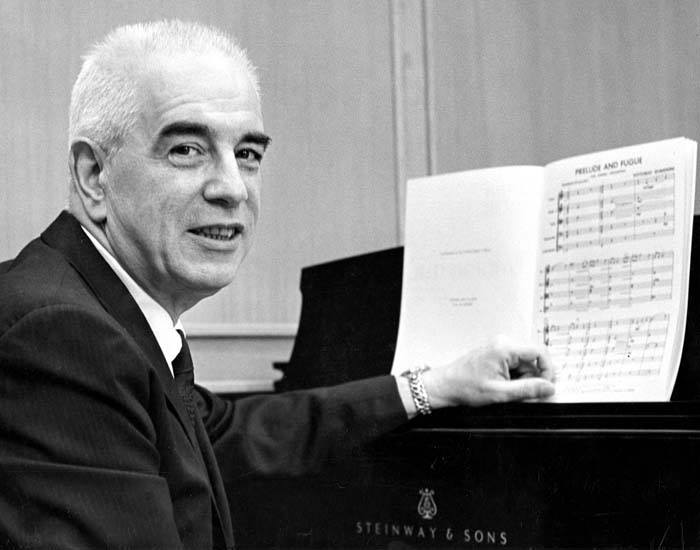
    Today is the 90th birthday of one of the most successful opera composers this country has ever produced. Carlisle Floyd was not yet 30 when he lured Phyllis Curtin and Mack Harrell to Tallahassee to sing in the world premiere of “Susannah” in 1956. The opera takes the Apocryphal tale of Susannah and the Elders and transplants it to rural Tennessee.

    Floyd wrote the libretto and music while on the piano faculty at Florida State University. The work’s success soon spread to New York, and “Susannah” went on to become the most frequently performed American opera behind only Gershwin’s “Porgy and Bess.” It does feature two heart-melting arias that remain favorites of aspiring American sopranos, “Ain’t It a Pretty Night” and “The Trees on the Mountain.”

    The directness of the drama and the uncluttered musical language struck a chord with both performers and audiences. Emboldened by his success, Floyd went on to compose ten more operas, all of them on his own librettos, drawing inspiration from such diverse sources as Emily Bronte’s “Wuthering Heights,” Robert Louis Stevenson’s “Markheim,” John Steinbeck’s “Of Mice and Men” and Robert Penn Warren’s “All the King’s Men.”

    “Cold Sassy Tree,” based on the novel of Olive Ann Burns was given its premiere in 2000. It was intended to have been the composer’s swan song. Floyd had become too busy caring for his wife, who suffered from Alzheimer’s disease, to devote much further thought to composition. But following her passing, he found the inspiration for one last hurrah. The result was the recently completed opera “Prince of Players,” about 17th century actor Edward Kynaston, which was given its premiere at the Houston Grand Opera in March.

    To have a new opera premiered at the age of 90 should be an inspiration to all of us who not only care about music, but who have ever puzzled over finding meaning in our lives. Happy birthday, Carlisle Floyd!


    About Carlisle Floyd’s “Prince of Players”:

    http://www.houstonchronicle.com/entertainment/arts-theater/article/Composer-inspired-to-finish-one-more-opera-5358307.php

    A more in depth look (the first of three parts, if you’d like to dig deeper):

    http://www.houstonchronicle.com/entertainment/arts-theater/article/Carlisle-Floyd-s-operas-offer-traditional-music-6857032.php

    A teaser for the opera on YouTube:

    Carlisle Floyd speaks:

    Reception in The Classical Review:

    Floyd’s “Prince of Players” receives effective world premiere at Houston Grand Opera

    In Opera News:

    http://www.operanews.com/Opera_News_Magazine/2016/4/Reviews/HOUSTON__Prince_of_Players.html

    Dawn Upshaw breaks hearts with “Ain’t It a Pretty Night,” from “Susannah”:

    Cheryl Studer sings “The Trees on the Mountain,” from a complete recording of the work:


    “The thing that you have to guard against is just your own self-doubt about what you’ve done.”

    • Carlisle Floyd
  • Surviving Rusalka Week with Slavic Opera

    Surviving Rusalka Week with Slavic Opera

    What precautions have you taken against Rusalka Week? None, you say? (Crosses self.)

    In Slavic mythology, a rusalka is a spirit that dwells at the bottom of a river or lake. She lures unsuspecting men with her song, invariably resulting in a watery doom. Rusalki are never more dangerous than in early June, when the spirits roam free.

    There have been innumerable pieces of music written about water spirits – sirens, naiads, lorelei, undines, mermaids and melusinas. One of the best known of the bunch is Dvořák’s “Rusalka,” inspired by Czech fairy tales of Karel Jaromir Erben and Božena Němcová. Here is its most famous aria, the “Song to the Moon,” sung by Lucia Popp:

    https://www.youtube.com/watch?v=uoPTh_q7GYs

    Alexander Dargomizhsky, one of the pioneers of Russian nationalism in music, also composed an opera called “Rusalka.” His was based on a dramatic poem by Pushkin. Chaliapin recorded selections, but the complete opera is as rare as hen’s teeth.

    Rusalka Week is the backdrop for Rimsky-Korsakov’s opera, “May Night,” drawn from Gogol’s collection, “Evenings on a Farm Near Dikanka.” The Nikolai Golovanov recording from 1948 is still the one to beat.

    https://www.youtube.com/watch?v=I6PjqmjQ6qk

    Of course, it being YouTube, you will have to search for plot synopses and libretti yourself. You should have plenty of time to do so. You shouldn’t be out wandering at night during Rusalka Week anyway.

  • Yannick Nézet-Séguin New Met Music Director

    Yannick Nézet-Séguin New Met Music Director

    Yannick Nézet-Séguin has been named the new music director of the Metropolitan Opera. James Levine, who held the position for the past 40 years, agreed to step down at the end of this season because of health issues. Levine led his final performance as the Met’s music director, of Mozart’s “The Abduction from the Seraglio,” on May 7. He conducted the Met Orchestra in selections from Wagner’s “Ring” at Carnegie Hall on May 26.

    Yannick is a very fine conductor of opera and a seemingly unstoppable force, but even for such a fireball, maintaining his loyalty to Philadelphia (where his contract has been renewed through 2026) and the Orchestre Métropolitain in his native Montreal might be spreading things a bit thin. Congratulations, Yannick, and best of luck to you!

    Here’s the press release:

    YANNICK NEZET-SEGUIN NAMED THE METROPOLITAN OPERA’S MUSIC DIRECTOR

    The 41-year-old conductor will become only the third
    Music Director in the history of the Met

    New York, NY (June 2, 2016) – The Metropolitan Opera announced that the acclaimed conductor Yannick Nézet-Séguin will be the company’s new Music Director. The position has previously been held by only two artists in the company’s storied 133-year history—James Levine, who after 40 years in the position stepped down at the end of the recently concluded season to become the company’s first Music Director Emeritus, and Rafael Kubelik, who held the title briefly in the company’s 1973-74 season.

    In the Met’s 2017-18 season, Nézet-Séguin will assume the interim title of Music Director Designate. He will become Music Director in the 2020-21 season, the first season in which he is available to take over the full responsibilities of the position. However, he will immediately become involved in the company’s artistic planning, which happens many years in advance.

    As Music Director, Nézet-Séguin will be responsible for the overall musical quality of the Met. He will have artistic authority over the company’s orchestra, chorus, and music staff, and will work in tandem with Met General Manager Peter Gelb to oversee the planning and casting of each Met season, including repertoire choices, new productions (including the selection of creative teams), revivals, and commissions.

    Nézet-Séguin will initially conduct five different operas each season he is Music Director, as well as concerts with the Met Orchestra. In each of the seasons in which he is Music Director Designate, Nézet-Séguin will conduct two operas. Next season at the Met, he will conduct his first Wagner opera with the company, a revival of Der Fliegende Holländer.

    “Becoming the Music Director of the Metropolitan Opera is the fulfillment of a lifelong dream for me,” said Nézet-Séguin. “I am truly honored and humbled by the opportunity to succeed the legendary James Levine and to work with the extraordinary orchestra, chorus, and staff of what I believe is the greatest opera company in the world. I will make it my mission to passionately preserve the highest artistic standards while imagining a new, bright future for our art form.”

    “Yannick was the clear choice of the Company,” said Gelb. “He is the right artist at the right time to lead us forward into a new and what I believe will be a glorious chapter in the history of the Met.”

    “The Metropolitan Opera has been the great artistic love of my life, and it has been tremendously rewarding to see the company develop and improve over the past 45 years,” said Levine. “I offer my heartfelt congratulations to Yannick on taking the musical reins, and I look forward to seeing the good work continue under his watch.”

    “The MET Orchestra enjoys a tremendously fruitful, positive relationship with Maestro Nézet-Séguin, and we are delighted in his appointment as Music Director,” said Jessica Phillips, clarinetist and chair of the Met’s Orchestra committee. “He embodies the artistic leadership, musical excellence, and respect for rich tradition that opera lovers around the world have come to cherish. We eagerly look forward to working together to shape this new era at the Met.”

    “The singers and stage performers at the Met welcome Yannick Nézet-Séguin, joining the historic line of artists from James Levine’s great tenure back to Toscanini and Mahler,” said David Frye, tenor and chair of the Met’s chorus committee. “Yannick has led great performances with the company, and we’re eager to expand our collaboration.”

    Nézet-Séguin made his Met debut in the 2009-10 season, conducting a new production of Bizet’s Carmen. He has returned in every subsequent season, leading acclaimed performances of Verdi’s Don Carlo, Gounod’s Faust, Verdi’s La Traviata, and Dvořák’s Rusalka. He led the opening night performance of the Met’s 2015-16 season, a new production of Verdi’s Otello.

    Nézet-Séguin’s operatic career was launched when he was appointed Chorus Master and Assistant Conductor of the Montreal Opera at age 23. Since then, he has conducted a wide breadth of repertoire at a number of the leading companies, including the Vienna State Opera; the Royal Opera House, Covent Garden; La Scala; Dutch National Opera; and the Salzburg Festival, in addition to the Met. He is also a frequent guest conductor of the Berlin Philharmonic, the Vienna Philharmonic, the Bavarian Radio Symphony Orchestra, the London Philharmonic, and the Chamber Orchestra of Europe.

    Since 2012, Nézet-Séguin has been Music Director of the Philadelphia Orchestra, which announced today that he has extended his contract with them through 2025-26. (A separate press release on that announcement is available.) Given the close proximity of New York and Philadelphia, Nézet-Séguin will be able to easily commute between his two posts, and the Met and the Philadelphia Orchestra will also be exploring the possibilities for artistic collaboration between the two institutions.

    He is also the Music Director of Montreal’s Orchestre Métropolitain and of the Rotterdam Philharmonic, a position he will resign at the conclusion of the 2017-18 season.

    Each season, the Met presents more than 200 performances in its home at Lincoln Center and transmits 10 live performances to more than 2,000 movie theaters in 70 countries around the world.

  • Korngold Unleashed The Inner Pirate Composer

    Korngold Unleashed The Inner Pirate Composer

    Happy birthday, Erich Wolfgang Korngold (1897-1957). You unleashed my inner pirate and helped shepherd me into the wonderful world of orchestral music. Little did I realize at the time I was dueling my friends with my mother’s curtain rods that you wrote marvelous operas, too.

    Korngold conducts “The Adventures of Robin Hood”:

    The Sea Hawk:

    Renée Fleming sings from “Das Wunder der Heliane”
    https://www.youtube.com/watch?v=H2x5NgtGSx4

    His greatest operatic hit, Marietta’s Lied from “Die tote Stadt,” sung by Elisabeth Schwarzkopf:
    https://www.youtube.com/watch?v=ZoGQd1dsAlw

  • Easter Vivaldi and Mom’s Love of Music

    Easter Vivaldi and Mom’s Love of Music

    One of my favorite Easter memories is of when I came downstairs and found a couple of Vivaldi LPs next to my basket. Now, Vivaldi isn’t even remotely my favorite composer, but I thought that was just the greatest thing ever. I listened to those records with every bit as much pleasure as I experienced when I devoured my chocolate rabbit (and of course they’ve lasted a great deal longer).

    That’s the kind of thoughtful gesture my mom would make. She always started with something nice and then took it to the next level. Mom was fond of Vivaldi’s Guitar Concerto in D. We weren’t a “classical music” family – I was the first to fall under the spell – but Mom caught on fast. She liked Vivaldi and Bach and jogged to Sousa marches.

    That’s not to say she didn’t always have an appreciation for it. She took me to plenty of piano and chamber recitals after she realized I had been bitten by the bug, and we attended every Gilbert & Sullivan production in the area. She encouraged me in my record collecting. I wonder if she ever thought, “My god, what have I done?”

    In her last few years, Mom became interested in learning more about opera, after I had gotten her a nice compilation of arias for a gift. I could see she was a little puzzled by it at first, though Mom being Mom, she never would have expressed anything other than gratitude. But she actually grew to really enjoy it.

    A number of years earlier, she had attended part of a dress rehearsal for “The Marriage of Figaro” I had assistant stage managed with what was then the Opera Company of Philadelphia. It made her proud to see me in the wings with my headset, doing something I enjoyed (which was mostly cueing singers when it was time for them to go on and signaling stage hands when to smash flower pots). There was a lot of funny business on stage, though no supertitles until the actual performances. But it was pure farce, with powdered wigs flying around and people diving under furniture. I think she probably was already interested in seeing a complete opera then. I don’t know why my parents couldn’t make that one – they lived only about an hour and a half away – since that would have been pretty much ideal.

    Instead, I wound up taking her to a threadbare production of Boito’s “Mefistofele” at the New York City Opera. It was essentially the same production Norman Treigle had triumphed in, in the early 1970s, but 20 years later it was looking kind of shabby – which surprised me, since everything I had seen at City Opera up until that point (Korngold’s “Die tote Stadt,” Busoni’s “Doktor Faust,” Hindemith’s “Mathis der Maler,” Tippett’s “The Midsummer Marriage”) had been so good. I should have just taken her across the plaza to the Met for a buffo romp. It’s one of my regrets that I did not. Hopefully they’ve got “Figaro” in heaven.

    Our last concert together featured the Chamber Orchestra of Philadelphia in Mozart’s final three symphonies.

    Happy birthday, Mom. Thanks for everything.

Tag Cloud

Aaron Copland (93) Beethoven (95) Composer (114) Film Music (129) Film Score (143) Film Scores (255) Halloween (94) John Williams (192) KWAX (229) Leonard Bernstein (103) Marlboro Music Festival (125) Movie Music (144) Mozart (88) Opera (206) Philadelphia Orchestra (89) Picture Perfect (174) Princeton Symphony Orchestra (108) Radio (88) Ross Amico (244) Roy's Tie-Dye Sci-Fi Corner (290) The Classical Network (101) The Lost Chord (268) Vaughan Williams (103) WPRB (396) WWFM (881)

DON’T MISS A BEAT

Receive a weekly digest every Sunday at noon by signing up here


RECENT POSTS