Tag: Orchestral Music

  • November Music Bax & Lloyd Autumnal Tones

    November Music Bax & Lloyd Autumnal Tones

    November already?

    This Sunday night on “The Lost Chord,” we celebrate the eleventh month with music of an autumnal nature. We’ll open with Sir Arnold Bax’s ravishing tone poem, “November Woods,” of 1917. Then we’ll hear a symphony composed in 1981 by the criminally underrated George Lloyd.

    Lloyd’s music is invariably well-crafted, even infectious, yet stubbornly tonal. It can often seem a bit old-fashioned, yet compositional integrity and musical good taste never go out of style. He’s certainly a composer well worth getting to know.

    Lloyd’s Symphony No. 10, “November Journeys,” was commissioned by the BBC for the Northern Brass Ensemble. The commission coincided with the composer’s exploration by rail of a number of cathedrals. The sounds of the brass in the composer’s head paralleled his experience of taking in the magnificent buildings. At no point was he attempting to conjure an ecclesiastical air, yet he conceded that the second movement reminded him of a Christmas carol.

    We’ll have just a little bit of time at the end of the hour, so I’m tossing in Bax’s “Red Autumn,” for two pianos, for good measure. The piece was originally composed in 1912, and though he never orchestrated it, it’s thought that his original intention had been to do so. In any case, it is marked by Bax’s characteristic opulence.

    I hope you’ll join me for “Notions Eleven,” music for the eleventh month, this Sunday night at 10 ET, with a repeat Wednesday evening at 6; or that you’ll listen to it later as a webcast at wwfm.org.

  • Elgar’s Third: A Symphony Reborn

    Elgar’s Third: A Symphony Reborn

    The greatest pieces of music are universes in themselves. Just when you think you know everything about a given work or its composer, along comes a fresh interpretation, or you listen to a cherished recording in a different frame of mind, and you’ll notice details you never heard before. Even so, it is sometimes tempting to crave more.

    A composer dies. Over the years, we absorb his canon. We think, wistfully, why couldn’t he have composed eight symphonies, as opposed to seven (Sibelius)? Or ten, as opposed to nine (Mahler and Beethoven)? Sibelius, Mahler and Beethoven all left behind tantalizing sketches of unrealized projects.

    This Sunday night on “The Lost Chord,” we’ll have a remarkably vivid piece of wishful thinking.

    Sir Edward Elgar produced no major works following the death of his wife in 1920. It was his friend and champion, George Bernard Shaw, who, in an attempt to keep one of England’s greatest composers from withering on the vine, persuaded the BBC to commission from Elgar a Third Symphony.

    Elgar, who died in 1934, worked at the piece during the last year of his life, jotting down his ideas – some merely a few bars in length, others, pages in full score. As his health deteriorated, he realized he would never be able to complete the work, and he made contradictory remarks concerning his intentions over the fate of the sketches.

    Another of his friends, the violinist W.H. Reed, passed many hours playing through what existed of the piece, with the composer at the piano. After Elgar’s death, Reed published 40 pages worth of sketches into a memoir, which kept the work at the periphery of the public consciousness.

    Several attempts have been made over the decades to make something more of the sketches, but musicians and musicologists have always been stopped short by the Elgar estate.

    The composer Anthony Payne became interested in the fragments in 1972. For many years, he worked at a realization of the piece, again meeting resistance from Elgar’s heirs, until it became apparent that, due to the publication of the sketches in Reed’s book, the material would soon fall into the public domain. The family opted to capitalize on what control it had left and finally authorized Payne’s efforts.

    His realization was given its premiere in 1998 and granted broad exposure through performances by major orchestras, particularly in England and the United States (including the Philadelphia Orchestra), and the piece has been recorded at least four times.

    The formal title is “Edward Elgar: The Sketches for Symphony No. 3 Elaborated by Anthony Payne,” or the “Elgar/Payne Symphony No. 3,” for short. You’ll have a chance to hear it tonight.

    I hope you’ll join me for “No Payne, No Gain,” this Sunday night at 10 ET, with a repeat Wednesday evening at 6; or that you’ll listen to it later as a webcast at wwfm.org.

    Also, of perhaps related interest, here’s an article about Payne’s completion of Elgar’s “Pomp and Circumstance March No. 6″:

    http://www.telegraph.co.uk/culture/music/classicalmusic/3654077/Finishing-touches.html

    PHOTOS: A Payne on Elgar’s side

  • Strauss’s 10 Conducting Commandments

    Strauss’s 10 Conducting Commandments

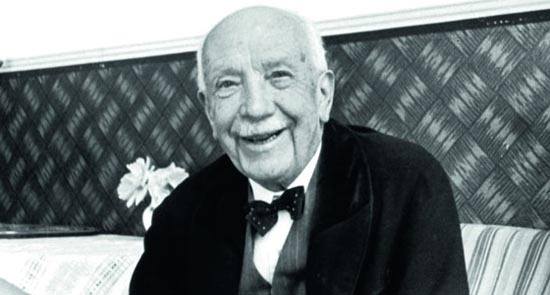
    Since I mentioned these on the air, I figured I’d copy them here for your edification: Richard Strauss’ “Ten Golden Rules for the Album of a Young Conductor” (1927):

    1. Remember that you are making music not to amuse yourself, but to delight your audience.

    2. You should not perspire when conducting. Only the audience should get warm.

    3. Conduct “Salome” and “Elektra” as if they were by Mendelssohn: Fairy music.

    4. Never look encouragingly at the brass, except with a brief glance to give an important cue.

    5. But never let the horns and woodwinds out of your sight. If you can hear them at all, they are still too strong.

    6. If you think that the brass is now blowing hard enough, tone it down another shade or two.

    7. It is not enough that you yourself should hear every word the soloist sings. You should know it by heart anyway. The audience must be able to follow without effort. If they do not understand the words, they will go to sleep.

    8. Always accompany the singer in such a way that he can sing without effort.

    9. When you think you have reached the limits of prestissimo, double the pace. (Amended in 1948: “Today I should like to amend this: take the tempo half as fast.”)

    10. If you follow these rules carefully, you will, with your fine gifts and your great accomplishments, always be the darling of your listeners.

    PHOTO: Strauss, there is method in his madness

  • Film Scores Why Aren’t They Great Anymore

    Film Scores Why Aren’t They Great Anymore

    The Orquestra Sinfônica Brasileira strikes back with music of John Williams:

    http://www.classicfm.com/music-news/latest-news/john-williams-youtube-save-brazilian-symphony/

    Granted, the story is a year old, but clearly people still respond to this music. So why are most film scores today so anonymous, slipshod or just plain lacking in craftsmanship? I understand that a tight post-production schedule can leave little time for the film composer to do his job, but surely there must be someone of a caliber of a Jerry Goldsmith out there, who could churn out a decent score before breakfast.

    There are probably still a lot of people who don’t actively think about the fact that the music they hear in the movies is being played by very talented orchestral musicians. (That is, when it isn’t being sampled on a keyboard.) For them, perhaps, it’s just something that emanates from the screen. Exposure is key. Ironically, in an age when everything is a keystroke away, there seems to be less of that than ever before. It’s a useful endeavor to bring this music to the public and to play it with passion and commitment.

    I wonder if the day will ever come when the very best music written for film will be held on a level with incidental music written for plays by earlier masters? It would be nice to hear something more than snappy main title music dished up on pops concerts or, what seems to be the latest trend, music performed live with the actual movies. These practices have their place, but why not program a suite from “E.T.” or “Ben-Hur” or “The Bride of Frankenstein” or “The Adventures of Robin Hood” once in a while? Let the music speak for itself.

    And spare me the condescending program notes. Other folks besides Prokofiev and Walton have written great music for the screen.

    The Philadelphia Orchestra will be performing musical selections from Pixar films at The Kimmel Center for the Performing Arts this Friday at 7 p.m. and Saturday at 2 p.m. The press release promises selections from 14 films, so expect a lot of short pieces, with film clips. Still, with music by Michael Giacchino, Thomas and Randy Newman, and Patrick Doyle, why complain? They’re some of the best film composers working today, and Pixar makes some of the best movies. It seems like an ideal intro for the kids.

    http://www.philorch.org/concert/philadelphia-orchestra-pixar-concert

Tag Cloud

Aaron Copland (93) Beethoven (95) Composer (114) Film Music (128) Film Score (143) Film Scores (255) Halloween (94) John Williams (191) KWAX (229) Leonard Bernstein (103) Marlboro Music Festival (125) Movie Music (143) Mozart (87) Opera (206) Philadelphia Orchestra (89) Picture Perfect (174) Princeton Symphony Orchestra (108) Radio (88) Ross Amico (244) Roy's Tie-Dye Sci-Fi Corner (290) The Classical Network (101) The Lost Chord (268) Vaughan Williams (103) WPRB (396) WWFM (881)

DON’T MISS A BEAT

Receive a weekly digest every Sunday at noon by signing up here


RECENT POSTS