With the grand cacophony of Christmas still fresh in everyone’s ears, I thought it only appropriate this week on “Picture Perfect” to focus on music from movies about toys.
Without giving anything away, in the unlikely event you don’t already know the story’s big pay-off, “Citizen Kane” (1941) is a film flanked by toys. There’s even a snow globe in the film’s opening montage. A certain memory of Kane’s childhood provides a poignant glimpse of the larger-than-life newspaper magnate’s lost innocence. “Kane” is often cited as one of the greatest films ever made. Orson Welles triumphed in his debut as writer-director-star, even if, ultimately, his creation proved to be a bottle rocket that blew up in his face. The film also marked the Hollywood debut of composer Bernard Herrmann.
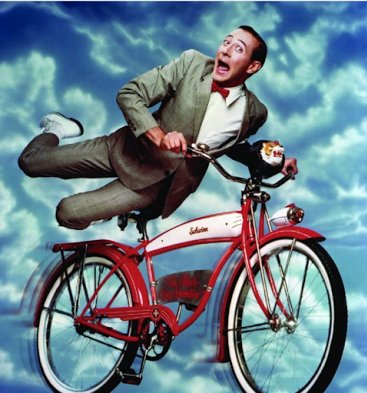
I’m not sure that “Pee-wee’s Big Adventure” (1985) could be described as the “Citizen Kane” of the ‘80s, exactly, but this endearingly goofy sojourn into the surreal does revolve around the recovery of a lost toy, as Pee-wee, the eternal boy, determines to make his way to “the basement of the Alamo” in an attempt to reclaim his stolen bike. The feature was director Tim Burton’s first. It was also his first collaboration with Danny Elfman, who is obviously a big fan of Nino Rota.
The husband-and-wife team of Charles and Ray Eames are better known for their contributions to architecture, industrial design, and manufacturing, but they also made short films. “Toccata for Toy Trains” (1957) was inspired by the Eames’ passion for vintage toys. The score was provided by their go-to composer, Elmer Bernstein.
Finally, in acknowledgement of the greatest toy series of our day, we’ll conclude with music from “Toy Story” (1995), the first full-length computer animated feature. The quality of the film propelled it beyond mere novelty status into the realm of instant classic, and the beloved “Toy Story” franchise has raked in hundreds of millions of dollars. Early on, it was decided by the filmmakers that they did not want “Toy Story” to be a musical, but that songs could be used to underline its emotional content. Randy Newman has provided the music for all the “Toy Story” films so far. He was recognized with an Academy Award for his work on “Toy Story 3,” for the song, “We Belong Together.”
Keep popping those aspirin. It’s “Toys Everywhere” this week, on “Picture Perfect,” music for the movies, now in syndication on KWAX Classical Oregon!
——–
Clip and save the start times for all three of my recorded shows:
PICTURE PERFECT, the movie music show – Friday at 8:00 PM EST/5:00 PM PST
SWEETNESS AND LIGHT, the light music program – Saturday at 11:00 AM EST/8:00 AM PST
THE LOST CHORD, unusual and neglected rep – Saturday at 7:00 PM EST/4:00 PM PST
Stream them, wherever you are, at the link!
https://kwax.uoregon.edu
Tag: Orson Welles
-

War of the Worlds & H.G. Wells on Picture Perfect
This week on “Picture Perfect,” with Halloween only days away, my thoughts turn to Grover’s Mill, the community located not far outside of Princeton, NJ, that became the focal point of Orson Welles’ notorious radio adaptation of H.G. Wells’ “The War of the Worlds.”
On October 30, 1938, Welles’ Mercury Theatre presented the classic’s dramatization after the manner of “breaking news,” with simulated live reports interrupting a program of regularly scheduled dance music. What the alleged reports described was chilling – a Martian invasion of rural America by hostile aliens bearing fiery weapons and poisonous gas. The whole story was authenticated, in real time, by a “Professor Richard Pierson of Princeton Observatory.”
Those who tuned in late or were only half-listening completely freaked out, and reacted in a manner unimaginable in an era of social media. Panicked mobs choked the streets, phone lines were jammed, and police flooded CBS Studios. Welles had dropped the biggest firecracker right in the middle of a United States already on edge, thanks to widespread access to radio reports of mounting tensions in Europe.
You might say Welles’ (and Wells’) fame skyrocketed. Orson Welles would match his early notoriety a few years later with his Hollywood debut, as producer, director, co-writer, and star of “Citizen Kane,” which inflamed William Randolph Hearst, while H.G. Wells’ novel has remained his most popular, the work having been adapted to film several times.
To mark the 85th anniversary of the radio broadcast and the 125th anniversary of the publication of the novel, we’ll hear music from a classic film, released 70 years ago, in 1953, produced by George Pal, with music by Leith Stevens; also, from the Steven Spielberg blockbuster, from 2005 (titled, simply, “War of the Worlds”), with music by John Williams.
The remainder of the hour will be devoted largely to other Wells creations, including “First Men in the Moon,” from 1964, with music by Laurie Johnson; “The Shape of Things to Come,” from 1936, with music by Arthur Bliss; and “The Time Machine,” from 1960, with music by Russell Garcia.
The capper will be a loosely-related thriller from 1979, called “Time After Time,” which is not actually based on any of Wells’ writings; however, Wells appears in the film as a character, and his Time Machine plays a very important role.
The screenplay is by Nicholas Meyer, who also directed. Meyer knew a thing or two about having fun with revisionist takes on well-worn, even iconic material, as evidenced by his earlier novel, “The Seven Percent Solution,” a new Sherlock Holmes adventure, which was made into a film, directed by Herbert Ross, in 1976.
Here, H.G. Wells pursues Jack the Ripper across time to modern day San Francisco. Malcolm MacDowell plays Wells, David Warner the Ripper, and Mary Steenburgen, the banker who assists Wells in the present. The music is by Miklós Rózsa, a brilliant choice, and the composer provides one of the better scores from the twilight of his career.
All’s well that’s based on Wells this week, on “Picture Perfect,” music for the movies, now in syndication on KWAX, the radio station of the University of Oregon!
Remember, KWAX is on the West Coast, so there’s a three-hour difference for the Trenton-Princeton area. Here are the respective air-times of my recorded shows (with East Coast conversions in parentheses):
PICTURE PERFECT, the movie music show – Friday on KWAX at 5:00 PACIFIC TIME (8:00 PM EDT)
THE LOST CHORD, unusual and neglected rep – Saturday on KWAX at 4:00 PACIFIC TIME (7:00 PM EDT)
Stream them here!
-

War of the Worlds & Martian Movie Music
This week on “Picture Perfect,” with Halloween only days away, my thoughts turn to Grover’s Mill, the community located not far outside of Princeton, NJ, that became the focal point of Orson Welles’ notorious radio adaptation of H.G. Wells’ “The War of the Worlds.”
On October 30, 1938, Welles’ Mercury Theatre presented the classic’s dramatization after the manner of “breaking news,” with simulated live reports interrupting a program of regularly scheduled dance music. What the alleged reports described was chilling – a Martian invasion of rural America by hostile aliens bearing fiery weapons and poisonous gas. The whole story was authenticated, in real time, by a “Professor Richard Pierson of Princeton Observatory.”
Those who tuned in late or were only half-listening completely freaked out, and reacted in a manner unimaginable in an era of social media. Panicked mobs choked the streets, phone lines were jammed, and police flooded CBS Studios. Welles had dropped the biggest firecracker right in the middle of a United States already on edge, thanks to widespread access to radio reports of mounting tensions in Europe.
You might say Welles’ (and Wells’) fame skyrocketed. Orson Welles would match his early notoriety a few years later with his Hollywood debut, as producer, director, co-writer, and star of “Citizen Kane,” which inflamed William Randolph Hearst, while H.G. Wells’ novel has remained his most popular, the work having been adapted to film several times.
We’ll hear music from the classic 1953 version, produced by George Pal, with music by Leith Stevens; then the Steven Spielberg blockbuster, from 2005 (titled, simply, “War of the Worlds”), with music by John Williams.
After that, we’ll take it to the Red Planet, when an American astronaut is stranded with his test monkey, in 1964’s “Robinson Crusoe on Mars,” with music by Van Cleave.
Finally, we’ll turn to Edgar Rice Burroughs’ John Carter. Why Disney dropped “of Mars” from the title – something that would have actually elaborated on the subject matter, for uninitiated – is anybody’s guess. The belated 2012 adaptation was undertaken 100 years after the character was introduced.
Unfortunately, the intervening decades robbed Burroughs’ creation of much of its freshness, with dozens, if not hundreds, of science fiction novels and movies having plundered the author’s pulp treasure trove. “John Carter” was less striking than it might have been, but the film was certainly not the train wreck the press made it out to be. Michael Giacchino’s score concludes the hour on a romantic note, a welcome relief after dodging so many Martian heat rays.
I hope you’ll join me for this interplanetary exchange program (albeit not always a peaceful one), on “Picture Perfect,” music for the movies, this Saturday evening at 6:00 EDT, on WWFM – The Classical Network and wwfm.org.
-

“Cradle Will Rock”: Welles & Blitzstein’s Labor Day Coup
For Labor Day, Marc Blitzstein and Orson Welles stick it to the Man – or Mr. Mister, as the case may be – with “The Cradle Will Rock.”
The Philadelphia-born Blitzstein is probably best remembered for two things: for supplying the fine English translation/adaptation of Kurt Weill and Bertolt Brecht’s “The Threepenny Opera;” and for being the composer of this incendiary entertainment.
Not long before “Cradle”s scheduled premiere, on June 16, 1937, the Brechtian, pro-labor musical was shut down by the Works Progress Administration, allegedly due to budget cuts. However, the padlocks on the theatre, the security guards, and the unwillingness to release props or costumes seemed to bolster assertions that the play was censored for being too radical.
One must never toss a bone like that to Orson Welles. Welles turned it into a publicity coup by leading a 21-block march to a much larger theatre, where “The Cradle Will Rock” skirted union restrictions by scrapping the orchestra and having the actors perform their parts from the audience, while Welles and Blitzstein presided from the stage.
The stunt worked so well that the show was able to secure a private backer and all subsequent performances were done in the same manner, with the actors in the audience. The producer, John Houseman, was elated that such a practical solution should prove to be the key to the show’s success.
“There has always been the question of how to produce a labor show so the audience feels like it is a part of the performance,” he commented. “This technique seems to solve that problem and is exactly the right one for this particular piece.”
The success of “The Cradle Will Rock” led Welles and Houseman to form the Mercury Theatre.
But don’t take my word for it. Blitzstein tells the story himself in this reminiscence of the first performance of “The Cradle Will Rock.”
PHOTO (left to right) Blitzstein, Welles, and Lehman Engel in 1937
-

Magnificent Ambersons Lost Cut Found?
If this project is successful, it will be the most exciting cinematic discovery since the complete “Metropolis” was uncovered in Buenos Aires in 2008. Then maybe Orson Welles and Robert Wise will be reconciled in heaven.
After shooting wrapped for “The Magnificent Ambersons” in 1942, Welles took off for Rio de Janeiro to begin work on his next project, entrusting Wise, his editor, to carry his plans to fruition – which he dutifully did. However, following a disastrous preview screening, Wise suddenly found himself in an awkward position. RKO ordered him back into the editing booth to reconfigure Welles’ original blueprint, this time under hardnosed studio supervision. Furthermore, he was instructed to shoot a new ending. Needless to say, Welles and Wise, both nominated for Academy Awards for “Citizen Kane” (Welles won, with Herman Mankiewicz, for his screenplay), would never work together again.
In all, 43 minutes of footage were cut from “The Magnificent Ambersons” and melted down for nitrate during World War II, dashing any hope that the film might be restored to its original version.
Until now.
Could we actually see “The Magnificent Ambersons” in the form Welles originally intended?
Tag Cloud
Aaron Copland (92) Beethoven (94) Composer (114) Film Music (116) Film Score (143) Film Scores (255) Halloween (94) John Williams (185) KWAX (228) Leonard Bernstein (99) Marlboro Music Festival (125) Movie Music (131) Opera (197) Philadelphia Orchestra (86) Picture Perfect (174) Princeton Symphony Orchestra (106) Radio (86) Ralph Vaughan Williams (85) Ross Amico (244) Roy's Tie-Dye Sci-Fi Corner (290) The Classical Network (101) The Lost Chord (268) Vaughan Williams (99) WPRB (396) WWFM (881)