Tag: Orson Welles

  • Magnificent Ambersons Lost Cut Found?

    Magnificent Ambersons Lost Cut Found?

    If this project is successful, it will be the most exciting cinematic discovery since the complete “Metropolis” was uncovered in Buenos Aires in 2008. Then maybe Orson Welles and Robert Wise will be reconciled in heaven.

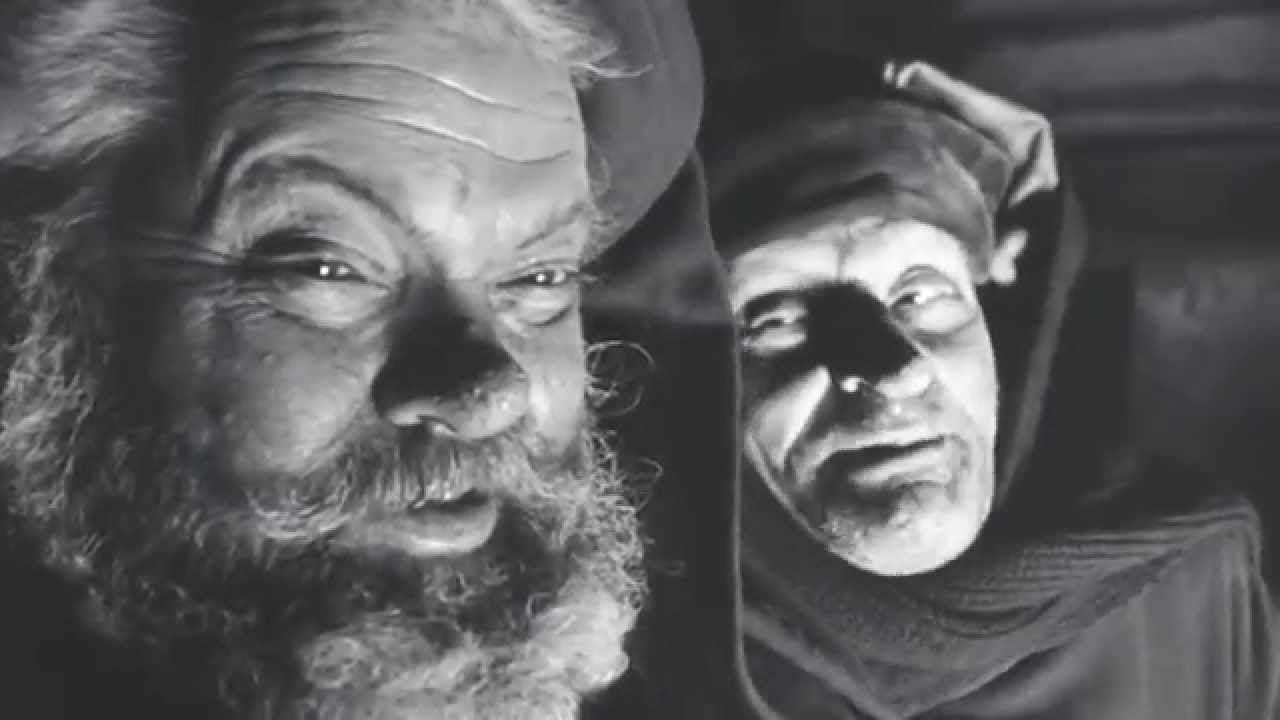
    After shooting wrapped for “The Magnificent Ambersons” in 1942, Welles took off for Rio de Janeiro to begin work on his next project, entrusting Wise, his editor, to carry his plans to fruition – which he dutifully did. However, following a disastrous preview screening, Wise suddenly found himself in an awkward position. RKO ordered him back into the editing booth to reconfigure Welles’ original blueprint, this time under hardnosed studio supervision. Furthermore, he was instructed to shoot a new ending. Needless to say, Welles and Wise, both nominated for Academy Awards for “Citizen Kane” (Welles won, with Herman Mankiewicz, for his screenplay), would never work together again.

    In all, 43 minutes of footage were cut from “The Magnificent Ambersons” and melted down for nitrate during World War II, dashing any hope that the film might be restored to its original version.

    Until now.

    Could we actually see “The Magnificent Ambersons” in the form Welles originally intended?

    Home

  • Shakespeare Italian Style on Film

    Shakespeare Italian Style on Film

    William Shakespeare certainly has legs. As England’s greatest playwright, his works have been performed, more or less continuously, for 400 years. He’s trod the boards of the Globe, and he’s circumnavigated the globe. This week on “Picture Perfect,” the Bard gets the “the boot,” with film adaptations scored by composers from the Italian Peninsula.

    Just about everyone knows about Orson Welles’ difficulties in Hollywood after skewering William Randolph Hearst in “Citizen Kane.” For flying too close to the sun, all at once cinema’s boy wonder was persona non grata. As a result, Welles spent the bulk of his career trying to secure his own funding and devise creative solutions when the money ran out.

    There is plenty of ingenuity on display in Welles’ “Othello” (1949). The film was shot on and off in Italy and Tunisia over a period of three years, as Welles periodically halted production to earn yet another paycheck by acting in somebody else’s picture. When at a point the costumes were repossessed, Welles pivoted by staging a key sequence in a Turkish bath, with the actors clad only in towels.

    For the music, Welles employed Angelo Francesco Lavagnino, a classically-trained musician who turned to film in the 1950s. He was soon to become one of the best-known Italian film composers of the era. Lavagnino would be engaged by Welles for several other projects, including a television movie of “The Merchant of Venice.”

    Lavagnino received very little or even no payment for his work with Welles, though he was honored to collaborate with the legendary director. For his part, Welles was only too happy to work with Lavagnino, whose music he admired, certainly. But there was an additional incentive in that, in Italy, it was the practice that record companies would pay for everything – orchestration, copying parts, and recording – since they kept the rights.

    “Chimes at Midnight” (1965), Welles’ compilation of the Falstaff plays, this time a Spanish-Swiss production, was also scored by Lavignino. Welles’ performance in the picture is considered to be one of his finest. Also in the cast were John Gielgud, Jeanne Moreau, and Margaret Rutherford. Vincent Canby of the New York Times wrote that “Chimes at Midnight” “… may be the greatest Shakespearean film ever made, bar none.” Lavagnino modeled much of his score on Early Music, since Welles had used a lot of it on the temp track.

    Much less frugal was Franco Zeffirelli, who enjoyed notable success adapting the Bard, both for film and the operatic stage. He directed a lively version of “The Taming of the Shrew,” with Elizabeth Taylor and Richard Burton, and an inexorable one of Verdi’s “Otello,” with Placido Domingo recreating one of his most celebrated roles.

    Ennio Morricone was Zeffirelli’s composer of choice for “Hamlet” (1990). The film featured a venerable supporting cast, with Glenn Close, Ian Holm, Helena Bonham Carter, Alan Bates and Paul Scofield, and Mel Gibson did a surprisingly respectable job as the lead. At the time, Gibson was known for his action roles.

    Zeffirelli’s biggest success with Shakespeare came with “Romeo and Juliet” (1968). Much was made of the fact that the film’s leads, Leonard Whiting and Olivia Hussey, were closer than usual to the age of the characters in the play. “Romeo” became one of the great date movies and retains its broad appeal. The score, by Nino Rota, spawned a popular hit, “A Time for Us.”

    All the world’s a stage! I hope you’ll join me for “Shakespeare Italian-Style,” on “Picture Perfect,” music for the movies, this Saturday evening at 6:00 EST, on WWFM – The Classical Network and wwfm.org.

  • Gilded Age Novels: Soundtracks & Stories

    Gilded Age Novels: Soundtracks & Stories

    “The Gilded Age” was a term coined by none other than Mark Twain to describe the era spanning, roughly, from the end of Reconstruction (after the Civil War) to the turn of the 20th century. He didn’t mean it as a compliment. A gilded age is one that conceals serious social problems beneath a veneer of gold. This week on “Picture Perfect,” we look past the dazzle to focus on music from films inspired by novels from, or about, the period.

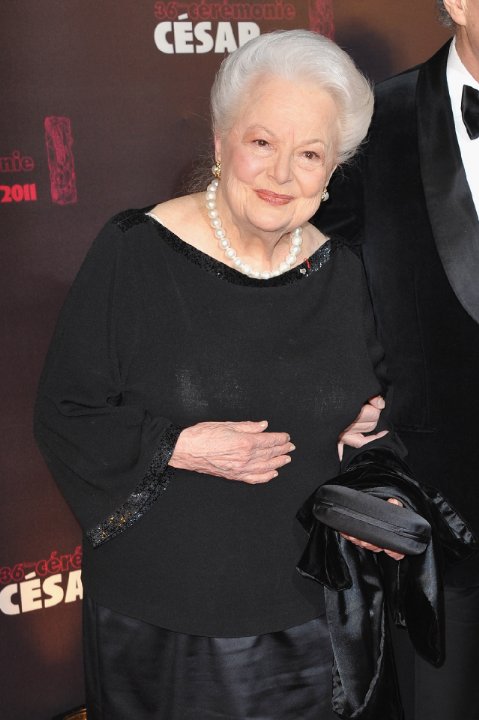
    “The Heiress” (1949) was adapted from a play by Ruth and Augustus Goetz, which in turn was based on the book “Washington Square,” by Henry James. Olivia De Havilland plays the “plain Jane” heiress of the title, Ralph Richardson her overbearing father, and Montgomery Clift, the adventurer who may or may not be out for her fortune. De Havilland won an Oscar for her portrayal, as did the music, by Aaron Copland.

    “The Age of Innocence” (1993) was written by one-time James correspondent, his close friend, Edith Wharton. The book was published in 1920, but looks back to the 1870s, its story dealing with the impending marriage of an upper class couple and the appearance of a disreputable interloper who threatens their happiness. The title is an ironic play on the contrast between the outward manners of New York society and its inward machinations. The novel earned Wharton a Pulitzer Prize, the first ever to be awarded to a woman. The film was something of a curve ball from director Martin Scorsese, who made his reputation on arguably meaner streets. Veteran composer Elmer Bernstein provided the lovely, Brahmsian score.

    “The Magnificent Ambersons” (1942) is based on another Pulitzer Prize winner, this time by Booth Tarkington, from 1918. The novel is part of trilogy that traces the declining fortunes of three generations of an aristocratic Midwestern family. With industrialism on the rise, the Ambersons’ “old money” wealth and prestige wane.

    “Ambersons” was only the second film directed by Orson Welles. Sadly, the financial failure of “Citizen Kane” and Welles’ uncompromising artistic vision caused the project to be removed from his control and re-cut by the studio, shaving a full hour off the original running time. It says something about the strength of Welles’ material that what survives yet remains a magnificent achievement.

    The score was by Bernard Herrmann, CBS staff composer from Welles’ radio days. Herrmann had followed Welles to Hollywood to supply the music for “Kane.” With the trimming of “Ambersons,” his score was drastically edited and half the music removed. The famously irascible Herrmann, who had just written his Academy Award winning music for “The Devil and Daniel Webster,” was so angry that he threatened legal action if his name was not removed from the credits. (The studio complied.)

    The action of “Mr. Skeffington” (1944), based on a 1940 novel by Elizabeth von Arnim, begins at a point some consider to be the twilight of the Gilded Age, the eve of World War I. Bette Davis stars as a woman so enamored with her own beauty, and the suitors it attracts, that she fails to value the affections of the man who eventually becomes her husband. Mr. Skeffington, played by Claude Rains, is a Jewish financier, riding high in the ‘teens, but his fortunes change when he’s caught in Europe during the rise of the Nazis.

    Davis and Rains both earned Academy Award nominations for their work. The vivid score is by Franz Waxman. Davis was going through a period of emotional turmoil during the filming, so that she was allegedly insufferable to be around throughout the entire shoot. Someone finally poisoned her eyewash. When the police questioned the director, Vincent Sherman, he wished them good luck with their investigation. “If you asked everyone on the set who would have committed such a thing, everyone would raise their hand!”

    Certainly all that glitters is not gold. We peel back the veneer of prosperity, this week, with “Novels of the Gilded Age,” on “Picture Perfect,” this Friday evening at 6:00 EDT on WWFM – The Classical Network and wwfm.org.


    PHOTOS: The late Olivia de Havilland (left), as Catherine Sloper (upper right), and posing with her Oscar for “The Heiress”

  • Time & Cinema Kings Row to The Leopard

    Time & Cinema Kings Row to The Leopard

    This week on “Picture Perfect,” with another year nearly burnt to nub, it’s an hour of cinematic reflections on time and impermanence.

    “Kings Row” (1942), based on the bestselling novel of Henry Bellamann (the one-time dean of the Curtis Institute of Music), takes place over a span of decades in a small Midwestern town. The community’s dark underbelly, gradually revealed, proves especially challenging to the story’s three protagonists, played by Robert Cummings, Ann Sheridan and Ronald Reagan.

    The deteriorating health of Cumming’s character’s grandmother (Maria Ouspenskaya, best known as Maleva, the gypsy fortune teller, in the 1943 version of “The Wolfman”) moves one of the film’s supporting characters to eulogize the passing of “… a whole way of life. A way of gentleness and honor and dignity. These things are going… and they may never come back to this world.” The story straddles the turn of the 20th century, even incorporating a New Year’s scene set in the year 1900.

    Erich Wolfgang Korngold composed the music. The opening fanfare, which we’ll hear from a rare 1961 recording, is said to have been one of the principal inspirations on John Williams in the writing of “Star Wars.”

    Director Orson Welles made his stunning Hollywood debut with back-to-back explorations of change and the passage of time: “Citizen Kane” (1941), about the rise and fall of a larger-than-life newspaper magnate – who, at his core, longs only for a simple pleasure of his childhood – and “The Magnificent Ambersons” (1942), after Booth Tarkington’s Pulitzer Prize-winning novel, documenting a prominent family’s declining fortunes over three generations. Both films sport scores by the ever-versatile Bernard Herrmann. We’ll hear some of the more upbeat selections assembled by the composer into a concert suite called “Welles Raises Kane.”

    “The Leopard” (1963) must be one of the most poignant meditations on mutability and time. One could argue whether or not director Luchino Visconti manages to capture the images of decay so pervasive in Giuseppe Tomasi di Lampedusa’s novel. What he does achieve is an achingly poetic study of the fall from prominence of an aristocratic Sicilian family, and the impact upon its patriarch (played by Burt Lancaster) during the time of Italian unification. Along the way, he also succeeds in staging one of the great set-pieces: an opulent ball that spans nearly a third of the film’s 187-minute running time. The operatically moving score is by Nino Rota.

    The hour will conclude with one final selection for the New Year, a lively overture to “The Four Poster” (1952). Rex Harrison and Lili Palmer appear in a series of vignettes – bedroom scenes – featuring a novelist husband and his wife. Collectively, they encapsulate the history of a marriage. The film became the basis for the musical “I Do! I Do!” The music is by Dimitri Tiomkin.

    Mark the sands of the hourglass and heed selections for the New Year. Nought may endure but Mutability, this Friday evening at 6:00 EST, on WWFM – The Classical Network and wwfm.org.
  • Bernstein Blitzstein Airborne Symphony

    Bernstein Blitzstein Airborne Symphony

    This Sunday night on “The Lost Chord,” to coincide with what would have been the 101st birthday of Leonard Bernstein, we’ll do our part in helping to wrap up the two-year, worldwide celebration of the Lenny centenary with, if not the most profound of his recordings, then surely one of the more unusual.

    Bernstein was a lifelong admirer of the Philadelphia-born composer Marc Blitzstein. He mounted a performance of Blitzstein’s notorious pro-labor musical, “The Cradle Will Rock,” while still at student at Harvard. He also dedicated his own opera, “Trouble in Tahiti” to him.

    Blitzstein’s “Airborne Symphony” was written on a commission from the U.S. Army while the composer was serving in its Air Force. The work traces the evolution of flight from its conception in theory to its use in modern warfare. The piece was envisaged by him as a big symphony on the theme of “the sacred struggle of airborne free men of the world… to crush the monstrous fascist obstructionist in their path.”

    Blitzstein began the work in 1943, at the height of World War II. It would not be completed until after the war, in 1946. Bernstein conducted the premiere virtually while the ink was still wet on the page. He recorded the piece twice. We’ll hear the second of the two recordings, from 1966, with Orson Welles as narrator, vocal soloists, the New York Philharmonic, and the men of the Choral Arts Society.

    I hope you’ll join me in celebrating Bernstein and Blitzstein – wrapping up the Bernstein centenary – on “Flight of Fancy,” this Sunday night at 10:00 EDT, on WWFM – The Classical Network and wwfm.org.

    Bernstein sings Blitzstein’s “Zipperfly”

    https://www.youtube.com/watch?v=VixrUZOppdI

Tag Cloud

Aaron Copland (92) Beethoven (95) Composer (114) Film Music (123) Film Score (143) Film Scores (255) Halloween (94) John Williams (187) KWAX (229) Leonard Bernstein (101) Marlboro Music Festival (125) Movie Music (138) Opera (202) Philadelphia Orchestra (89) Picture Perfect (174) Princeton Symphony Orchestra (106) Radio (87) Ralph Vaughan Williams (85) Ross Amico (244) Roy's Tie-Dye Sci-Fi Corner (290) The Classical Network (101) The Lost Chord (268) Vaughan Williams (103) WPRB (396) WWFM (881)

DON’T MISS A BEAT

Receive a weekly digest every Sunday at noon by signing up here


RECENT POSTS