Tag: Orson Welles

  • War of the Worlds Anniversary Events

    War of the Worlds Anniversary Events

    People of Earth! Hear the difference!

    October 30th marks the 80th anniversary of the notorious “War of the Worlds” radio broadcast that brought the Martians to Grover’s Mill, outside Princeton, NJ, and set off a national panic. 2018 also happens to be the 120th anniversary of the publication of the novel.

    This week on “Picture Perfect,” we’ll wrap up our “Hear the Difference” fundraiser with a special live double-celebration, featuring music from films inspired by Wells’ classic and other cinematic extraterrestrial-Earthling exchanges.

    Strike a blow for humanity! Please support us on the last day of our membership campaign at 1-888-232-1212 or wwfm.org.

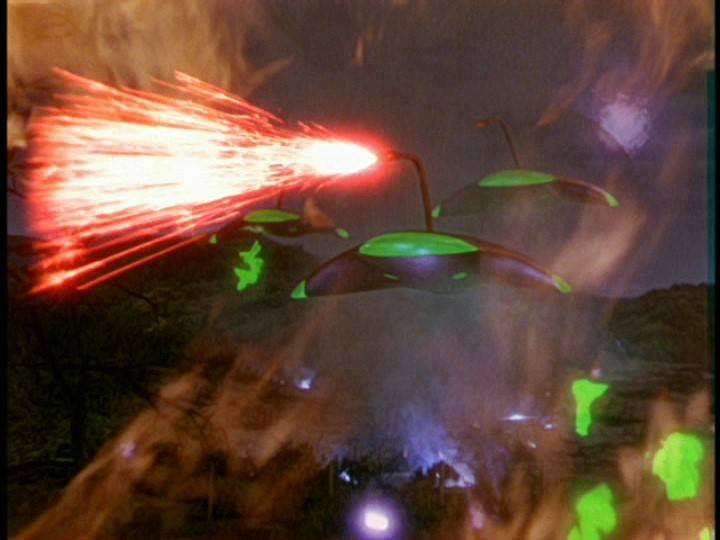
    Mars attacks, except when it doesn’t. Watch out for that heat ray, this Friday at 6 p.m. EDT, on WWFM – The Classical Network and wwfm.org!


    The locals are all stirred up!

    West Windsor Arts Center has big plans for the near future, beginning tomorrow with The mARTian Project Kick-off, which will include a screening of the 1953 George Pal classic. Learn more about the Arts Council’s vision for the next few years:

    https://communitynews.org/2018/05/16/west-windsor-arts-council-arts-council-war-of-the-worlds/

    Grover’s Mill Coffee House has commemorative events planned for tonight, tomorrow, and Sunday, including a recreation of the 1938 Mercury Theatre radio broadcast:

    http://www.groversmillcoffee.com/

    Keep watching the skies!


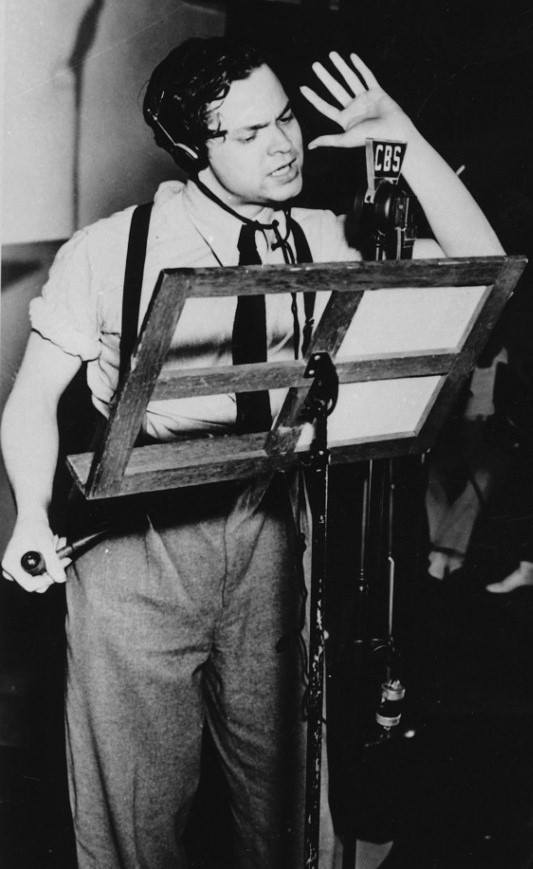
    PHOTOS: Orson Welles stirs panic; and the “War of the Worlds” monument, installed in Van Nest Park 30 years ago, to mark the 50th anniversary of the broadcast

  • War of the Worlds & Martian Movie Music

    War of the Worlds & Martian Movie Music

    This week on “Picture Perfect,” with Halloween only days away, my thoughts turn to Grover’s Mill, the community located not far outside of Princeton, NJ, that became the focal point of Orson Welles’ notorious radio adaptation of H.G. Wells’ “The War of the Worlds.”

    On October 30, 1938, Welles’ Mercury Theatre presented the classic’s dramatization after the manner of “breaking news,” with simulated live reports interrupting a program of regularly scheduled dance music. What the alleged reports described was chilling – a Martian invasion of rural America by hostile aliens bearing fiery weapons and poisonous gas. The whole story was authenticated, in real time, by a “Professor Richard Pierson of Princeton Observatory.”

    Those who tuned in late or were only half-listening completely freaked out, and reacted in a manner unimaginable in an era of social media. Panicked mobs choked the streets, phone lines were jammed, and police flooded CBS Studios. Welles had dropped the biggest firecracker right in the middle of a United States already on edge, thanks to widespread access to radio reports of mounting tensions in Europe.

    You might say Welles’ (and Wells’) fame skyrocketed. Orson Welles would match his early notoriety a few years later with his Hollywood debut, as producer, director, co-writer, and star of “Citizen Kane,” which inflamed William Randolph Hearst, while H.G. Wells’ novel has remained his most popular, the work having been adapted to film several times.

    We’ll hear music from the classic 1953 version, produced by George Pal, with music by Leith Stevens; then the Steven Spielberg blockbuster, from 2005 (titled, simply, “War of the Worlds”), with music by John Williams.

    After that, we’ll take it to the Red Planet, when an American astronaut is stranded with his test monkey, in 1964’s “Robinson Crusoe on Mars,” with music by Van Cleave.

    Finally, we’ll turn to Edgar Rice Burroughs’ John Carter. Why Disney dropped “of Mars” from the title – something that would have actually said something about the subject matter – is anybody’s guess. The belated 2012 adaptation came 100 years after the character was introduced. Unfortunately, the intervening decades robbed Burroughs’ creation of much of its freshness, with dozens, if not hundreds, of science fiction novels and movies having plundered the author’s pulp treasure trove. “John Carter” was less striking than it might have been, but the film was certainly not the train wreck the press made it out to be. Michael Giacchino’s score ends the hour on a romantic note, a welcome relief after dodging so many Martian heat rays.

    I hope you’ll join me for an interplanetary exchange program (though, granted, not always a peaceful one), with music from movies about visitors to and from Mars, on “Picture Perfect,” this Friday evening at 6 EDT, on WWFM – The Classical Network and wwfm.org.

    WWFM is the classical music station located closest to the site of Welles’ projected Martian invasion. In the interest of galactic harmony, please support us online or at 1-888-232-1212.

  • Blitzstein’s Airborne Symphony WW2 Relic

    Blitzstein’s Airborne Symphony WW2 Relic

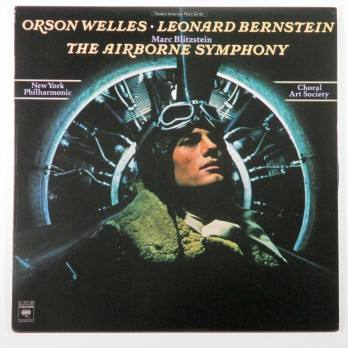
    This Sunday night on “The Lost Chord,” we’ll highlight a single, patriotic work: Marc Blitzstein’s “Airborne Symphony.” Written on a commission from the U.S. Army while Blitzstein was serving in its Air Force, the work traces the evolution of flight from its conception in theory to its use in modern warfare.

    The work was envisaged by the composer as a big symphony on the theme of “the sacred struggle of airborne free men of the world… to crush the monstrous fascist obstructionist in their path.”

    Blitzstein began the work in 1943, at the height of World War II. It would not be completed until after the war, in 1946. Leonard Bernstein conducted the premiere virtually while the ink was still wet on the page. He recorded it twice. We’ll be listening to the second of the two recordings, from 1966, with Orson Welles as the narrator, vocal soloists, the New York Philharmonic, and the men of the Choral Arts Society.

    Join me for this forgotten relic of WWII – “Flight of Fancy” – tonight at 10 EDT on WWFM – The Classical Network; or listen to it later as a webcast at http://www.wwfm.org/

  • Shakespeare Goes Italian: Welles & Zeffirelli Films

    Shakespeare Goes Italian: Welles & Zeffirelli Films

    Not only is William Shakespeare arguably England’s greatest poet and playwright, he certainly has legs. The Bard’s influence has been felt all around the globe. His plays have been translated into virtually every language, and filmmakers in such diverse cultures as those of India, Japan and Argentina have adapted his work for the silver screen.

    This week on “Picture Perfect,” we’ll be giving the Bard “the boot,” as we turn our attention to Italy, with two films by Orson Welles and two by Franco Zeffirelli.

    Just about everyone knows about Welles’ difficulties in Hollywood after skewering William Randolph Hearst in “Citizen Kane.” But Welles also was never one to take compromise lightly. As a result, he was frequently forced to strike out on his own, secure his own funding and come up with creative solutions when the money ran out.

    There is a famous bit of ingenuity on display in Welles’ adaptation of “Othello” (1949). The film was shot on and off over a period of three years and at various locales in Italy and Tunisia, as Welles would race off to earn money by acting in other pictures. One important scene was shot in a Turkish bath, with the actors clad in towels, since Welles’ couldn’t pay for the necessary costumes.

    For the music, Welles employed Angelo Francesco Lavagnino, a classically trained musician who, after a career in concert hall and conservatory, turned to film in the 1950s. He became one of the best-known Italian film composers of the era. He was actually Sergio Leone’s first choice to score “A Fistful of Dollars,” but his distributor insisted he use a young, less well-established Ennio Morricone instead.

    Lavagnino would be engaged by Welles for several other projects, including a television movie of “The Merchant of Venice.” Sadly, as was generally the case with Welles’ later films, lack of funding played a role in keeping “Don Quixote” from reaching the scoring stage.

    Lavagnino received very little or even no payment for his work on Welles’ pictures, though he was honored to collaborate with the legendary director. For his part, Welles was only too happy to work with Lavagnino, whose music he admired, certainly. But there was an additional incentive in that, in Italy, it was the practice that record companies would pay for everything – orchestration, recording and everything else – since they kept the rights.

    “Chimes at Midnight” (1965), Welles’ compilation of the Falstaff plays, though a Spanish-Swiss production, was also scored by Lavignino. Welles’ performance in the picture is considered to be one of his finest. Also in the cast were John Gielgud, Jeanne Moreau and Margaret Rutherford. Vincent Canby of the New York Times wrote that “Chimes at Midnight” “… may be the greatest Shakespearean film ever made, bar none.” Lavagnino modeled much of his score on Early Music, since Welles had used a lot of it on the temp track. (Coincidentally, this film is now on the schedule of the Princeton Garden Theatre.)

    Speaking of Morricone, he was very well-established by the time he was approached by director Franco Zeffirelli to score his screen adaptation of “Hamlet” (1990). The film featured a venerable supporting cast, with Glenn Close, Ian Holm, Helena Bonham Carter, Alan Bates and Paul Scofield, and Mel Gibson did a surprisingly respectable job as the lead. At the time, Gibson was known for his action roles.

    Zeffirelli has had notable success adapting Shakespeare, both for film and the operatic stage. He directed a lively film version of “The Taming of the Shrew,” with Elizabeth Taylor and Richard Burton, and an adaptation of Verdi’s “Otello,” with Placido Domingo recreating one of his most celebrated roles.

    By far, however, his biggest success came with “Romeo and Juliet” (1968). Much was made of the fact that the film’s leads, Leonard Whiting and Olivia Hussey, were closer than usual to the age of the characters in the play. “Romeo and Juliet” became one of the great date movies and retains its broad appeal. The score, by Nino Rota, spawned a popular hit, “A Time for Us.”

    I hope you’ll join me for “Shakespeare Italian-Style,” this Friday evening at 6 EDT, with a repeat Saturday morning at 6; or that you’ll listen to it later as a webcast at wwfm.org.

    #Shakespeare400

  • Orson Welles 100 The Third Man Restored

    Orson Welles 100 The Third Man Restored

    Holy cow (and no pun intended) – today is Orson Welles’ 100th birthday!

    Listen to this acceptance speech and realize just how far we as a civilization have fallen. Can you imagine any filmmaker or actor of today possessing this kind of oratorical skill? Does anyone even know who Samuel Johnson is?

    I also just learned that Rialto Pictures is releasing a 4k restoration of Carol Reed’s “The Third Man,” in which Orson totally steals the show. It will open on June 26 at New York’s Film Forum, before fanning out to several other major U.S. markets, including Philadelphia.

    http://variety.com/2015/film/news/orson-welles-restored-the-third-man-set-for-u-s-release-1201488365/

    Obviously, this is not the restored version (it looks like a screen shot off of somebody’s television set), but a great clip nonetheless:

    I salute you, Orson! You fell hard, but you accomplished much.

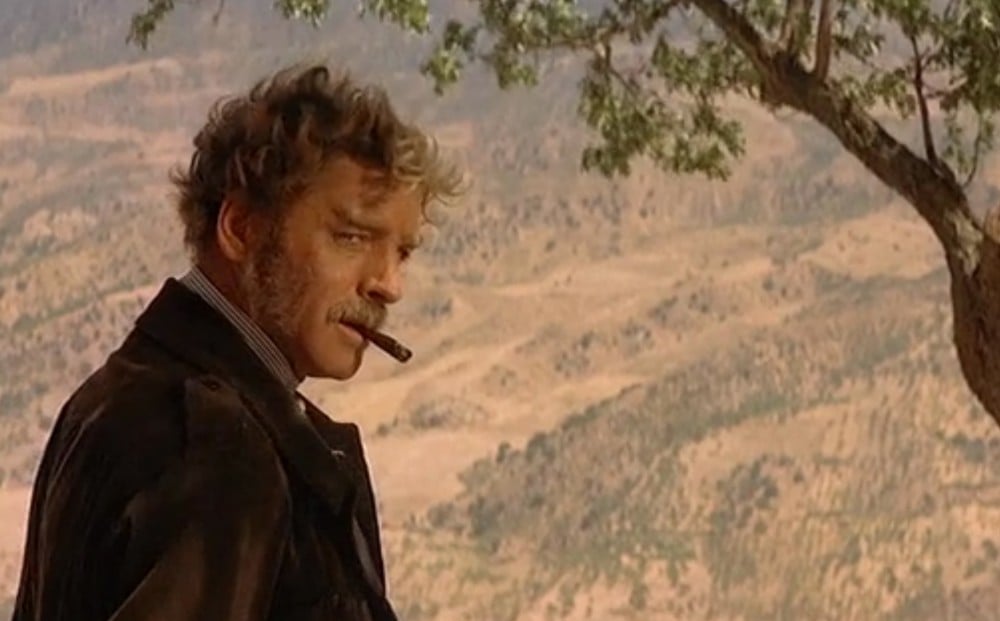
    PHOTO: Sometimes a cigar is just a – oh forget about it.

Tag Cloud

Aaron Copland (92) Beethoven (95) Composer (114) Film Music (123) Film Score (143) Film Scores (255) Halloween (94) John Williams (187) KWAX (229) Leonard Bernstein (101) Marlboro Music Festival (125) Movie Music (138) Opera (202) Philadelphia Orchestra (89) Picture Perfect (174) Princeton Symphony Orchestra (106) Radio (87) Ralph Vaughan Williams (85) Ross Amico (244) Roy's Tie-Dye Sci-Fi Corner (290) The Classical Network (101) The Lost Chord (268) Vaughan Williams (103) WPRB (396) WWFM (881)

DON’T MISS A BEAT

Receive a weekly digest every Sunday at noon by signing up here


RECENT POSTS