Tag: Pablo Casals

  • Music for Casals Composers Inspired by a Cello Legend

    Music for Casals Composers Inspired by a Cello Legend

    It’s hardly surprising that anyone would be moved to write music for Pablo Casals.

    Regarded by many as the greatest cellist of his time, perhaps ever, Casals was certainly a giant of an artist and of a man. Born in Catalonia, he stood up to the Franco regime, entering into self-imposed exile and refusing to perform in countries that recognized Franco’s authority. He rediscovered the Bach cello suites in a secondhand bookshop and made them famous. Over the course of his career, he played for both Queen Victoria and John F. Kennedy.

    As a conductor and an administrator, he founded the Prades Festival and Casals Festival. He established the Puerto Rico Symphony and Conservatory. He gave master classes, conducted and recorded at Marlboro. He was even a talented composer.

    This week on “The Lost Chord,” we’ll hear works dedicated to Casals by three of his friends and colleagues.

    Ralph Vaughan Williams wrote his seldom-heard “Fantasia on Sussex Folk Tunes” around the time he was at work on his Piano Concerto and “Job: A Masque for Dancing.” Casals performed the piece in 1930. It was not heard again until 1983, the year of its world-premiere recording (featuring Julian Lloyd Webber). The composer later undertook a full-scale concerto for Casals. It was never completed, but the sketches for its slow movement were realized for a 2010 performance at the BBC Proms, under the title “Dark Pastoral.”

    Donald Francis Tovey, who would achieve fame as a musicologist and writer on music, wrote quite a lot of music himself, most of it now forgotten. In 1935, he composed a concerto for Casals. At nearly an hour in length, the work may be the longest cello concerto ever written.

    In 1912, Tovey was a houseguest of Casals and cellist Guilhermina Suggia, at their summer home at Playa San Salvador on the Mediterranean coast. There, he played tennis, swam and performed chamber music with the likes of Enrique Granados and Mieczyslaw Horszowski. He also made great strides on his opera, “The Bride of Dionysus.” As a show of thanks, he composed for his hosts a Sonata for Two Cellos in G major, which became part of the evenings’ entertainments. The work’s second movement is a set of variations on a Catalan folk song. We’ll hear it performed by Marcy Rosen and Frances Rowell, from a Bridge Records, Inc. release.

    Finally, Arnold Schoenberg (whose birthday it is today), himself an amateur cellist, had done editorial work on three pieces by the 18th century composer Georg Matthias Monn for inclusion in the publication “Monuments of Music in Austria.” When Casals invited Schoenberg to conduct his orchestra in Barcelona, the composer set about arranging a “new” concerto, based upon a harpsichord work by Monn, written in 1746. We’ll hear Schoenberg’s transformation of the piece performed by Yo-Yo Ma.

    I hope you’ll join me for “Casals’ Pals” – music written for Pablo Casals by notable composers, friends and colleagues – on “The Lost Chord,” now in syndication on KWAX, the radio station of the University of Oregon!


    Clip and save the start times for all three of my recorded shows:

    PICTURE PERFECT, the movie music show – Friday at 8:00 PM EDT/5:00 PM PDT

    SWEETNESS AND LIGHT, the light music program – Saturday at 11:00 AM EDT/8:00 AM PDT

    THE LOST CHORD, unusual and neglected rep – Saturday at 7:00 PM EDT/4:00 PM PDT

    Stream them, wherever you are, at the link!

    https://kwax.uoregon.edu/

  • Casals & His Composer Friends on The Lost Chord

    Casals & His Composer Friends on The Lost Chord

    He put his career on hold to stand up to Franco. He rediscovered the Bach cello suites. He played for Queen Victoria and John F. Kennedy. He founded the Prades Festival. He established the Puerto Rico Symphony and Conservatory. He gave master classes, conducted and recorded at Marlboro. He was even a talented composer.

    Pablo Casals was a giant of an artist and of a man. Is it any wonder so many of his colleagues were moved to write music for him?

    This week on “The Lost Chord,” we’ll hear works dedicated to Casals by three of his composer friends and colleagues.

    Ralph Vaughan Williams wrote his seldom-heard “Fantasia on Sussex Folk Tunes” around the time he was at work on his Piano Concerto and “Job: A Masque for Dancing.” Casals performed the piece in 1930. It was not heard again until 1983, the year of its world-premiere recording (featuring Julian Lloyd Webber). The composer later undertook a full-scale concerto for Casals. It was never completed, but the sketches for its slow movement were realized for a 2010 performance at the BBC Proms, under the title “Dark Pastoral.”

    Donald Francis Tovey, who would achieve fame as a musicologist, composed quite a lot of music himself, most of it now forgotten. In 1935, he wrote a concerto for Casals. At nearly an hour in length, the work may be the longest cello concerto ever written.

    In 1912, Tovey was a houseguest of Casals and cellist Guilhermina Suggia, at their summer home at Playa San Salvador on the Mediterranean coast. There, he played tennis, swam, and performed chamber music with the likes of Enrique Granados and Mieczyslaw Horszowski. He also made great strides on his opera, “The Bride of Dionysus.” As a show of thanks, he composed for his hosts a Sonata for Two Cellos in G major, which became part of the evenings’ entertainments. The work’s second movement is a set of variations on a Catalan folk song. We’ll hear it performed by Marcy Rosen and Frances Rowell, from a Bridge Records, Inc. release.

    Finally, Arnold Schoenberg, himself an amateur cellist, had done editorial work on three pieces by the 18th century composer Georg Matthias Monn, for inclusion in the publication “Monuments of Music in Austria.” When Casals invited Schoenberg to conduct his orchestra in Barcelona, the composer set about arranging a “new” concerto, based upon a harpsichord work by Monn, written in 1746. We’ll hear Schoenberg’s transformation of the piece performed by Yo-Yo Ma.

    Pau takes a bow! I hope you’ll join me for “Casals’ Pals” – music written for Pablo Casals by notable composer friends and colleagues – on “The Lost Chord,” now in syndication on KWAX, the radio station of the University of Oregon!


    Remember, KWAX is on the West Coast, so there’s a three-hour difference for the Trenton-Princeton area. Here are the respective air-times of my recorded shows (with East Coast conversions in parentheses):

    PICTURE PERFECT, the movie music show – Friday on KWAX at 5:00 PACIFIC TIME (8:00 PM EDT)

    THE LOST CHORD, unusual and neglected rep – Saturday on KWAX at 4:00 PACIFIC TIME (7:00 PM EDT)

    Stream them here!

    https://kwax.uoregon.edu/

  • Casals Bach Cello Suites Holiday Escape

    Casals Bach Cello Suites Holiday Escape

    The holidays are not for the faint of heart. Pablo Casals, take me away!

    On Casals’ birthday, I wish you some quiet time with his pioneering, rejuvenating traversal of the Bach cello suites, still sounding great after 84 years.

    It’s hard to believe that these cornerstones of the cello repertoire were once commonly regarded as little more than etudes. The truth is, before the 20th century they were not widely known, much less understood. It is Casals who is credited with having rehabilitated them, following his discovery of the music in a Catalan bookshop at the age of 13. He cherished the suites for the rest of his life, not only playing them in public but delving into them privately every morning after a walk and a smoke. There must have been something to it: Casals died in 1973, two months shy of his 97th birthday.

    He was the first cellist to record all six suites, already 60 by the time he first played Bach before a microphone.

  • Casals’ Lost Christmas Oratorio “El Pessebre”

    Casals’ Lost Christmas Oratorio “El Pessebre”

    Pablo Casals is remembered primarily as one of the great cellists. But did you know he was also a composer?

    This Sunday night on “The Lost Chord,” we’ll hear selections from what must be Casals’ most ambitious piece, his Christmas oratorio “El Pessebre,” or “The Crib” (once commonly translated as “The Manger”).

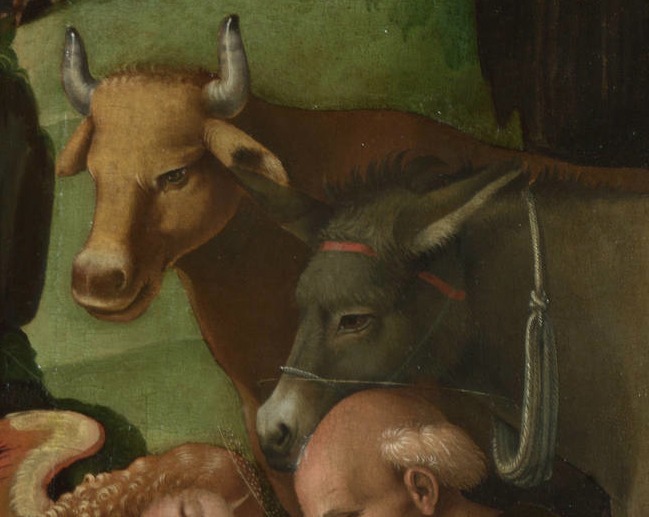
    The text, by Catalan poet Joan Alavedra, was conceived in response to questions posed by his five-year-old daughter, who asked him, as he was setting up his crèche, what each of the figures at the Nativity – including the animals – said.

    The project provided something of an escape for both artists. The work was begun while they were under house arrest in 1943. The folk-like simplicity of the oratorio is disturbed only occasionally by intimations of a troubled world. Casals added a prayer for peace to the concluding “Gloria” and refused to allow the work to be performed in Franco’s Spain. Instead, it was given its premiere in Acapulco, Mexico, in 1960.

    As long as you don’t go into it expecting Christmas music of the caliber of that written by Casals’ idol, Johann Sebastian Bach, the oratorio makes for a charming and disarming musical experience. Said Casals, “The figures in a crèche are folk figures. Why, they can’t sing twelve-tone music!”

    Casals’ recording of the piece (highlights from which I first heard on a stethoscope-style pneumatic headset on a flight to Europe, back in the 1980s!), to my knowledge, has never been released on CD. Even so, this one, with Lawrence Foster conducting, is probably about as good as it’s going to get.

    Ox me no more questions; mule find out soon enough! I hope you’ll join me for “Catalan Christmas,” selections from “El Pessebre,” this Sunday night at 10:00 EST, on WWFM – The Classical Network and wwfm.org.


    BONUS: Casals’ arrangement of a traditional Catalan carol, “The Song of the Birds.” It was he who popularized the carol internationally in a version for solo cello, which he would sometimes include on his recitals as an encore.

  • Pablo Casals: Beyond the Cello Great

    Pablo Casals: Beyond the Cello Great

    Pablo Casals is remembered primarily as one of the great cellists. But did you know he was also a composer? Casals’ most ambitious piece must be his Christmas oratorio “El Pessebre,” or “The Crib” (once commonly translated as “The Manger”).

    The text, by Catalan poet Joan Alavedra, was conceived in response to questions posed by his five-year-old daughter. She asked him, as he was setting up his crèche, what each of the figures at the Nativity – including the animals – said.

    The project provided something of an escape for both artists. The work was begun while they were under house arrest in 1943. The folk-like simplicity of the oratorio is disturbed only occasionally by intimations of a troubled world. Casals added a prayer for peace to the concluding “Gloria” and refused to allow the work to be performed in Franco’s Spain. Instead, it was given its premiere in Acapulco, Mexico, in 1960.

    As long as you don’t go into it expecting Christmas music of the caliber of that written by Casals’ idol, Johann Sebastian Bach, the oratorio makes for a charming and disarming musical experience. Said Casals, “The figures in a crèche are folk figures. Why, they can’t sing twelve-tone music!”

    Casals’ performance of the piece, to my knowledge, has never been released on CD. Even so, this one, with Lawrence Foster conducting, is probably about as good as it’s going to get.

    Less of an investment is Casals’ arrangement of a traditional Catalan carol, “The Song of the Birds.” It was he who popularized the carol internationally in a version for solo cello, which he would sometimes include on his recitals as an encore.

    On October 24, 1971, when Casals was awarded a Peace Medal from the United Nations, at the age of 94, he played it before the General Assembly. This is what he said on that occasion:

    “I haven’t played in public for nearly 40 years. I have to play today. This piece is called ‘The Song of the Birds.’ The birds in the sky, in the space, sing, ‘Peace! Peace! Peace!’ The music is a music that Bach and Beethoven and all the greats would have loved and admired. It is so beautiful and it is also the soul of my country, Catalonia.”

    You can actually hear him speak at the link.

    If you’ve already had your fill of Christmas, Casals’ traversal of the Bach cello suites still sounds great after 80 years. It’s hard to believe that these cornerstones of the cello repertoire were once commonly regarded as little more than etudes. In fact, before the 20th century, they were hardly known.

    It is Casals who is credited with having rehabilitated them, following his discovery of the music in a Catalan bookshop at the age of 13. He cherished the suites for the rest of his life, not only playing them in public, but delving into them privately every morning after a walk and a smoke. There must have been something to it: Casals died in 1973, two months shy of his 97th birthday.

    Casals was the first cellist to record all six suites. He was already 60 by the time he first played Bach before a microphone.

    Happy birthday, Pau!


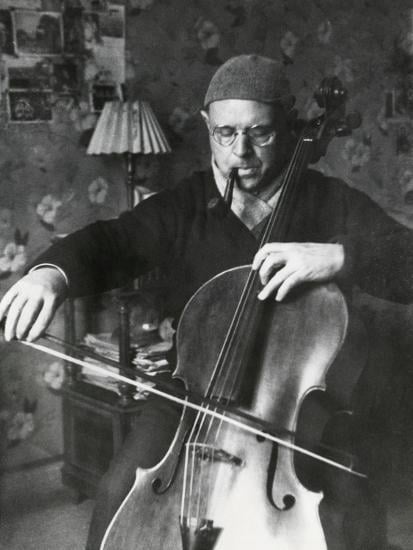
    PHOTO: Casals at home in Barcelona

Tag Cloud

Aaron Copland (92) Beethoven (94) Composer (114) Film Music (116) Film Score (143) Film Scores (255) Halloween (94) John Williams (185) KWAX (228) Leonard Bernstein (99) Marlboro Music Festival (125) Movie Music (131) Opera (197) Philadelphia Orchestra (86) Picture Perfect (174) Princeton Symphony Orchestra (106) Radio (86) Ralph Vaughan Williams (85) Ross Amico (244) Roy's Tie-Dye Sci-Fi Corner (290) The Classical Network (101) The Lost Chord (268) Vaughan Williams (99) WPRB (396) WWFM (881)

DON’T MISS A BEAT

Receive a weekly digest every Sunday at noon by signing up here


RECENT POSTS