Tag: Pablo Casals

  • Marlboro Music Festival: Casals & Hindemith

    Marlboro Music Festival: Casals & Hindemith

    This week on “Music from Marlboro,” we’ll sample from two authorized recordings made at the Marlboro Music Festival and issued commercially on Columbia Records and Sony compact disc.

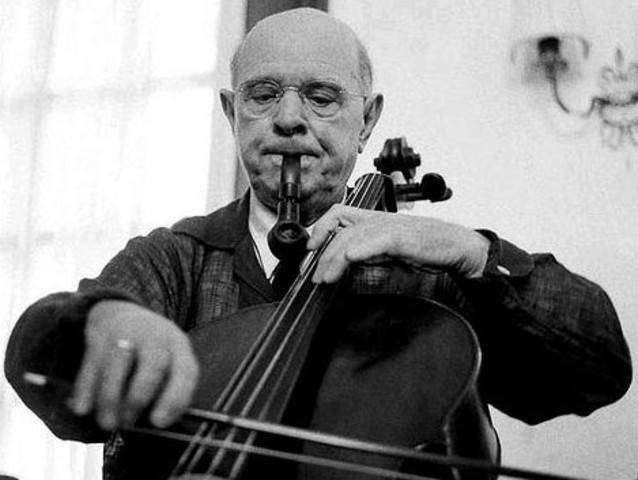
    Legendary cellist Pablo Casals was affiliated with the Marlboro festival for the last 13 years of his life, from 1960 to 1973. We’ll hear Casals conduct Marlboro musicians in one of the orchestral suites of Johann Sebastian Bach. It was Casals who, at the age of 13, rediscovered Bach’s cello suites in a thrift shop in Barcelona. His 1939 recordings established the works as cornerstones of the modern repertoire. Casals’ loving, humanistic interpretations of Bach’s orchestral works (as well as those of Mozart, Beethoven, Schubert, Mendelssohn, and Schumann) form a remarkable capstone to an enviable career.

    We’ll also listen to Paul Hindemith’s Octet for Winds and Strings, composed in 1957-1958. The work is scored for clarinet, bassoon, French horn, violin, two violas, cello, and double bass. Played by an impromptu group of eight talented Marlboro musicians, it’s as fine a performance of the piece as you’re ever likely to hear.

    I hope you’ll join me for “Music from Marlboro,” this Wednesday evening at 6:00 EDT, on WWFM – The Classical Network and wwfm.org.

    Marlboro School of Music and Festival: Official Page

  • Granados at 150 A Musical Celebration on WPRB

    Granados at 150 A Musical Celebration on WPRB

    Enrique Granados’ life may have been cut short in 1916, at the age of only 49, but his music continues to age well. Granados is widely celebrated for his evocative aural postcards of his native Spain, most notably his collections of piano miniatures, the “Spanish Dances,” and “Goyescas” (the latter inspired by paintings of Francisco Goya). But there was so much more to this remarkable composer.

    Join me this Thursday morning on WPRB, as we celebrate the 150th anniversary of Granados’ birth. We’ll get the day started with a full five hours of his music, including an assortment of his rarely-heard orchestral, choral and chamber works, and, yes, even a recording of his one-act opera “Goyescas,” which the composer cannily adapted from his popular piano pieces.

    Performers will include Ataulfa Argenta, the Barcelona Symphony Orchestra, Maria Bayo, the Beaux Arts Trio, Montserrat Caballe, Alicia de Larrocha, Victoria de los Angeles, Andres Segovia, Ramón Vargas and Granados himself.

    The playlist will also feature the rarely-heard symphonic poem “Dante,” and world premiere recordings of the “Suite on Galician Folk Songs,” “Song of the Stars,” and the lyric poem “Liliana,” as arranged by Granados’ friend and champion Pablo Casals.

    If you’re a fan of fandangos with a craving for castanets, you’ll want to join me, this Thursday morning from 6 to 11 EDT, on WPRB 103.3 FM and wprb.com. We’ll do it up grand for Granados, on Classic Ross Amico.

  • Granados Casals and Liliana on WPRB

    Granados Casals and Liliana on WPRB

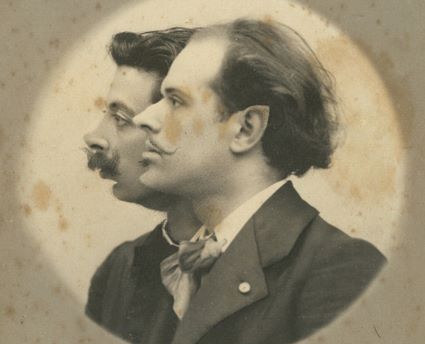
    A nice photo of Enrique Granados with his friend Pablo Casals, both evidently (and justifiably) proud of their moustaches. Casals arranged Granados’ lyric poem “Liliana” for concert performance. We’re enjoying it right now, as part of a full morning of Granados’ music, in celebration of the 150th anniversary of his birth, on WPRB 103.3 FM and wprb.com.

  • Casals’ Christmas Oratorio El Pesebre

    Casals’ Christmas Oratorio El Pesebre

    Pablo Casals is remembered primarily as one of the great cellists. But did you know he was also a composer? Casals’ most ambitious piece must be his Christmas oratorio “El Pesebre,” or “The Crib” (once commonly translated as “The Manger”).

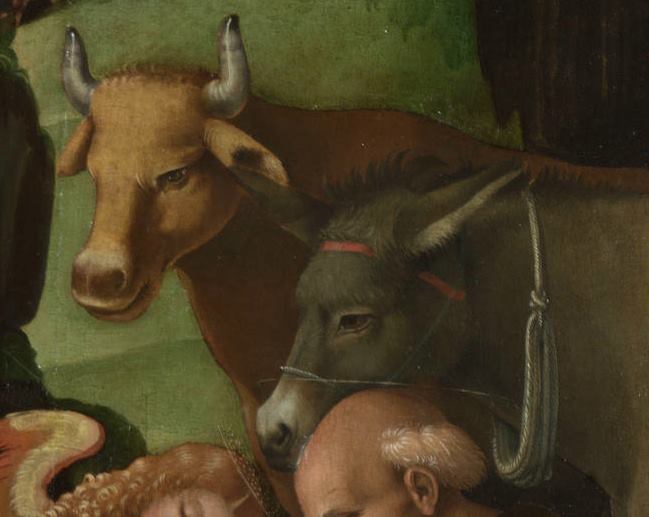
    The text, by Catalan poet Joan Alavedra, was conceived in response to questions posed by his five year-old daughter. She asked him, as he was setting up his crèche, what each of the figures at the Nativity – including the animals – said.

    The project provided something of an escape for both artists. The work was begun while they were under house arrest in 1943. The folk-like simplicity of the oratorio is disturbed only occasionally by intimations of a troubled world. Casals added a prayer for peace to the concluding “Gloria” and refused to allow the work to be performed in Franco’s Spain. Instead, it was given its premiere in Acapulco, Mexico, in 1960.

    As long as you don’t go into it expecting Christmas music of the caliber of that written by Casals’ idol, Johann Sebastian Bach, the oratorio makes for a charming and disarming musical experience. Said Casals, “The figures in a crèche are folk figures; why, they can’t sing twelve-tone music!” You can hear “El Pesebre” this afternoon around 2:00, following today’s noontime concert.

    At 12:00, we offer a rebroadcast of an event which took place at Nassau Presbyterian Church in Princeton on December 5. The American Boychoir and its music director, Fernando Malvar-Ruiz, join host Rob Kapilow for a special “What Makes It Great?” Performers and presenter parse out Benjamin Britten’s beloved “A Ceremony of Carols,” followed by a complete performance of the piece. The absorbing analysis-with-concert is emceed by WWFM’s David Osenberg.

    Christmas is for the young this afternoon, from noon to 4 p.m. EST, on WWFM – The Classical Network and at wwfm.org.

  • Music for Casals Giants Among Friends

    Music for Casals Giants Among Friends

    It’s hardly surprising that anyone would be moved to write music for Pablo Casals. Regarded by many as the greatest cellist of his time, perhaps ever, he was certainly a giant-of-an-artist, and of a man. Born in Catalonia, he stood up to the Franco regime, entering into self-imposed exile and refusing to perform in countries that recognized Franco’s authority. He rediscovered the Bach cello suites in a secondhand bookshop and made them famous. Over the span of his career, he played for both Queen Victoria and John F. Kennedy.

    As a conductor and administrator, he founded the Prades Festival and the Casals Festival. He established the Puerto Rico Symphony and the Conservatory of Music in Puerto Rico. He gave master classes, conducted and recorded at Marlboro. He was even a talented composer.

    This Sunday night on “The Lost Chord,” we’ll hear three works written for Casals by his notable friends and colleagues.

    Ralph Vaughan Williams wrote his seldom-heard “Fantasia on Sussex Folk Tunes” around the time he was at work on his Piano Concerto and “Job: A Masque for Dancing.” Casals performed the piece in 1930. It was not heard again until 1983, the year of its world-premiere recording (featuring Julian Lloyd Webber). The composer later undertook a full-scale concerto for Casals. It was never completed, but the sketches for its slow movement were realized for a 2010 performance at the BBC Proms, under the title “Dark Pastoral.”

    Donald Francis Tovey, who would achieve fame as a musicologist and writer on music, wrote quite a lot of music himself, most of it now forgotten. In 1935, he composed a concerto for Casals. At nearly an hour in length, the work may be the longest cello concerto ever written.

    In 1912, Tovey was a houseguest of Casals and cellist Guilhermina Suggia, at their summer home at Playa San Salvador on the Mediterranean coast. There, he played tennis, swam and performed chamber music with the likes of Enrique Granados and Mieczyslaw Horzsowski. He also made great strides on his opera, “The Bride of Dionysus.” As a show of thanks, he composed for his hosts a Sonata for Two Cellos in G major, which became part of the evenings’ entertainments. The work’s second movement is a set of variations on a Catalan folk song. We’ll hear it performed by Marcy Rosen and Frances Rowell, from a Bridge Records, Inc. release.

    Finally, Arnold Schoenberg, himself an amateur cellist, had done editorial work on three pieces by the 18th century composer Georg Matthias Monn for inclusion in the publication “Monuments of Music in Austria.” When Casals invited Schoenberg to conduct his orchestra in Barcelona, the composer set about arranging a “new” concerto, based upon a harpsichord work by Monn, written in 1746. We’ll hear Schoenberg’s transformation of the piece performed by Yo-Yo Ma.

    Join me for “Casals’ Pals” – music written for Casals by notable composers, friends and colleagues – this Sunday night at 10 EDT, on WWFM – The Classical Network and at wwfm.org.

Tag Cloud

Aaron Copland (92) Beethoven (95) Composer (114) Film Music (123) Film Score (143) Film Scores (255) Halloween (94) John Williams (187) KWAX (229) Leonard Bernstein (101) Marlboro Music Festival (125) Movie Music (138) Opera (202) Philadelphia Orchestra (89) Picture Perfect (174) Princeton Symphony Orchestra (106) Radio (87) Ralph Vaughan Williams (85) Ross Amico (244) Roy's Tie-Dye Sci-Fi Corner (290) The Classical Network (101) The Lost Chord (268) Vaughan Williams (103) WPRB (396) WWFM (881)

DON’T MISS A BEAT

Receive a weekly digest every Sunday at noon by signing up here


RECENT POSTS