Tag: Pablo Casals

  • Music for Casals Friends & Colleagues

    Music for Casals Friends & Colleagues

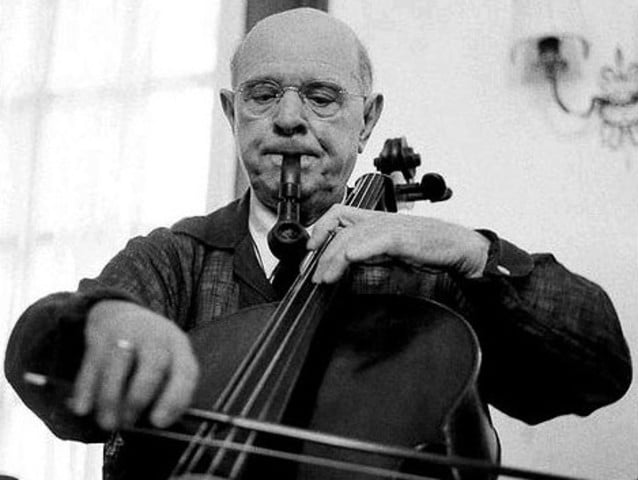
    It’s hardly surprising that anyone would be moved to write music for Pablo Casals. Regarded by many as the greatest cellist of his time, perhaps ever, he was certainly a giant-of-an-artist and of a man. Born in Catalonia, he stood up to the Franco regime, entering into self-imposed exile and refusing to perform in countries that recognized Franco’s authority. He rediscovered the Bach cello suites in a secondhand bookshop and made them famous. Over the span of his career, he played for both Queen Victoria and John F. Kennedy.

    As a conductor and administrator, he founded the Prades Festival and Casals Festival. He established the Puerto Rico Symphony and Conservatory. He gave master classes, conducted and recorded at Marlboro. He was even a talented composer.

    This Sunday night on “The Lost Chord,” we’ll hear works dedicated to Casals by three of his friends and colleagues.

    Ralph Vaughan Williams wrote his seldom-heard “Fantasia on Sussex Folk Tunes” around the time he was at work on his Piano Concerto and “Job: A Masque for Dancing.” Casals performed the piece in 1930. It was not heard again until 1983, the year of its world-premiere recording (featuring Julian Lloyd Webber). The composer later undertook a full-scale concerto for Casals. It was never completed, but the sketches for its slow movement were realized for a 2010 performance at the BBC Proms, under the title “Dark Pastoral.”

    Donald Francis Tovey, who would achieve fame as a musicologist and writer on music, wrote quite a lot of music himself, most of it now forgotten. In 1935, he composed a concerto for Casals. At nearly an hour in length, the work may be the longest cello concerto ever written.

    In 1912, Tovey was a houseguest of Casals and cellist Guilhermina Suggia, at their summer home at Playa San Salvador on the Mediterranean coast. There, he played tennis, swam and performed chamber music with the likes of Enrique Granados and Mieczyslaw Horszowski. He also made great strides on his opera, “The Bride of Dionysus.” As a show of thanks, he composed for his hosts a Sonata for Two Cellos in G major, which became part of the evenings’ entertainments. The work’s second movement is a set of variations on a Catalan folk song. We’ll hear it performed by Marcy Rosen and Frances Rowell, from a Bridge Records, Inc. release.

    Finally, Arnold Schoenberg, himself an amateur cellist, had done editorial work on three pieces by the 18th century composer Georg Matthias Monn for inclusion in the publication “Monuments of Music in Austria.” When Casals invited Schoenberg to conduct his orchestra in Barcelona, the composer set about arranging a “new” concerto, based upon a harpsichord work by Monn, written in 1746. We’ll hear Schoenberg’s transformation of the piece performed by Yo-Yo Ma.

    I hope you’ll join me for “Casals’ Pals” – music written for Casals by notable composers, friends and colleagues – this Sunday night at 10:00 EDT, on WWFM – The Classical Network and wwfm.org.
  • Peter Serkin & Marlboro Music Festival

    Peter Serkin & Marlboro Music Festival

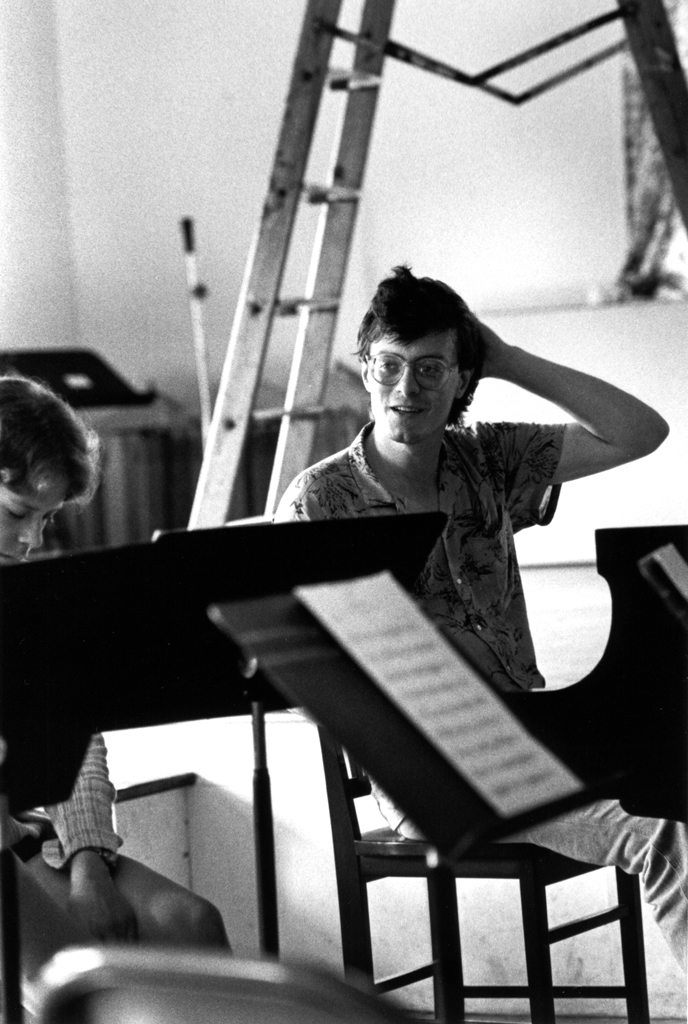
    For some reason, I always equate Peter Serkin in my mind with Peter Fonda. Perhaps it’s because he’s like the Easy Rider of pianists. At one point, he even totally dropped out, moving to Mexico and not playing for a couple of years. When he returned, as often as not, he was a kind of countercultural champion of modernist works (he was one of the founders of the new music ensemble Tashi). But he is, after all, his father’s son (sired by legendary pianist Rudolf Serkin), so Bach and Beethoven have been just as important to him as an artist and as a person.

    Hard to believe that Peter Serkin is 72 years-old today. On this week’s “Music from Marlboro,” we’ll hear a performance of Mozart’s Concerto for Two Pianos (the Piano Concerto No. 10), KV 365, with Peter, at 15, joined in music-making by his Marlboro co-founding father.

    Then we’ll keep our spirits high, as Pablo Casals conducts the Marlboro Festival Orchestra in Franz Schubert’s Symphony No. 5. Schubert was totally under the spell of Mozart at the time of its composition, remarking in his diary, “O Mozart! Immortal Mozart! what countless impressions of a brighter, better life hast thou stamped upon our souls!”

    This summer’s Marlboro Music Festival is about to enter its third weekend, with three concerts on the agenda. The festival’s annual town benefit concert will be held on Friday at 8 p.m., featuring music by Schumann, Stravinsky, Mozart, and György Kurtág. Marlboro co-directors Mitsuko Uchida and Jonathan Biss will appear on separate concerts on Saturday and Sunday. Uchida will be the pianist in Schumann’s Piano Quintet on a program which will also feature music by Schoenberg, on Saturday at 8 p.m. Biss will perform Dvořák’s Piano Trio in F minor on a concert which will also include works by Mozart and Marlboro composer-in-residence Jörg Widmann, on Sunday at 2:30 p.m. For complete listings and more information, visit marlboromusic.org.

    For today, musicians from the renowned chamber music festival take a break from playing chamber music. It’s a well-orchestrated program on this week’s “Music from Marlboro,” this Wednesday evening at 6:00 EDT, on WWFM – The Classical Network and wwfm.org.
    Marlboro School of Music and Festival: Official Page


    PHOTO: Young Peter Serkin performs Mozart on today’s broadcast of recordings from the archive of Marlboro Music.

  • Mozart’s Genius at Marlboro Music

    Mozart’s Genius at Marlboro Music

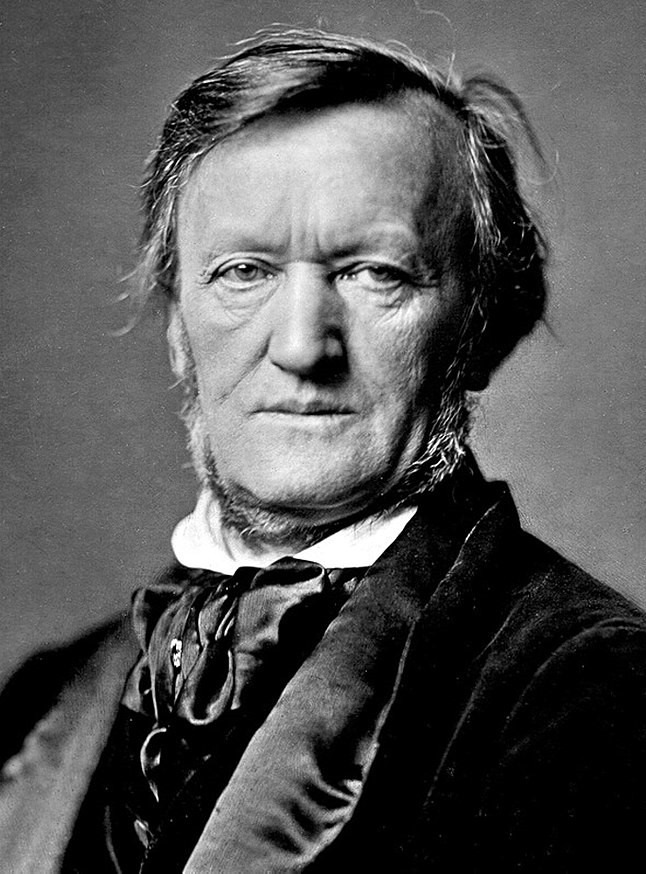
    “The most tremendous genius raised Mozart above all masters, in all centuries and in all the arts.”

    – Richard Wagner

    So glad to hear you say that, Richie. Then you won’t mind if we enjoy an all-Mozart hour for your birthday, on this week’s “Music from Marlboro.”*

    Mozart doubles the violas in his String Quintet No. 5 in D Major, K. 593. Composed in 1790, the work was recollected by the composer’s widow, Constanze, as having been written for a musical amateur, often speculated to be Johann Trost. Trost must have been quite the gifted dilettante. He also knew Haydn from Esterhaza, and Haydn dedicated some of his quartets to him.

    When Haydn and Mozart played through the D Major Quintet together before Haydn’s first visit to London, the two men took turns indulging in the first viola part. The work was known for centuries as the “Zigzag” because of an alteration to the original manuscript that modified what had been a descending chromatic figure in the final movement into something decidedly more humorous.

    We’ll hear it played at the 2005 Marlboro Music Festival by Sarah Kapustin and Diana Cohen, violins; Mark Holloway and Sebastian Krunnies, violas; and David Soyer, cello.

    Mozart wrote his Symphony No. 35 in 1782. Subtitled the “Haffner,” it is not to be confused with his “Haffner Serenade,” though both works had their origins in commissions from the eminent Haffner family of Salzburg.

    The “Serenade” was composed in 1776 to celebrate the wedding of Marie Elisabeth Haffner. A second serenade was written four years later for her brother, Mozart’s friend, Sigmund Haffner the Younger, for the occasion of his ennoblement. Mozart complained to his father at the time that he was “up to his eyeballs in work.” On top of his usual teaching obligations, he was pressed to complete an arrangement of his opera “The Abduction from the Seraglio,” even as he was looking to move into a house in Vienna prior to his marriage to Constanze Weber. Nevertheless, he began churning out music, sending it piecemeal to his father.

    It was only later, when Mozart found a moment of calm, that he was able to take a look at what he had actually written and realized that it wasn’t half bad. He arranged material from this second “Haffner” serenade and expanded the orchestration to create what we now know as the “Haffner” Symphony – his Symphony No. 35 – in 1783.

    We’ll hear an inspired performance of the work, featuring an ad hoc orchestra under the direction of Pablo Casals. Together, they manage to convey joy, intimacy, and exuberance in a cherishable recording from the 1967 Marlboro Music Festival.

    Get the most from Mozart, on the next “Music from Marlboro,” this Wednesday evening at 6:00 EDT, on WWFM – The Classical Network and wwfm.org.
    Marlboro School of Music and Festival: Official Page

    (*For all you Wagnerites, tune in a little early to enjoy some of HIS music between 4 and 6!)

  • Casals’ Beethoven at Marlboro Music

    Casals’ Beethoven at Marlboro Music

    The Marlboro Music Festival is recognized far and wide as a chamber music mecca. Summer after summer, Marlboro Music brings together classical music luminaries and rising young talent, as it continues to add links to a chain, begun by Rudolf Serkin, Adolf Busch, Marcel Moyse, and the rest, all the way back in 1951.

    Though chamber music is indeed Marlboro’s principal area of focus, every once in a while it’s fun to get everyone together to do a reading from the orchestral literature. On this week’s “Music from Marlboro,” we’ll listen in on one such occasion, as Marlboro players perform under the loving direction of Pablo Casals.

    Beethoven’s Symphony No. 3, the “Eroica (written in 1803-04) is enshrined in the history books as one of the torches that touched off the Romantic Era, but, on closer inspection, the composer was already playing with black powder in his Symphony No. 2.

    In his second symphony, completed two years earlier, Beethoven swaps out the Haydn-issue minuet for a scherzo, a move that would be emulated so frequently by other composers that it became the new standard.

    “Scherzo” is Italian for “joke,” and the last two movements of Beethoven’s symphony are full of them. I can’t say that they’re knee-slappers, but the composer plays enough with convention that it triggered a smart backlash from critics at the work’s premiere. One critic described the symphony as “a hideously writhing, wounded dragon that refuses to die, but writhing in its last agonies and, in the fourth movement, bleeding to death.”

    Ouch!

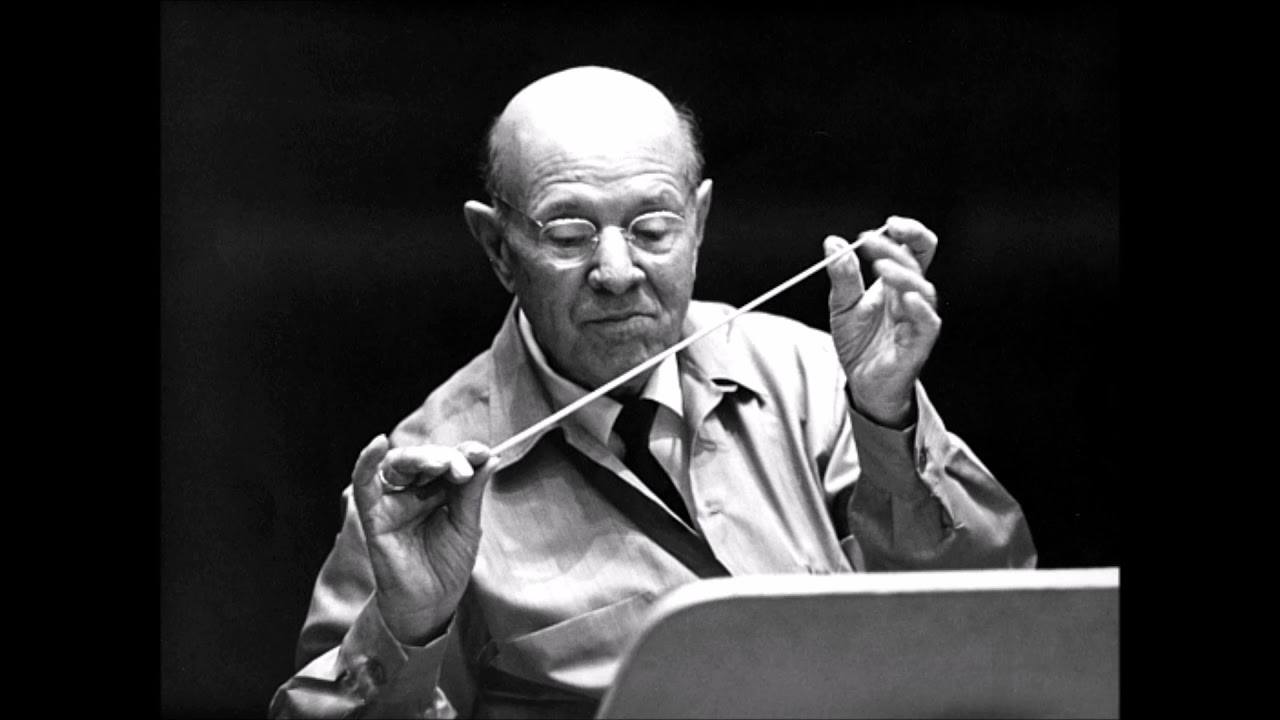
    I don’t think it’s anyone’s favorite Beethoven symphony, but in the hands of Pablo Casals, it is given a little more dignity than usual, in part because he just lets the music do its thing. There are no volcanic shifts in dynamics or hairpin turns in tempi. Many conductors interpret the earlier symphonies of Beethoven with retroactive insight, imposing a degree of vehemence more appropriate to the angrier passages of the 5th or the 9th. Casals non-interventionist approach allows the music to speak for itself.

    We’ll hear a performance from the 1969 Marlboro Music Festival. Casals directs a performance brimming with affection, and his players responding accordingly.

    Then, to fill out the remainder of the hour, we’ll find further delight in music by Wolfgang Amadeus Mozart – his Sonata in B-flat for Bassoon and Cello, K. 292. The 1975 performance will feature bassoonist Alexander Heller and a 19 year-old cellist named Yo-Yo Ma, also evidently having a good time.

    We’ll let the music do the talking, on the next “Music from Marlboro,” this Wednesday evening at 6:00 EDT, on WWFM – The Classical Network and wwfm.org.

    Marlboro School of Music and Festival: Official Page


    PHOTOS: Casals tames the dragon

  • Bach & Mendelssohn from Marlboro Festival

    Bach & Mendelssohn from Marlboro Festival

    On this week’s “Music from Marlboro,” we get a good start on 2019, with music by Felix Mendelssohn, bounding out of the gate at 16 years-old with one of the most astonishing works in the repertoire.

    Mendelssohn’s Octet for Strings in E-flat is the piece that established him as music’s foremost preternatural genius. Hear a 1960 performance from the legendary Marlboro Music Festival, featuring violinists Jaime Laredo, Alexander Schneider, Arnold Steinhardt and John Dalley, violists Michael Tree and Samuel Rhodes, and cellists Leslie Parnas and David Soyer.

    Holy smokes! In case you didn’t notice, the performers include the entire Guarneri String Quartet – which didn’t formally come together as a group until four years later, at Marlboro – and then some.

    Of course, Mendelssohn was also the most important figure in the revival of the music of Johann Sebastian Bach, at the age of 20 spearheading the first performance since Bach’s death of the “St. Matthew Passion.”

    Equally important to Bach’s rehabilitation was Pablo Casals, who rediscovered Bach’s cello suites in a Catalan bookshop at the age of 13. Casals championed the pieces for the remainder of his days. Thanks to him, what had previously been regarded as dimly-recollected etudes are now standard repertoire.

    Casals was affiliated with the Marlboro Music Festival from 1960 to 1973, the last 13 years of his life. We’ll hear Casals conduct Marlboro musicians in Bach’s Bradenburg Concerto No. 5. Flutist Ornulf Gulbransen, violinist Alexander Schneider, and pianist Rudolf Serkin are standouts in this 1964 recording. Serkin, of course, was the Marlboro Music School and Festival’s founding artistic director.

    Begin the new year with inspirational performances of music by Bach and Mendelssohn – a surefire balm for the back-to-work blues – on the next “Music from Marlboro,” this Wednesday evening at 6:00 EST, on WWFM – The Classical Network and wwfm.org.

    Marlboro School of Music and Festival: Official Page


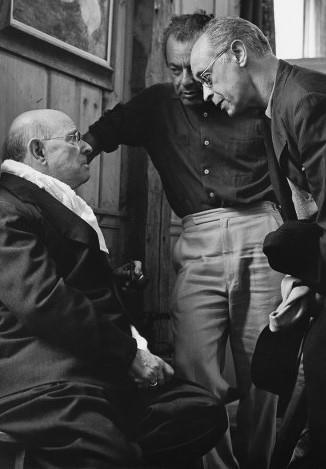
    PHOTO: Pablo Casals, Alexander Schneider, and Rudolf Serkin will feature prominently on this week’s “Music from Marlboro.”

Tag Cloud

Aaron Copland (92) Beethoven (95) Composer (114) Film Music (123) Film Score (143) Film Scores (255) Halloween (94) John Williams (187) KWAX (229) Leonard Bernstein (101) Marlboro Music Festival (125) Movie Music (138) Opera (202) Philadelphia Orchestra (89) Picture Perfect (174) Princeton Symphony Orchestra (106) Radio (87) Ralph Vaughan Williams (85) Ross Amico (244) Roy's Tie-Dye Sci-Fi Corner (290) The Classical Network (101) The Lost Chord (268) Vaughan Williams (103) WPRB (396) WWFM (881)

DON’T MISS A BEAT

Receive a weekly digest every Sunday at noon by signing up here


RECENT POSTS