Tag: Pablo Casals

  • Casals and His Composer Friends

    Casals and His Composer Friends

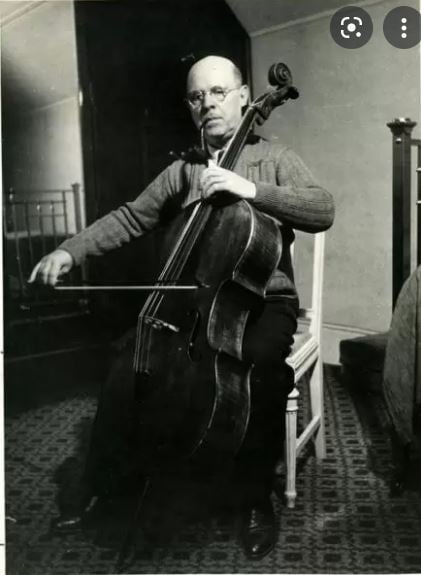
    He put his career on hold to stand up to Franco. He rediscovered the Bach cello suites. He played for Queen Victoria and John F. Kennedy. He founded the Prades Festival. He established the Puerto Rico Symphony and Conservatory. He gave master classes, conducted and recorded at Marlboro. He was even a talented composer.

    Pablo Casals was a giant of an artist and of a man. Is it any wonder so many of his colleagues were moved to write music for him?

    This Sunday night on “The Lost Chord,” we’ll hear works dedicated to Casals by three of his composer friends and colleagues.

    Ralph Vaughan Williams wrote his seldom-heard “Fantasia on Sussex Folk Tunes” around the time he was at work on his Piano Concerto and “Job: A Masque for Dancing.” Casals performed the piece in 1930. It was not heard again until 1983, the year of its world-premiere recording (featuring Julian Lloyd Webber). The composer later undertook a full-scale concerto for Casals. It was never completed, but the sketches for its slow movement were realized for a 2010 performance at the BBC Proms, under the title “Dark Pastoral.”

    Donald Francis Tovey, who would achieve fame as a musicologist, composed quite a lot of music himself, most of it now forgotten. In 1935, he wrote a concerto for Casals. At nearly an hour in length, the work may be the longest cello concerto ever written.

    In 1912, Tovey was a houseguest of Casals and cellist Guilhermina Suggia, at their summer home at Playa San Salvador on the Mediterranean coast. There, he played tennis, swam, and performed chamber music with the likes of Enrique Granados and Mieczyslaw Horszowski. He also made great strides on his opera, “The Bride of Dionysus.” As a show of thanks, he composed for his hosts a Sonata for Two Cellos in G major, which became part of the evenings’ entertainments. The work’s second movement is a set of variations on a Catalan folk song. We’ll hear it performed by Marcy Rosen and Frances Rowell, from a Bridge Records, Inc. release.

    Finally, Arnold Schoenberg, himself an amateur cellist, had done editorial work on three pieces by the 18th century composer Georg Matthias Monn, for inclusion in the publication “Monuments of Music in Austria.” When Casals invited Schoenberg to conduct his orchestra in Barcelona, the composer set about arranging a “new” concerto, based upon a harpsichord work by Monn, written in 1746. We’ll hear Schoenberg’s transformation of the piece performed by Yo-Yo Ma.

    Pau takes a bow! I hope you’ll join me for “Casals’ Pals” – music written for Pablo Casals by notable composer friends and colleagues – this Sunday night at 10:00 EDT, on WWFM – The Classical Network and wwfm.org.
  • Marlboro Music Festival YouTube Gems Await

    Marlboro Music Festival YouTube Gems Await

    Did you know that Marlboro Music had a YouTube channel? There are some real gems on there, including documentaries about Pablo Casals and Marlboro co-founder Marcel Moyse (“He was the only musician I knew who could play the flute and smoke a pipe at the same time,” according to Claude Frank).

    In addition, you’ll find an interview with Pina Carmirelli, Library of Congress performances of music by Haydn, Webern, Brahms, and the late Krzysztof Penderecki, and a beautiful promotional video showing off the idyllic splendor of the Marlboro grounds.

    For a hit of the Marlboro Music Festival, look here:

    https://www.youtube.com/channel/UC3QvDJxEjaVxObDMU96_k1w

    Then sample from the audio archive here:

    Historic Recordings

    “Music from Marlboro” is on hiatus from WWFM – The Classical Network until we get the all-clear from COVID-19, but Marlboro Music is still very much in our thoughts!


    Marlboro School of Music and Festival: Official Page

  • Mozart at Marlboro: An Oasis of Musical Sanity

    Mozart at Marlboro: An Oasis of Musical Sanity

    With the world hurtling toward destruction, we’ll do our best to offer an oasis of sanity on the next “Music from Marlboro.”

    Find solace in Wolfgang’s Amadeus Mozart’s Piano Trio in B flat major, K. 502. The composer took evident pleasure in writing for the combination of violin, cello and piano. For one thing, these works provided him opportunities to connect with fellow musicians as a performer. He even regarded some as party pieces.

    K. 502 was written when Mozart was 30 years-old and at the peak of his powers. It was composed in 1786, the year of the premiere of “The Marriage of Figaro.” Like the opera, Mozart’s trio subverts a kind of class stratification, elevating the stringed instruments, formerly relegated to supporting roles, so that they attain equal footing with the piano. This egalitarian gesture allows for a kind of civilized discourse between friends.

    We’ll hear it performed at the Marlboro Music Festival in 1968, by violinist Jaime Laredo, cellist Madeline Foley, and pianist Rudolf Serkin.

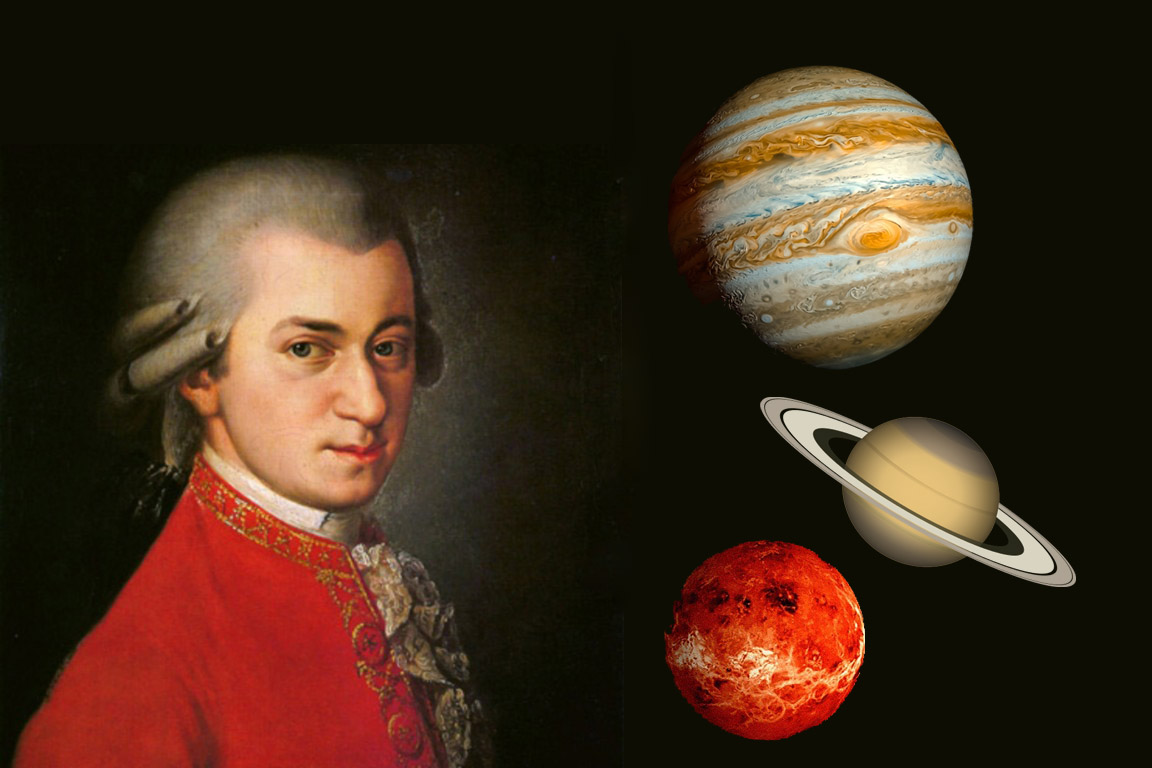
    Then Mozart reaches for the stars, both figuratively and by association. It was probably nowhere in the composer’s thoughts that his Symphony No. 41, composed in 1788, would bear the subtitle “Jupiter.” Like most nicknames, the sobriquet was bestowed by others. That said, it could hardly be more appropriate, as this is one of Mozart’s most Olympian works. It turned out to be his final symphony – and what a way to go!

    The fugato passages of the finale, with the effortless interweaving of no less than five harmonious themes, is breathtaking in its ambition and scale. The spirit of indomitable optimism is just the thing we need right now.

    We’ll hear it performed by the Marlboro Festival Orchestra in 1967, conducted by a 90 year-old Pablo Casals.

    Music may not be a cure-all, but it sure does serve to remind us that there is still beauty in the world and something noble in humanity. Would that everyone could tap into that largeness of spirit and aspire to something greater.

    It’s Mozart for sanity, on the next “Music from Marlboro,” this Wednesday evening at 6:00 EST, on WWFM – The Classical Network and wwfm.org.
    Marlboro School of Music and Festival: Official Page

  • Beethoven’s Birthday Bash WWFM Symphony Marathon

    Beethoven’s Birthday Bash WWFM Symphony Marathon

    BEETHOVEN BIRTHDAY BASH

    WWFM – The Classical Network’s symphony marathon continues!

    NOW PLAYING: Symphony No. 7 in A major (Marlboro Festival Orchestra/Pablo Casals)

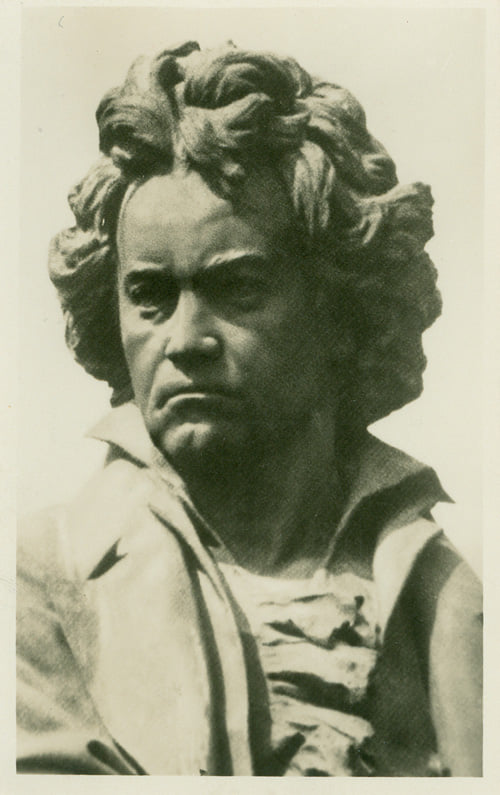
    Richard Wagner described Beethoven’s 7th Symphony as “the apotheosis of the dance” – and we all know what a great dancer Wagner was!

    Dance on over to your phones, why don’t you, and support it by calling us at 1-888-232-1212, or by donating online at wwfm.org.

    Thank you for your generous contribution!

  • Marlboro Music Festival: Mozart, Schubert, and Autumn

    Marlboro Music Festival: Mozart, Schubert, and Autumn

    Autumn comes to Vermont on this week’s “Music from Marlboro,” as Pablo Casals conducts the Marlboro Festival Orchestra in a performance of Wolfgang Amadeus Mozart’s Symphony No. 40 in G minor.

    Of Mozart’s 41 numbered symphonies, only two are cast in a minor key. (The other, in case you’ve forgotten, is the Symphony No. 25, also in the key of G minor.) This is the Mozart of shadows and dark poetry. The performance, from 1968, is a strong one, propulsive and compelling, with a powerful sense of purpose. It’s hard to believe the maestro was 91 years-old!

    Some of Casals’ recordings as conductor can be a little raggedy from time to time – this was, after all, a makeshift ensemble, albeit one made up of some of the world’s greatest musicians – but any rough edges are of secondary consideration, when taking into account the spontaneity and excitement of the live concert experience. In the case of Mozart’s 40th, the players follow their leader with uncanny precision and plenty of fire.

    Franz Schubert’s “Introduction and Variations on ‘Trockne Blumen’” takes its theme from his song cycle “Die schöne Müllerin.” These settings of poems by Wilhelm Müller form a narrative about a wanderer who falls in love with a miller’s beautiful daughter (hence, the title). Unfortunately, he is supplanted in her affections by a strapping hunter bedecked in green. The color becomes something of a morbid obsession. The wanderer fantasizes about his own death and ultimately drowns himself in the stream that had led him to the mill.

    “Trockne Blumen” (“Withered Flowers”) is one of the last songs in the cycle. The wanderer imagines reclaiming his dried-up flowers from the miller’s daughter and bearing them to his grave, from which, he muses, they will spring afresh as witnesses to his true love.

    Schubert’s variations on his own song were performed at the Marlboro Music Festival in 1968, by flutist Paula Robison and pianist Rudolf Serkin.

    Remember that the first of this season’s Marlboro tours will take place from October 19th to October 27th, with stops in Groton, Massachusetts; Weill Recital Hall at Carnegie Hall in New York City; the Perleman Theater at the Kimmel Center for the Performing Arts in Philadelphia; the Freer Gallery’s Meyer Auditorium in Washington D.C., and at Longy School of Music in Boston.

    On the program will be Mozart’s Oboe Quartet in F major, Beethoven’s String Quartet in F, Op. 59. No. 1, and a work by Brett Dean, for soprano and string quartet, “And Once I Played Ophelia” – Dean’s String Quartet No. 2. Brett Dean was composer-in-residence at Marlboro in 2017. For tickets and information, visit marlboromusic.org.

    It’s withered flowers and minor keys, on this week’s “Music from Marlboro.” Mozart and Schubert get their brood on, this Wednesday evening at 6:00 EDT, on WWFM – The Classical Network and wwfm.org.

    Marlboro School of Music and Festival: Official Page

Tag Cloud

Aaron Copland (92) Beethoven (95) Composer (114) Film Music (123) Film Score (143) Film Scores (255) Halloween (94) John Williams (187) KWAX (229) Leonard Bernstein (101) Marlboro Music Festival (125) Movie Music (138) Opera (202) Philadelphia Orchestra (89) Picture Perfect (174) Princeton Symphony Orchestra (106) Radio (87) Ralph Vaughan Williams (85) Ross Amico (244) Roy's Tie-Dye Sci-Fi Corner (290) The Classical Network (101) The Lost Chord (268) Vaughan Williams (103) WPRB (396) WWFM (881)

DON’T MISS A BEAT

Receive a weekly digest every Sunday at noon by signing up here


RECENT POSTS