Tag: Philadelphia

  • Tower Records’ Presidents Day CD Sales

    Tower Records’ Presidents Day CD Sales

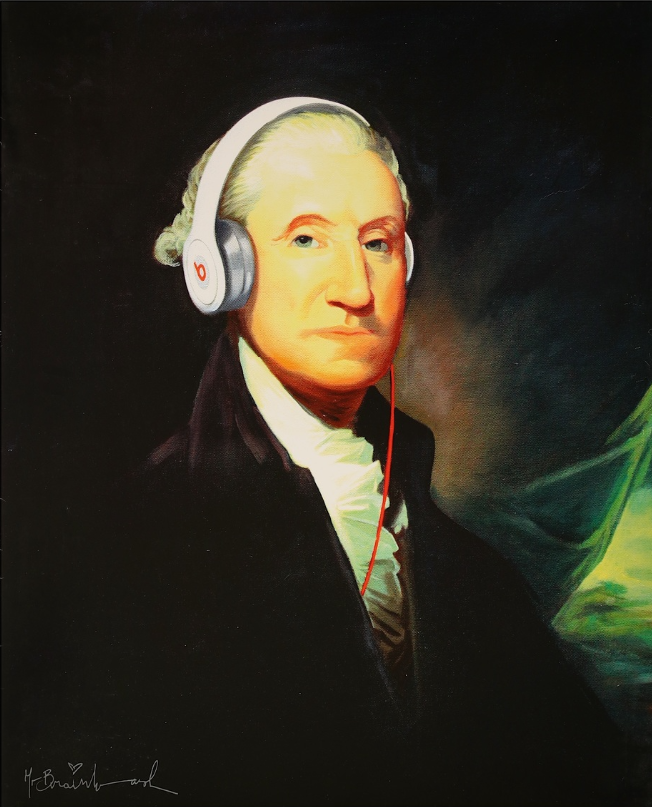
    When I was a kid, Presidents Day brought heartfelt patriotic acknowledgements of the contributions of Washington and Lincoln. But in my 20s, it meant the biggest CD sale of the year at Tower Records!

    During its heyday, Tower Records’ Classical Annex, at 6th and South Streets, was a beacon for classical music lovers in Philadelphia. Sure, there was the subterranean crevasse at Nathan Muchnick’s, near 18th and Walnut, where on an average day, the CDs were cheaper. And if Barnes & Noble, at Broad and Chestnut, had a sale, you could certainly pick up a bargain. But Tower was the only record store in Center City that was open until midnight, 365 days a year – which meant you could drop by after Philadelphia Orchestra concerts – and it could be counted on to carry all the new releases and much else beside.

    Furthermore, it introduced a tantalizing cut-out bin that spanned the entire back of the store, in which overstocked items would be marked down to $6.99. In the days when full-priced CDs at Tower averaged around $16.99, this innovation had the effect of sending me into a delirium. How many Czech operas did I mine from that rack? How my pulse would quicken as I flipped through the superfluous blister packs. (Parenthetically, the New York branch at 4th and Broadway, with an entire store devoted to cut-outs, brought me one plane closer to Nirvana!)

    When Tower Records had a sale on a major label (that is to say, Angel/EMI, Deutsche Grammophon, RCA/BMG, or Sony), the prices would drop to $11.99. But Presidents Day was something else entirely. That’s when the store would prop its doors – invariably, it was unseasonably mild, and the sun beating against the glass display windows only lent to the kinetic intensity of the roiling shoppers – and the perspiring crowds would flow in to partake of for-one-day-only, deeply-discounted merchandise, on arcane, seldom-marked-down-ever labels like BIS, Chandos, CPO, Lyrita, and Unicorn-Kanchana. And the majors would be marked-down even further.

    I would scarf a slice of pizza beforehand to keep my blood sugar up and then essentially stage-dive into the crowd. Representatives from all the CD distributors were there, with name tags and ties, and hosts from WFLN, Philadelphia’s now-defunct classical music station, would broadcast live from a platform about three-quarters of the way toward the back of the sales floor.

    On a counter in the front of the store was a kind of ballot box, in which you would stuff slips of paper bearing your personal information, and periodically these would be drawn for giveaways of free stuff. This is how I came to own Christopher Hogwood’s superlative recording of Haydn’s “The Creation,” among other treasures. It was very easy to win. All you had to do, as I explained to my friends, is wait until you saw WFLN’s Henry Varlack pushing toward the front of the store, and then cram in all your slips. Henry never went very deep into the box, and whoever was closest to the top usually walked away with a bounty. One of my friends, who wasn’t even a classical music guy, took home some stereo components.

    Of course, I was still living something of a bohemian existence back then. It was a lot for me to be able to scrape together a hundred or maybe a hundred-twenty dollars to blow on Presidents Day. This was also before secondhand record shops acquired a large influx of used classical CDs. Nowadays, a store like Princeton Record Exchange deals in volume, so to keep up the turnover, most discs are priced only a buck or two.

    Viewed from the perspective of 2022, the Tower Records of decades ago might strike one as rather thin brew by comparison. But in those now-distant times, it was like an invitation to drift through Elysium for a day, and to return home elated with all your purchases and free stuff. There were always abundant catalogues and wish books and plenty of swag.

    Nevermind the white sales. I never changed my sheets, anyway. For me, Presidents Day will always bring with it memories of Tower Records!

  • William Penn: Music From Philadelphia

    William Penn: Music From Philadelphia

    This Sunday night on Then we’ll turn to “The Lost Chord,” round out your Thanksgiving weekend with two works inspired by William Penn.

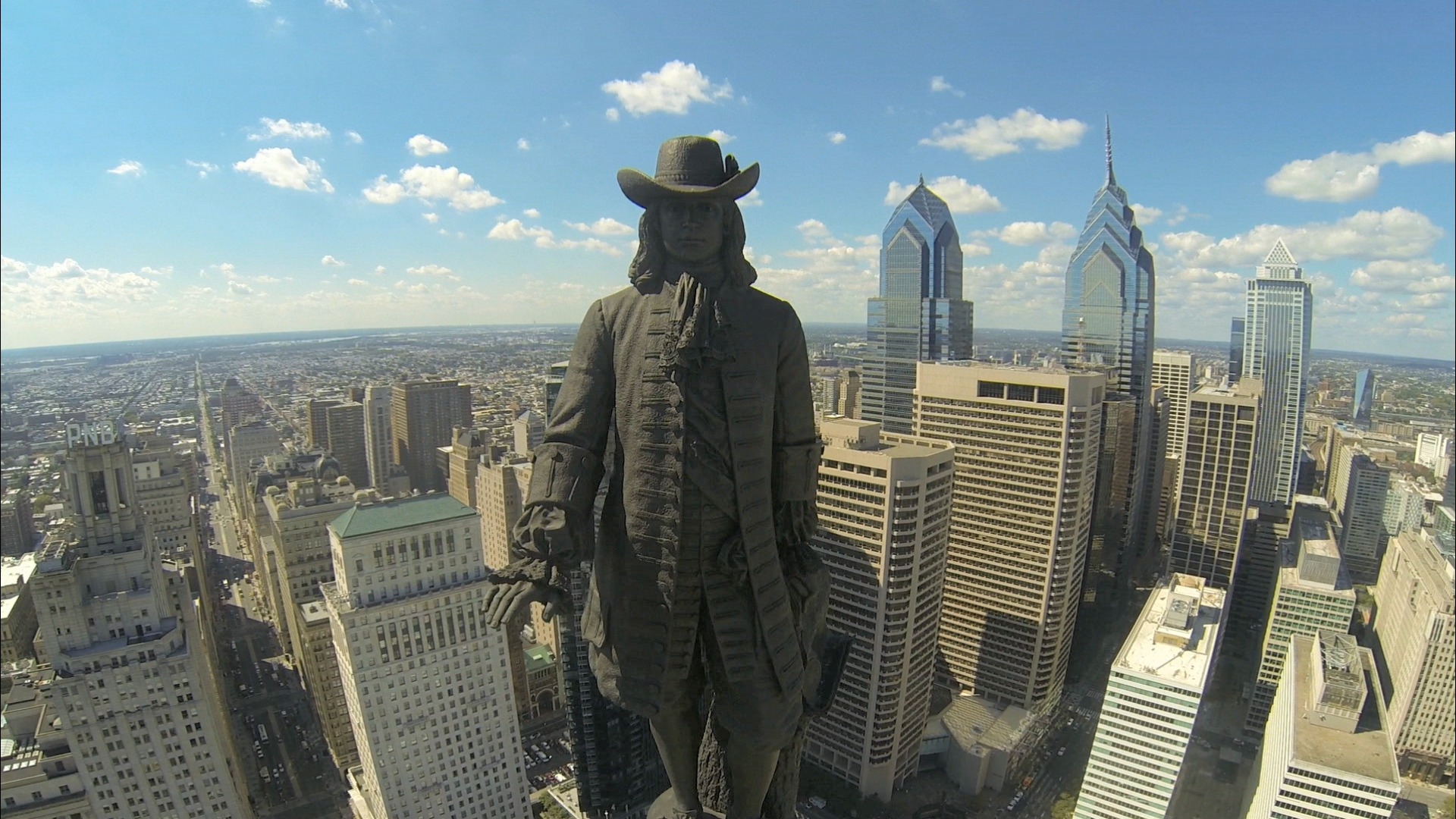
    An early hero of American liberty, Penn founded Philadelphia (the “City of Brotherly Love”), named the state of Pennsylvania in honor of his father, and signed a landmark treaty with the Lenape. He was enshrined in music by at least two Philadelphia composers.

    We’ll hear a selection from the opera “William Penn,” by Romeo Cascarino. Cascarino, born in South Philadelphia in 1922, was largely self-taught as a composer. His fascination with Penn took root at an early age, when he was moved by a plaque posted on City Hall of “Penn’s Prayer for Philadelphia.” He first set the Prayer to music as a choral work in 1950, and later set the Treaty, as well.

    These led naturally to the conception of an opera on a grand scale, for which Cascarino asked poet Peg Gwynn to craft a libretto, based on Penn’s life and writings. He spent the next quarter century crafting his magnum opus, even as he composed other works and continued to teach harmony and composition at Philadelphia’s now-defunct Combs College of Music.

    The opera was heard twice in concert, performed by the Orchestra Society of Philadelphia at Drexel University, in 1975 and 1977. Tom DiNardo, critic for the Philadelphia Bulletin, recognized the exceptional quality of the music, and surprised the composer by arranging for a couple of staged performances at the Academy of Music in 1982.

    The chorus is especially prominent, but arguably the most powerful moments are the intimate glimpses of Penn with his family. These were the days of immense and hazardous ocean voyages, remember, and when a man went to sea, there was no telling when – or even if – he’d be reunited with his loved ones. This knowledge lends an added poignancy to our experience of Penn the man.

    Tonight, Metropolitan Opera singer John Cheek assumes the title role, and Penn’s wife, Gulielma, is portrayed by Dolores Ferraro, then married to the composer.

    The second half of the program will be devoted to “Four Squares of Philadelphia,” by Louis Gesensway. Gesensway was born in Latvia in 1906. A violin prodigy, he was one of the founders of the Toronto Symphony. He arrived in Philadelphia, at the age of 19, where he played in the Philadelphia Orchestra under both Stokowski and Ormandy.

    In his mid-20s, he took a leave of absence to study composition with Zoltán Kodály. “Four Squares” was described by the composer as a “symphonic poem for large orchestra, narrator and street criers.”

    The piece opens with Penn’s prayer for the city and celebrates the distinctive characteristics of each of the public spaces he planned: “Washington Square” in early morning during Colonial times, with street criers hawking their wares; “Rittenhouse Square” on a bright and cheerful afternoon; “Logan Square” with its fountains at dusk; and “Franklin Square” at night, evocative of noisy bridge traffic, with a side excursion into Chinatown and musical interjections from the honky-tonk joints located around the square in the 1950s.

    We’ll hear it performed by Gesensway’s colleagues of the Philadelphia Orchestra, with Eugene Ormandy conducting.

    Penn’s influence is not stationary. As the days grow shorter and the nights colder, warm yourself with a nice steaming bowl of “Quaker Notes,” this Sunday night at 10:00 EST, on WWFM – The Classical Network and wwfm.org.

  • David Amram Musical Polyglot Turns 91

    David Amram Musical Polyglot Turns 91

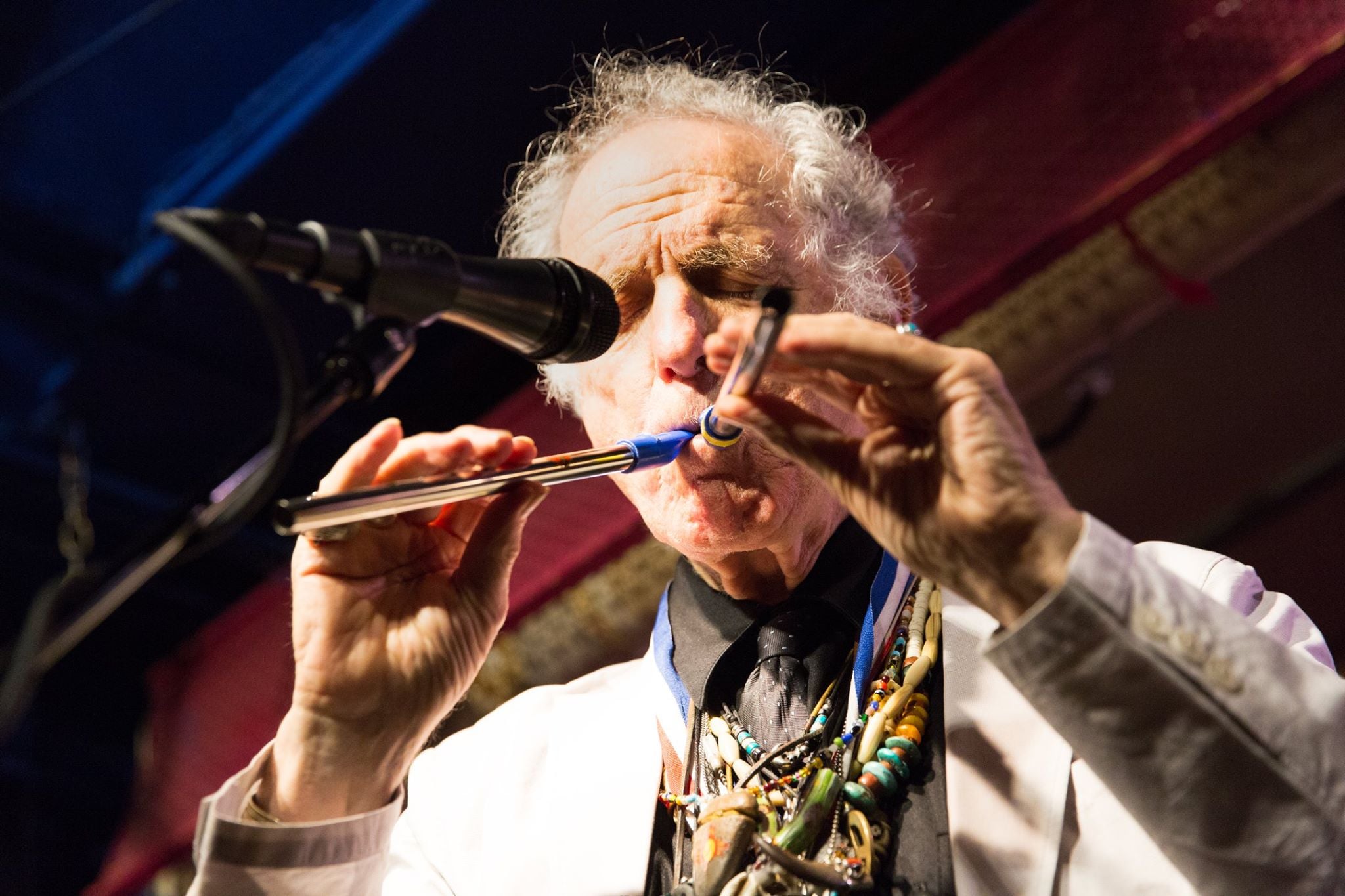
    Philadelphia’s musical polyglot is 91 today.

    David Amram, born in Philadelphia on this date in 1930, has always been equally at home in classical music, jazz, folk, and world music. The composer of over 100 orchestral and chamber works, music for Broadway and film (including the scores for “Splendor in the Grass” and “The Manchurian Candidate”), and two operas, he’s also the author of three books: “Vibrations: The Adventures and Musical Times of David Amram” (1968), “Offbeat: Collaborating with Kerouac” (2002), and “Upbeat: Nine Lives of a Musical Cat” (2007).

    Amram was raised on a farm in Bucks County. There, he was introduced to classical, jazz, and cantorial music by his father and uncle. He took piano lessons and experimented with instruments of the brass family, finally centering on the French horn. Following a year at Oberlin, he lit out for George Washington University, where he studied history. While there, he performed as a freelance hornist with the National Symphony. He also studied privately with two musicians in the orchestra.

    Amram became a pioneer of the “jazz French horn,” as well as the New York Philharmonic’s first composer-in-residence (designated such in 1966). He’s worked with artists ranging from Dizzy Gillespie to Bob Dylan to Leonard Bernstein, from Jack Kerouac to Arthur Miller, from Christopher Plummer to Johnny Depp. He’s a musician without borders, always open to new experiences.

    At 91, Amram is still cookin’. He’ll be performing tonight in Newport, RI, celebrating his birthday with a concert of his chamber music, jazz, and folk compositions. On Friday, he’ll be in Tarrytown, NY, with his jazz quartet. On December 3, he’ll be playing with pianist Dick Hyman in Sarasota, FL. And on December 5, he’ll be in Manhattan for his annual “Amram Jam” – a program of jazz and classical chamber music, the instrumentalists joined by vocalists, songwriters, actors, poets, and dancers that’s anticipated to stretch into the wee hours of the morning.

    For more information, check the Amram calendar at his website:

    https://davidamram.com/calendar.php

    If you can’t be at tonight’s concert, you might do as he suggested last year, during “stay at home,” and just take a moment to send him an ESP thought-o-gram. Happy birthday, David Amram!


    Trailer for “David Amram: The First 80 Years”:

    Amram Horn Concerto:

    Amram with Dizzy Gillespie:

    Amram’s music for “The Manchurian Candidate”
    https://www.youtube.com/watch?v=u4V0uQE-nRY

    Wonderful snapshot of the man and artist, who more and more seems a prophet of our age

    Amram jamming at the Philadelphia Folk Festival in 2011:

    “Pull My Daisy”

  • Hear Kile Smith’s “Ave Maris Stella” Live

    Hear Kile Smith’s “Ave Maris Stella” Live

    As always, I’m a day late and a dollar short.

    Yesterday, I forgot to mention the world premiere of a new piece by my friend, Kile Smith – “Ave Maris Stella” – to be performed three times this weekend by Piffaro, The Renaissance Band and the vocal ensemble Variant 6. The Center City Philadelphia performance took place last night, but there are still two more chances to hear it live: tonight at 7:30 pm, at the Presbyterian Church of Chestnut Hill (Philadelphia’s “garden district”), and tomorrow at 3 pm, at Sts. Andre and Matthew, 719 N. Shipley St., in Wilmington, DE.

    If these times don’t work for you, a concert video will be made available on-demand from 10/16 to 10/26. Access to the video for ticker holders is free.

    You’ll find more information about the program at the Piffaro website.

    21/22 Concert 1

    PLEASE NOTE: There will be no tickets sold at the door – ADVANCE TICKET SALES ONLY!! So if you intend to go, make your purchases now!

    Kile talks about “Ave Maris Stella”:

    Kile’s earlier Piffaro commission, “Vespers,” is a knock-out. You can sample his setting of Psalm 113 here:

    Want to hear the whole thing? That’s posted too:

    Congratulations, Kile, and best wishes from an absent-minded admirer!

  • Romeo Cascarino Rediscovering a Forgotten Composer

    Romeo Cascarino Rediscovering a Forgotten Composer

    O Romeo, Romeo, wherefore art thou Romeo? Why does no one play your music?

    It is well-crafted. It has heart. It is full of beauty.

    On the 99th birthday of Romeo Cascarino, I am asking, is there no one out there who might be able to program something to mark the composer’s centenary in 2022?

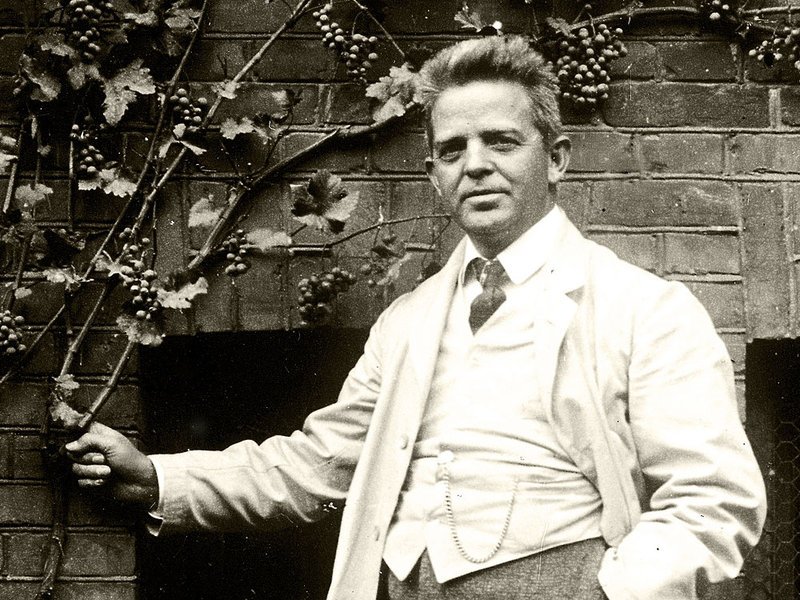
    Cascarino was born into a rough neighborhood in South Philadelphia in 1922. With a name like Romeo, you have to learn how to use your fists! While navigating the School of Hard Knocks, he taught himself privately, gleaning the mechanics of music theory from books checked out of the Free Library of Philadelphia. He was discovered by composer Paul Nordoff, who recognized his genius, and the two became more like friends than master-disciple.

    For many years, Cascarino was a professor of composition at Combs College of Music. The recipient of two Guggenheim Fellowships, he labored at his magnum opus, the opera “William Penn,” for the better part of three decades. The work received its premiere at Philadelphia’s Academy of Music in 1982 to mark the 300th anniversary of the founding of the city.

    Metropolitan Opera singer bass-baritone John Cheek sang the title role, Cascarino’s wife, soprano Dolores Ferraro, created the part of Penn’s wife, Gulielma, and Christofer Macatsoris conducted the Philadelphia Singers and the Concerto Soloists of Philadelphia.

    Cascarino died in 2002, at the age of 79. He left too little music. Fortunately, every piece is a treasure. A seductive, twilit beauty informs much of his output. If only he had completed “William Penn” 30 years earlier, I believe it would be as highly-regarded as Carlisle Floyd’s “Susanna” or Robert Ward’s “The Crucible.”

    Here’s hoping for a Cascarino revival, however modest, in 2022.


    “Pygmalion,” conducted by JoAnn Falletta

    “The Acadian Land,” performed by members of The Chamber Orchestra of Philadelphia

    The concise Bassoon Sonata, written for Cascarino’s Army buddy, Sol Schoenbach, for twenty years principal bassoonist of The Philadelphia Orchestra

    “Blades of Grass” for English horn and orchestra, after Carl Sandburg, performed by Orchestra 2001

    “Little Blue Pigeon,” from “Pathways of Love,” sung by Dolores Ferraro

    “Meditation and Elegy,” inspired by Edgar Allan Poe’s “Annabel Lee,” performed by Philadelphia Sinfonia

    Bruce Duffie interviews the composer

    http://www.kcstudio.com/cascarino2.html

    A list of his works

    https://romeocascarino.org/list_of_works.html

Tag Cloud

Aaron Copland (93) Beethoven (95) Composer (114) Film Music (133) Film Score (143) Film Scores (255) Halloween (94) John Williams (193) KWAX (229) Leonard Bernstein (103) Marlboro Music Festival (125) Movie Music (148) Mozart (88) Opera (206) Philadelphia Orchestra (89) Picture Perfect (174) Princeton Symphony Orchestra (108) Radio (88) Ross Amico (244) Roy's Tie-Dye Sci-Fi Corner (290) The Classical Network (101) The Lost Chord (268) Vaughan Williams (103) WPRB (396) WWFM (881)

DON’T MISS A BEAT

Receive a weekly digest every Sunday at noon by signing up here


RECENT POSTS