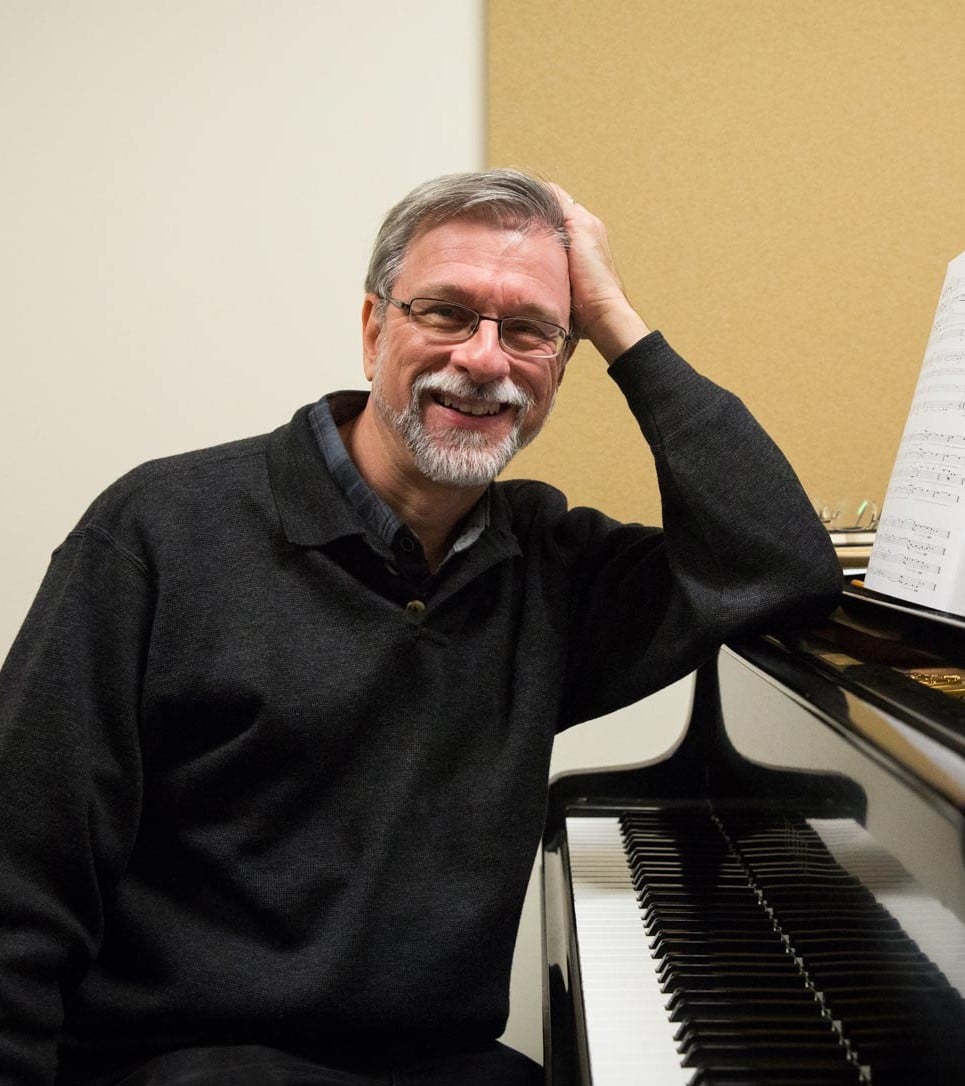
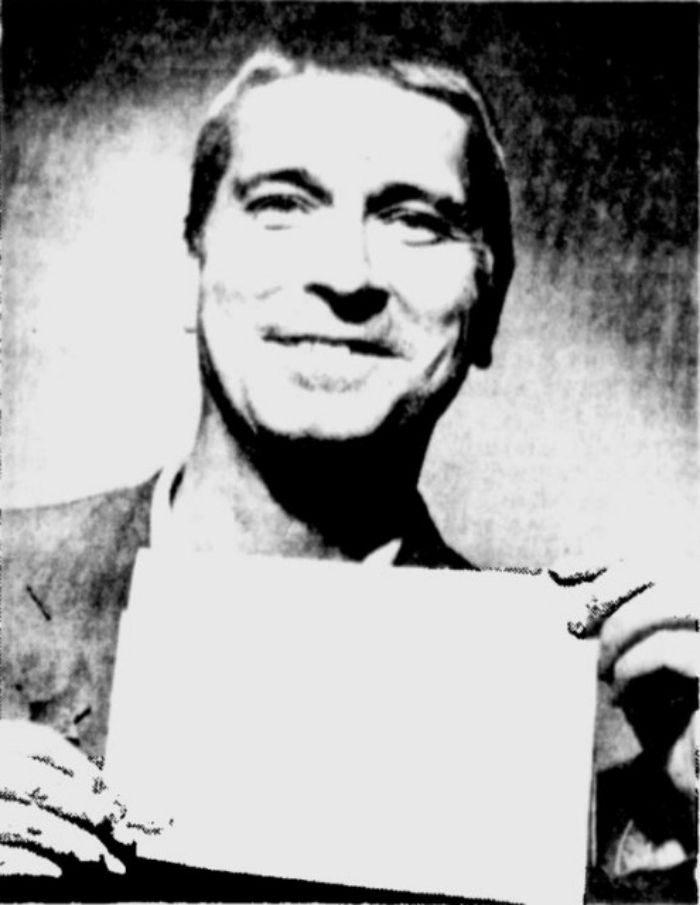
Following the sad news this morning of the death of James Primosch, I have only just learned of the passing of another Philadelphia composer. Harold Boatrite died on Monday at the age of 89.
Boatrite studied with Stanley Hollingsworth (himself a pupil of Darius Milhaud and Gian Carlo Menotti). On a scholarship, he attended Tanglewood for further lessons with Lukas Foss and Aaron Copland. In 1961, he was invited by Rudolf Serkin to serve as composer-in-residence at the Marlboro Music Festival.
Six years later, Boatrite received an honorary doctorate from Combs College of Music. He taught theory and composition at Haverford College until 1980. From 1974 to 1977, he also served on the Pennsylvania Council on the Arts.
Boatrite’s output spanned chamber and solo instrumental music to large-scale choral and orchestral works. His compositions have been performed throughout the United States and Europe, most notably at the Prague Autumn International Music Festival. A ballet, “Childermas,” was nationally broadcast on CBS television in 1969.
Boatrite served for many years as a new music consultant to the Chamber Orchestra of Philadelphia. His chamber works were recorded for the Capstone label, and his orchestral scores are housed in the Edwin A. Fleisher Collection at the Free Library of Philadelphia.
A Philadelphia presence for many years, Primosch earned his master’s degree at the University of Pennsylvania, where he was a student of George Crumb and Richard Wernick.
He went on to obtain his doctorate from Columbia, where he studied with Mario Davidovsky. He also served as a teaching assistant at the Columbia Electronic Music Center.
He returned to Philadelphia to join the faculty of U of P in 1988. There he became director of the Presser Electronic Music Studio.
Earlier, he studied at Cleveland State University. Primosch was born in Cleveland in 1956.
Acclaimed for his word-setting and poetic nuance, he composed quite a bit of music for voice. His Catholic faith informed his sacred works. He was also a jazz enthusiast. His compositional language could be angular or unabashedly lyrical. His music has been much performed, much recorded, and much honored.
Among the organizations and ensembles to have programmed his pieces are the Chicago Symphony, the Los Angeles Philharmonic, the New York Philharmonic New Music Ensemble, and the St. Paul Chamber Orchestra.
Locally, his music has been performed by The Crossing, Dolce Suono, Mendelssohn Club, Network for New Music, Orchestra 2001, the PRISM Saxophone Quartet, and Westminster Choir College.
In 1994, he served as artist-in-residence at the Marlboro Music Festival.
Primosch was diagnosed with pancreatic cancer in September 2020.
R.I.P.
Meditation on “Motherless Child,” from the Piano Quintet
From his “Mass for the Day of St. Didymus,” performed by The Crossing
Here it is complete
Oboe Quartet
“Our Revels Now Are Ended” from “Songs and Dances from ‘The Tempest’”
I find it fascinating that Germaine Tailleferre waited out World War II in Philadelphia. And yet I can never seem to find out very much about what she did while in exile.
Tailleferre was the only female member of Les Six, that loose collective of composers that rose to prominence in Paris in the late ‘teens and 1920s, under the guidance of Jean Cocteau. Her famous colleagues included Francis Poulenc, Darius Milhaud, Arthur Honegger, and Georges Auric. Louis Durey, a hard-line communist who went on to set poems by Ho-Chi Minh and Mao Zedong, is the one nobody remembers. (I wonder why.)
Tailleferre was strong-willed from the beginning. Her birth name was Taillefesse, but she changed it to spite her father, since the old man opposed her musical studies. However, she took piano lessons with her mother and was admitted into the Paris Conservatory. It was there that she met the rest of The Six and that the prizes began to pile up. She also earned the friendship and received the support of Maurice Ravel.
In 1925, she married Ralph Barton, the American caricaturist, and moved to New York. Two years later, the couple returned to France, then divorced. Her career thrived in the 1920s and ‘30s. With the outbreak of World War II, however, she beat it back to the United States, leaving most of her scores at her home in Grasse, and, as I said, passed the war years in Philadelphia.
After the war, she again returned to France, where she resumed her career. As she got older, her pieces tended to be shorter, as she suffered from arthritis. She also wrote a lot for children and young pianists. She composed virtually right up until the time of her death in 1983, when she was 91 years-old. She wrote so much, in fact, that a lot of the music of her later years has never been published, and fresh discoveries from her output are being recorded all the time.
Happy birthday, Germaine Tailleferre! If anyone has any information about her activities in Philadelphia, I would be very curious to know.
The Concertino for Harp and Orchestra (1927):
The lovely and wistful “Arabesque” for clarinet and piano (1972):
The Concerto for Piano and Orchestra (1924). The piece was given its U.S. premiere – in the presence of the composer – by Alfred Cortot and the Philadelphia Orchestra, conducted Leopold Stokowski.
Leo Smit was born in Philadelphia 100 years ago today.
Not to be confused with the Dutch composer of the same name (born in 1900), Smit was the son of Russian immigrants. His father was a violinist who performed with Leopold Stokowski in Philadelphia, Fritz Reiner in Cincinnati, and Arturo Toscanini in New York (with the NBC Symphony).
A child prodigy, Leo took to the piano by the age of 5. When he was about 8, his mother took him to Moscow, where he studied for a year with composer Dmitri Kabalevsky.
Back home, he was accepted into the Curtis Institute of Music. He was taught there by Isabella Vengerova. Vengerova was a Leschetizky pupil. Her other students included Gary Graffman, Gilbert Kalish, Leonard Pennario, Menahem Pressler, and Abbey Simon.
Smit also learned from José Iturbi, the Spanish conductor, pianist, and harpsichordist, who achieved wider recognition in Hollywood films of the 1940s. Iturbi stood in for Cornel Wilde on the soundtrack to the Chopin biopic “A Song to Remember.”
He received further instruction in composition from Nicolas Nabokov, who was the first cousin of Vladimir Nabokov.
At 15 or 16, Smit became a rehearsal pianist for George Balanchine. He first worked with Igor Stravinsky while preparing for the world premiere of “Jeu de Cartes.” He was a devoted champion of the music of Aaron Copland, all of whose works for the keyboard he recorded. He once had the opportunity to play privately for Béla Bartók, for whom he turned pages at Carnegie Hall. Following the Carnegie concert, Copland introduced him to Leonard Bernstein. Smit also did much to revive the reputation of boogie-woogie master Pete Johnson.
In 1951, the Boston Symphony Orchestra performed Smit’s First Symphony. He also composed two operas, “The Alchemy of Love,” on a libretto by British astronomer Fred Hoyle (who also provided the text for an oratorio about Copernicus), and “Magic Water.” Among his other compositions was a collection of 100 songs after poems of Emily Dickinson. His works were programmed by Bernstein, Stokowski, and Serge Koussevitzky.
For three decades, he made his home in Buffalo, where he served on the faculty of the State University of New York. Earlier, he taught at Sarah Lawrence College and the University of California. As a photographer, he captured images of some of the era’s most notable musicians. He sometimes performed recitals to curated slide shows of his work.
Smit died in 1999 at the age of 78.
Leo Smit, Symphony No. 1:
Interesting interview with Bruce Duffie, including a great recollection of Stravinsky:
This guy – Hubert Blaine Wolfeschlegelsteinhausenbergerdorff Sr., for short – is credited with having actively used what is said to be the longest personal name in the world. Of course, its derivation is German, so it could conceivably go on forever, like pi. Needless to say, his life was a trail of typographical errors. You can wade through the full name by following the link below.
Philadelphia attracts some very strange people. (I offer this as a resident of over 30 years.)
What it reminds me of is this classic Monty Python sketch, about the neglected German baroque composer.
My best friend and I had this memorized when we were in the seventh grade.
NOTE: Even in its shortened form, Hubert’s surname caused my computer to parse it out. As I cut-and-pasted my post from a Word document, there appeared several artificial breaks, signified by little perpendicular symbols, since removed!