Tag: Pianist

  • Seymour:  An Epilogue

    Seymour: An Epilogue

    Between the obligation to promote my radio shows every Friday and Saturday, then last week falling ill as I teetered into the weekend, I just couldn’t pull it together to acknowledge the passing of Seymour Bernstein.

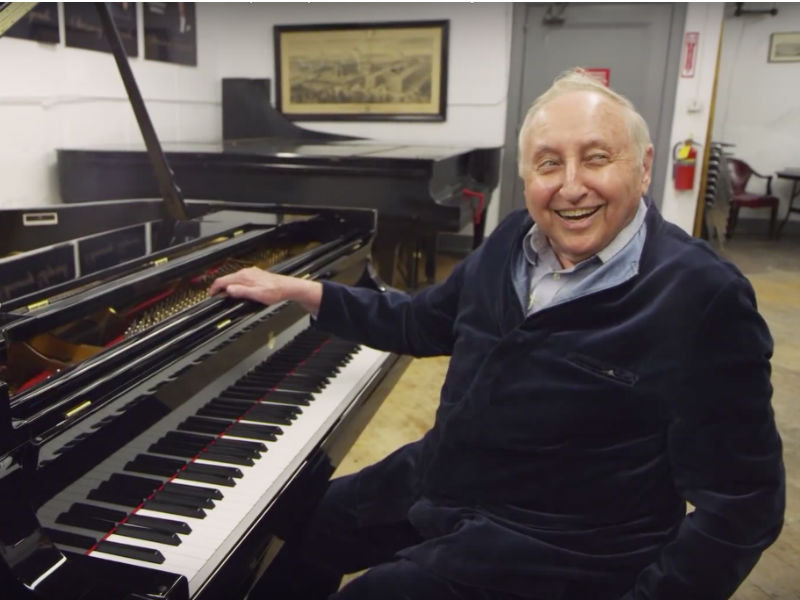
    Born and raised in Newark, NJ (and no relation to Leonard), Bernstein basically taught piano for 80+ years, from the time his own teacher, Clara Husserl, herself a pupil of Theodor Leschetizky – who studied with Carl Czerny, who studied with Beethoven – delegated the supervision of some of her more gifted, younger pupils to him when he was only 15.

    Bernstein also studied with Alexander Brailowsky, Clifford Curzon, and Jan Gorbaty, legendary pedagogue Nadia Boulanger, and master of all trades George Enescu. That is quite the gallery of mentors!

    Bernstein was the soloist in the world premiere of Heitor Villa-Lobos’ Piano Concerto No. 2 with the Chicago Symphony Orchestra in 1969. Even at the height of his career as a performer, he taught, conducting master classes in Europe, Asia, and the Americas.

    He abandoned the concert stage at the age of 50, opting instead for the quieter satisfactions of teaching and composing. He intimated to no one that his final concert, in 1977, would be his swan song.

    His Achilles’ heel was debilitating stage fright. It drove him to early retirement, and later in life, when he was persuaded to go before the cameras for a documentary about him, he blacked out.

    He long maintained a private studio in New York City, where he continued to teach practically to the time of his death. His books include “With Your Own Two Hands: Self-Discovery Through Music,” “20 Lessons in Keyboard Choreography,” “Monsters and Angels: Surviving a Career in Music,” and “Chopin: Interpreting His Notational Symbols.”

    Warm and funny, dry, opinionated, and always full of insight, Bernstein was a larger-than-life character whose philosophy of musicmaking was always rooted in the heart. He could lull you with that grandfatherly exterior, but watch out! He was as sharp as C-sharp major.

    In 2015, that documentary was released. “Seymour: An Introduction” was directed by Princeton’s Ethan Hawke – and if you’re a J.D. Salinger fan, you’ll doubly appreciate the title. The film has a 100-percent fresh rating on Rotten Tomatoes. You can watch the trailer here.


    A Bernstein interview at the age of 90 on “Living the Classical Life”


    There are also hours of fascinating videos on the YouTube channel “tonebase PIANO.” In this one, Bernstein dismantles Glenn Gould’s Mozart.


    Bernstein plays Brahms


    At 19, playing Liszt’s “Mephisto Waltz No. 1”


    Bernstein died on April 30. At the time of his death, he was 99 years old.

    R.I.P.
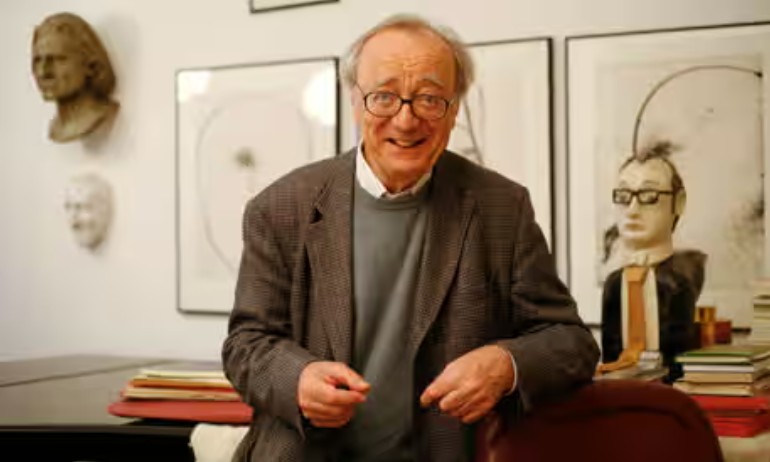
  • Alfred Brendel: Wit, Wisdom & Beethoven

    Alfred Brendel: Wit, Wisdom & Beethoven

    Alfred Brendel was taller and had a better sense of humor than one would ever anticipate from the somber expression he wore on so many of his album covers. He was often described as “cerebral,” but what he really liked was to laugh. I guess that image would have jarred with the marketing strategy of Philips Records. They always had him looking way too serious as he recorded way too much Beethoven. Back in the day, Brendel was the first to record Beethoven’s complete piano music. Then he recorded the sonatas again. And then again.

    His fame paralleled the rise of the LP. It’s interesting that many of his earlier recordings were in muddy sound for the Vox label. That said, the repertoire was often much more stimulating than that on the digital recordings he made later in his career. (For Vox, he set down first recordings of Franz Liszt’s “Christmas Tree Suite” and Prokofiev’s Piano Concerto No. 5.) Also, the performances seemed more spontaneous, or perhaps simply more vibrant. Later, he was always reliable, if not always the most thrilling interpreter. Cerebral became a handy euphemism.

    Handily, the compact disc arrived for Brendel at mid-life, just as he had reached maturity. The improved technology allowed him to go back and document much of his core repertoire in clean, modern sound. By extension, he was a regular presence on classical radio, and millions became familiar with him through his interpretations of Haydn, Mozart, Beethoven, Schubert, Schumann, Liszt, Brahms, and perhaps most interestingly, Schoenberg.

    When he retired in 2008, at the age of 78, he had been struggling with arthritis and back pain, but he was still at the top of his game, one of the few classical artists still guaranteed to pack an auditorium. He appeared at Carnegie Hall no less than 81 times. Twice, he performed the complete Beethoven sonatas there.

    I don’t think it’s possible to love classical music and not respect Alfred Brendel. The man was an interpretive artist of the highest caliber. He also sold lots of records during an era when his very existence helped contribute to the viability of keeping a classical music section in most record stores.

    He looked pretty much like what anyone imagined a pianist to be: bespectacled, crowned with a disheveled widow’s peak, and improbably tall and lank. He was the living embodiment of an absent-minded professor. But the man, better-read than most, also possessed a keen sense of humor. He was a fan of Edward Gorey and Charles Addams and Gary Larson. He collected kitsch and newspaper bloopers. He went on record as stating that his favorite occupation was laughing.

    Alongside his many thoughtful essays on musical subjects (including at least one on humor in music), he published two volumes of epigrammatic poetry, “One Finger Too Many” and “Cursing Bagels.”

    One of the most celebrated pianists of his day (and that’s saying something), Alfred Brendel died this morning, peacefully at his home in London, at the age of 94.

    R.I.P.


    PHOTO: Brendel, flanked by Liszt (left) and Eugene Jardin’s whimsical “Gipsbrendel”

  • Hugh Sung Pianist Sci-Fi Fan

    Hugh Sung Pianist Sci-Fi Fan

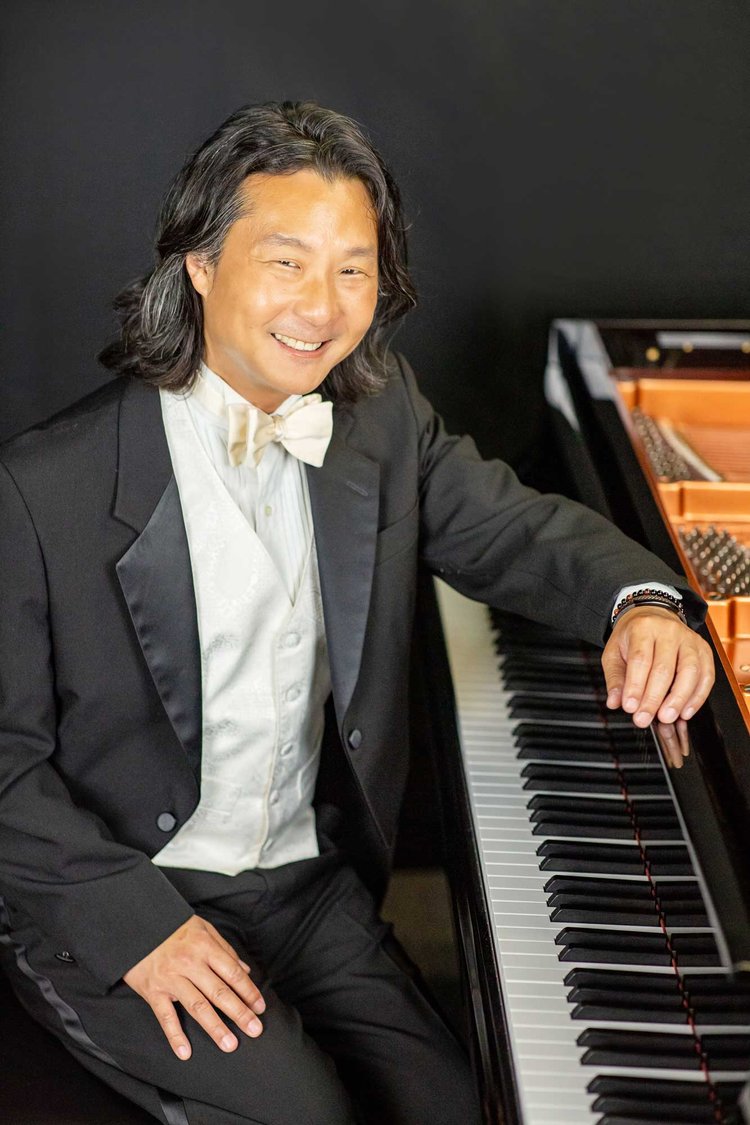
    Last night, pianist Hugh Sung was kind enough to join Roy and me on Roy’s Tie-Dye Sci-Fi Corner to share his dual enthusiasms for music and science fiction. Despite the facts that I’ve worked in classical music and lived in Philadelphia for over 30 years, and Hugh studied and worked often within several blocks of me, at the Curtis Institute of Music, we never actually met until a year or two ago, when Roy introduced us at his church, where Hugh serves as music director!

    So it was great to be able to spend a little time with him and to hear just a bit about his experiences at Curtis, especially with his teachers, the long-lived Eleanor Sokoloff (who died in 2020 at the age of 106!), who I used to wave to every morning as I walked my dog, and Jorge Bolet, world-famous for, among other things, his recordings of Franz Liszt. Hugh himself has made innumerable recordings and has accompanied musicians from the legendary (Aaron Rosand and Julius Baker) to the contemporary (Hilary Hahn and Jasmine Choi). During the course of the show, he also talks about some technological innovations he devised to assist classical performers in the digital age.

    His love of science fiction reaches back to his childhood and obviously continues in the present, as evidenced by some of the videos he’s made of sci-fi and fantasy themes, often with his wife, pianist Madalina Danila. In fact, it was one of those videos that got the show yanked last night from Facebook, for alleged copyright violation, but you can still view it complete on YouTube, by following the link.

    Ha! Totally missed out on this! Hugh’s also a foodie. Poke around his website for more fun.

    https://hughsung.com/plates

    His arrangement of “Black Coffee,” played with Philadelphia Orchestra principal flutist Jeffrey Khaner

    Thanks for the visit, and the music, Hugh Sung!

  • Maria Tipo Neapolitan Horowitz Dies at 93

    Maria Tipo Neapolitan Horowitz Dies at 93

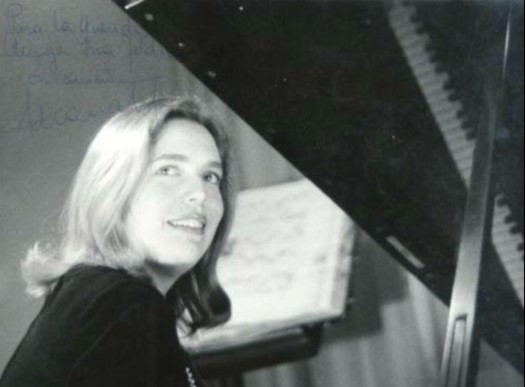
    The Italian pianist Maria Tipo died yesterday at the venerable age of 93.

    Her first teacher was her mother, who was a pupil of Ferruccio Busoni. Tipo also studied with Alfredo Casella and Guido Agosti.

    When she first toured the United States in the 1950s, she was hailed as “the Neapolitan Horowitz.” Her classic 1955 Vox LP of Scarlatti sonatas (later reissued on CD, with two Mozart piano concertos) was declared by Newsweek “the most spectacular record of the year.” (Newsweek should go back to reviewing classical records.) Her recording of Bach’s “Goldberg Variations” is also highly-prized.

    Tipo was a pianist’s pianist, admired by Martha Argerich among others, who attained her fame at a time when being a piano virtuoso was largely a man’s game. She herself was also a dedicated teacher. But all you really know is right there on the recordings. R.I.P.


    Scarlatti in 1955

    34 years later, playing Mozart’s Piano Concerto No. 21

  • Leonard Pennario Piano Bridge Master

    Leonard Pennario Piano Bridge Master

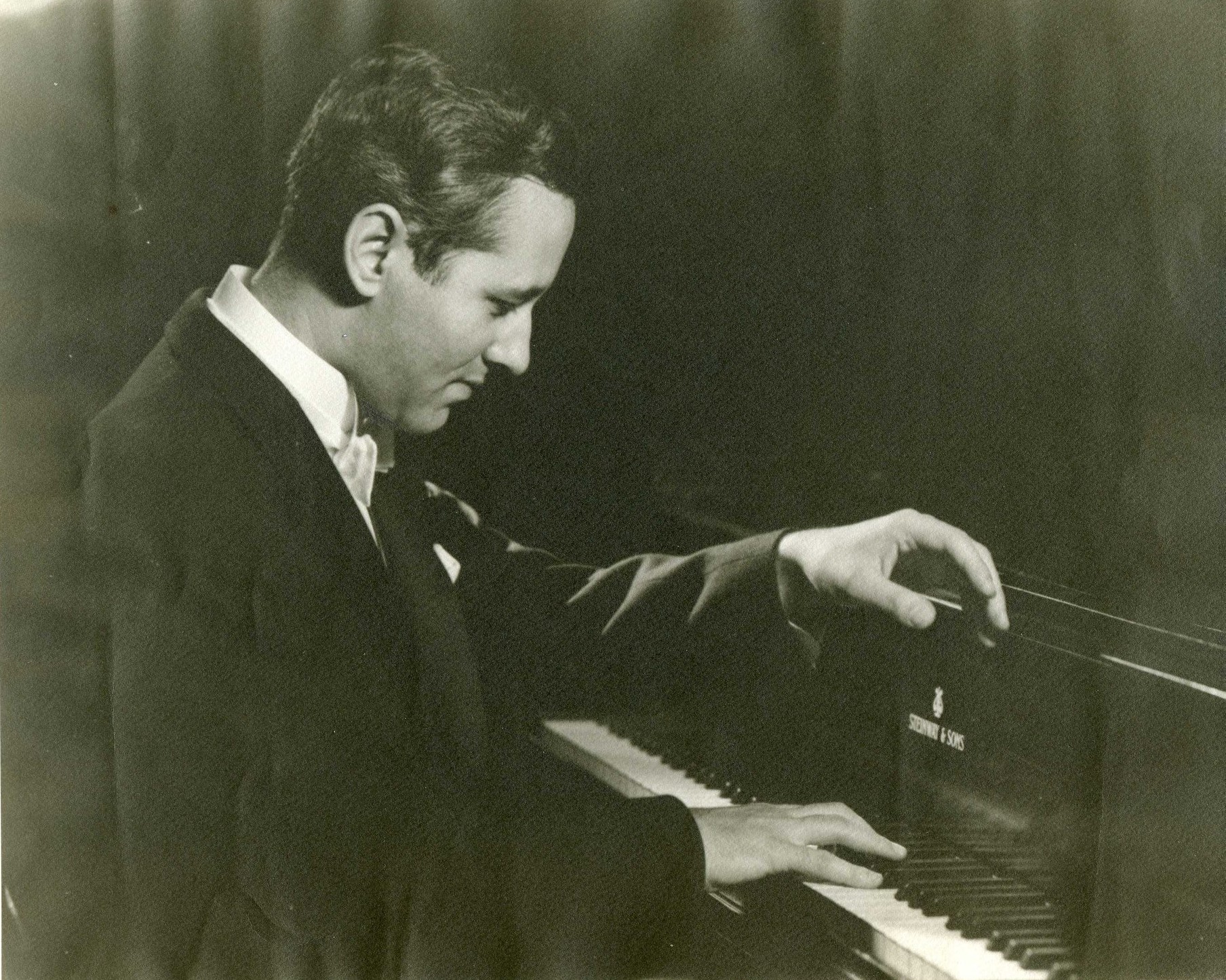
    He liked his keys and he liked his cards. One hundred years ago today, pianist and bridge master Leonard Pennario was born in Buffalo, New York.

    Pennario gave his first public performance in a department store there at the age of 7. After his father’s shoe business collapsed during the Great Depression, he and his family moved to Los Angeles when he was 10. Los Angeles was to remain his base of operations for the rest of his career, until his retirement in 2005.

    Pennario was a born musician with an outstanding memory. At the age of 12, he was recommended by Sir Eugene Goossens to the Dallas Symphony Orchestra as a substitute for an ailing pianist. Asked if he knew Grieg’s Piano Concerto, Pennario said yes, when in fact he had never even heard it. He was able to learn the piece in six days, without missing any school. His debut was a triumph and the beginning of an extraordinary career.

    He rose to prominence without ever attending a music college or entering a piano competition. He did, however, take lessons from Isabelle Vengerova, whose other students included Samuel Barber, Leonard Bernstein, Gary Graffman, and Abbey Simon. He also studied composition with Ernst Toch at the University of Southern California.

    He served in the U.S. Army during the Second World War, and made his debut with the New York Philharmonic under Artur Rodzinski, in Liszt’s First Piano Concerto, while still in uniform, in 1943.

    Temperamentally, he was the polar opposite of Glenn Gould, who, early on, abandoned public concertizing, in favor of the hermetic environment of the recording studio, or even Vladimir Horowitz who suffered harrowing bouts of stage fright. Pennario adored performing before an audience, and his magnetism and self-confidence were evident to those who were lucky enough to have heard him live. His was an unshakeable technique, characterized by clarity, speed, and accuracy, combined with a sense of spontaneity and soulfulness.

    His recordings of Gershwin and Rachmaninoff have seldom, if ever, been out of the catalogue. His “Rhapsody in Blue” was one of the most popular of all classical LPs, and he was the first pianist after the composer to record all the Rachmaninoff concertos. In 1959, he was declared the best-selling American pianist. He was also the first to record the works of Louis Moreau Gottschalk. In all, he made over 60 records.

    Pennario’s association with Hollywood unsettled some musical elitists, especially when he recorded an album like “Concertos Under the Stars,” featuring Addinsell’s “Warsaw Concerto,” among other potboilers, or when he adapted his own “Midnight on the Cliffs” for the Doris Day film “Julie.” He dated Elizabeth Taylor and palled around with Judy Garland. He was an early champion of the concert music of Academy Award-winning film composer Miklós Rózsa. In the meantime, he was also recording piano trios with Jascha Heifetz and Gregor Piatigorsky.

    In addition to being an exceptional pianist, he was an accomplished card player. He discovered bridge in 1965, formed a celebrity quartet with Don Adams (of “Get Smart”), band leader Les Brown, and Joan Benny (Jack Benny’s daughter), and under the tutelage of his friend, columnist Alfred Sheinwold, attained an enviable level of expertise. In fact, he became a Life Master in tournament bridge, and earned a listing in the Official Encyclopedia of Bridge.

    Apparently, Sheinwold shared Pennario’s passion for music. During their get-togethers the pianist would sometimes accompany him in lieder of Schubert and Brahms. Said Pennario, “He had a fine tenor voice… I would accompany him and he in turn would partner me in tournaments. Each of us felt he had the better deal!”

    In the late 1990s, the onset of Parkinson’s Disease forced Pennario into retirement. Bridge became the solace of his old age. He died in La Jolla, California, on June 28, 2008, at the age of 83.

    Fondly remembering Leonard Pennario on the 100th anniversary of his birth!


    “Rhapsody in Blue”

    With Fiedler and the Boston Pops: Rachmaninoff’s “Rhapsody on a Theme of Paganini,” César Franck’s “Symphonic Variations,” and Henry Charles Litolff’s Scherzo from the Concerto Symphonique No. 4

    Live performance of Miklós Rózsa’s Piano Concerto, with post-performance interview

    Trios with Heifetz and Piatigorsky

    “Midnight on the Cliffs”

    On Kraft Music Hall with Nelson Eddy in 1947

Tag Cloud

Aaron Copland (92) Beethoven (95) Composer (114) Film Music (123) Film Score (143) Film Scores (255) Halloween (94) John Williams (187) KWAX (229) Leonard Bernstein (101) Marlboro Music Festival (125) Movie Music (138) Opera (202) Philadelphia Orchestra (89) Picture Perfect (174) Princeton Symphony Orchestra (106) Radio (87) Ralph Vaughan Williams (85) Ross Amico (244) Roy's Tie-Dye Sci-Fi Corner (290) The Classical Network (101) The Lost Chord (268) Vaughan Williams (103) WPRB (396) WWFM (881)

DON’T MISS A BEAT

Receive a weekly digest every Sunday at noon by signing up here


RECENT POSTS