Tag: Piano Concerto

  • John Williams Piano Concerto Premiere NYC

    John Williams Piano Concerto Premiere NYC

    It’s that time of year again. All the musical arts organizations have been sending out emails to announce their 2025-26 seasons, hoping to entice us to subscribe. In fact, I get so many of these, I often just wind up scrolling quickly through them or putting them aside for later and then forgetting all about them. Catalogues and brochures that show up in the actual, honest-to-goodness U.S. Post receive closer scrutiny.

    For me, computer screens are just so claustrophobic. And inconvenient. I hate having to scroll up and down and click through endless links while trying to compile a fantasy subscription season. I especially dislike when marketers reduce otherwise interesting programs to yawn-inducing teasers such as “Mitsuko Uchida Plays Mozart.” And then you have to click on the link to see if there’s anything else actually worth hearing. Because if you don’t, you just know it’s going to be some opulent, hour-long, fin-de-siècle symphonic poem that will only get programmed once in a lifetime.

    For the big orchestras that offer some 130 concerts a season, the whole online process is infuriatingly inconvenient. It’s a waste of my time and it’s not good for my blood pressure.

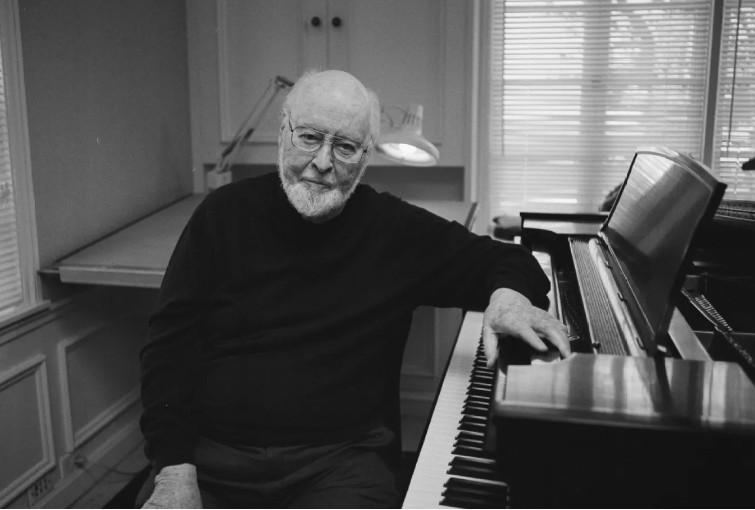
    But I digress. With a quick flash of the middle finger to the marketers, I now move on to the exciting news that it looks like John Williams finally finished his Piano Concerto for Emanuel Ax, as it will be performed by the New York Philharmonic on a series of concerts, February 27 – March 3, 2026, not long after the composer’s 94th birthday (on February 8 ). Ax is slated to give the work its world premiere with the Boston Symphony Orchestra at Tanglewood in July.

    Why it’s taken Williams so long to get around to writing a concerto for his own instrument is anyone’s guess. Over the past 50 years, he’s written concertos for violin, viola, cello, flute, oboe, clarinet, bassoon, trumpet, French horn, tuba, and maybe a few others I’m forgetting, since the works are not always titled “concerto.”

    The New York Philharmonic program will also include Ralph Vaughan Williams’ “Fantasia on a Theme by Thomas Tallis” and Mieczyslaw Weinberg’s Symphony No. 5. Mirga Gražinytė-Tyla will conduct. The whole prospect is so thrilling that I don’t know how I’m supposed to wait an entire year!

    How do the marketers drain all the excitement out of it? They’re titling it “Mirga Gražinytė-Tyla & Emanuel Ax.” That’s guaranteed to get butts in the seats.

    Despite their best efforts to keep me away, I will be there.

    https://www.nyphil.org/concerts-tickets/2526/mirga-grazinyte-tyla-and-emanuel-ax/

  • Busoni’s Piano Concerto A Centenary & My Wake-Up

    Busoni’s Piano Concerto A Centenary & My Wake-Up

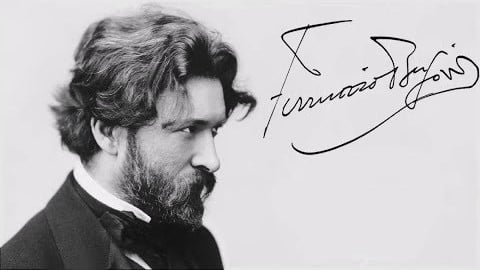
    Ferruccio Busoni died on his date one hundred years ago. He was 58 years old. The age I am now. I’d better get started on my epic piano concerto!

    More about Busoni’s titanic opus (with male chorus!) in this post I wrote in 2021:

    https://www.facebook.com/photo/?fbid=1812926358874646&set=a.279006378933326

  • Rachmaninoff’s April Fool’s Humor & Busoni’s Epic

    Rachmaninoff’s April Fool’s Humor & Busoni’s Epic

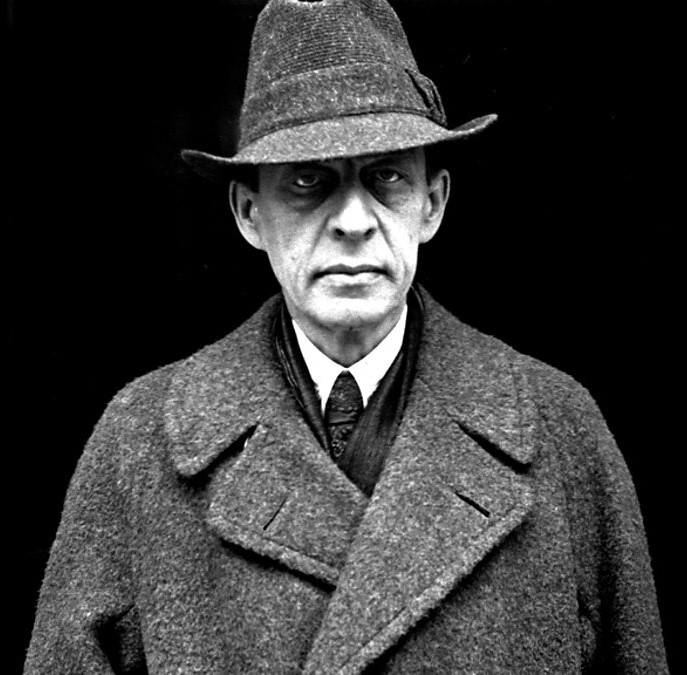
    Happy April Fool’s birthday to laugh-riot Sergei Rachmaninoff.

    Depending on where you look, Igor Stravinsky described his dour compatriot as either “six-foot-two of Russian gloom” or “a six-and-a-half-foot scowl.” Perhaps both. It’s true, you won’t find very many photos of Rachmaninoff smiling. But just to prove he was not entirely without a sense of humor, I share with you the following anecdote:

    Rachmaninoff was a favorite recital partner of violinist Fritz Kreisler. Once, in the middle of a concert in New York, Kreisler suffered a memory lapse. As he continued to noodle on his violin, feigning nonchalance while attempting to grope his way out of the labyrinth, he subtly inched closer to his pianist.

    “Where are we?” he whispered.

    To which Rachmaninoff replied, “Carnegie Hall.”

    On this day devoted to fun and frivolity, the two friends are reunited in spirit in Rachmaninoff’s transcription of Kreisler’s “Liebesfreud,” or “Love’s Joy.”

    Also, a shout-out to inadvertent prankster Ferruccio Busoni, another great pianist born on this date. Actually, his parents named him Ferruccio Dante Michelangelo Benvenuto Busoni. So clearly he had a sense of destiny. Or at any rate, he had a lot to prove! Perhaps that’s what spurred him to write what could very well be the most grandiose piano concerto of all time.

    Busoni’s concerto swings for the fences, with an epic, 70-minute running time, large orchestration, demanding solo part, and men’s chorus in the finale (which doesn’t start singing until an hour in).

    The text, from Adam Oehlenschläger’s verse-drama “Aladdin,” begins:

    “Deep and quiet, the pillars of rock begin to sound:
    Lift up your hearts to the power eternal,
    Feel Allah’s presence, behold all his works!”

    In the score, Busoni instructs that the chorus should be “invisible.” Somehow, this was mistranslated, resulting in a widespread belief that he actually wanted the singers to perform nude. Whether or not it’s ever been presented that way (in the interest of authenticity) is anyone’s guess.

    Oddly, the concerto isn’t designed as a showcase for a fire-eating virtuoso. Beyond it being something of an endurance test for the soloist, there aren’t really any flashy cadenzas or too many opportunities to hot dog. The work is more like a gargantuan piano fever dream.

    I particularly like the movement “All’Italiana,” evocative of Italian folk music and popular song. It always makes me think of Chico Marx.

    To give you a sense of perspective, Rachmaninoff’s ever-popular Piano Concerto No. 2, at less than half the length, was first performed three years earlier, in 1901. The work would later be used on the soundtrack to “Brief Encounter.” There is nothing brief about Busoni’s concerto.

    The pianist here is Marc-André Hamelin, who used to come into my bookshop looking for arcane sheet music, back in the day. Just a few years before this video, as a matter of fact. About a decade later, I saw him perform Busoni’s concerto at Carnegie Hall.

    The Chico Marx business begins about 46 minutes in. The movement gets zanier and zanier.

    Here Eileen Joyce plays Rachmaninoff’s Piano Concerto No. 2 in “Brief Encounter,” with Celia Johnson and a young Trevor Howard:

    Happy birthday, Busoni and Rachmaninoff!

  • Busoni’s Grandiose Piano Concerto

    Busoni’s Grandiose Piano Concerto

    The most grandiose piano concerto of all time?

    With a name like Ferruccio Dante Michelangelo Benvenuto Busoni, I imagine a pianist would do anything to live up to his potential. Ferruccio Busoni’s aspirational Piano Concerto swings for the fences, with an epic, 70-minute running time, large orchestration, demanding solo part, and men’s chorus in the finale.

    The text, from Adam Oehlenschläger’s verse-drama “Aladdin,” begins:

    “Deep and quiet, the pillars of rock begin to sound:
    Lift up your hearts to the power eternal,
    Feel Allah’s presence, behold all his works!”

    In the score, Busoni instructs that the chorus should be invisible. Somehow, this was mistranslated, so that there’s still a widespread misunderstanding that he actually wanted the singers to perform nude. Although whether it’s ever been presented that way is anyone’s guess.

    Oddly, the concerto isn’t designed as a showcase for a fire-eating virtuoso. Beyond it being something of an endurance test for the soloist, there aren’t really any flashy cadenzas or too many opportunities to hot dog. The work is more like a gargantuan piano fever dream.

    I particularly like the movement “All’Italiana,” evocative of Italian folk music and popular song. It always makes me think of Chico Marx.

    To give you a sense of perspective, Rachmaninoff’s ever-popular Piano Concerto No. 2, at less than half the length, was first performed three years earlier, in 1901. The work would later be used on the soundtrack to “Brief Encounter.” There is nothing brief about Busoni’s concerto.

    The pianist here is Marc-André Hamelin, who used to come into my bookshop looking for arcane sheet music, back in the day. Just a few years before this video, as a matter of fact. About a decade later, I saw him perform Busoni’s concerto at Carnegie Hall.

    https://www.youtube.com/watch?v=ohPzurDZzZ4

    Eileen Joyce plays Rachmaninoff’s Piano Concerto No. 2 in “Brief Encounter,” with Celia Johnson and a young Trevor Howard:

    Happy birthday, Busoni and Rachmaninoff!

  • Liszt’s Lost Concertos & Musical Secrets

    Liszt’s Lost Concertos & Musical Secrets

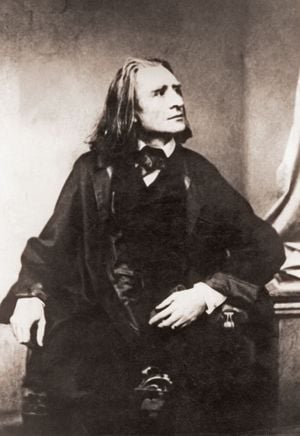
    When Franz Liszt died in 1883, his housekeeper allowed his students to go through his belongings and carry off manuscripts to keep as mementos. Just over a hundred years later, in 1989, parts of a previously unknown piano concerto were retrieved from Weimar, Nuremberg, and Leningrad. These were reunited by University of Chicago doctoral candidate Jay Rosenblatt.

    Scholars had simply assumed that the fragments were from an early draft of the much-beloved Piano Concerto No. 1. In reality, it is a “Third Piano Concerto” now believed to predate the accepted two. The work has not entered the standard repertoire, but it remains an interesting curiosity.

    One of the few pianists to take up the piece has been Rosenblatt’s teacher, Jerome Lowenthal, born in Philadelphia on this date in 1932. Here is Lowenthal’s recording of the work:

    Interestingly, it took the better part of a century for the truth about another lesser-known Liszt concerto to emerge.

    Sophie Menter had studied with Liszt in Weimar, beginning in 1869. So gifted a musician was she that Liszt described her as “the greatest pianist of her day.” He praised her “singing hand” and called her his “only legitimate daughter as a pianist.” She was by her teacher’s side when he died in Bayreuth in 1886.

    At the time, she held a professorship at the St. Petersburg Conservatory There, she became friendly with Peter Ilych Tchaikovsky. She asked Tchaikovsky to orchestrate a piano concerto she claimed that she herself had written, to showcase her talents as a performer. Tchaikovsky agreed, and also dedicated his own “Concert Fantasy for Piano and Orchestra” to her.

    What he didn’t realize is that the concerto – according to Menter’s friend, fellow Liszt pupil Vera Timanoff, to whom Menter allegedly confided – was actually composed by Liszt. Had Tchaikovsky known, he might very well have torn up the manuscript. He loathed Liszt, and was especially disgusted by Liszt’s transcription of the Polonaise from “Eugene Onegin.” As it was, Tchaikovsky conducted the work’s first performance in Odessa in 1893.

    Here is the “Concerto in the Hungarian Style” – formerly known as the “Sophie Menter Concerto” – performed by Janina Fialkowska, the same pianist who gave the first public performance of Liszt’s “Third Piano Concerto” in 1990:

    As an addendum, György Cziffra plays the Liszt transcription that Tchaikovsky so despised.

    In classical music, sometimes it’s not so much who you know, as who you don’t know that matters!


    Clockwise from left: Franz Liszt, Sophie Menter, Janina Fialkowska, and birthday boy Jerome Lowenthal

Tag Cloud

Aaron Copland (92) Beethoven (95) Composer (114) Film Music (123) Film Score (143) Film Scores (255) Halloween (94) John Williams (187) KWAX (229) Leonard Bernstein (101) Marlboro Music Festival (125) Movie Music (138) Opera (202) Philadelphia Orchestra (89) Picture Perfect (174) Princeton Symphony Orchestra (106) Radio (87) Ralph Vaughan Williams (85) Ross Amico (244) Roy's Tie-Dye Sci-Fi Corner (290) The Classical Network (101) The Lost Chord (268) Vaughan Williams (103) WPRB (396) WWFM (881)

DON’T MISS A BEAT

Receive a weekly digest every Sunday at noon by signing up here


RECENT POSTS