Tag: Picture Perfect

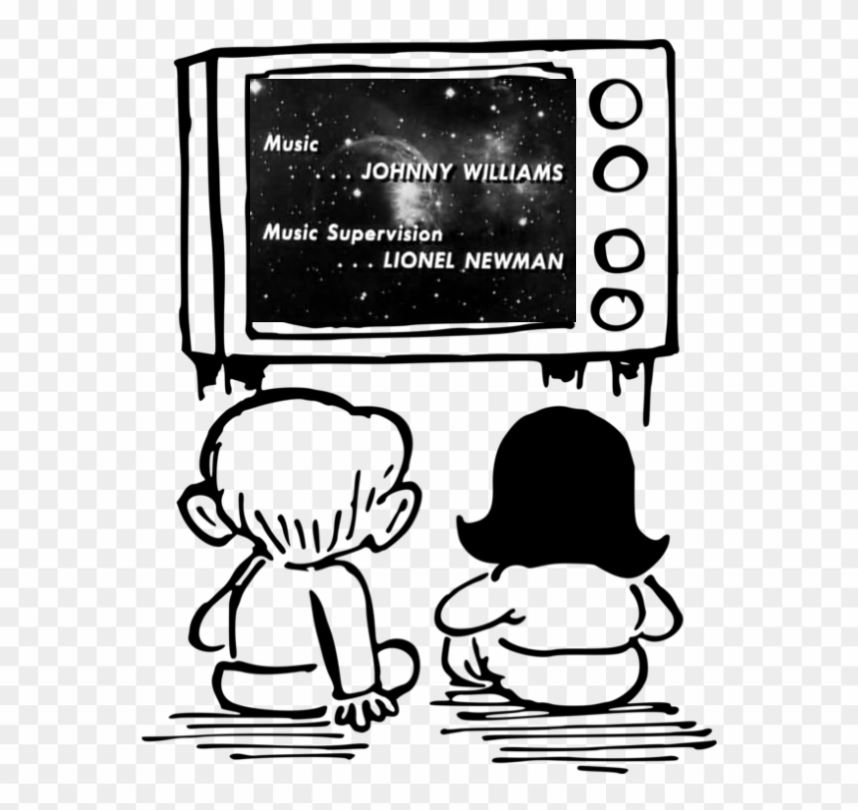
  • Johnny Williams Before the Blockbusters

    Johnny Williams Before the Blockbusters

    Before “Harry Potter.” Before “Jurassic Park.” Before “E.T.” Before “Raiders of the Lost Ark.” Before “Superman.” Before “Close Encounters of the Third Kind.” Before “Star Wars.” Before “Jaws.” Before even John Williams… there was Johnny Williams.

    Well before Williams became America’s most famous living composer, he was busy honing his craft as an orchestrator, an arranger, a session pianist, and a composer in the bush league of television. This week on “Picture Perfect,” we’ll hear some of “Johnny” Williams’ music for “Lost in Space.”

    Also on the program will be selections from “The Alfred Hitchcock Hour” by Bernard Herrmann, the theme from “Wagon Train” by Jerome Moross, and a medley of well-known television music by Jerry Goldsmith.

    Don’t touch that dial! Movie composers think inside the box, on “Picture Perfect,” this Saturday evening at 6:00 EST, on WWFM – The Classical Network and wwfm.org.

  • Dickens Movie Music Picture Perfect

    Dickens Movie Music Picture Perfect

    ‘Tis the season for… “Humbug!”

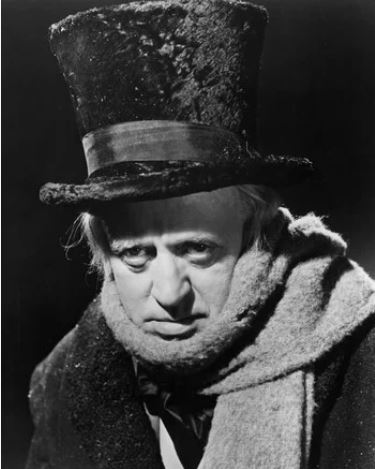
    This week on “Picture Perfect,” we’ll have a Dickens of a time with a garland of music from movies inspired by his writings. Tune in for selections from “Nicholas Nickleby” (1947) by Lord Berners, “Oliver Twist” (1948) by Sir Arnold Bax, “David Copperfield” (1969) by Sir Malcolm Arnold, and “A Christmas Carol” (1951) by Richard Addinsell.

    Blame it on an undigested bit of beef, a blot of mustard, a crumb of cheese, a fragment of an underdone potato. There will be more of gravy than of grave about it. Take your pick of Dickens on “Picture Perfect,” music for the movies, this Saturday evening at 6:00 EST, on WWFM – The Classical Network and wwfm.org.
  • Nino Rota Godfather Fellini Birthday

    Nino Rota Godfather Fellini Birthday

    An hour of music by Nino Rota is an offer you can’t refuse.

    Rota was born in Milan on this date in 1911. An extraordinarily prolific composer, he wrote some 150 film scores, from the 1930s until his death in Rome in 1979. That’s an average of three scores per year over a 46-year span. At the height of his productivity, from the late-40s to the mid-50s, he was writing up to ten scores a year, with a mindboggling 13 film scores to his credit in 1954.

    Yet somehow, in his spare time, he managed to write ten operas, five ballets, and dozens of other orchestral, choral, and chamber works, and incidental music for the stage. As if that weren’t enough, he also taught at the Liceo Musicale in Bari, Italy, of which he was the director for almost 30 years.

    This week on “Picture Perfect,” we remember him on his birthday, with some of his best-known film scores.

    For the 50th anniversary of its release, we’ll hear selections from Francis Ford Coppola’s “The Godfather” (1972) and what many regard as one of the greatest sequels ever made, “The Godfather Part II” (1974). Taken collectively, this is some of the best-known and best-loved movie music ever written.

    “The Godfather Part II” earned Rota his only Academy Award. But there was some controversy surrounding Rota’s contribution to its predecessor. His nomination for the original “The Godfather” was withdrawn at the eleventh hour, when it came to the Academy’s attention that the love theme had been used in a 1958 Italian comedy he had scored called “La Fortunella.” Puzzlingly, the music for the sequel went on to win the Oscar, although it featured the same theme that made the earlier score ineligible.

    It could be argued that Rota was so prolific that, as was the case with many of his Baroque forebears, a certain amount of recycling was inevitable. We’ll listen to a selection from Luchino Visconti’s “Rocco and His Brothers.” Hearing it directly on the heels of “The Godfather,” you may find it unexpectedly familiar.

    But lest we become too judgmental, remember Gioachino Rossini did much the same thing. And the Italian opera comparison is not inappropriate. Rota’s long-limbed melodies frequently evoke the heyday of Puccini and the Verismo School. This is most evident in his music written for another Visconti film, “The Leopard” (1963), after the poignant novel of Giuseppe di Lampedusa.

    At the same time, Rota was also clearly influenced by the commedia dell’arte, or perhaps simply the world of the circus, which made him the ideal composer for the films of Federico Fellini, in which the most poignant melodies might be swept away at any moment by off-the-rails funhouse music. There would be no Danny Elfman without Nino Rota!

    Rota’s association with Fellini began in 1952 with “The White Sheik.” It was the start of a working relationship that would span decades, until Rota’s death in 1979, and encompassed such classics as “La Strada” (1954), “Nights of Cabiria” (1957), “La Dolce Vita” (1960), and “8 ½” (1963). We’ll hear an impromptu suite made up of selections from all four. Such music could only be described as Felliniesque – or perhaps, more accurately, Fellini’s films should be described as Rotaesque.

    Leave the gun, take the cannoli. Nino Rota sucks down all the espresso on his birthday, on “Picture Perfect,” music for the movies, this Saturday evening at 6:00 EST, on WWFM – The Classical Network and wwfm.org.

  • National Geographic’s Epic Soundtracks

    National Geographic’s Epic Soundtracks

    Years in advance of modern cable, at the very dawn of color television, the National Geographic Society aired its first “special” on September 10, 1965. The program, titled “Americans on Everest,” featured stunning footage taken from the summit of the world’s tallest peak. These specials really were special, with breathtaking images and real-life adventures unlike anything previously experienced in American living rooms.

    Three months later, viewers were introduced to the familiar “National Geographic Theme,” which was composed by Elmer Bernstein for the third of the broadcast specials, “Voyage of the Brigantine Yankee.” When one realizes that Bernstein also wrote the score for “The Magnificent Seven,” it becomes one of those “Of course!” moments. Both themes remain among the most recognized by American audiences.

    National Geographic went on to work with a number of the top film composers of the day. This week on “Picture Perfect,” we’ll travel the world with four of them.

    Bernstein, who was also responsible for the music for “The Ten Commandments,” “The Great Escape,” and “To Kill a Mockingbird,” returned in 1967 to write the music for a follow-up to “Voyage of the Brigantine Yankee,” called “Yankee Sails Across Europe.”

    Ernest Gold, composer of “Exodus,” was engaged in 1972 to write the score for “The Last Vikings,” a documentary about the inhabitants of the rugged northern coast of Norway, who at the time still practiced some of the traditions followed centuries before by their Norse forebears. Gold’s score is a good example of what a talented composer can accomplish through an economy of means – in this case, a wind ensemble, harp, cello and percussion.

    Leonard Rosenman, a pupil of Arnold Schoenberg, Roger Sessions, and Luigi Dallapiccola – a most unlikely pedigree on which to build a career in Hollywood – wrote classic scores for “East of Eden,” “Rebel Without a Cause,” and “Fantastic Voyage.” He also composed the music for one of the best known of the National Geographic specials, “Dr. Leakey and the Dawn of Man,” in 1966.

    Finally, Jerome Moross wrote a charming and buoyant Americana score for “Grizzly!,” which aired in 1967. Moross, of course, was the composer of one of the all-time great western scores, for “The Big Country.”

    Of course we’ll also get more than our share of that iconic National Geographic theme. All of this music was issued on limited edition compact discs from the Intrada label.

    I hope you’ll join me for music from outstanding television documentaries produced by National Geographic, on “Picture Perfect,” this Saturday evening at 6:00 EST, on WWFM – The Classical Network and wwfm.org.

  • Doreen Carwithen Unsung Film Composer

    Doreen Carwithen Unsung Film Composer

    This week on “Picture Perfect,” we’ll shine a light on the shamefully underutilized talent of Doreen Carwithen.

    In 1941, Carwithen studied harmony and composition with William Alwyn at London’s Royal College of Music. For both, it was love at first sight. Their fateful pairing led to a decades-long romance that culminated in their marriage, finally, in 1975.

    The reason for the delay was, unfortunately, at the time of their meeting, Alwyn happened already to be married. The double-life caused tremendous stress. Alwyn, in particular, descended into alcoholism and suffered a nervous breakdown. Finally, his doctor urged him that, if he was going to live at all, he should get on with it already and live honestly.

    In the concert hall, Alwyn – a contemporary of William Walton and Michael Tippett – enjoyed comparative success as a symphonist. Carwithen, too, got off to a promising start. Her overture “ODTAA (One Damn Thing After Another)” was conducted by Adrian Boult at Covent Garden in 1947. She also wrote two award-winning string quartets. But the cinema promised more lucrative employment. Carwithen was the first selected by J. Arthur Rank to enter the college’s new film music program.

    Combined, during their heyday, in the 1940s and ‘50s, Alwyn and Carwithen wrote the music for over 100 films. Alwyn, in particular, scored such high-profile projects as “The Crimson Pirate,” “A Night to Remember,” and “The Swiss Family Robinson.” Carwithen, although groomed for the very purpose, was not given the same opportunities. In all, she scored only six dramatic features. The rest were documentaries and shorts.

    Neither were her concert works, though well-received, met with the same enthusiasm or eagerness by either programmers or publishers. In 1961, she became Alwyn’s secretary and amanuensis, and following his death in 1985, devoted herself to the preservation of his legacy.

    After her own death, in 2003, discovered among her papers were sketches for an unfinished string quartet (her third), a symphony, and a cello concerto. One can only imagine that, as an artist, her potential remained unfulfilled.

    In anticipation of the centenary of Carwithen’s birth (on November 15, 1921), we’ll do our best to level the playing field, dividing the hour between Alwyn and Carwithen, 50/50, this week, on “Picture Perfect,” music for the movies, this Saturday evening at 6:00 EST, on WWFM – The Classical Network and wwfm.org.
    Watch this space: I’ll be writing more about Carwithen and her efforts for the concert hall this Tuesday!


    If you enjoy either of my weekly shows (or both!), or any of the other music you hear on The Classical Network, please consider making a contribution today. We’re celebrating our 40th anniversary on the air and online. If you’re in a position to do so, why not make a donation right now at wwfm.org. Thank you in advance for your generosity and for your continued support of WWFM The Classical Network!

    https://wwwfm.secureallegiance.com/wwfm/WebModule/Donate.aspx?P=DEFAULT&PAGETYPE=PLG&CHECK=vOU2bz5JCWmgCDbf53nm9ezWDeZ%2beA1M

Tag Cloud

Aaron Copland (92) Beethoven (95) Composer (114) Film Music (123) Film Score (143) Film Scores (255) Halloween (94) John Williams (187) KWAX (229) Leonard Bernstein (101) Marlboro Music Festival (125) Movie Music (138) Opera (202) Philadelphia Orchestra (89) Picture Perfect (174) Princeton Symphony Orchestra (106) Radio (87) Ralph Vaughan Williams (85) Ross Amico (244) Roy's Tie-Dye Sci-Fi Corner (290) The Classical Network (101) The Lost Chord (268) Vaughan Williams (103) WPRB (396) WWFM (881)

DON’T MISS A BEAT

Receive a weekly digest every Sunday at noon by signing up here


RECENT POSTS