Tag: Picture Perfect

  • Miss Marple Before Angela Lansbury

    Miss Marple Before Angela Lansbury

    Before Angela Lansbury, there was Margaret Rutherford.

    Rutherford played Miss Marple in a series of Agatha Christie adaptations scored by Ron Goodwin. Goodwin’s music for “Murder, She Said” (1961) will be among the selections on this week’s “Picture Perfect,” an hour of wry mysteries and thrillers featuring the sound of the harpsichord.

    In the first of the Marple films, Rutherford’s amateur sleuth goes undercover as a domestic servant. Goodwin’s Miss Marple theme became a popular hit, which you may still recognize.

    Bette Davis enjoyed something of a comeback following her turn in “Whatever Happened to Baby Jane?,” opposite Joan Crawford. The film singlehandedly defined a subgenre which has been variously described as “psycho-biddy,” “hag horror,” “hagsploitation,” and “grande dame guignol.” Camp and black comedy are essential elements. “Dead Ringer” (1964) was yet another “bad twin” film, with Davis’ delicious performance underscored by André Previn.

    Sir Laurence Olivier and Michael Caine play a deadly game of cat and mouse, as a mystery writer plans to exact revenge on his wife’s lover, in a big screen adaptation of Anthony Shaffer’s play, “Sleuth” (1972). John Addison, who had previously harpsichorded his way to an Academy Award with his score for “Tom Jones,” wrote the impish music.

    Finally, Barbara Harris plays a fake psychic and Bruce Dern her cab-driving, private investigator boyfriend, who become embroiled with serial kidnappers, in Alfred Hitchcock’s final film, “Family Plot” (1976). The composer was none other than John Williams, poised between his breakout success, “Jaws,” and “Star Wars,” which was to make him a household name. (Both “Jaws” and “Star Wars” were Academy Award winners for Best Original Score.)

    Hitchcock was full of suggestions as to the music and how it should be conducted. The composer recollects that on one occasion, when trying to convey the tone he was looking for, Hitch remarked, “Mr. Williams, murder can be fun.”

    We’ll keep our tongues firmly in cheek as the corpses pile up. It’s an hour of arch harpsichords this week, on “Picture Perfect,” music for the movies, this Saturday evening at 6:00 EDT, on WWFM – The Classical Network and wwfm.org.
  • Classical Radio Debut My WWFM Story

    Classical Radio Debut My WWFM Story

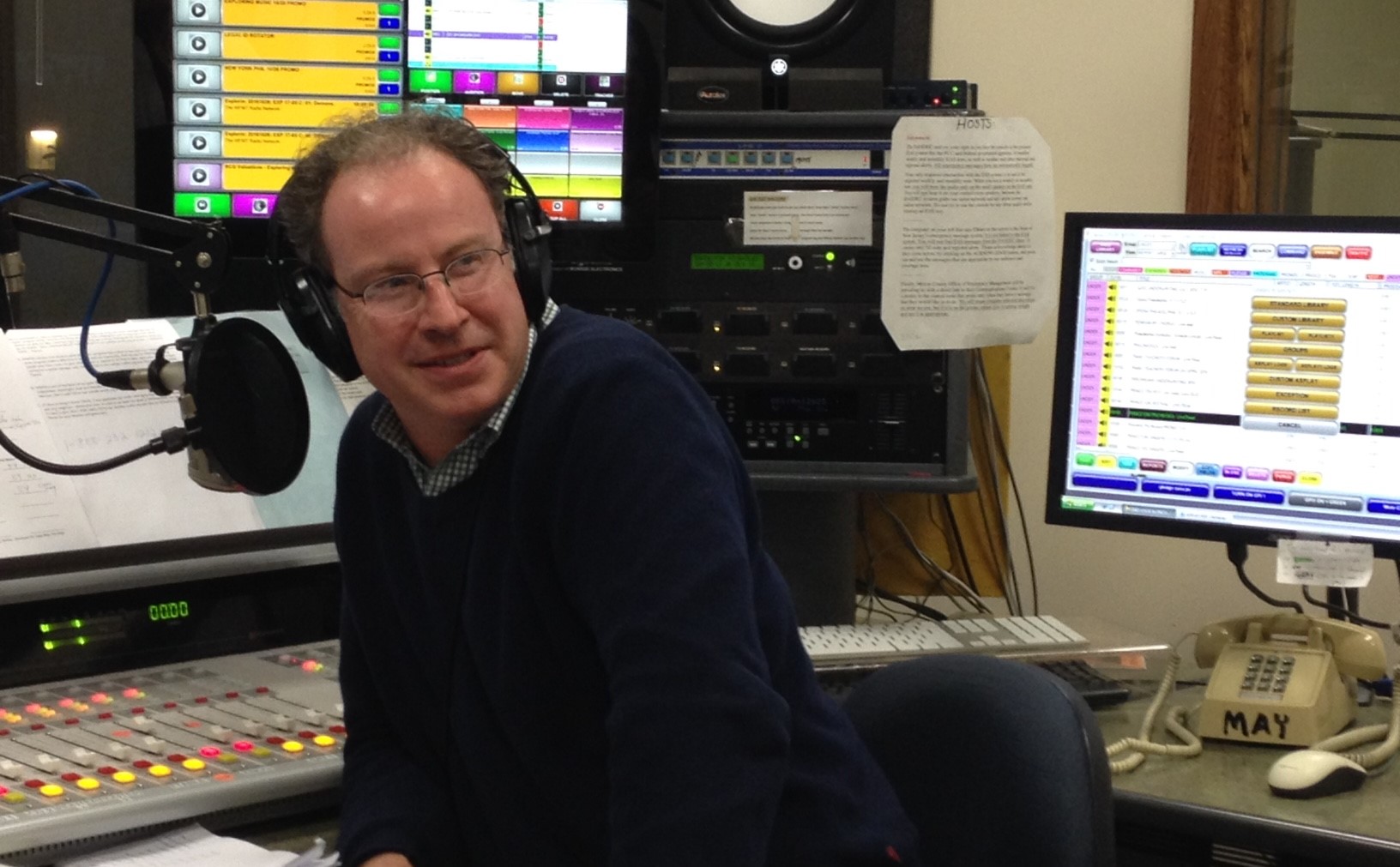
    27 years ago this morning, I made by debut on WWFM – The Classical Network. Beloved radio personality Bliss Michelson, ever the avuncular presence, sat at my elbow as I opened the mic, my heart racing, and I introduced my first hour of selections.

    This was at the end of one of Bliss’ weekday morning shifts. I would be left to fend for myself the following weekend. A lot of responsibility for a fledgling, and I took it very seriously. I rose at 4 a.m. every Saturday and Sunday (3 a.m. before the station went to 24 hours in 1997), drove an hour in the dark through all weather, and accrued a few flat tires and speeding tickets along the way.

    When it snowed, I scaled the icy ladder to the deck on the roof to clean out the satellite dish. I stayed late if there was a malfunction. I came through in innumerable ways that were not part of the job description, to keep everything running smoothly when I was alone at the helm.

    In January 2003, after much petitioning, I got the go ahead to produce my specialty show “The Lost Chord,” devoted to unusual and neglected repertoire. In 2010, I added “Picture Perfect,” my movie music show.

    In 2011, as we expanded into New York, broadcasting on Columbia University’s HD2 channel, I was moved from weekend mornings to weekday afternoons, which I alternated with David Osenberg. By that time, I was also heavily into producing live and recorded broadcast concerts. I had become a crackerjack interviewer, with guests ranging from representatives of our local musical community to phoners with people like Leon Fleisher, Peter Schickele, Dawn Upshaw, JoAnn Falletta, Sharon Isbin, and Christopher Walken (who played a cellist in the film “A Late Quartet”).

    Although, at the time I started, I already had nine years’ experience as a community broadcaster at WMUH Allentown and WXLV Schnecksville, Pennsylvania, I quaked at the enormity of the listenership (I myself had been listening in Philadelphia and the Lehigh Valley for years), and because I didn’t want to mess up the opportunity. Detecting my anxiety, Bliss offered the following words of advice: “Remember, it’s just you and the microphone.”

    Thus commenced my dream job, getting paid to share music I’ve selected with an audience of kindred spirits. Personally, I can’t think of a more perfect marriage of knowledge, ability, enthusiasm, resources (have you seen my record collection?), and performance.

    It’s been said, get a job that you love and you’ll never work a day in your life. Well, that’s what it was for a good many years. Things weren’t always that simple, but in terms of it just being “me and the microphone,” the honeymoon was remarkably long.

    Here’s the music I selected for my first hour on WWFM, at 9 a.m. on September 28, 1995:

    HOWARD HANSON – Merry Mount: Suite

    SIR PETER MAXWELL DAVIES – Farewell to Stromness

    MUZIO CLEMENTI – Symphony No. 1

    ARNOLD SCHOENBERG – Aria from “The Mirror of Arcadia”


    PHOTO: In my glory, during a WWFM membership drive in 2016

  • Westerns from the Old World

    Westerns from the Old World

    Before American composers like Jerome Moross and Elmer Bernstein made the western distinctly their own, the task of scoring the genre fell largely to European émigrés. This week on “Picture Perfect,” we’ll take a look at some outside perspectives on how the West was won.

    Literally the godson of Richard Strauss, Max Steiner came from Vienna, where he studied with Johannes Brahms and Robert Fuchs. In Hollywood, he wound up scoring such classics as “King Kong,” “Gone with the Wind” and “Casablanca.”

    Among his over 300 film projects were a number of westerns. One of these was “They Died with Their Boots On” (1941), which starred Errol Flynn as George Armstrong Custer and Olivia de Havilland as Libby, the woman who becomes his wife. Steiner’s score features familiar folk material, some old-fashioned faux “Indian” music, and one of his characteristically lush love themes.

    Born in Ukraine in 1894, Dimitri Tiomkin was a pupil of Alexander Glazunov. He came to revolutionize the sound of the American West, when he wrote the music for “High Noon,” the first of his “ballad” scores. Advanced word, based on an early screening for the press, was that the picture would be a failure. However, Tiomkin had such faith in the theme song, sung in the film by Tex Ritter, that he hired Frankie Laine to record it, and the record became a world-wide hit. In fact, his score is largely credited with having saved the film.

    Tiomkin was recognized with two Academy Awards: one for Best Original Song, and one for the score itself. It was the first time a composer won two Oscars for his work on the same movie. It also changed the way western scores were done. In the 1950s, Tiomkin became THE western composer of choice. He produced a number of subsequent ballad scores, including that for “Gunfight at the O.K. Corral” (1957). Asked how it was that a composer from Ukraine could write so convincingly for the American West, Tiomkin quipped, “A steppe is a steppe is a steppe.”

    Another unexpected source of classic western music, Franz Waxman was born in Upper Silesia. He arrived in the U.S. by way of Germany. Nonetheless, as part of the composer’s varied and prolific output, he did indeed score a number of films in the genre, including “The Furies” (1950), a peculiar noir-western hybrid. Walter Huston, in his final film, plays a cattle baron who remarries and throws his empire into jeopardy. Barbara Stanwyck is his strong-willed daughter.

    Hungarian-born composer Miklós Rózsa scored many films with historical settings – “Quo Vadis,” “Ben-Hur,” and “King of Kings,” among them. However, to my knowledge, his only western was “Tribute to a Bad Man” (1956). James Cagney stars as a rancher who doles out some frontier justice.

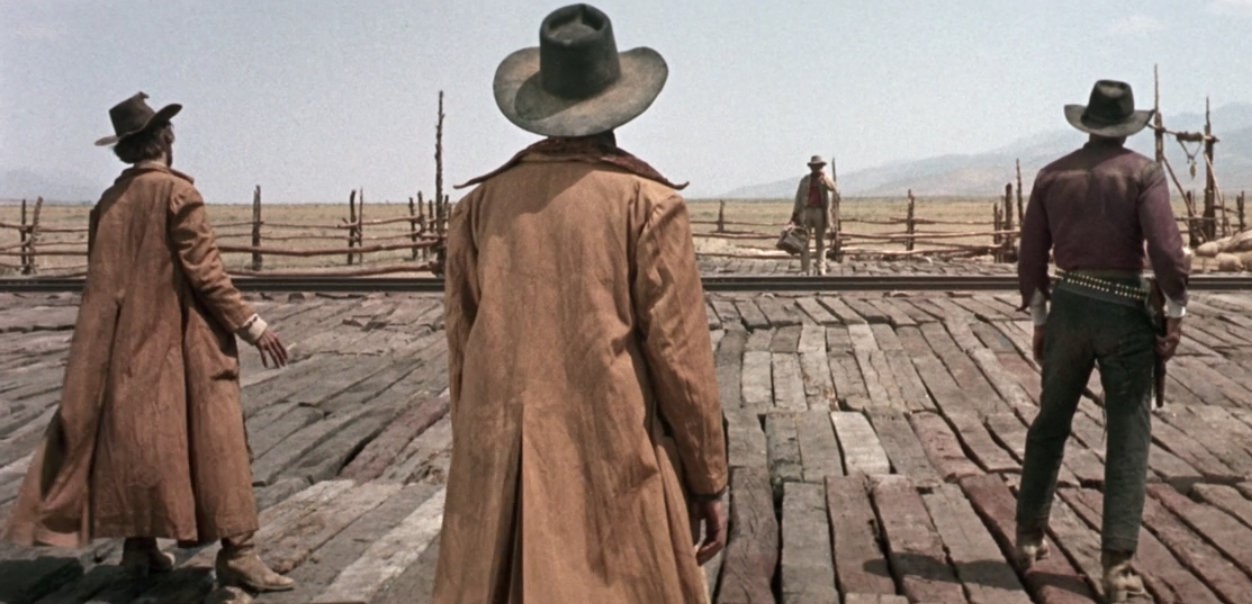
    Finally, we’ll hear music by Ennio Morricone, from arguably the most operatic of all spaghetti westerns, “Once Upon a Time in the West” (1968). As a reaction to Tiomkin’s ballad scores and the neo-Coplandisms of Elmer Bernstein and the rest, Morricone brings his own quirky sensibility to bear on the classic western iconography. Get ready for indelible motifs for harmonica and banjo, but also an unexpectedly moving elegiac arioso, underscoring the close of the American West with the arrival of the railroad.

    Better wind your pocket watches. Old World composers go west this week on “Picture Perfect,” music for the movies. The train arrives this Saturday evening at 6:00 EDT, on WWFM – The Classical Network and wwfm.org.

  • Chivalry in Film Music Picture Perfect

    Chivalry in Film Music Picture Perfect

    The term “chivalry” conjures images of knights in armor, of courtly behavior, of bravery, honor, courtesy, moral virtue, and willingness to defend the weak. For the average filmmaker and moviegoer, that likely translates into spectacle and adventure.

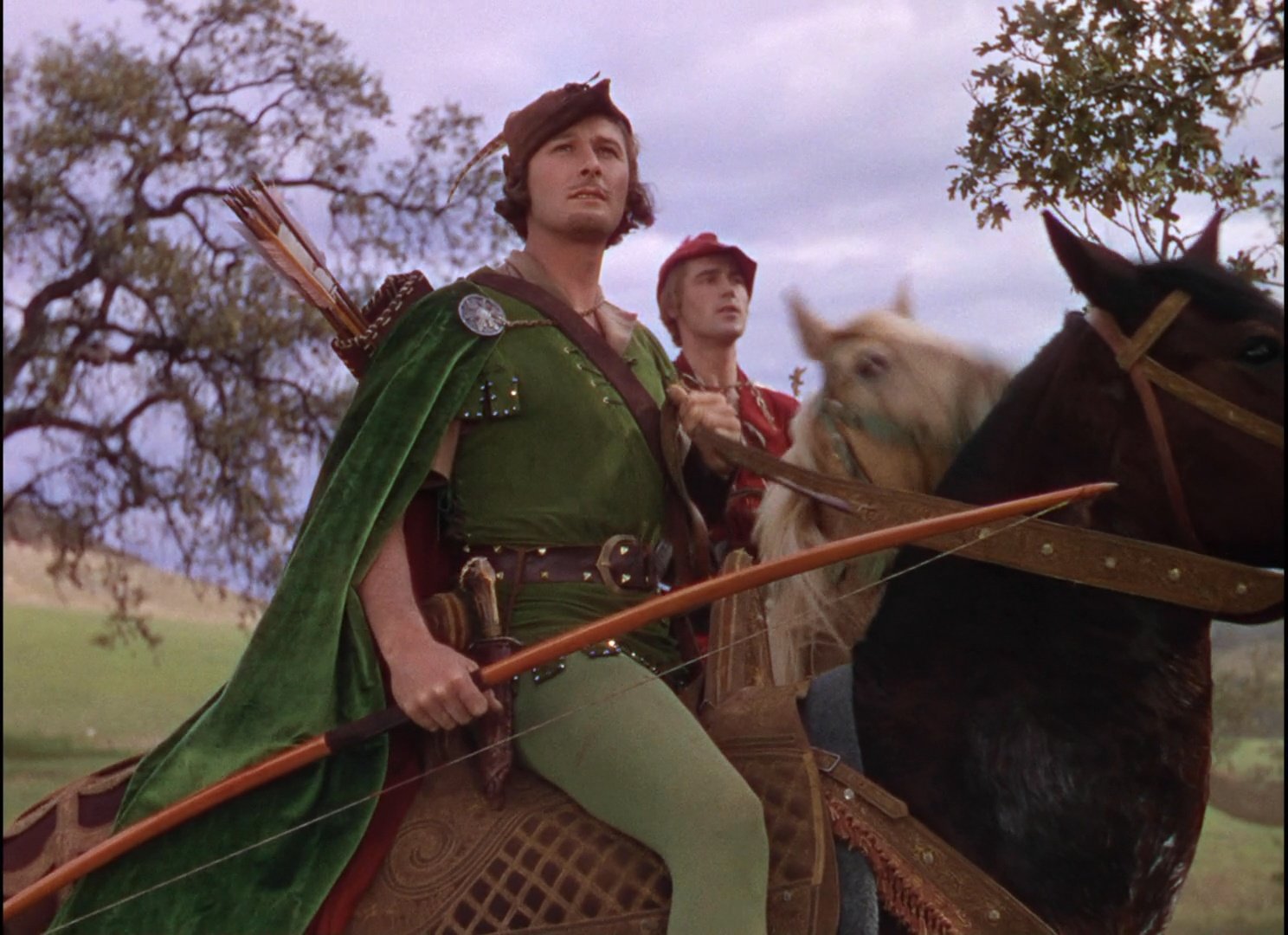
    This week on “Picture Perfect,” we’ll sample scores from movies that celebrate or circumvent the code and listen to selections from “The Warlord” (Jerome Moross), “El Cid” (Miklós Rózsa), “Lionheart” (Jerry Goldsmith), and “The Adventures of Robin Hood” (Erich Wolfgang Korngold).

    Chivalry is not dead! We embark on another crusade for worthy film music, on “Picture Perfect,” music for the movies, this Saturday evening at 6:00 EDT, on WWFM – The Classical Network and wwfm.org!


    Robin is a bold rascal:

  • Summer Film Music from Europe

    Summer Film Music from Europe

    With several weeks left in August, there’s still time for a quick European vacation. This week on “Picture Perfect,” we glance across the pond for an hour of music from foreign films with summer settings.

    “A Summer Story” (1988), based on a tale by John Galsworthy, tells of a young London lawyer and a farm girl who fall profoundly in love at the turn of last century. Georges Delerue provides the poignant score.

    The juxtaposition of “Igmar Bergman” and “comedy” may seem like something of an oxymoron, but the dour Swede’s “Smiles of a Summer Night” (1955) proves to be a witty examination of the folly of the human heart. Frequent Bergman collaborator Erik Nordgren wrote the music.

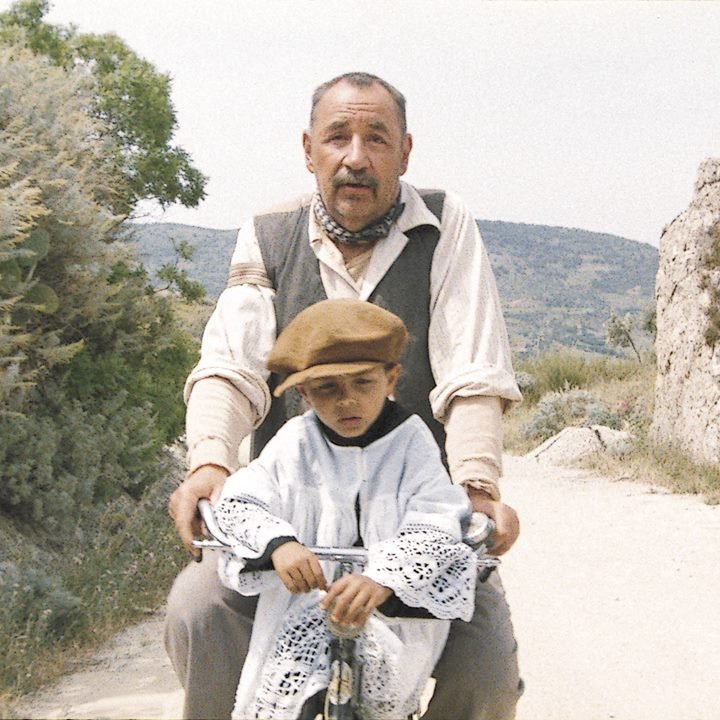
    Director Yves Robert adapted the memoirs of Marcel Pagnol, who spent his childhood summers in the south of France, into two lovely films, “My Father’s Glory” and “My Mother’s Castle” (1990). We’ll hear music composed for both by Vladimir Cosma. Pagnol’s experiences in Provence marked him for life, informing the films and writings of his maturity, including “The Baker’s Wife,” and “Jean de Florette.”

    Finally, we’ll have a generous sampling from one of Ennio Morricone’s most beloved scores, that for “Cinema Paradiso” (1988). “Cinema Paradiso,” set in a post-war Sicily where it seems always to be summer, is a nostalgic paean to the shared experience of film and the significance it holds in our lives. It won a special jury prize at the Cannes Film Festival and was honored with an Academy Award for Best Foreign Film.

    Music is the universal language. I hope you’ll join me for summer overseas on “Picture Perfect,” music for the movies, this Saturday evening at 6:00 EDT, on WWFM – The Classical Network and wwfm.org.
Tag Cloud

Aaron Copland (92) Beethoven (95) Composer (114) Film Music (123) Film Score (143) Film Scores (255) Halloween (94) John Williams (187) KWAX (229) Leonard Bernstein (101) Marlboro Music Festival (125) Movie Music (138) Opera (202) Philadelphia Orchestra (89) Picture Perfect (174) Princeton Symphony Orchestra (106) Radio (87) Ralph Vaughan Williams (85) Ross Amico (244) Roy's Tie-Dye Sci-Fi Corner (290) The Classical Network (101) The Lost Chord (268) Vaughan Williams (103) WPRB (396) WWFM (881)

DON’T MISS A BEAT

Receive a weekly digest every Sunday at noon by signing up here


RECENT POSTS