Tag: Picture Perfect

  • Memorial Day Movie Music Valor and Sacrifice

    Memorial Day Movie Music Valor and Sacrifice

    It’s all about valor and sacrifice this week on “Picture Perfect,” as we anticipate Memorial Day.

    Memorial Day has its roots in Decoration Day, established in 1868 to honor the Civil War dead. We’ll hear music from “Glory” (1989), inspired by the extraordinary courage of Colonel Robert Gould Shaw’s 54th Massachusetts Voluntary Regiment, an all African American outfit that distinguished itself in an impossible assault on Fort Wagner, near Charleston, South Carolina. The outstanding cast features Morgan Freeman, Matthew Broderick, and Cary Elwes, with an Oscar-winning performance by Denzel Washington. The poignant score is by James Horner.

    Gary Cooper had one of his best roles as “Sergeant York” (1941), based on the true story of Alvin C. York, who went from backwoods hell-raiser to devout pacifist. After a period of soul-searching, York was able to reconcile his strong moral convictions with the unfortunate reality that sometimes it really is necessary to fight. He went on to distinguish himself on the battlefield and become one of the most-decorated soldiers of the First World War. The folksy score, evocative of York’s Tennessee roots, is by Max Steiner.

    In director Michael Cimino’s “The Deer Hunter” (1978), three men from a small Pennsylvania steel town serve in Vietnam, then struggle to cope with the war’s psychological impact. The harrowing film, especially memorable for its scenes of Russian roulette in a P.O.W. camp, won five Academy Awards, including Best Picture and Best Director. Christopher Walken was honored with the award for Best Supporting Actor. Stanley Myers wrote the music. We’ll hear his famous “Cavatina,” performed by guitarist John Williams, not to be confused with…

    … composer John Williams, who provided one of his sparser scores for “Saving Private Ryan” (1998). Steven Spielberg’s war-is-hell narrative yet manages to honor the sacrifice of the fighting men of World War II. The opening – a sustained “you-are-there” battle sequence on Omaha Beach – is unforgettable. Remarkably, it is presented wholly without music, Williams preferring to allow the tension of the mise-en-scène to speak for itself. Spielberg picked up his second Academy Award for Best Director. The film, however, inexplicably, lost to “Shakespeare in Love.”

    I hope you’ll join me for music from these cinematic meditations on the costs and consequences of war, as we honor the valor and sacrifice of soldiers who died while serving in America’s armed forces, on “Picture Perfect,” music for the movies, now in syndication on KWAX, the radio station of the University of Oregon!


    Clip and save the start times for all three of my recorded shows:

    PICTURE PERFECT, the movie music show – Friday at 8:00 PM EDT/5:00 PM PDT

    SWEETNESS AND LIGHT, the light music program – ALL NEW! – Saturday at 11:00 AM EDT/8:00 AM PDT

    THE LOST CHORD, unusual and neglected rep – Saturday at 7:00 PM EDT/4:00 PM PDT

    Stream them, wherever you are, at the link!

    https://kwax.uoregon.edu/

  • Farewell Local Classical Radio Drama

    Farewell Local Classical Radio Drama

    I’ve gone on several screeds here about a certain local classical music station and its unfathomable management decisions and toxic work environment. But I’m done with all that, even though I’ve merely skated the surface. I don’t have room in my life for any more negativity, not even toward those who most assuredly deserve it.

    That’s not to say I will forget. That’s only to say that with this observation of one last related anniversary, my personal Voyager will be leaving this particular solar system, hopefully never to return again.

    It was on this date, one year ago, that the final episode of “Picture Perfect” was broadcast locally. Once it was made clear to me that I had no say in the matter, and that I would either agree, going forward, to produce one new show a month for no financial compensation or “Picture Perfect” would be dropped entirely, I would have been absolutely content to let it run out on the original date I was told it would euphemistically “sunset,” April 29.

    But of course, management didn’t have its act together and came back and told me they needed to air it for a few more weeks, until May 20. None of it makes any sense, of course. It was all arbitrary. I’m sure any local musicians or performing arts organizations who’ve had to deal with the station, or anyone whose thankless task it has been to help promote these groups, are familiar with precisely the kind of erratic behavior I’m talking about.

    When I rejected the offer to do one show a month, for nothing (if you’re going to exploit me, at least offer me a weekly show), management never did follow through on its original plan, as it was presented to me, to air four varied programs, in rotation, in the vacated slot. So they simply jettisoned some popular shows, along with their stable of local hosts, who had been around for decades, on yet another impulse.

    In their place: classical music’s greatest hits, sliced and diced and served up in bleeding chunks in a sauce of mindless blather from a service out of Minnesota. In the mornings, in particular, you’re guaranteed to hear up to ten pieces an hour. And I do mean pieces.

    At no point during the day will you will ever encounter Beethoven’s “Eroica” Symphony, or any of Brahms’ symphonies in their entirety (except maybe No. 3), or any Mahler, or the early Stravinsky ballets (complete), or basically anything much over 30 minutes; and even then you will have to pay for it by being on the receiving end of a bunch of three-to-five-minute selections on either side, to meet whatever quota they’ve set for themselves. If it were not for the syndicated evening broadcast concerts, much of the standard repertoire would never be heard at all.

    This is the price of dealing with around-the-clock automation. There need to be so many breaks during the hour to allow time for station IDs, promos, and underwriting, and these have to be consistent and synchronized in order to satisfy every affiliate in the country. So goodbye longer pieces. Common sense would seem to dictate that they could adjust the programming and do two or three pieces an hour for some hours, but no! I can only assume they’re afraid they might alienate listeners if they were to play something that’s 45-minutes long that might not appeal to everybody.

    This is the state of contemporary classical music radio. Run by a bunch of attention-deficit dimwits with no respect for the audience, simply churning out the aural wallpaper by the yard.

    Okay, enough of that. As originally planned, “Picture Perfect” would have gone out on April 29 with an hour of music from barbarian movies. And you know I was down with that. (The show had already been programmed by the time I was notified of the series’ cancellation.)

    With the extension taking it to May 20, I had time to think about it, and I concluded on a less defiant, more reflective theme, with “Change and the Passage of Time.” The show included selections from “Kings Row” (Erich Wolfgang Korngold), “The Magnificent Ambersons” (Bernard Herrmann), “The Leopard” (Nino Rota), and “The Fourposter” (Dimitri Tiomkin).

    I am fully aware just how much people enjoyed “Picture Perfect.” There was a lot of blowback when it was cancelled, but from everything that’s gotten back to me, the letters, email, Facebook, and phone messages were all met with stony silence.

    Even if it is the case that the folks that make the decisions about operations and programming make about as much sense as a couple of guinea fowl, in the long run, it’s really only ever been you, the listeners, that I really cared about connecting with. Not that I didn’t try to please my bosses!

    Every once in a while, I’ll stumble across a gratifying little sign of affirmation on the internet. Here, someone posted something nice on the Film Score Monthly page, back in 2014.

    https://www.filmscoremonthly.com/board/posts.cfm?threadID=101054&forumID=1&archive=0

    I know what I did was appreciated by those in the know. And those are the ones who matter. My only concern is that to be heard, I have to have an outlet. For now, you can still catch me, and “Picture Perfect,” “The Lost Chord,” and the all-new “Sweetness and Light,” on KWAX, the radio station of the University of Oregon. Peter Van de Graaff, who formerly lost his own long-time slots at the local station, is now music director out there. This is a guy who actually knows what he’s doing.

    You can stream KWAX wherever you are, at kwax.uoregon.edu, but it’s gotten to the point now where I’m just going to invest in an internet radio. This will work for me even better than bookshelf speakers, as it’s just like having a regular radio in my house. That way I can have KWAX on around the clock and get on with my life already, without all the reminders and agitation, should I ever happen to flip on the local station. There’s no reason that my love of great music should be mired in so much bullshit.

    If you’ve never considered it, google wifi internet radios. It could change your life too, if you’re not already tied in to satellite or Siri or Alexa or what have you.

    Suggested music for the reading of this post: Holst’s “Neptune,” with its ethereal chorus mirroring my passage from this particular solar system.

  • Robin Hood Movie Adaptations Ranked

    Robin Hood Movie Adaptations Ranked

    You might think me a “bold rascal” or a “saucy fellow” or perhaps even a “Saxon cockerel” this week on “Picture Perfect,” as I offer my highly-opinionated assessments of four screen adaptations of the Robin Hood legends.

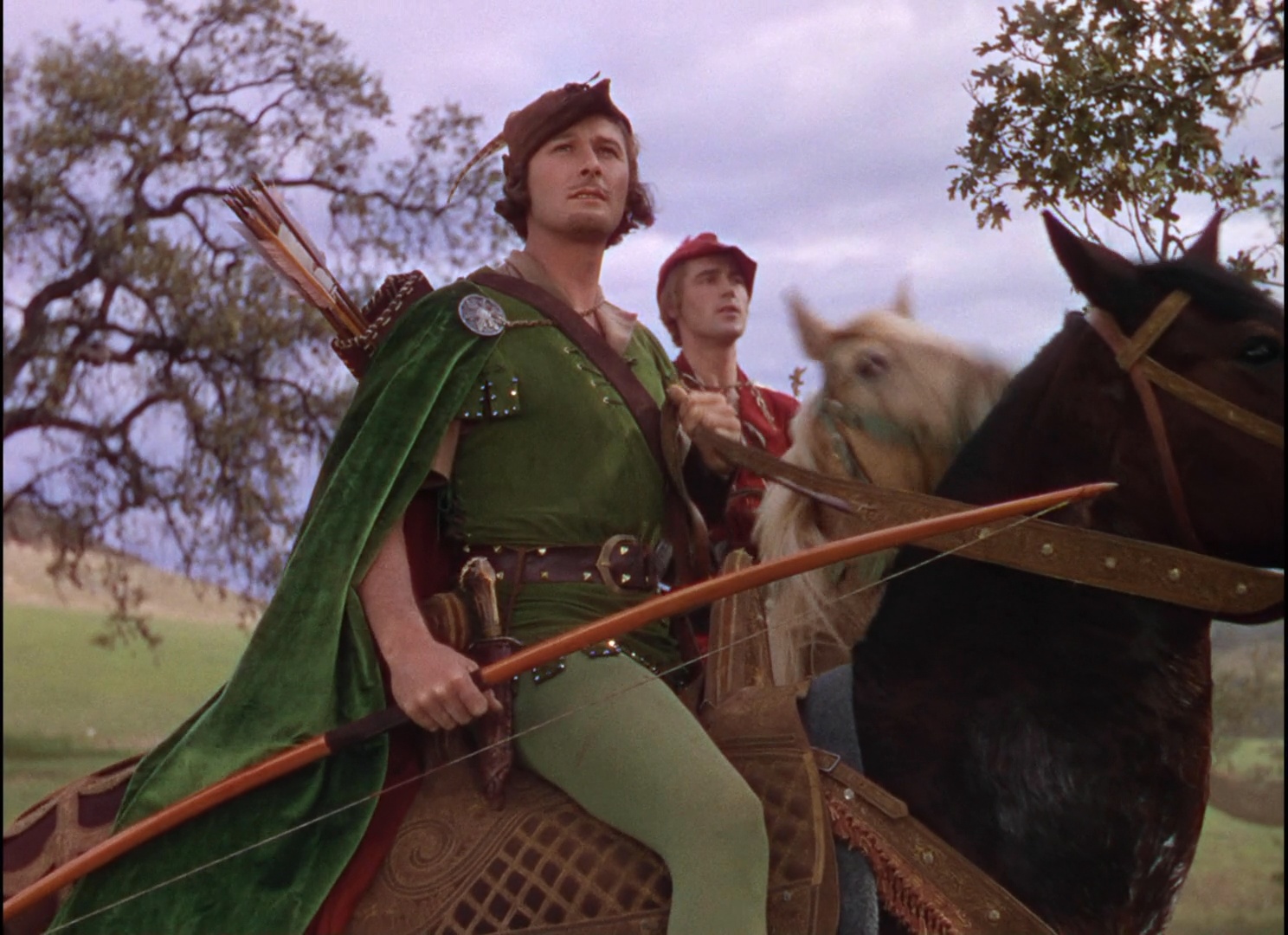
    We’ll begin with “The Adventures of Robin Hood” (1938), directed by Michael Curtiz, taking over from William Keighley. One of the all-time Technicolor classics, its stellar cast includes Errol Flynn, Olivia De Havilland, Basil Rathbone, Claude Rains, Alan Hale, Eugene Pallette, Melville Cooper, and many, many others – a veritable who’s who of classic movie actors. Everything about it – the screenplay, the production design, the buoyant tone, the stylish choreography – is as a Robin Hood film should be. That includes, not least of all, its Academy Award-winning music by Erich Wolfgang Korngold.

    While Flynn will always be the definitive Robin Hood, we’ll consider another very interesting take on the character, which in my opinion doesn’t quite come off, in Richard Lester’s revisionist meditation, “Robin and Marian” (1976). Sean Connery plays a middle-aged Robin who returns from the crusades to rekindle his romance with Maid Marian, played by Audrey Hepburn, and to settle his account, once and for all, with the Sheriff of Nottingham, played by Robert Shaw. Again, you can’t beat the cast, which also includes Nichol Williamson, Richard Harris, and Denholm Elliot.

    The elegiac tone is precisely what Lester was aiming for. The story is both a meditation on the beloved Robin Hood characters in middle age AND a melancholy reflection on the passage of time. However, the screenplay, by James Goldman, of “The Lion in Winter” fame, probably could have been a little more inventive, despite an ending that hues closer to the actual legends. It’s undoubtedly a moving film, but somehow it leaves one feeling rather grim.

    There was some tension between the director and producer, Ray Stark, as to whether the film should be an artistic statement or hew more closely to the mainstream. Initially composer Michel Legrand was engaged to write the music. Lester found the results agreeable, but Stark did not. At the very least, Stark wanted a more insinuating love theme, as a concession to the audience. So John Barry was brought on board to write a replacement score. Out of necessity, Barry had to do so very quickly. But Barry being Barry, he was able to fulfill Stark’s objective and infuse the story with some memorable musical heartache.

    At least there was some attempt at poignancy and philosophical provocation in “Robin and Marian.” By contrast, there was little reason to resurrect the legends for “Robin Hood: Prince of Thieves” (1991). Little reason, that is, unless they were going to make it GOOD.

    The project seemed doomed from the start, with Kevin Costner cast as the lead. I have nothing against Costner, who made a string of very fine movies in the 1980s, culminating in his multiple Oscar-winner, “Dances with Wolves,” in 1990. But by no stretch of the imagination is he a believable Englishman. Pile on the grit and ramp up the violence, add a superfluous witch, forget to put in the FUN, and what’s left is a soul-numbing experience.

    Alan Rickman brings the film sporadically to life with his lunatic update of Basil Rathbone. But the salt-and-pepper buddy approach, Morgan Freeman as Robin’s sidekick, and a battle-hardened Maid Marian, played by Mary Elizabeth Mastrantonio, don’t really ring true for the 12th century, although I suppose they are pretty characteristic of the 1990s – and the 2020s, now that I think about it. This Robin Hood truly was a prince of thieves. I certainly wished I had my two-and-a-half hours back.

    I thought the score was pretty lackluster too, but having endured another 30 years of modern movies since then, the music for “Robin Hood: Prince of Thieves” has come to sound like a veritable classic. The score is credited to composer Michael Kamen, who had the assistance of no less than 15 orchestrators. There’s no question the theme is rousing. Like most of the elements of the film, however, I found myself questioning whether it is really appropriate. Judge for yourself.

    We’ll wrap things up on firmer ground with an adaptation of Sir Walter Scott’s classic novel “Ivanhoe” (1952), in which Robin Hood, Friar Tuck, and of course Richard the Lionheart play important supporting roles. The film stars Robert Taylor, Elizabeth Taylor (no relation), Joan Fontaine, and the usually supercilious, but here somewhat sympathetic, George Sanders. The fine score is by three-time Academy Award-winner Miklós Rózsa, who of course is best remembered for having composed the music for such epic films as “Quo Vadis,” “Ben-Hur,” and “King of Kings.”

    May I obey all your commands with equal pleasure, sire! We’ll make it our mission to fight for the rich and deprecate the poor (movies, that is), as we plunder the legends of Robin Hood, on “Picture Perfect,” now in syndication on KWAX, the radio station of the University of Oregon!


    Remember, KWAX is on the West Coast, so there’s a three-hour difference for those of you listening in the East. Here are the respective air-times for all three of my recorded shows (with East Coast conversions in parentheses):

    PICTURE PERFECT, the movie music show – Friday on KWAX at 5:00 PM PACIFIC TIME (8:00 PM EASTERN)

    SWEETNESS AND LIGHT, the light music program – ALL NEW! – Saturday on KWAX at 8:00 AM PACIFIC TIME (11:00 AM EASTERN)

    THE LOST CHORD, unusual and neglected rep – Saturday on KWAX at 4:00 PM PACIFIC TIME (7:00 PM EASTERN)

    Stream all three, at the times indicated, by following the link!

    https://kwax.uoregon.edu/


    Robin is a bold rascal:

  • WWFM Radio Betrayal My Classical Music Sunset

    WWFM Radio Betrayal My Classical Music Sunset

    It was last year on this date that I received the email notifying me that my long-running radio shows, “Picture Perfect” and “The Lost Chord” would “sunset,” beginning in ten days. Sunset. What a euphemism. I suppose it allows me the dignity of the Old West, to just mosey off into the twilight. However, nothing about my dismissal was dignified. As an employee of WWFM since 1995, I deserved better.

    When I turned down an offer I can only guess they thought I couldn’t refuse – to produce one new “Picture Perfect” a month for no financial compensation (BUT with the satisfaction of enjoying a continued presence on the station) – they cut the cord. They had wanted to air the show on Friday evenings in rotation with three other, unrelated programs.

    The shows’ cancellations were peculiar to me, for more reasons than one, but foremost among them surely was because at that point the station was already airing both of them for free. Granted, they were all reruns, but I had never previously, since the start of the pandemic, been invited back into the studios to produce fresh installments. The last I was told, no one was allowed in except management (the managers, of course, were never laid off), for safety reasons, and the rest of us would be brought back as soon as the situation permitted.

    Once seemingly every other business had resumed normal operations, I even extended the offer to come in and volunteer my services during pledge drives. I heard nothing in return. It doesn’t surprise me, as communication was always one of the most glaring of WWFM management’s many weaknesses. But in allowing so many relationships with knowledgeable, capable staff to erode, they painted themselves into a corner. On one occasion, sudden illnesses and personal obligations caused them to have to totally reschedule a pledge drive, because they no longer had back-up staff to draw on in order to keep things running smoothly.

    Of course, what they did have was their trusty automation, so that they could continue to pump in the aural wallpaper from a service they subscribe to in Minnesota (less expensive than maintaining a staff of local talent). When they took criticism from listeners for the apparent lack of local content, they began to rerun whatever locally-produced shows they had left, during daylight hours. Of course, most of the music-oriented shows had been cancelled. Those that were left were mostly produced by one person and stuffed to the gills with chat. (I’ll reserve comment on the production values.) I can only speculate the thinking must have been that now people were getting local content. What they weren’t getting was very much music! And somehow, still, whenever I turn on the radio, when I do get music, all I seem to hear is Mozart’s Clarinet Quintet (twice this week) and Edouard Lalo’s “Symphonie espangnole.” How many times a month DOES Classical 24 program that piece, anyway? I actually used to enjoy hearing it.

    In any case, my tone was respectful. I did mention that if I were going to produce new shows, I would want it to be for a weekly slot. I know for a fact, reruns or no, “Picture Perfect” was an extraordinarily popular program. When it was cancelled, there was a roar of listener disapproval. I can recall multiple times over the decades when one listener complaint by telephone would be enough to send the current general manager into a tizzy and dicta would be handed down (No sopranos in the morning! No organ music! No Sibelius 4th!); but now, from everything that’s gotten back to me, complaints seem to be met with stony silence.

    I concluded my email, “I sincerely thank you for the offer, and I am here if some opportunity should present itself to bring me back to do something more productive and satisfying in the future.

    “I am still very interested in producing that light music show I proposed, for instance. If you’d like to talk about that, I am all ears.

    In the meantime, best wishes.”

    In response, I received a Dear John letter, thanking me for the shows I’ve produced over the years and wishing me the best of luck with my future endeavors. No suggestion that we might work together again in any capacity. Which is why I feel no compunction in raking WWFM over the coals every once in a while.

    I was also asked if I might allow them to extend the 10-day sunset of my shows to May 20, since apparently they couldn’t get their act together in the amount of time stated in the first letter. So typical.

    I can’t say that I am the station’s biggest fan now – I only listen in the car if I’m out for a quick jaunt or if I haven’t got a CD with me – but I have noticed they don’t seem to have ever implemented that Friday rotation of shows. Why drop locally-produced programs that you were already airing for free and then not do anything with the vacant real estate? WWFM, you sure does confuse me.

    Anyway, even though I vent once in a while, I try not dwell too much upon it, as it’s in the past now, and I’ve got other things to keep me occupied. Still, you have to admit, 28 years is an awfully long time. What I miss more than the recorded shows are the live air shifts. That’s where I did my best work, providing my own programming, making alterations on the wing, and batting it back and forth during live interviews. These are skills I honed over nearly three decades of service. I understand (but only to some extent) the motivation in never paying me what I deserve (unless you’re in the upper echelon, classical music seldom pays), but the whole lack of respect, I never got. I should have been made full-time decades ago. How many people in the industry, my age, were as knowledgeable, capable, and good natured as I was?

    I took an awful lot of abuse over the years, despite having gone above and beyond to literally keep the station on the air (in the days before automation, braving all weather, and in the days before 24-hour broadcast, actually turning on the transmitter, whatever the toll on my personal life and circumstances). I pulled everyone’s fat out of the fire on more occasions than I can remember. But always, a week would go by, and we’d be back to what-have-you-done-for-us-lately.

    A lousy place to work, then, especially once they started to drive out all the good people. I would have been out decades ago, if not for the relationships I developed with my fellow announcers and for an unspoken covenant I tried to keep with my listeners, to just ignore all the crap, or push through it, so that I can continue to share music with people who genuinely appreciate it.

    Anyway, it was in my dreams last night, probably because of today’s anniversary, so I figured I’d better get it out there and move on.

    “Picture Perfect” and “The Lost Chord” have found a new roost at KWAX, awaiting further efforts on my part to expand my Lilliputian empire. To these, I’ve added “Sweetness and Light,” first pitched to WWFM management years ago. But, as with the many, many times I pitched “The Lost Chord” before FINALLY getting the go-ahead, the idea was smilingly received, and then pushed off to the corner of a desk, never to be revisited until I next decided to bring it up. As seen in the excerpt from my email above, I suggested it one last time as a counteroffer to replace my sunsetting shows.

    In my experience, any note that begins with “I hope this finds you well” and concludes with “Kind regards” seldom contains good news.

    I do not expect to work at WWFM ever again. Those currently in charge would have to leave before I would even consider it. Bullshit and bureaucracy hold no interest for me. I’ve never been a phony. I’ve always been there for the music, rather than personal advancement. So, with nothing to lose, I can sit back and muse at how brilliantly the rotted wood of this bridge can burn.

    More broadly, I lament the loss of quality classical music radio, which seems to have been compromised nearly everywhere. I do miss being able to just turn on the radio and being guaranteed to hear some professionally presented programs of engaging music, all uncut and presented as the composer intended.

    That’s all for now, I hope you will continue to enjoy “The Lost Chord” (since 2003), “Picture Perfect” (since 2010) and “Sweetness and Light” (since December), by streaming them from their new home at KWAX.

  • Poetry at the Movies KWAX Picture Perfect

    Poetry at the Movies KWAX Picture Perfect

    Time to sharpen your quill and replenish your laudanum. April is National Poetry Month. This week on “Picture Perfect,” the focus will be on poets at the movies.

    We’ll hear music from “Dead Poets Society” (1989), Peter Weir’s beautiful-but-vacuous take on the transformative power of poetry, its “Goodbye, Mr. Chips” story arc made all the more poignant (and less cheap) by the passing of its beloved star, Robin Williams. Maurice Jarre, a long, long way from his Oscar-winning work on “Lawrence of Arabia,” wrote the music, which blends dulcimer and bagpipes (!) with electronics.

    At least “Dead Poets Society” found a place in the hearts of the public. “Lady Caroline Lamb” (1973) did not. Sarah Miles plays Byron’s jilted lover, the wife of future prime minister William Lamb. Despite an impressive cast, which includes Jon Finch, Laurence Olivier, Ralph Richardson, and Richard Chamberlain (as Lord Byron, no less), and direction by venerable playwright and screenwriter Robert Bolt (“A Man for All Seasons”), the film received mixed reviews and tanked at the box office. The always fine Richard Rodney Bennett provided the atmospheric score.

    “Il Postino” (1994) tells the story of a simple postman whose prosaic life is transformed through the power of metaphor. His model is the exiled Chilean poet Pablo Neruda, played by Philippe Noiret. The film’s writer and star, Massimo Troisi, died of a heart attack twelve hours after shooting was completed, having postponed surgery until he finished work. He was 41 years-old. Argentinian-Italian composer Luis Bacalov’s bandoneon-tinged score was honored with an Academy Award for Best Music.

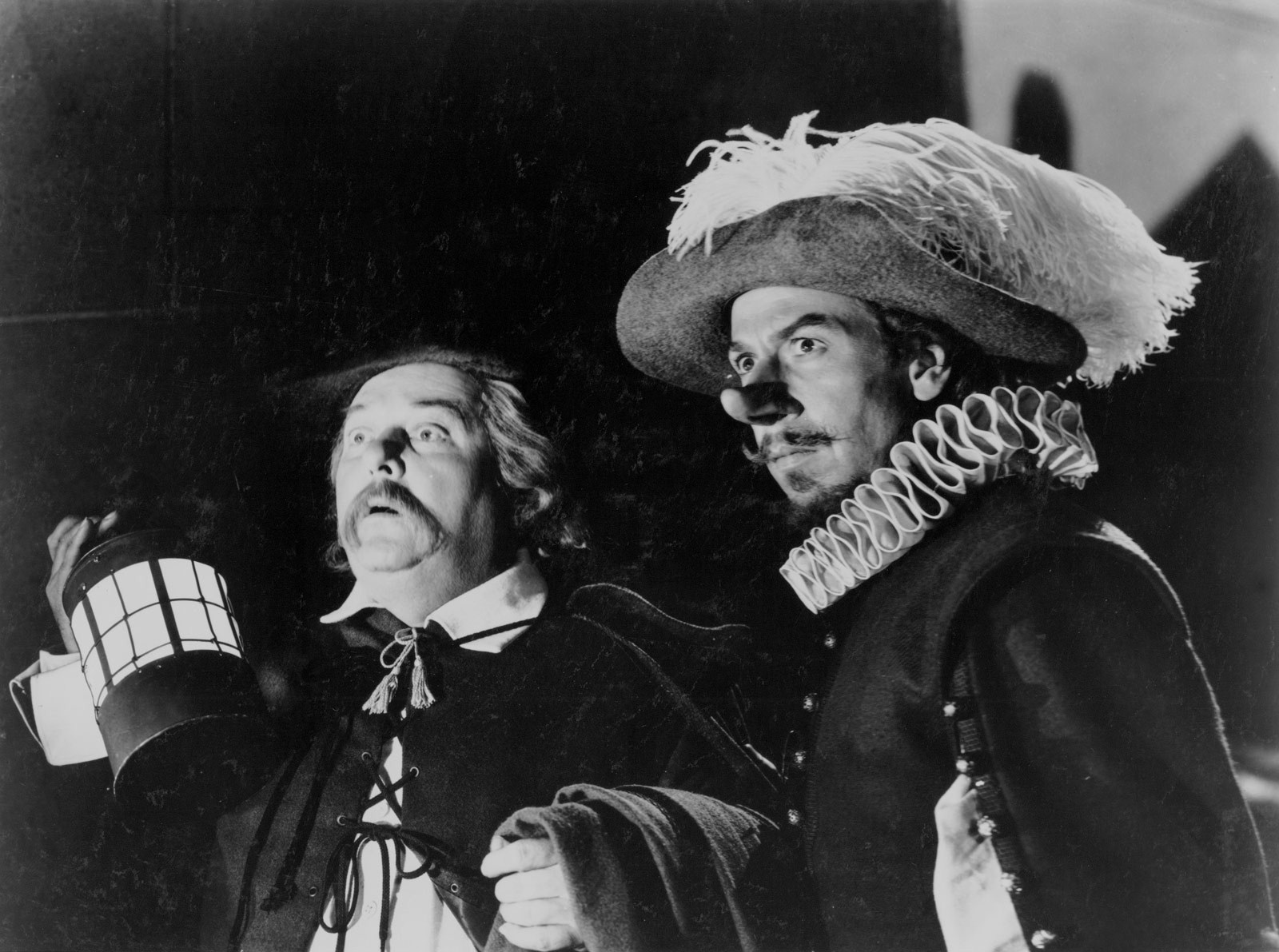
    Finally, we put a point on things with the rapier wit of “Cyrano de Bergerac” (1950). José Ferrer struts his stuff as the warrior-poet with the prominent proboscis, who never wants for words, save in the presence of his beautiful cousin Roxane. Ferrer elocuted – and fenced – his way to an Academy Award for Best Actor. The score is one of Dimitri Tiomkin’s finest, and we’ll hear a recording taken from the film’s original elements, under the crisp direction of the composer.

    It could be verse. Poetry warms the soul this week. It’s poetry in motion, on “Picture Perfect,” music for the movies, now in syndication on KWAX, the radio station of the University of Oregon!


    Remember, KWAX is on the West Coast, so there’s a three-hour difference for those of you listening in the East. Here are the respective air-times for all three of my recorded shows (with East Coast conversions in parentheses):

    PICTURE PERFECT, the movie music show – Friday on KWAX at 5:00 PM PACIFIC TIME (8:00 PM EASTERN)

    SWEETNESS AND LIGHT, the light music program – ALL NEW! – Saturday on KWAX at 8:00 AM PACIFIC TIME (11:00 AM EASTERN)

    THE LOST CHORD, unusual and neglected rep – Saturday on KWAX at 4:00 PM PACIFIC TIME (7:00 PM EASTERN)

    Stream all three, at the times indicated, by following the link!

    https://kwax.uoregon.edu/

Tag Cloud

Aaron Copland (92) Beethoven (95) Composer (114) Film Music (123) Film Score (143) Film Scores (255) Halloween (94) John Williams (187) KWAX (229) Leonard Bernstein (101) Marlboro Music Festival (125) Movie Music (138) Opera (202) Philadelphia Orchestra (89) Picture Perfect (174) Princeton Symphony Orchestra (106) Radio (87) Ralph Vaughan Williams (85) Ross Amico (244) Roy's Tie-Dye Sci-Fi Corner (290) The Classical Network (101) The Lost Chord (268) Vaughan Williams (103) WPRB (396) WWFM (881)

DON’T MISS A BEAT

Receive a weekly digest every Sunday at noon by signing up here


RECENT POSTS