Tag: Princeton Symphony Orchestra

  • Rachmaninoff Shine at Princeton Symphony

    Rachmaninoff Shine at Princeton Symphony

    For better or worse, whenever I think of Sergei Rachmaninoff’s Piano Concerto No. 3, I can’t help but remember John Gielgud in the 1996 film “Shine.” Can it really have been 29 years ago?

    Gielgud addresses Noah Taylor, as the psychologically frail Australian pianist David Helfgott, in Yoda-like bromides, cautioning him against the hazards of the “Rach 3” and shepherding him through a training sequence pitched somewhere between Dagobah and “The Mask of Zorro.” I guess this is effective shorthand for the masses, communicating the concerto’s challenges in a concise, three-minute montage that honestly has very little to do with the music.

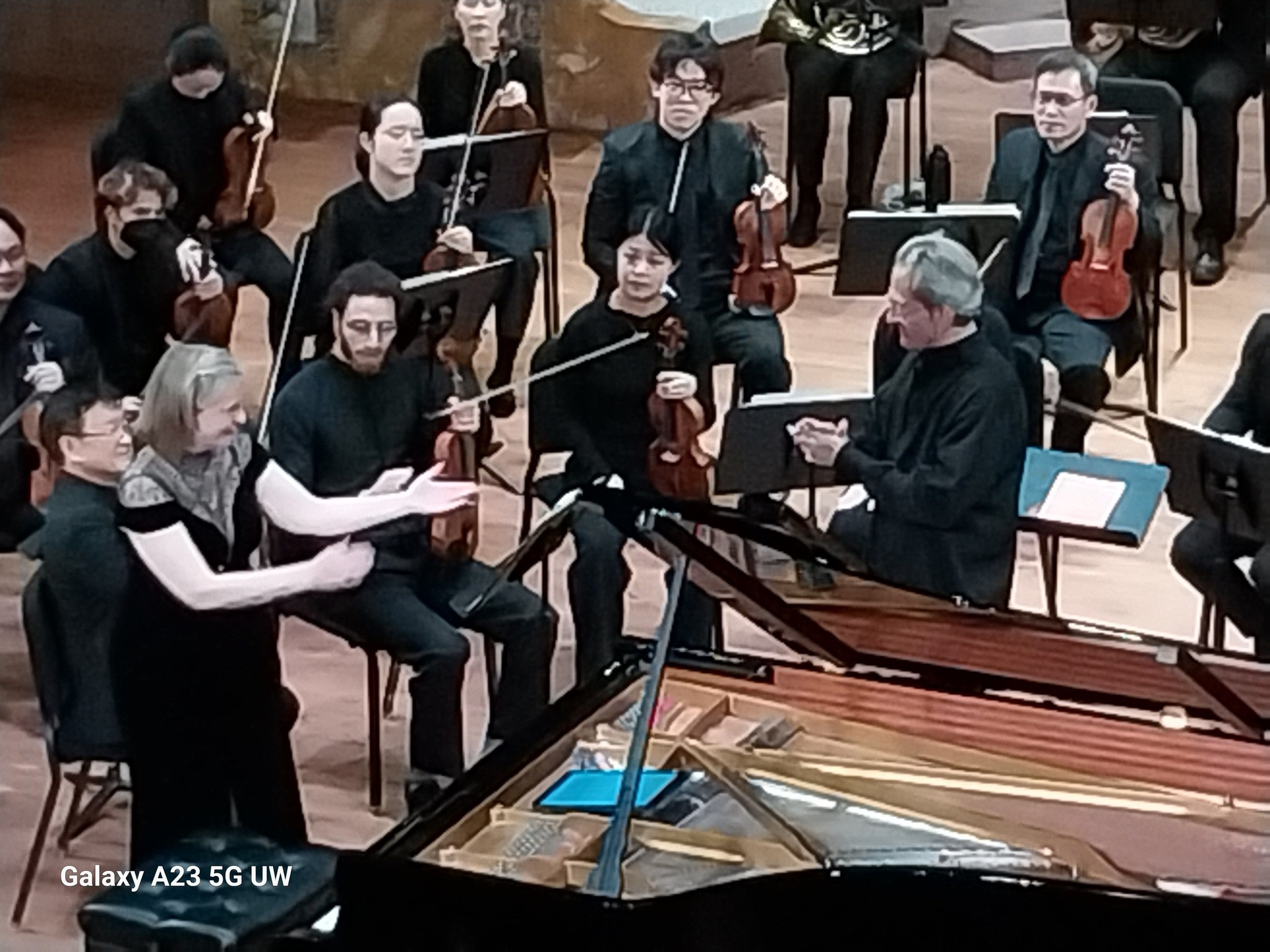
    “Shine” was showered with Oscar love in 1997 – the recipient of seven Academy Award nominations and a Best Actor trophy for Geoffrey Rush – but no amount of “pop” corn can convey the true drama of arguably Rachmaninoff’s most intense masterpiece, which can be heard on two concerts of the Princeton Symphony Orchestra this weekend. PSO favorite Natasha Paremski will be the soloist. Rossen Milanov will conduct at Princeton University’s Richardson Auditorium.

    The Westminster Symphonic Choir will also appear, on the program’s first half, to perform Pyotr Ilych Tchaikovsky’s “Hymn to the Cherubim” from the “Liturgy of St. John Chrysostom” and Johannes Brahms’ “Schicksalslied” (“Song of Destiny”).

    All the shine will be in the music, tonight at 8:00 and tomorrow afternoon at 4:00. For tickets and information, visit princetonsymphony.org.

  • Black Oak Ensemble Plays Princeton

    Black Oak Ensemble Plays Princeton

    For whatever reason, the second half of the concert season always turns out to be especially busy for me. I don’t know if it’s the allure of the repertoire, the irresistible discount offers, or the madness of spring, but since the pandemic, anyway, every year, March and April have turned out to be crazy concert months. Surely the madness peaks at the end of April, when I will be hearing Yuja Wang and Yo-Yo Ma on the same day (!), but I’ll be running it close with a concert of rarely-heard music from the 1920s (including John Alden Carpenter’s “Skyscrapers”) at Lincoln Center with the American Symphony Orchestra this weekend and Jake Heggie’s “Moby Dick” at the Met later in the week.

    Despite the fact that my dance card is full, I’ll definitely make room for this one, which totally snuck up on me: tomorrow night, Thursday, at 7:00, the BLACK OAK Ensemble will perform works for string trio at Trinity Church, 33 Mercer Street in Princeton, NJ.

    The program is Classic Ross Amico catnip, including music by Gideon Klein, Jean Cras, and Henri Tomasi. Also some guy named Johann Sebastian Bach (to be played, as it turns out, on the eve of his birthday anniversary).

    The Czech pianist and composer Gideon Klein (1919-1945) was one of a number of major musical figures to be interned at Terezin, or Theresienstadt, the model “artists’ camp” set up by the Nazis for propaganda purposes. Basically, it was an antechamber to Auschwitz. When there were no camera crews or Red Cross representatives to bear witness, Klein was deported and killed with the rest.

    Jean Cras (1879-1932) was a career navy officer from Brittany, who composed a fair amount of his music shipboard. His opera, “Polyphème,” about the lovelorn cyclops Polyphemus, is a great wallow.

    French composer Henri Tomasi (1901-1971) found steady work as a conductor, beginning in the early days of radio. In the 1940s, he established the contemporary music group Triton with Sergei Prokofiev, Darius Milhaud, Arthur Honegger, and Francis Poulenc.

    The program will conclude with some ersatz Romani music, Vittorio Monti’s “Csárdás” from 1904. (You know it, even if you think you don’t.)

    The concert is the latest in a chamber music series featuring visiting ensembles presented by the Princeton Symphony Orchestra. If it lures me out on a Thursday evening during such a busy month, it’s got to be something special. For tickets, visit princetonsymphony.org.

    To learn more about the Black Oak Ensemble, look here: https://www.blackoakensemble.com/about

  • Mozart, a Snow Plow, and Princeton Symphony

    Mozart, a Snow Plow, and Princeton Symphony

    Mozart’s masterful Symphony No. 39 is a marvel of classical invention. But not even HIS nimble imagination lit on the idea of including a snow plow.

    Last night, on the first of two concerts devoted to a program of the composer’s music, presented by the Princeton Symphony Orchestra at Princeton University’s Richardson Auditorium, a rumbling, scraping basso continuo underscored the work’s last two movements, as a wintry mix was cleared from the parking lot outside the venue. This was especially evident in the silence between movements, though briefly the truck’s back-up alarm did make for a disorienting John Cage-like tug-of-war between everyday and Elysium.

    Not everyone braved the weather last night, so a well-sold house was left with pockets of empty seats. A pity for those who couldn’t be there, as the music-making, on the concert’s first half, especially, was inspired and transporting, with plenty of warmth and glow to keep the sleet and slush at bay.

    Guest conductor Gérard Korsten, forgoing the standard-issue baton in favor of directing with his bare hands, oversaw the orchestra with energy and commitment. Whether I should be crediting him, the musicians, or the music, I’m not sure – perhaps all three – but whatever or whoever was responsible, all the tumblers aligned for some of the most satisfying Mozart I’ve ever heard from this group, which seldom disappoints, but is frequently more successful in Romantic and 20th century repertoire. (A gross generalization, as a concert they did with a barefoot Daniel Rowland that interleaved Vivaldi’s “The Four Seasons” with Astor Piazzolla’s “The Four Seasons of Buenos Aires” in 2016 continues to resonate in my memory.)

    The program opened with punchy and energetic ballet music from the opera “Idomeneo.” It came off so well, I was disappointed to find it was not the full 25-minute suite, but rather only two of the five numbers, with a combined running time of about 14 minutes. Too bad, because I really loved what I heard. The effect was like being awakened in the middle of a beautiful dream.

    But my yearning was short-lived, thankfully, as the highlight of the evening was surely the Piano Concerto No. 20 in D minor – one of only two piano concertos Mozart composed in a minor key – which pretty much fulfilled its ideal with soloist Orli Shaham. Like a poetic alchemist, Shaham turned ivories into pearls, for a performance that balanced the work’s drama and depth, honoring the emotion in the score’s nascent Romanticism while never betraying its Classical poise. The pianist has had a long history with the piece – it was the work that made her want to take up the instrument as a child – but somehow she has managed to keep it fresh and immediate, her involvement evident in every phrase. She silently mouthed passages and swayed to the music and even leaned into the first violins at times, as if to symbolize her sense of oneness with the orchestra. Truly, it was a thing of beauty (with apologies to Keats).

    One of the things I love about the Princeton Symphony Orchestra is how the wind players all actually listen to one another. Last night, principal clarinetist Pascal Archer, always full of animation, was characteristically the focal point of some very sensitive wind playing, musically linking arms with clarinetist Gi Lee and flutist Sooyun Kim; but all the winds – and I should include in this the brass (two horns and two trumpets) – were excellent.

    While the performance of the symphony as whole did not, for me, attain the giddy heights or emotional depth of the concert’s first half, there’s no question it was well-played. Putting principal percussionist Jeremy Levine on period kettle drums may have been a nod to 18th century practice, but authenticity be damned, I missed the anchor of a strong downbeat as those strings rain their torrents of joy!

    Kudos, though, to trumpeters Jerry Bryant (principal) and Thomas Cook, who throughout the evening were consistently fine, both in uniformity and execution – impeccable in their restraint, when necessary – in both “Idomeneo” and the last movement of the symphony. If I could play the trumpet, I would always be tempted to play so that the walls of Jericho would crumble.

    As I know I’ve mentioned before, the prospect of an all-Mozart program seldom gets me excited, but the repertoire, soloist, and conductor for this one filled me with anticipation. It gave me pleasure to set aside my deep-seated cynicism, if only for an evening.

    The program will be repeated, without freezing rain, today, Sunday, at 4 p.m. I suspect tickets really will be scarce. But, who knows, if last night is any indication, there could be a number of stay-at-homes. You can try your luck at princetonsymphony.org.

  • Tchaikovsky’s Manfred Symphony: A Missed Ending?

    Tchaikovsky’s Manfred Symphony: A Missed Ending?

    I stated in an earlier post that there should be an organ in Tchaikovsky’s “Manfred Symphony.” And while an organ is certainly featured in many performances and recordings of the work, it turns out the composer actually called for a harmonium. Live and learn.

    That said, last night’s otherwise superb performance by the Princeton Symphony Orchestra of this sublime work (in my opinion, one of Tchaikovsky’s most compelling; then again, I’m a fan of Byron’s dramatic poem, overheated film scores, and Romantic seething in general), reverted to the outmoded practice of ditching the reflective denouement (with organ/harmonium) in favor of reprising the powerfully intense coda of the work’s first movement. (Richardson Auditorium’s pipe organ, installed in 1910, has been out of commission for three quarters of a century.) No redemption for this Manfred. I’m pretty sure Tchaikovsky wouldn’t have been happy, but I loved it all the same.

    I confess I also missed the fire of Jeremy Levine’s blazing timpani (Levine had the weekend off, but it turns out had to be called back in as a substitute on the cataclysmic bass drum), which would have pushed this “Manfred” as far over the top as this glorious score deserves.

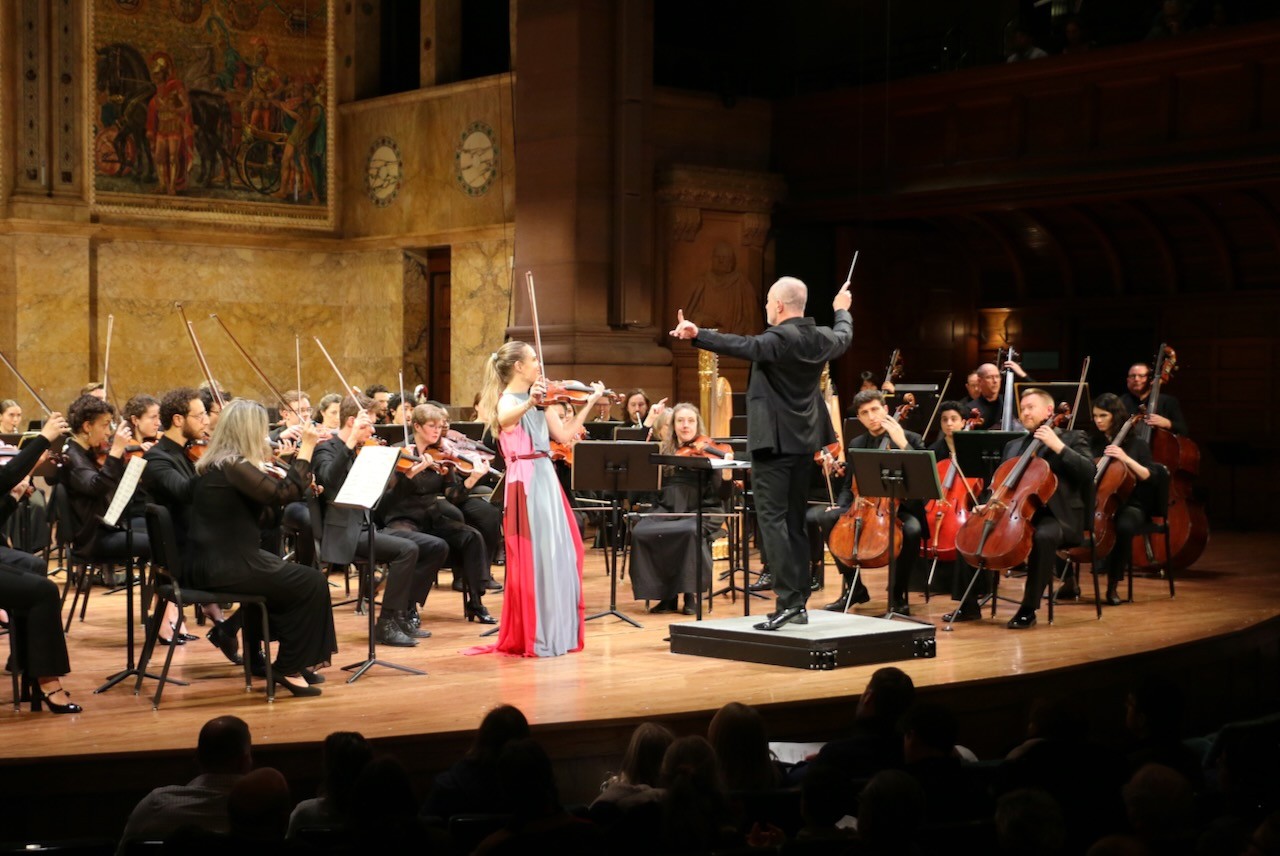
    At the other end of the spectrum, Stravinsky’s Violin Concerto, as immaculate as a Fabergé egg (though not at the expense of heart and humanity, especially in the Baroque arioso throwback of the work’s third movement), was more than mere icing on the cake – an apt metaphor, it turns out, for a program in celebration of music director Rossen Milanov’s 60th birthday. The soloist was Leila Josefowicz, well-toned in both senses of the word. It’s always a privilege to hear a concerto like this one in such an intimate hall.

    The concert will be repeated at Princeton University’s Richardson Auditorium this afternoon at 4:00. Both works are comparative rarities. As predicted, for me, this proved to be one of the highlights of the season. Miss it to your own detriment.

    https://princetonsymphony.org/


    PSO staff photo

  • Princeton Symphony Tchaikovsky’s Manfred

    Princeton Symphony Tchaikovsky’s Manfred

    From the repertoire alone, how could this weekend’s concerts of the Princeton Symphony Orchestra not stand as a highlight of the current season? And positing that, I take into account the bigger brand name orchestras in the adjacent metropolises of New York and Philadelphia. Rossen Milanov will conduct Tchaikovsky’s vertiginous, broody, and magnificent “Manfred Symphony” at Princeton University’s Richardson Auditorium in two performances, this Saturday at 8 p.m. and Sunday at 4 p.m.

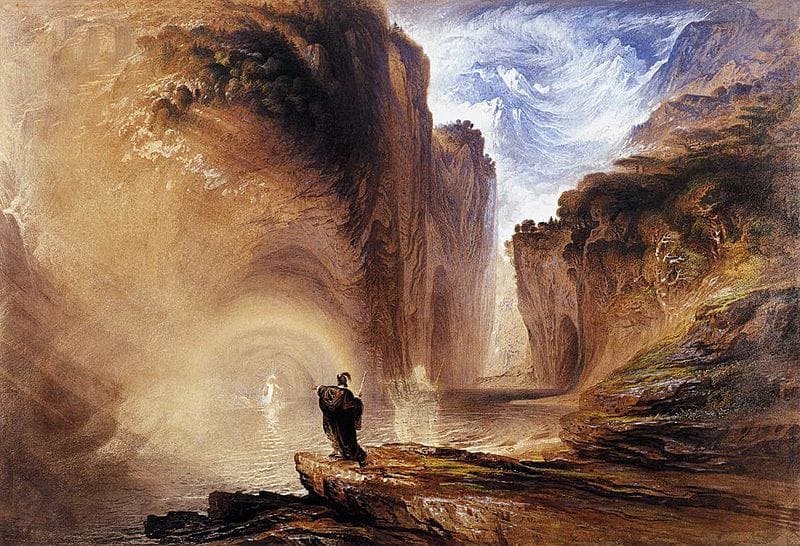
    This music is Romantic with a capital R. The quintessential Byronic hero, Manfred is weary but indomitable, an unconquerable superman, tormented by unimaginable suffering. Haunted by mysterious guilt (in connection with the death of his beloved), he wanders the Bernese Alps, longing for extinction, and meets his fate defiantly, rejecting all authority, corporeal and supernatural. And as you know, it doesn’t take much to get Tchaikovsky to seethe most eloquently.

    It will be very interesting to see how the group tackles this foray into the sublime, which requires a large orchestra with organ. (Richardson’s was removed years ago.) The work was originally scheduled for the ill-fated pandemic season of 2019-20, then coupled with Reinhold Glière’s Harp Concerto. If it could be thus, and it were not a madness and a mockery, I might have been most happy!

    But I will definitely be content with Stravinsky’s Violin Concerto, one of the loveliest works of the composer’s neoclassical period, to be heard on the reconstituted program’s first half. Temperamentally, the concerto is worlds away from Tchaikovsky’s Alpine awesomeness, but its prismatic reflections on Baroque airs can be quite seductive, with the spirit of Bach flitting around the composer’s crystalline heart. Leila Josefowicz, last heard here in Alban Berg’s concerto in 2016, will return to Princeton as the work’s soloist.

    The concerts are being presented in celebration of PSO music director Rossen Milanov’s 60th birthday. In the spirit of Manfred, I defy the solace of both cake and conviviality! However, I confess, I can’t wait to hear this program.

    For tickets and information, visit princetonsymphony.org.


    IMAGE: John Martin, “Manfred and the Witch of the Alps” (1837)

Tag Cloud

Aaron Copland (92) Beethoven (94) Composer (114) Film Music (116) Film Score (143) Film Scores (255) Halloween (94) John Williams (185) KWAX (228) Leonard Bernstein (99) Marlboro Music Festival (125) Movie Music (131) Opera (197) Philadelphia Orchestra (86) Picture Perfect (174) Princeton Symphony Orchestra (106) Radio (86) Ralph Vaughan Williams (85) Ross Amico (244) Roy's Tie-Dye Sci-Fi Corner (290) The Classical Network (101) The Lost Chord (268) Vaughan Williams (99) WPRB (396) WWFM (881)

DON’T MISS A BEAT

Receive a weekly digest every Sunday at noon by signing up here


RECENT POSTS