Tag: Princeton University

  • Paul Lansky From Crummy Student to Composer

    Paul Lansky From Crummy Student to Composer

    “I was a crummy student. I never really did what my teachers told me.”

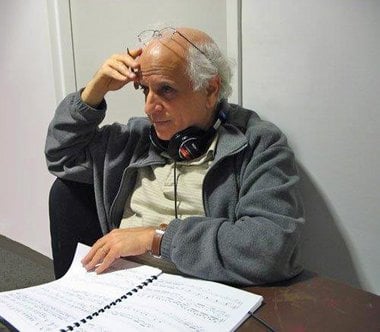
    That independent streak has served Paul Lansky well. Lansky was on the faculty of Princeton University from 1969 to 2014. He chaired the music department there for nine years, from 1991 to 2000.

    A French hornist who became a pioneering composer of computer music, he caught the ear of the experimental rock band Radiohead and formed a fruitful association with guitarist David Starobin. Starobin’s Bridge Records, Inc. continues to document Lansky’s post-electronic works for standard acoustic instruments.

    When he retired from Princeton after 45 years of service, it was never Lansky’s plan to stop composing. In fact, he remains as busy as ever, with the past few years being a remarkably fertile period.

    You can read more about him in this article I wrote in 2019, to preview a special tribute concert presented at Richardson Auditorium, in honor of the composer’s 75th birthday. It’s the first time I ever used the word “fart” in print.

    https://www.communitynews.org/princetoninfo/artsandentertainment/a-composer-celebrates-with-wit-and-human-touch/article_9d5126f9-b138-56ba-b139-9d4108840e67.html

    Happy birthday, Paul Lansky!


    While you’re at it, check out Paul’s new album, “Angles”:

    Paul Lansky: Angles (VOL. 17) <br> BRIDGE 9532

    Some selections:

    “Four’s Company” (2018): Vivaldiana

    “Angles” (2017): A Sad Song

    Also, some of his greatest hits:

    “Table’s Clear” (1990) for utensils, kids, and computer:

    “Threads” (2005) for percussion quartet:

    “Partly Pavane” from the “Semi-Suite” (2001) for guitar:

  • Indiana Jones’ Princeton University Connection

    Indiana Jones’ Princeton University Connection

    Did you know Indiana Jones was born in Princeton, NJ? Supposedly on July 1, 1899. According to his fictional biography, he lived here until 1908, at which time his father, Henry Jones, Sr. – a professor of medieval studies at Princeton University – embarked on a lecture tour.

    The Joneses returned to Princeton in time for Indy to attend Princeton High School. However, he never did graduate. While on spring break during his senior year, he fell in with Poncho Villa, while visiting the Southwest, then got caught up in World War I.

    Indy himself is supposed to have taught at Princeton University in 1933. However, his longtime employer, and the one we see in the movies, is Marshall College, a fictional institution, in Bedford, Connecticut.

    40 years after the release of “Raiders of the Lost Ark (on June 12, 1981), and all this is news to me. Then, I was never a follower of “The Young Indiana Jones Chronicles” television show or the spin-off novels or video games.

    The period during which the Joneses lived in Utah, in 1912, portrayed in the opening sequence of “Indiana Jones and the Last Crusade,” coincides with Henry Jones Sr.’s Princeton sabbatical. Henry Jones taught at Princeton from 1899 until at least 1938.

    At some point, Oxford-graduate Marcus Brody, Indy’s boss at Marshall, also took courses at Princeton.

    Needless to say, as a “Raiders” fan and now a Princetonian, I find this newly-acquired Indy lore fascinating.

    https://indianajones.fandom.com/wiki/Princeton

    https://indianajones.fandom.com/wiki/Princeton_University

    In real life, William Hootkins, the actor who played Major Eaton in “Raiders” (and memorably uttered the line “TOP… MEN”) graduated from Princeton in 1970. I wrote a post about it in 2019.


    PHOTO: Indiana Jones and the Princeton Tiger?

  • Milton Babbitt a surprising composer

    Milton Babbitt a surprising composer

    In reading an interview with John Williams in The New Yorker only a few months back, I was amused to discover that he and Milton Babbitt enjoyed a friendship of sorts. I guess Babbitt was a Bernard Herrmann fan. Who knew?

    https://www.newyorker.com/culture/persons-of-interest/the-force-is-still-strong-with-john-williams

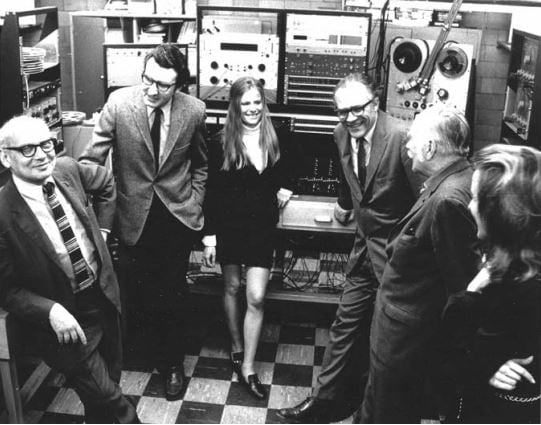
    Babbitt, who was born in Philadelphia on this date in 1916, was a fixture at Princeton University for many years. It’s telling that he joined both the music and mathematics faculties there. Later, he also served on the faculty of the Juilliard School.

    He gained widespread notoriety for his essay published under the title “Who Cares If You Listen?” The provocative slant was actually the result of an editorial decision. Babbitt’s original title had been “The Composer as Specialist” – not likely to generate nearly as much controversy.

    Broadly speaking, while he frequently composed in a serial style, his music is fairly lucid, without undo congestion, and with a minimum of soul-crushing dissonances. On the contrary, he often achieved a paradoxical simplicity under the guise of complexity.

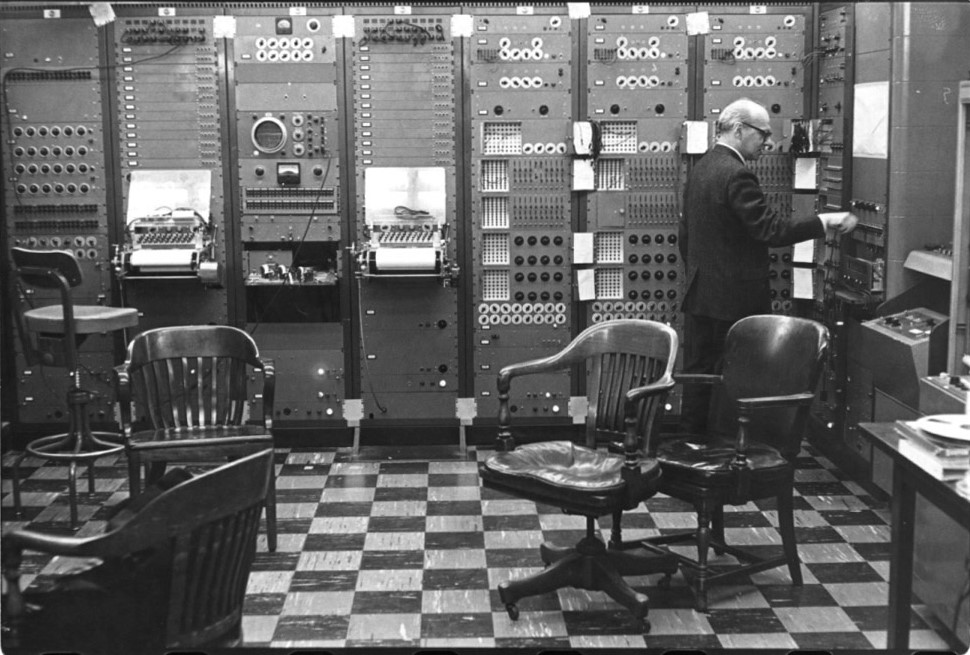
    In the 1960s, Babbitt became interested in electronic music, apparently more for its rhythmic precision than for any unusual timbral considerations. I find it endearing to learn that he was also fond of jazz and musical theater. He himself was a saxophonist. In 1946, he penned a musical, “Fabulous Voyage,” a retelling of Homer’s “The Odyssey.”

    Babbitt was the recipient of an honorary Pulitzer Prize in 1982. He died in Princeton in 2011, at the age of 94.


    Listen here for “Penelope’s Night Song” from “Fabulous Voyage”:

    “Composition for Twelve Instruments” (1948):

    “Reflections” (1974) for piano and synthesized tape:

    Milton Babbitt on electronic music:

  • Remembering William Scheide Princeton Benefactor

    Remembering William Scheide Princeton Benefactor

    Today would have been the 107th birthday of William H. Scheide.

    By coincidence, I was only just thinking about two concerts given in Princeton by Sir John Eliot Gardiner and his Monteverdi Choir. The first, in 2014, was devoted to Bach and Handel, and the second, in 2015, was a performance of Monteverdi’s “Orfeo.” These were among the most memorable concerts I ever attended. Both were made possible thanks to Scheide’s munificence.

    Scheide, who died in 2014 at the age of 100, was as generous as he was long-lived. He shared his abiding love for music, of course, especially that of Bach, of whom he was a respected interpreter and scholar; but he was also active in social causes, fighting against poverty, disease, hunger, ignorance, and discrimination. He touched many, many lives in the Princeton area and beyond.

    He also happened to enrich Princeton University’s Firestone Memorial Library with a trove of rare books and documents, including a Gutenberg Bible, some Shakespeare first folios, a copy of the Declaration of Independence, and manuscripts by Bach, Beethoven, and Lincoln, among others, the fruits of three generations of Scheide book-collecting.

    I had also, by chance, only just been thinking about a Scheide memorial program, a radio documentary of sorts, that I assembled for broadcast on WWFM – The Classical Network, for which I interviewed a number of his intimates and associates, including conductor Mark Laycock, radio personality Teri Noel Towe, and Bach scholar Christoph Wolff, in addition to Scheide’s widow, Judith. In the end, I had to pull a literal all-nighter in order to get it on the air in time, sounding the best it possibly could, on January 6, 2015, on what would have been Scheide’s 101st birthday.

    The year before, I had interviewed Gardiner, in advance of the first of his Princeton concerts, for an article in The Times of Trenton. Gardiner talked about his relationship with the famous Haussman Bach portrait, which then hung in the Scheide home. I also wrote a little more about Scheide’s relationship with Bach and Bach scholarship and his founding of the Bach Aria Group.

    Two Scheide-sponsored concerts, conducted by Laycock, were also mentioned. In 2013, Laycock conducted the Philadelphia Orchestra, in yet another landmark Scheide-sponsored event – the first time the orchestra had played in Princeton in nearly 50 years. His performance of Beethoven’s Symphony No. 9, with the Wiener KammerOrchester and the Westminster Symphonic Choir, on the occasion of Scheide’s 100th birthday, was broadcast nationally on PBS.

    https://www.nj.com/times-entertainment/2014/06/sir_john_eliot_gardiner_to_con.html

    Thanks for the musical memories, Mr. Scheide, and beyond that, thank you for making the world a better place.


    PHOTO: William Scheide (center) with the Bach Aria Group he founded. Clockwise, from left, Eileen Farrell, Julius Baker, Robert Bloom, Paul Ulanowsky, Jan Peerce, Norman Farrow, Bernard Greenhouse, Maurice Wilk and Carol Smith

  • Juri Seo Featured Composer on Datebook

    Juri Seo Featured Composer on Datebook

    Princeton’s Juri Seo makes today’s “Composer’s Datebook.” Listen to the two-minute segment here:

    https://www.yourclassical.org/programs/composers-datebook/episodes/2020/12/02

    Then find out more, at her website:

    https://www.juriseomusic.com/

Tag Cloud

Aaron Copland (93) Beethoven (95) Composer (114) Film Music (126) Film Score (143) Film Scores (255) Halloween (94) John Williams (189) KWAX (229) Leonard Bernstein (101) Marlboro Music Festival (125) Movie Music (141) Mozart (87) Opera (203) Philadelphia Orchestra (89) Picture Perfect (174) Princeton Symphony Orchestra (107) Radio (87) Ross Amico (244) Roy's Tie-Dye Sci-Fi Corner (290) The Classical Network (101) The Lost Chord (268) Vaughan Williams (103) WPRB (396) WWFM (881)

DON’T MISS A BEAT

Receive a weekly digest every Sunday at noon by signing up here


RECENT POSTS