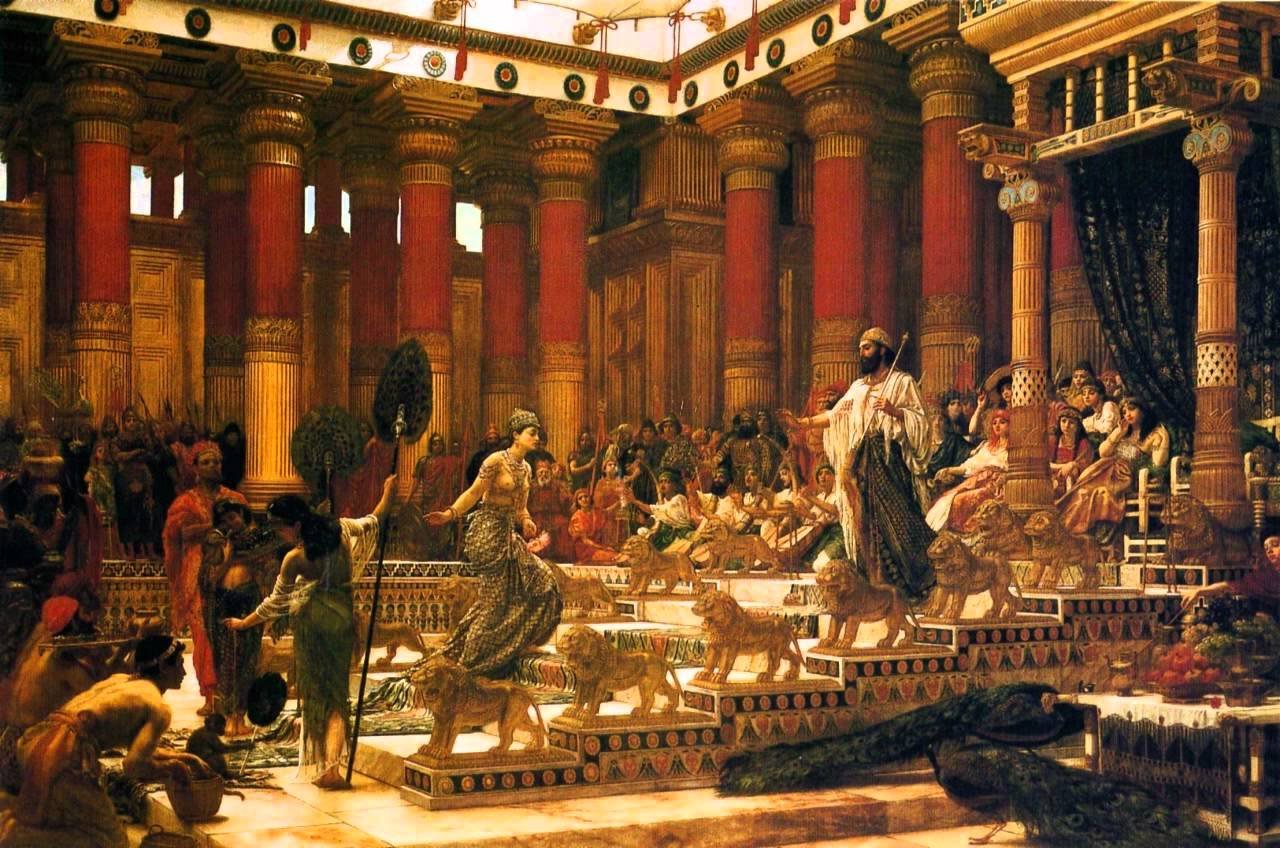
It’s music that’s so over-the-top, Cecil B. DeMille would have blushed. Ottorino Respighi gets all quasi-biblical in this suite from “Belkis, Queen of Sheba.” The ballet spectacle, set at the court of King Solomon, was given its first performance at La Scala in 1932. The finale featured over a thousand performers, which likely accounts for the work’s subsequent neglect. Grandiose even by Respighi standards, the concluding orgiastic dance whipped the opening night audience into a frenzy.
Think big, and aim high! Happy birthday, Ottorino Respighi!
I can hardly hear myself think, with twelve drummers drumming!
While I am generally all for extending Christmas for as long as possible, we have come finally to the twelfth day, the Feast of the Epiphany, and the official close of the season. At least in the West. For the Orthodox, today is Christmas Eve.
For the rest of us, this is traditionally the day to take down the Christmas tree and all the festive decorations and to let the tree spirits go about their business. Our wise forebears believed that it is bad luck to take down the decorations earlier. Taking them down later is equally unlucky, so that if you miss the date, you’re supposed to leave everything up for the rest of the year. Ignore this advice at the peril of your crops!
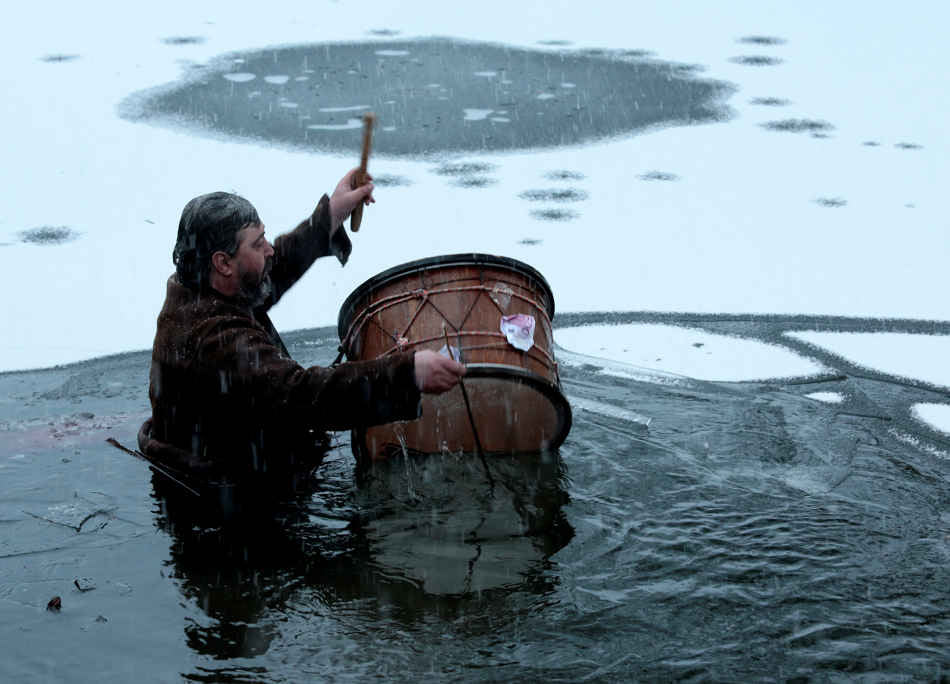
I hope La Befana, the Christmas witch, was good to you. Here are some photos of some other Epiphany celebrations, including one that involves pounding a drum while standing in frigid water.
And in case you missed it yesterday, here again is the last section of Respighi’s tone poem “Feste Romane” (“Roman Festivals”), titled “La Befana.” It’s often given in English as “Epiphany,” but it’s really named for the Christmas witch, whom Italians embrace as part of their January 6 celebrations.
Here’s a souvenir from my days at WPRB 103.3 FM. Dan Zhu, a superb violinist, dropped by the studio for a chat, prior to his Princeton appearance as soloist in Beethoven’s Violin Concerto with West Windsor’s Bravura Philharmonic Orchestra in 2018.
If you’re interested in rewarding, off-the-beaten path, post-Romantic music, check out Dan’s recording of the Violin Concerto by Croatian composer Boris Papandopulo, on the CPO label. Here’s the first movement:
The night after our conversation, Dan was off to Shanghai to perform music by Bright Sheng (a figure now much in the news), under the composer’s direction. Dan’s recorded several of Sheng’s works for release on the Naxos label, including this one:
I mention all this as preamble to a link Dan was kind enough to forward of his performance of the rarely-heard Violin Sonata by Ottorino Respighi, which took place only a few weeks ago. The work was composed in 1917, making it contemporaneous with the composer’s much better-known “Fountains of Rome.” Respighi was about 38 years-old.
The recital was filmed in the Palazzo Tornabuoni’s Sala delle Muse in Florence, the site of the premiere of the world’s first opera, Jacopo Peri’s “Dafne,” in 1598. The pianist is Julien Quentin, performing on an instrument once owned by Maria Tipo! You can watch it here:
I helmed that morning air shift at WPRB from 2015 to 2018. For a time, I was on three stations at once (WPRB, WRTI, and WWFM), prompting one listener to describe me as “the hardest-working DJ in classical radio.” I don’t know if that’s true, but I sure didn’t sleep very much.
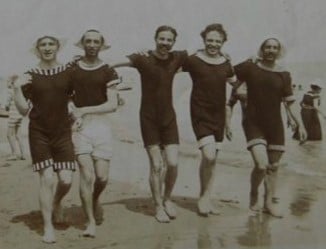
In a week that saw the 75th anniversary of the bikini (unveiled on July 5. 1946), Ottorino Respighi hangs on to his modesty by rocking a one-piece bathing suit with four of his amici.
You won’t detect much of that modesty in his rafter-rattling tone poems, “Fountains of Rome” (1916), “Pines of Rome” (1924), and “Roman Festivals” (1928). But he also had his softer side, as evidenced by the time-tripping Renaissance lute recreations, the “Ancient Airs and Dances” (composed in 1917, 1923 & 1932).
I’m reminded that Respighi died in 1936 at the age of 55. Mortality is staring me in the face!
Incredibly, his wife, Elsa, outlived him by some 60 years. A singer and composer herself, she died in 1996, one week shy of her 102nd birthday! She remained her husband’s biggest cheerleader, tirelessly promoting his music. She even completed his final opera, “Lucrezia,” given its debut in 1937.
As a soundtrack to the photo: In 1929, when conductor Serge Koussevitzky formulated the idea that Respighi should orchestrate some of Rachmaninoff’s keyboard pieces, Rachmaninoff was nothing if not enthusiastic. He supplied Respighi with hidden programs behind the works to lend additional insights into their creation. Koussevitzky was impressed with the results, which he debuted with the Boston Symphony Orchestra in 1931. More importantly, Rachmaninoff found the orchestrations to be faithful to the spirit of the originals.
Here is “The Sea and the Seagulls,” from “Cinq Études-Tableaux” by Respighi, after Rachmaninoff.
Also, footage of Arturo Toscanini conducting “Pines of Rome” in 1952, with the NBC Symphony. Toscanini conducted the work’s U.S. premiere, with the New York Philharmonic, in 1926. The bird calls begin at 14:43.
A mesmerizing performance, from 1949, of the “Arie de corte” from the “Ancient Airs and Dances Suite No. 3,” with Eugene Ormandy conducting the Philadelphia Orchestra (part of Sony’s recently-released “Eugene Ormandy: The Columbia Legacy” boxed set):
Finally, a guilty pleasure that’s so over-the-top, it would have made Cecil B. DeMille blush: a suite from the ballet “Belkis, Queen of Sheba,” a quasi-Biblical spectacle set at the court of King Solomon. The work was given its first performance at La Scala Milan in 1932. The finale featured over a thousand performers, which likely accounts for its subsequent neglect. Grandiose even by Respighi standards, the concluding orgiastic dance whipped the opening night audience into a frenzy.
Romantic, Classicist, Impressionist, AND supermodel – Happy birthday, Ottorino Respighi!
PHOTO: Respighi (second from right) and friends horsing around, like an outtake from Fellini’s “I Vitelloni”
Wow! Did you know that Respighi’s widow died in 1996? That’s as crazy to contemplate as the fact that Gustav Mahler (whose birthday it was on Tuesday) would have turned 80 on the day Ringo Starr was born. And of course, there are those photos of Alma talking with Leonard Bernstein. History is collapsing in on itself like a telescope!
Respighi’s wife, Elsa, outlived him by some 60 years. A singer and composer herself, she died one week shy of her 102nd birthday. She remained her husband’s biggest cheerleader, tirelessly promoting his music, after his own untimely death in 1936, at the age of 55, and even completed his last opera, “Lucrezia.”
Respighi, of course, is best known for his trilogy of opulent, at times rafter-rattling tone poems celebrating the scenes and history of Rome – “Fountains of Rome” (1916), “Pines of Rome” (1924), and “Roman Festivals” (1928) – and his time-tripping sets of Renaissance lute recreations, the “Ancient Airs and Dances” (composed in 1917, 1923 & 1932).
In 1929, when conductor Serge Koussevitzky suggested Respighi orchestrate some of Rachmaninoff’s keyboard pieces, Rachmaninoff responded enthusiastically. He supplied Respighi with hidden programs behind the works to lend additional insights into their creation. Koussevitzky was impressed with the results, which he unveiled with the Boston Symphony Orchestra in 1931. More importantly, Rachmaninoff found the orchestrations to be faithful to the spirit of the originals.
Here is “The Sea and the Seagulls,” from “Cinq Études-Tableaux” by Respighi, after Rachmaninoff.
Also, footage of Arturo Toscanini conducting “Pines of Rome” in 1952, with the NBC Symphony. Toscanini conducted the work’s U.S. premiere, with the New York Philharmonic, in 1926.