Tag: Respighi

  • Respighi’s Rafter-Rattling Birthday Bash

    Respighi’s Rafter-Rattling Birthday Bash

    Hey, when you write tone poems that rattle the rafters, you deserve to enjoy a little down time.

    Ottorino Respighi may be taking the day off, but we’ll celebrate the anniversary of his birth, with music that’s so over-the-top that Cecile B. DeMille would have blushed.

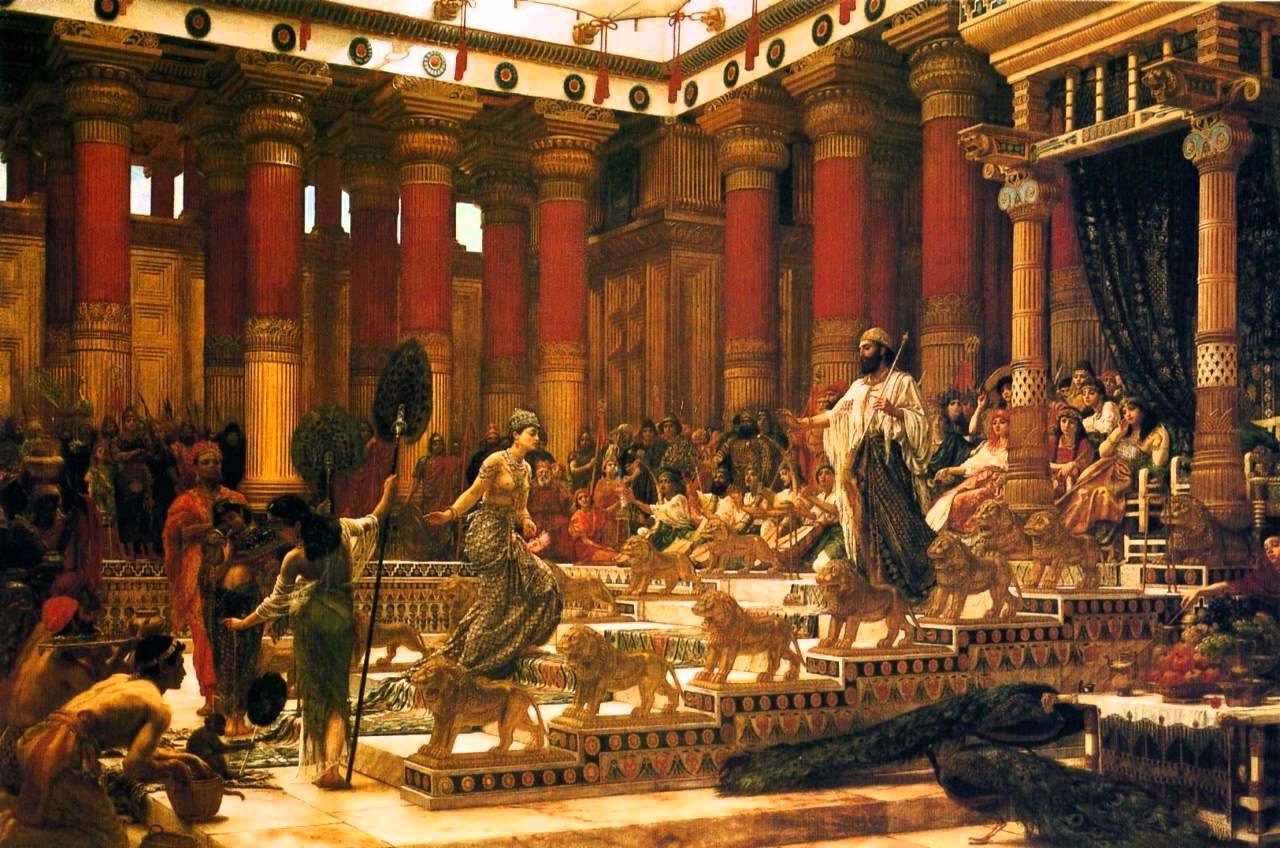
    The ballet “Belkis, Queen of Sheba,” a quasi-Biblical spectacle set at the court of King Solomon, was given its first performance at La Scala in 1932. The finale featured over a thousand performers, which likely accounts for the work’s subsequent neglect. Grandiose even by Respighi standards, the concluding orgiastic dance whipped the opening night audience into a frenzy.

    We’ll also observe the birthdays today of composers David Diamond and Paul Chihara, pianist Leonard Pennario, and conductor David Zinman, and remember composer and conductor Oliver Knussen, who died yesterday at the age of 66.

    The music will be pretty spectacular, between 4 and 7 p.m. EDT, on WWFM – The Classical Network and wwfm.org.


    Respighi (second from right) hits the beach with quattro amici

  • Respighi & Pizzetti: Italian Masters at Marlboro

    Respighi & Pizzetti: Italian Masters at Marlboro

    We’re headed back to the ‘80s for this week’s “Music from Marlboro” – the 1880s, that is.

    We’ll hear music by two composers of “la generazione dell’Ottanta” (literally, “the Generation of the ‘80s”), artists of the post-Puccini era, born around 1880, who made their reputations largely in the concert halls, as opposed to in the opera houses. This would have been a change of pace for Italy.

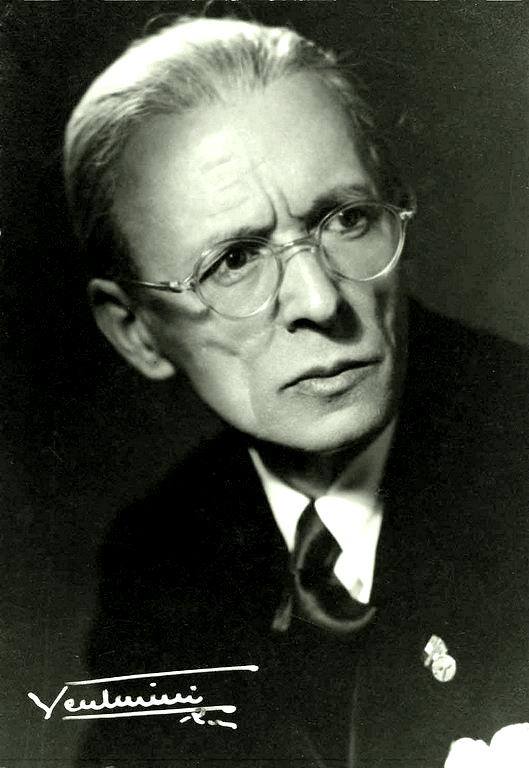
    The best known of these, of course, was Ottorino Respighi. Respighi may have written twelve operas – can you name them? – but unquestionably it is for his roof-raising tone poems and time-traveling suites for chamber orchestra that he is most celebrated.

    Respighi’s “Il Tramonto” (or “The Sunset”), composed in 1918, was inspired by a poem of Shelley, which tells of a pair of crepuscular lovers who meet in the woods at twilight. The young woman wakes to find that the man has passed in the night.

    We’ll hear a performance by Marlboro musicians on tour at the Isabella Stewart Gardner Museum in Boston, in 2010, including Metropolitan Opera mezzo-soprano Jennifer Johnson Cano, violinists Ira Levin and Yonah Zur, violist Beth Guterman, and cellist Saeunn Thorsteindottir.

    Ildebrando Pizzetti was best known as an associate of the poet and playwright Gabriele d’Annunzio, providing incidental music for a number of d’Annunzio’s plays and setting his drama “Fedra” as an opera. Pizzetti’s Piano Trio in A major, written in 1925, is big music with big things to say. There is plenty of drama, lyricism, and warmth throughout the 30 minute piece, which is almost never heard.

    It was performed, however, at the Marlboro Music Festival in 1968, by violinist Pina Carmirelli, cellist Leslie Parnas, and that venerable poet of the keyboard, Mieczyslaw Horszowski.

    Temperatures will rise into the ‘80s, on this week’s “Music from Marlboro” – chamber music performances from the legendary Marlboro Music Festival – this Wednesday evening at 6:00 EDT, on WWFM – The Classical Network and wwfm.org.

    Marlboro School of Music and Festival: Official Page

  • Respighi’s Queen of Sheba & More

    Respighi’s Queen of Sheba & More

    It’s music that’s so over-the-top, Cecil B. DeMille would have blushed.

    Join me this afternoon as we get all quasi-biblical, with a suite from Ottorino Respighi’s ballet “Belkis, Queen of Sheba.” The spectacle, set at the court of King Solomon, was given its first performance at La Scala in 1932. The finale featured over a thousand performers, which likely accounts for the work’s subsequent neglect. Grandiose even by Respighi’s standards, the concluding orgiastic dance whipped the opening night audience into a frenzy.

    We’ll also hear a Concerto for Winds, Harp and Orchestra by Paul Hindemith, one of his more attractive inventions, which we’ll complement with music by his great Baroque counterpart Georg Philipp Telemann.

    The last hour will likely feature at least some English music – because I’m just in that kind of mood.

    Listen in, if you’re a little moody yourself, from 4 to 7 p.m. EDT, on WWFM – The Classical Network or at wwfm.org.

  • Hello Autumn!

    Hello Autumn!

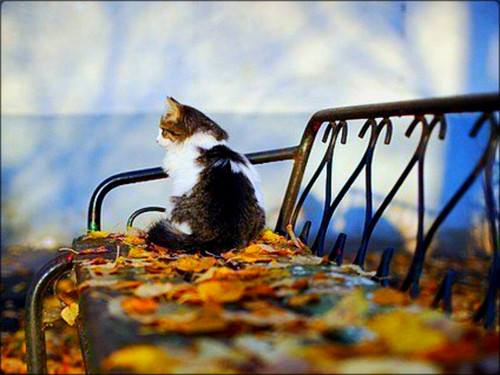
    Now that that pesky air shift is out of the way, I can get back to writing about something worthwhile. Like the fact that today is the first day of autumn, praised be! Bring on the soups, the baked goods, the sweaters, the colored leaves, the moody skies, the used book shopping on weekend afternoons, the carved pumpkins, the black-and-white horror movies, the Brahms, and a welcome cup of tea. See you next year, summer, but hopefully not too soon!

    Dream along to Respighi’s “Poema autunnale”:

    PHOTO: The leaves make it more challenging to see the chipmunks

  • Italian Composers & the Seasons

    Italian Composers & the Seasons

    “La generazione dell’ottanta” is a label used to describe that group of Italian composers born around 1880. By and large, they are remembered for their contributions to orchestral and instrumental music, as opposed to opera, though their contributions to the latter form were not inconsiderable. The group included Franco Alfano, Alfredo Casella, Gian Francesco Malipiero, Ildebrando Pizzetti, and the best known of the bunch, Ottorino Respighi.

    This Sunday night on “The Lost Chord,” we’ll enjoy seasonal works by three of them.

    Respighi wrote his “Poema autunnale,” for violin and orchestra, in 1926. He prefaced his score with the following descriptive program:

    “A sweet melancholy pervades the poet’s feelings, but a joyful vintner’s song and the rhythm of a Dionysiac dance disturb his reverie. Fauns and Bacchantes disperse at the appearance of Pan, who walks alone through the fields under a gentle rain of golden leaves.”

    The work is meditative, lovely and uplifting in the manner of Vaughan Williams’ “The Lark Ascending.”

    For a composer who disliked sonata form, Malipiero certainly wrote a lot of symphonies – 11 numbered symphonies, in all – though largely on his own terms. Two of these were inspired by the seasons.

    In the case of the Symphony No. 1, composed in 1933, the connection might be said to be analogous, as opposed to strictly programmatic. His initial plan had been to set passages from Anton Maria Lamberti’s poem, “La stagione.” Ultimately, he abandoned that design, but the idea of an annual cycle remained.

    The composer subtitled the work, “In Quattro tempi, come le quattro stagioni” (“In four movements, like the four seasons”). Indeed, the first has something of a vernal flavor, with the second, according to the composer, “strong and vehement like summer,” the third autumnal, and the fourth akin to “the winter carnival season and the gaiety of snow.”

    The program will open with music by Pizzetti that, while not strictly seasonal, is clearly of an autumnal cast. His “Preludio a un altro giorno” (“Prelude to Another Day”) is a fairly late piece, and rather a world-weary one, composed in 1952.

    Just before writing it, Pizzetti had received a painful letter from his former teacher, Giovanni Tebaldini, then 87 and praying for death after a series of strokes left him confined to a chair, terrified to stand for fear of falling. Not surprisingly, I thought it best to listen to this one first, so that we could relax and enjoy the leaves and snow.

    I hope you’ll join me for “Italian Seasoning,” tonight at 10 ET, with a repeat Wednesday evening at 6; or that you’ll enjoy it later as a webcast at http://www.wwfm.org.

    PHOTOS: Pizzetti looking severe; Malipiero and Respighi enjoying la dolce vita

Tag Cloud

Aaron Copland (92) Beethoven (95) Composer (114) Film Music (123) Film Score (143) Film Scores (255) Halloween (94) John Williams (187) KWAX (229) Leonard Bernstein (101) Marlboro Music Festival (125) Movie Music (138) Opera (202) Philadelphia Orchestra (89) Picture Perfect (174) Princeton Symphony Orchestra (106) Radio (87) Ralph Vaughan Williams (85) Ross Amico (244) Roy's Tie-Dye Sci-Fi Corner (290) The Classical Network (101) The Lost Chord (268) Vaughan Williams (103) WPRB (396) WWFM (881)

DON’T MISS A BEAT

Receive a weekly digest every Sunday at noon by signing up here


RECENT POSTS