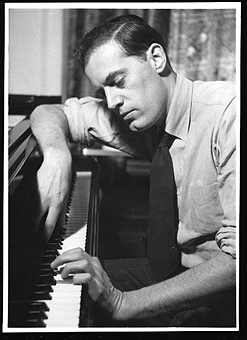
Tag: Richard Arnell

  • Richard Arnell Encounters and Musical Mysteries

    Richard Arnell Encounters and Musical Mysteries

    Last month I attended the Bard Music Festival in Annandale-on-Hudson, NY, and then had to move on to a wedding in Vermont.

    During my Bard stay, over breakfast at the inn, I met someone with the unusual name of Arnell. His first name, I mean. He was an African American male, probably around 40, a writer from L.A., who was there to see his daughter start school at the college. I only mention his race, because not long after, I was in a convenience store in the mountains of Vermont, and I noticed the name tag on an older white woman behind the register, probably in her 70s. The tag, as by now surely you’ve anticipated, also read Arnell!

    Being Classic Ross Amico, I had to ask both of them if they were familiar with the composer Richard Arnell or if, at the very least, their parents were musical.

    I first learned of Richard Arnell, born on this date in 1917, from a recording of his Sherlock Holmes ballet, “The Great Detective.” But he was also a renowned symphonist, who spent the war years here in the United States, cut off from his home in the U.K. while visiting the 1939 World’s Fair. Here, he cultivated important friendships with Bernard Herrmann, Virgil Thomson, and Sir Thomas Beecham (who, alongside Sir John Barbirolli and Leopold Stokowski, championed his concert works). He also wrote film music for Robert J. Flaherty and ballets for George Balanchine and Frederick Ashton.
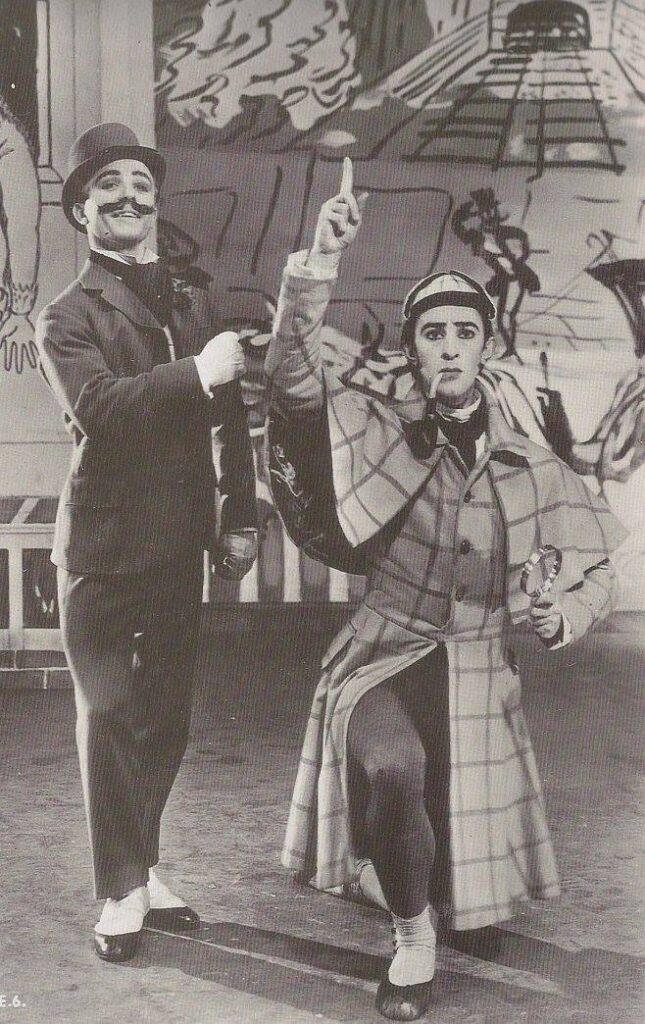
    A few years ago, when WPRB 103.3 FM still had five hours a day devoted to classical music, I hosted a marathon tribute to the composer for the occasion of the 100th anniversary of his birth. To this end, I had the support of two of the composer’s younger friends – Patrick Jonathan, who now makes his home in Malaysia, and Warren Cohen, who is music director of the MusicaNova Orchestra, based in Phoenix, AZ. Both of them were very generous with their time, sharing anecdotes, recordings, and, in the case of Jonathan, historical documents. As luck would have it, Cohen actually makes his home in New Jersey, just about an hour away. So he was able to drive down and join me for an in-studio interview.

    Here’s a link to our conversation.

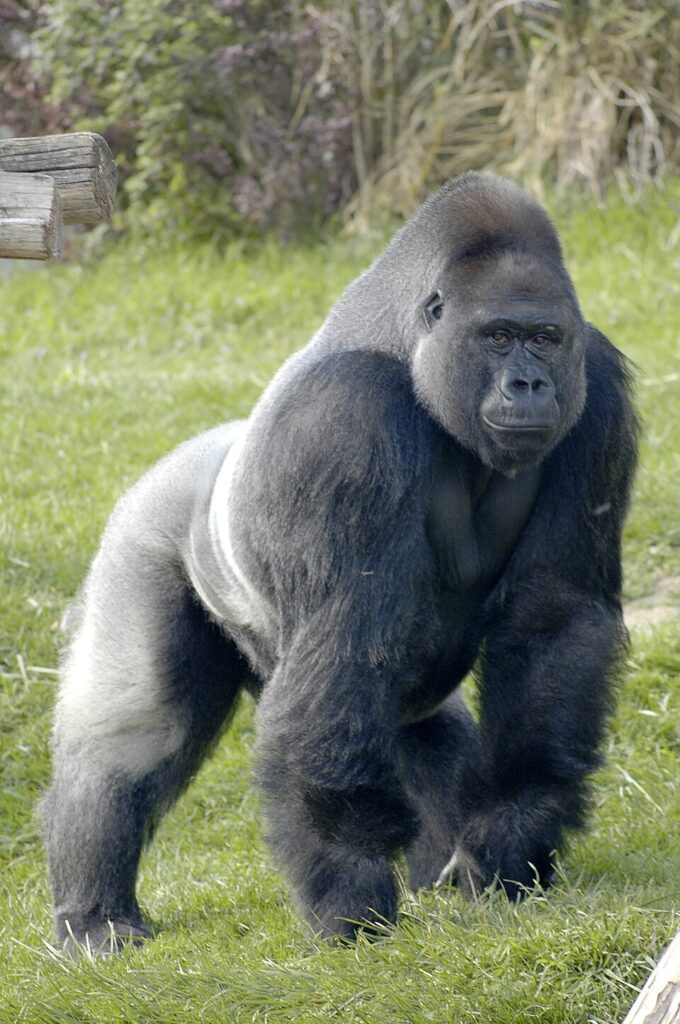
    MusicaNova is a fascinating organization whose mission it is to present “the greatest music you’ve never heard – yet.” In fact, Cohen has conducted first American performances of a number of Arnell’s major works. The sound file includes a MusicaNova performance of Arnell’s Symphony No. 5 – subtitled “The Gorilla” (!) – and Cohen’s gorgeous arrangement for string orchestra, sanctioned by the composer, of the “Elegy” from Arnell’s String Quartet No. 3.

    This season, among its more unusual offerings, MusicaNova will present rarely-heard music by Lou Harrison and Germaine Tailleferre, a world premiere by Manel Burgos de la Rosa, and a work by Samuel Coleridge-Taylor that hasn’t been heard in the United States since 1912! Visit the orchestra’s website, and if you find yourself in the area, treat yourself to a musical adventure.

    https://www.musicanovaaz.org/

    It turns out neither of my recent Arnell acquaintances came from musical families. How many people have Arnell for their first name? It shall remain one of those great mysteries, why the universe would bother to tantalize me with two Arnells living on separate coasts, encountered over several days, roughly four hours apart.

    Verily, it is a case worthy of the Great Detective!

    Happy birthday, Richard Arnell.

  • Bard Music Festival Serendipity: Vaughan Williams & More

    Bard Music Festival Serendipity: Vaughan Williams & More

    Another serendipitous reunion at the Bard Music Festival: for Saturday night’s concert, who else should be sitting in my row, but Warren Cohen, music director of the MusicaNova Orchestra!

    The orchestra is based in Phoenix, Arizona, but Warren makes his home in New Jersey, which is why he was able to make the trip down to the studios of Princeton University’s WPRB, to share with me his experiences with English composer Richard Arnell and his works (of which he has conducted many), for Arnell’s centenary in 2017. It was an all-Arnell morning, which featured several of Warren’s recordings with his orchestra. I feel comfortable stating that Warren is a huge advocate of unusual and neglected repertoire, with a special fondness for English music. Remind you of anyone?

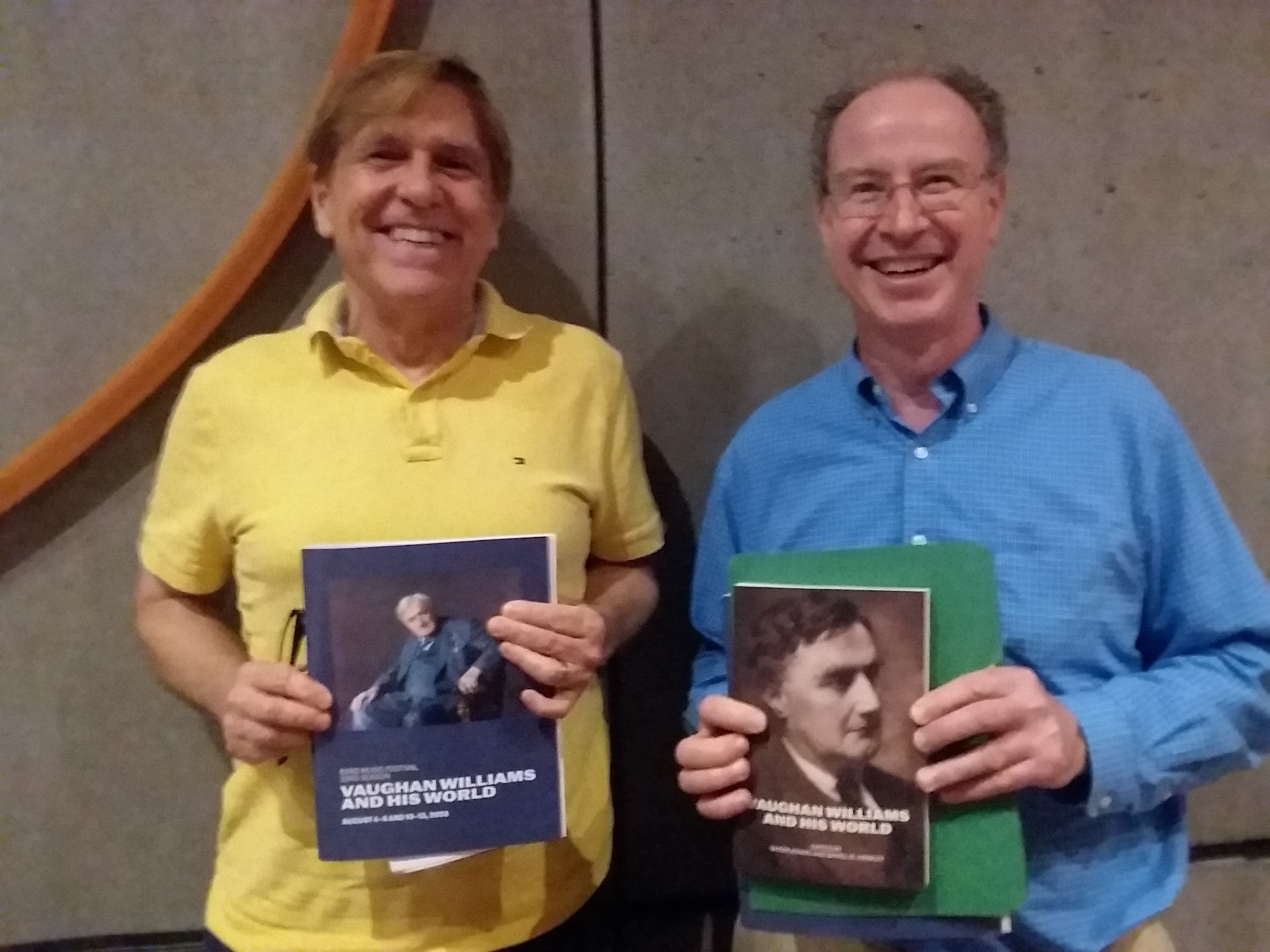
    Anyway, here we are during intermission on Saturday, Warren, holding a copy of the lavish Bard Music Festival program, and me, with this year’s tie-in volume of scholarly essays, “Vaughan Williams and His World,” published by University of Chicago Press.

    The concert itself was a Vaughan Williams enthusiast’s dream, featuring “Job, A Masque for Dancing” (with projections of William Blake’s artwork), the Concerto for Two Pianos (with soloists Danny Driver and Piers Lane), and the turbulent Symphony No. 4. Leon Botstein conducted The Orchestra Now (TŌN). Good luck ever hearing “Job” in the United States, or the concerto anywhere!

    The Bard Music Festival will resume this weekend at Bard College in Annandale-on-Hudson, NY, with a couple of special supplementary events taking place at Church of the Messiah in Rhinebeck on Thursday evening and Friday afternoon.

    Impending highlights from Bard’s marathon programs will include Vaughan Williams’ “Five Variants of Dives and Lazarus,” “Flos Campi,” and “The Lark Ascending” (alongside works by Edward Elgar, Grace Williams, Peter Warlock, Frederick Delius, and Gustav Holst, on Friday evening), the String Quartet No. 2 (alongside works by Gordon Jacob, Robert Müller-Hartmann, Egon Wellesz, Arnold Bax, Howard Ferguson, Béla Bartók, Edmund Rubbra, and a Bach transcription by Harriet Cohen, on Saturday afternoon), the Symphony No. 8 and “Sinfonia Antartica” (alongside works by Elizabeth Maconchy, William Walton, and Jean Sibelius, on Saturday evening), the Violin Sonata in A minor (alongside works by Ruth Gipps, Michael Tippett, Samuel Barber, Peggy Glanville-Hicks, and Constant Lambert, on Sunday morning), and the Falstaff opera “Sir John in Love” (Sunday afternoon).

    Some of the concerts will be livestreamed. You’ll find the complete schedule here:

    https://fishercenter.bard.edu/whats-on/programs/bard-music-festival/

    Fisher Center at Bard


    Warren Cohen conducts Richard Arnell’s Symphony No. 4:

    Warren joins me in 2017 to talk about Arnell on WPRB:

    MusicaNova’s website:

    https://musicanovaaz.org/

    Who else will I encounter at Bard?

  • Richard Arnell Rediscovered Neglected Composer

    Richard Arnell Rediscovered Neglected Composer

    Certainly, you all know by now how enthusiastic I am about unusual, neglected, and worthwhile repertoire. Here’s a composer who is so neglected, he didn’t even turn up in my birthday references for today – or at any rate, those I checked – Richard Arnell (1917-2009), known to his friends as Tony.

    A few years ago, when WPRB 103.3 FM still had five hours a day devoted to classical music, I hosted a marathon tribute to Arnell on the occasion of the 100th anniversary of his birth. To this end, I had the support of two of the composer’s younger friends – Patrick Jonathan, who now makes his home in Malaysia, and Warren Cohen, who is music director of the MusicaNova Orchestra, based in Phoenix, Arizona. Both of them were very generous with their time, sharing anecdotes, recordings, and, in the case of Patrick, historic documents. As luck would have it, Cohen actually makes his home in New Jersey, just about hour away. So he was able to drive down and join me for an in-studio interview.

    If you missed it, here’s a link to our conversation. MusicaNova is a fascinating organization whose mission it is to present “the greatest music you’ve never heard – yet.” In fact, Cohen has conducted first American performances of a number of Arnell’s major works. The sound file includes a MusicaNova performance of Arnell’s Symphony No. 5 – subtitled “The Gorilla” (!) – and Cohen’s gorgeous arrangement for string orchestra, sanctioned by the composer, of the “Elegy” from Arnell’s String Quartet No. 3.

    Learn more about this neglected English master, who was championed by Beecham, Stokowski, and Bernard Herrmann, by listening here:

    Happy birthday, Tony Arnell!

  • Richard Arnell Rediscovered on WWFM

    Richard Arnell Rediscovered on WWFM

    It’s been brought to my attention by Patrick Jonathan that tomorrow will mark the tenth anniversary of the passing of English composer Richard Arnell. While I am not in the habit of commemorating death anniversaries, I will make an exception in the case of this neglected and deserving composer of much attractive and inspirational music.

    Join me today on The Classical Network, following today’s Noontime Concert, for a sampling of Arnell’s output. Just how much of it will be heard remains to be seen. I’ve pretty much got a clean slate from 1 to 4 p.m. EDT.

    First, we’re off to midtown Manhattan for another concert presented under the auspices of Gotham Early Music Scene (or GEMS). Empire Viols will perform a program of transcriptions of organ trios by Johann Sebastian Bach and Bach pupil Johann Ludwig Krebs. The concert was given last June at Saint Bartholomew’s Church, 325 Park Avenue, as part of GEMS’ free Midtown Concerts series. Free concerts are held at St. Bart’s every Thursday at 1:15 p.m. This Thursday, Douglas Lundeen will perform a recital of French works composed for the piston-valve French horn. To find out more, visit gemsny.org.

    Then stay tuned, as I dip into my arsenal of Arnell. I’ll be manning the cannons against the canon, from 12 to 4 p.m. EDT, on WWFM – The Classical Network and wwfm.org.


    If you’re interested, here’s a link to a conversation I had with Warren Cohen, music director of the MusicaNova Orchestra. Musica Nova is a really fascinating organization, based in Phoenix, AZ, that bills itself as presenting “the greatest music you’ve never heard – yet.” Cohen knew Arnell personally and gave the U.S. premieres of a number of his major works. The interview took place on the occasion of the composer’s centenary. The soundfile includes a Musica Nova performance of Arnell’s Symphony No. 5 – subtitled “The Gorilla!” – and Cohen’s beautiful arrangement for string orchestra, sanctioned by the composer, of the Elegy from Arnell’s String Quartet No. 3.

  • Arnell’s Bruckner Symphony on WWFM Today

    Arnell’s Bruckner Symphony on WWFM Today

    I know, I play an awful lot of Bruckner on WWFM on Tuesday afternoons. It’s a way for me to regroup as I come down off the adrenaline rush of hosting the live noon concerts, which are unscripted and basically improvised from a sheaf of papers handed to me, which I do my best to assimilate in advance.

    I also know I have been going on an awful lot about Richard Arnell, the neglected English master, in connection with the centenary of his birth, which was last Friday. (Yesterday I played his String Quintet No. 3.)

    So, in the interest of mixing it up, today I will offer something a little different: Arnell’s Bruckner-inflected Symphony No. 3. Arnell’s wartime symphony bears other diverse influences – some Sibelius here, a dash of Nielsen there; perhaps even some Shostakovich – but try listening to it with Bruckner in mind, especially the earlier movements.

    The six-movement piece was composed in the United States, where Arnell found himself stranded while visiting the World’s Fair in 1939, his return home cut off by the outbreak of the Second World War. His mother would be killed in the Blitz in 1942. Arnell dedicated his symphony “to the political courage of the British people.”

    It certainly achieves an ambitious scale, running to over an hour in length. And don’t get me wrong: despite the multiplicity of influences – there’s even a kind of barn dance that recalls American symphonic music of the era – it is English, and most certainly Arnell, to the core. I think you’ll agree, it works up a good head of steam and achieves passages of genuine nobility. Judge for yourself; I’ll be playing it around 2:00.

    First, today’s Noontime Concert will be made up of performances by the New York Chamber Ensemble, drawn from this summer’s Cape May Music Festival. We’ll hear selections from two programs. The first will include music by Philippe Hersant (“Héliades” for flute and strings), Johan Kvandal (from his Hardanger fiddle quintet) and Felix Mendelssohn (his String Quartet No. 2 in B-flat major). Then saxophonist Eddie Barbash will join the group for riffs on a variety of old favorites by Cole Porter, Ruben Fuentes, Manuel Ponce, Vincenzo Bellini, Harry Warren, and the ever-prolific Anonymous. Next year’s Cape May Music Festival will run from May 27 to June 14. Further developments, as they become available, will be posted at the festival’s website, capemaymac.org.

    I hope you’ll join me today, from 12 to 4 p.m. EDT, for chamber music, an epic symphony and more, on WWFM – The Classical Network and wwfm.org.

Tag Cloud

Aaron Copland (92) Beethoven (95) Composer (114) Film Music (123) Film Score (143) Film Scores (255) Halloween (94) John Williams (187) KWAX (229) Leonard Bernstein (101) Marlboro Music Festival (125) Movie Music (138) Opera (202) Philadelphia Orchestra (89) Picture Perfect (174) Princeton Symphony Orchestra (106) Radio (87) Ralph Vaughan Williams (85) Ross Amico (244) Roy's Tie-Dye Sci-Fi Corner (290) The Classical Network (101) The Lost Chord (268) Vaughan Williams (103) WPRB (396) WWFM (881)

DON’T MISS A BEAT

Receive a weekly digest every Sunday at noon by signing up here


RECENT POSTS