Tag: Richard Arnell

  • Richard Arnell: A Centenary Celebration

    Richard Arnell: A Centenary Celebration

    Patrick Jonathan has been most generous with his anecdotes about Richard Arnell.

    If it hasn’t registered yet, I’ll be presenting an all-Arnell marathon, in honor of the 100th anniversary of the composer’s birth, on WPRB 103.3 FM and wprb.com, this Thursday morning from 6 to 11 EDT.

    My guest will be Warren Cohen, music director of the MusicaNova Orchestra, who has conducted a good many of Arnell’s works, including all of the symphonies. In fact, MusicaNova will be performing Arnell’s Symphony No. 6, as part of an all-English program, which will be presented in Phoenix, AZ, on October 29. You can find out more at http://musicanovaaz.com/tickets/.

    Here is a little background on how Patrick got to know “Tony.”

    “One of the things that was remarkable about Tony was his self-awareness and honesty. When I first met him he was 66 years old, still very actively teaching at Trinity College and London International Film School, but really in a compositional slump. His Who’s Who biographical listing had, under current occupation, ‘vegetating’!

    “I met Tony in 1982/3 when I was a student at Goldsmiths College, London University. I had taken as one of my electives ‘Music and Theatre’. Everyone was studying Opera or Ballet, but I was determined to do original research and asked whether I could study music and film. At that time there was little academic material devoted to this field. My lecturer, Keith Potter, also lectured part-time at Trinity College, where Tony was a colleague, and knew he was Music Tutor at the London International Film School, so set up an introduction for me so I could go and pick his brain.

    “I was a very conscientious student, so – out of respect for this composer I hadn’t really heard of – before meeting him I visited the BMIC and listened to every recording (on reel to reels in those days) they had, and visited Senate House Library and read every article and periodical that mentioned him. I was astonished that a composer of such power and beauty was unknown to me (even in those days I had a wide and deep musical knowledge). Incidentally, the first piece I listened to was the fifth symphony and Roger Wright, later to become top dog at BBC radio three and the Proms was the person who threaded the reels for me, conducting music he knew well as it bled out of my headphones!

    “Anyhow, Tony was very flattered and impressed that I turned up so well prepared. As I said earlier, he was in a bit of a slump at the time and feeling particularly neglected. As well as questioning him about topics I was interested in, I also listened as he talked about the mishandling, neglect and downright disrespect he felt many of his publishers had been showing him (pulping warehoused copies, etc.) so I decided that I would thank him for his time and wisdom by researching all of his published compositions.

    “I contacted him a few weeks later with a report I’d compiled on availability and a briefcase full of everything I’d actually been able to buy. He was impressed. At the time he was married to wife number seven, Audrey, who was making an effort to put his affairs in order. He got us together and we started cataloguing everything we could. They started a self-publishing scheme (A plus A) for which I played an integral role.

    “In the meantime, we’d become very friendly. He liked to drink and tell anecdotes. I liked to sit and listen! Everywhere he went and everything he did he invited me along as his guest. By the time I graduated I was working for Schott and Co. and was a skilled copyist and editor. I hand copied all the parts for his compositions from the mid-80s onwards. Although I’d studied composition at Goldsmiths it was the experience of copying his music that really taught me how to orchestrate.

    “I have wonderful memories of when he was composing Six Lawrence Songs for the DH Lawrence Centenary in Nottingham. He was so late meeting this commission that I spent days at his flat in Elstree: he was composing upstairs in the study; Audrey was the go between, up and down the stairs passing the pages to me as they were completed while I was sitting at the counter in the kitchen making the parts!

    “I sat in on the rehearsals in a practice room at Trinity with the soprano, and the narrator (who was a very famous tv news reader – Richard Baker); and travelled with them up to Nottingham for the performance. Great memories.

    “He was old enough to be my grandfather, but somehow we just hit it off. We were on the same wavelength. He was the sort of friend who, for instance, if you were going out of town for an interview or meeting would ask if you wanted company and would travel with you on the train then wait in a bar, pub or cafe while you had your appointment, have a drink with you afterwards then accompany you back on the train.

    “Luckily our friendship was in the pre-internet age and I have about 150 letters that he wrote to me during my time in Malaysia. His was a friendship I really treasure and the fact that he described me as his friend when he named me musical executor in his will was a very great honour. His daughter, Jennifer, has been a fantastic protector of his legacy since he died. I hope your tribute promotes much interest in his work.”


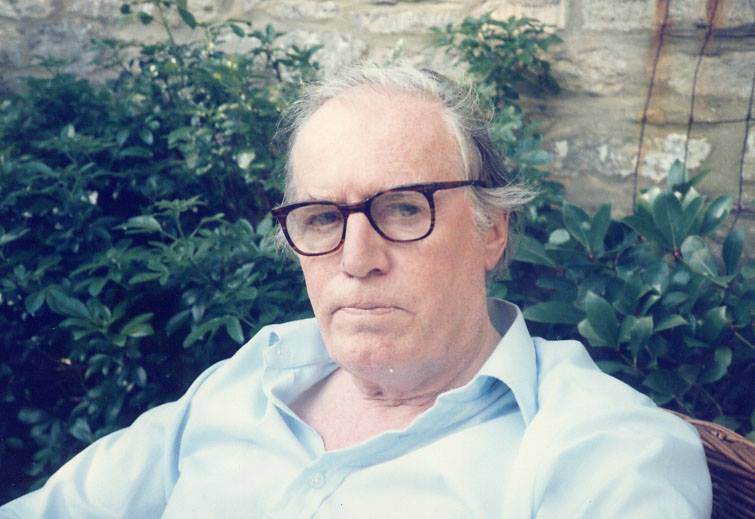
    PHOTO: Richard Arnell at 70, looking very much as he did when he and Patrick first met
  • Richard Arnell Rediscovered British Symphony Gem

    Richard Arnell Rediscovered British Symphony Gem

    In an 80th birthday tribute, BBC Radio 3’s David Wright described him as the “greatest living British symphonist.” Irish composer Gerard Victory said of the Symphonies 3 and 5, “I wish I had written them!” Conductor Bryden Thomson called the 5th “a work to fall in love with.” Yet at the time of these remarks, none of his symphonies had been commercially recorded.

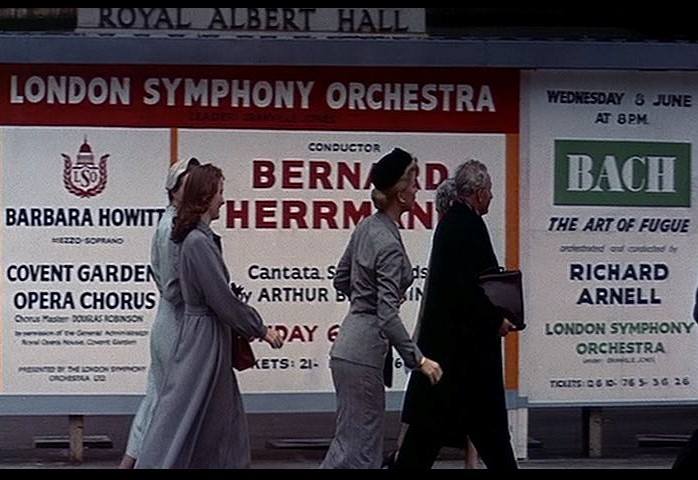
    Richard Anthony Sayer Arnell (1917-2009), known to his intimates simply as “Tony,” was a composer of lush, romantic, big-hearted music, full of noble aspirations and transcendent melody. Stranded in the United States for eight years, with the outbreak of World War II as he was visiting the 1939 World’s Fair, he cultivated important friendships with Bernard Herrmann, Virgil Thomson, and Sir Thomas Beecham. His concert works were championed by Beecham, Sir John Barbirolli and Leopold Stokowski. He wrote film music for Robert J. Flaherty and ballets for George Balanchine and Frederick Ashton.

    His ballet “Punch and the Child” was recorded by Beecham; the composer himself recorded selections from “The Great Detective.” The symphonies, on the other hand, had to wait until 2005 to receive their first recordings. In light of all the attention lavished on English composers over the years by labels such as EMI, Lyrita and Chandos, this is tantamount to a crime against music.

    Though most of the symphonies had been heard in concert (you’ll find some live performances on YouTube), it fell to Martin Yates, one of Arnell’s composition students at Trinity College, and Warren Cohen, the music director of MusicaNova Orchestra in Phoenix, Arizona, to get the ball rolling on a revival of this fascinating and worthwhile body of work (documented on Dutton Vocalion Records and Con Brio Recordings, respectively). But by then the composer was already in his late 80s.

    I hope you’ll join me this week on WPRB, as I do my own small part in redressing this unjust neglect with a special program in honor of Arnell’s 100th birthday. We’ll enjoy five hours of Arnell’s orchestral, chamber and instrumental works, with a special visit by Cohen, who will talk a little bit about his experiences with the composer and his output. The celebration will take place this Thursday – the eve of Arnell’s centenary – from 6 to 11 a.m. EDT, on WPRB 103.3 FM and wprb.com.

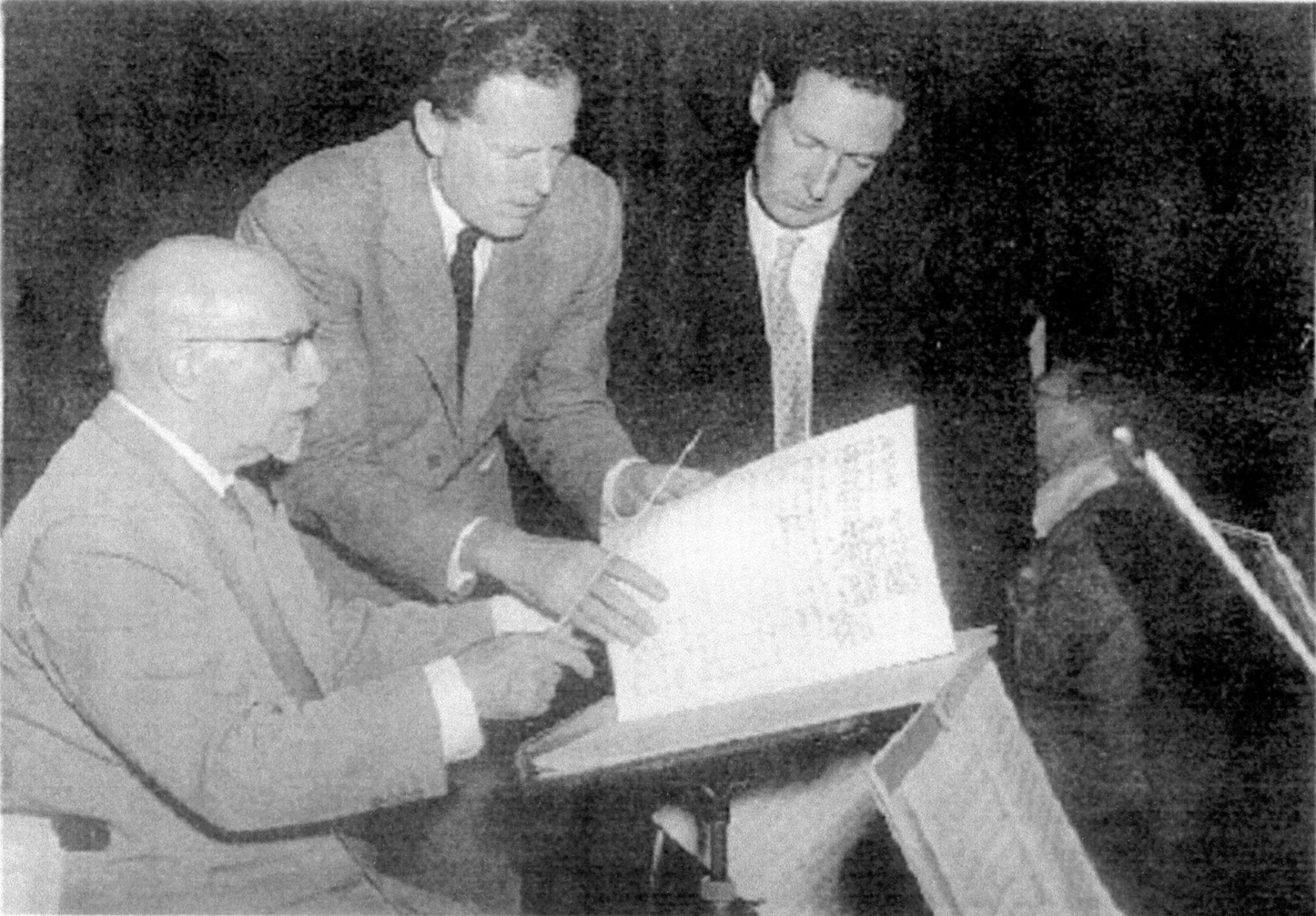
    Special thanks to Patrick Jonathan, who shares this photo of Beecham, Arnell and pianist Denis Vaughan, taken at a rehearsal of Arnell’s “Landscapes and Figures” in preparation for a concert at the 1956 Edinburgh Festival. “I love this photo,” Patrick writes. “Tony took it wherever he went to live and put it up on the wall. I bugged him till he got it scanned and gave me a copy!”

  • Richard Arnell Rediscovered Centenary Special

    Richard Arnell Rediscovered Centenary Special

    They say forewarned is forearmed.

    I don’t ordinarily tease shows this far in advance, but I wanted to direct your attention to a very special program I’ll be presenting on WPRB this coming Thursday in honor of the neglected English composer Richard Arnell.

    Friday would have been Arnell’s 100th birthday. Best known for his ballets “Punch and the Child” and “The Great Detective,” he died in 2009 at the age of 91. Puzzlingly, for a composer that was championed by Bernard Herrmann, Virgil Thomson and Sir Thomson Beecham, Arnell remains a marginal figure, a status not at all commensurate with the level of his artistry. Beecham went so far as to characterize him as one of the greatest orchestrators since Berlioz. His soaring melodies and playful syncopations are certainly easy to warm up to, and his symphonies convey real depth.

    Thankfully, he lived long enough to witness a recorded revival of his orchestral works, spearheaded by the Dutton Vocalion Records label, with Martin Yates conducting the Royal Scottish National Orchestra and the BBC Philharmonic. This occurred toward the very end of his life, and the performances are top-notch.

    Interestingly, however, the Dutton team was pipped at the post by the Arizona-based MusicaNova Orchestra, which set down its own recordings of the Symphonies Nos. 4 & 5 in August of 2005. These performances have been issued commercially on the Con Brio Recordings label. The orchestra has performed all of the Arnell symphonies, along with the “Sinfonia quasi Variazioni” and “Ode to the West Wind.”

    Music director Warren Cohen, who founded MusicaNova in 2003, is a champion of unusual and neglected repertoire. What other orchestra in the United States, especially one so young, can brag about having presented works by Hans Gál, Harald Genzmer, John Ireland, Othmar Schoeck, and Boris Tchaikovsky – and all in one season?

    As luck would have it, Cohen divides his time between Phoenix and New Jersey, and his schedule is such that he is able to join me on-air to talk a little bit about his enterprising orchestra, his programming and recording plans, and most especially his experiences with Richard Arnell, both the man and his music. The broadcast will include exclusive concert recordings of Arnell’s Symphony No. 5 and an elegy arranged for string orchestra by Cohen from Arnell’s String Quartet No. 3.

    In the coming days, I will also be sharing personal anecdotes on this page, supplied by composer Patrick Jonathan, now living in Malaysia. Jonathan became very close to Arnell late in life, when a master-disciple dynamic quickly deepened into a true friendship.

    I hope you’ll continue to check in all this week, as we look forward to the Arnell centenary on September 15, to learn more about this skilled and charismatic composer, and that you’ll listen on Thursday, September 14, from 6 to 11 a.m. EDT, to enjoy a special Arnell marathon on WPRB 103.3 FM and wprb.com.

Tag Cloud

Aaron Copland (93) Beethoven (95) Composer (114) Film Music (129) Film Score (143) Film Scores (255) Halloween (94) John Williams (192) KWAX (229) Leonard Bernstein (103) Marlboro Music Festival (125) Movie Music (144) Mozart (88) Opera (206) Philadelphia Orchestra (89) Picture Perfect (174) Princeton Symphony Orchestra (108) Radio (88) Ross Amico (244) Roy's Tie-Dye Sci-Fi Corner (290) The Classical Network (101) The Lost Chord (268) Vaughan Williams (103) WPRB (396) WWFM (881)

DON’T MISS A BEAT

Receive a weekly digest every Sunday at noon by signing up here


RECENT POSTS