Tag: Richard Rodney Bennett

  • All Aboard!  Taking the Train on “Picture Perfect”

    All Aboard! Taking the Train on “Picture Perfect”

    Trains have always been very good for drama. They are symbols of departures and arrivals. They are conveyors of prisoners and vehicles of escape. They are objects of romance and objects to “hobo around” on. They are harbingers of civilization, and they are transports be robbed. You can fight on top of them. You can make out with Eva Marie Saint, or you can protect Marie Windsor so that she can testify against the mob. You can shuffle off to Buffalo.

    From the beginning, trains have provided good escapist fun at the movies. This week on “Picture Perfect,” we’ve got an hour of music from four memorable films in which trains play an important role.
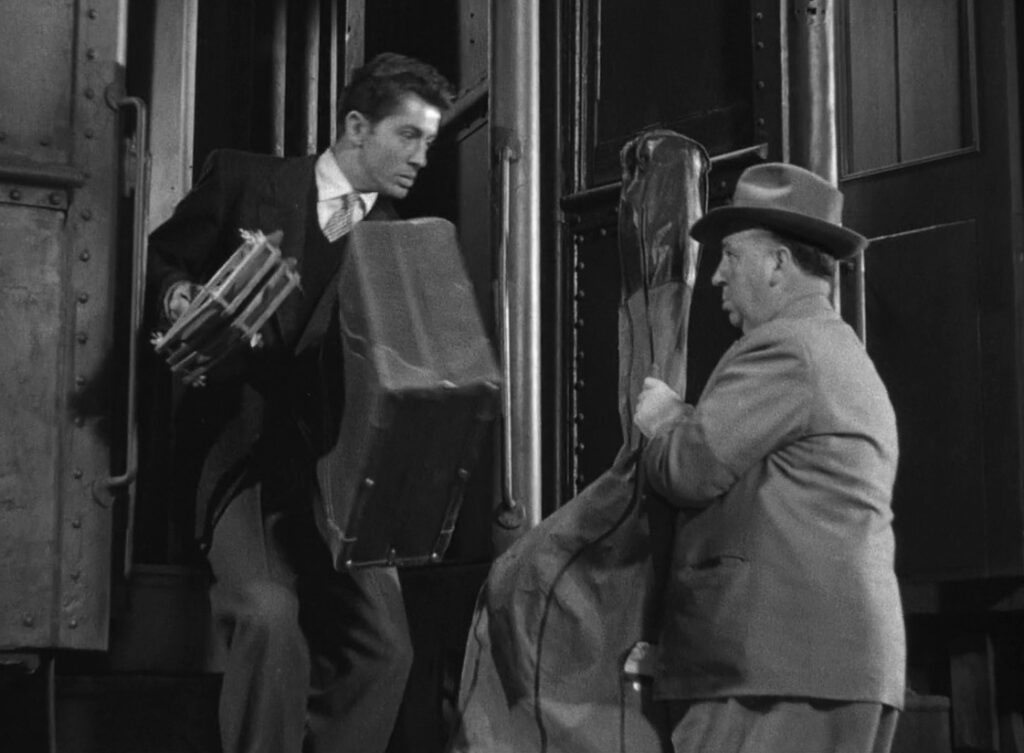

    In “Strangers on a Train” (1951), arguably Alfred Hitchcock’s most underrated film of the 1950s, Farley Granger plays a tennis pro who unwittingly becomes involved in a double-murder plot (criss-cross!) through a chance encounter on a passenger train with a psychopath named Bruno (probably Robert Walker’s finest performance). The music is by Dimitri Tiomkin, who scored four films for Hitch – including “Shadow of a Doubt,” “I Confess,” and “Dial M for Murder.”
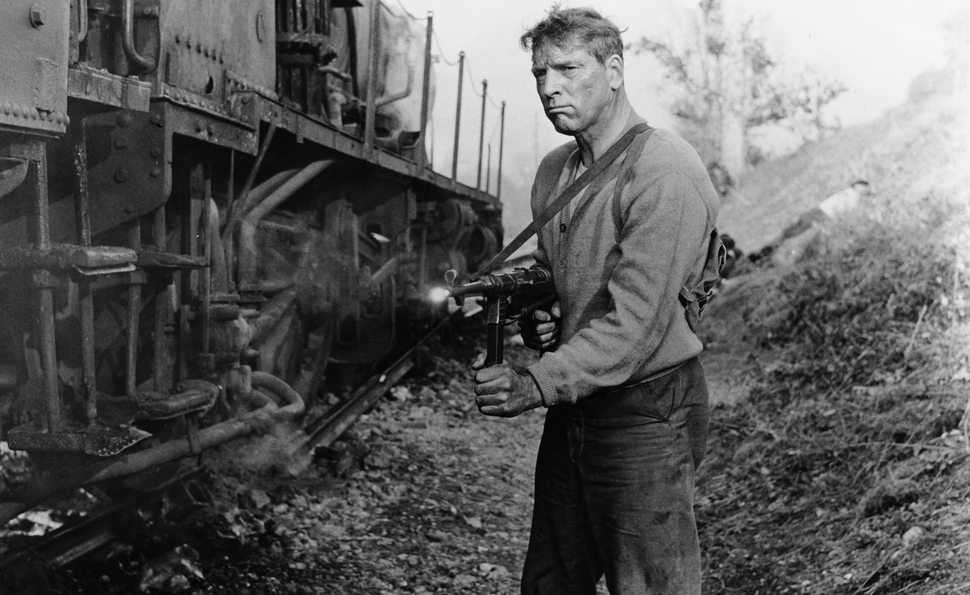

    Burt Lancaster stars in a film titled, simply, “The Train” (1964), as a reluctant railroad inspector who is persuaded to join the French Underground’s efforts to delay the transport of masterpieces looted from the museums of Paris by the Nazis, since Allied liberation of France is imminent. Paul Scofield plays the art-loving German officer determined to move the art at all costs. Real trains were destroyed in the making of the film, real dynamite was employed, and Lancaster, as was often the case, did all his own stunts. The score is by Maurice Jarre.
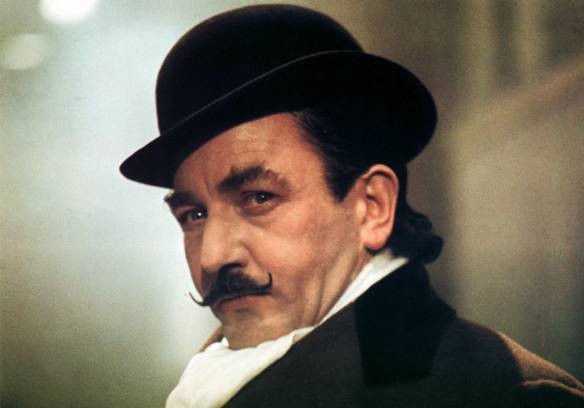

    “Murder on the Orient Express” (1974) is based on one of the best-known Agatha Christie vehicles involving her recurring character, celebrated detective Hercule Poirot. Albert Finney portrays Poirot most memorably in this, the first and best of the all-star Christie thrillers, set on a long-distance passenger train connecting Paris to Istanbul. The list of suspects includes Lauren Bacall, Martin Balsam, Ingrid Bergman, Sean Connery, John Gielgud, Anthony Perkins, Richard Widmark, and Michael York. The unforgettable score is by Richard Rodney Bennett.
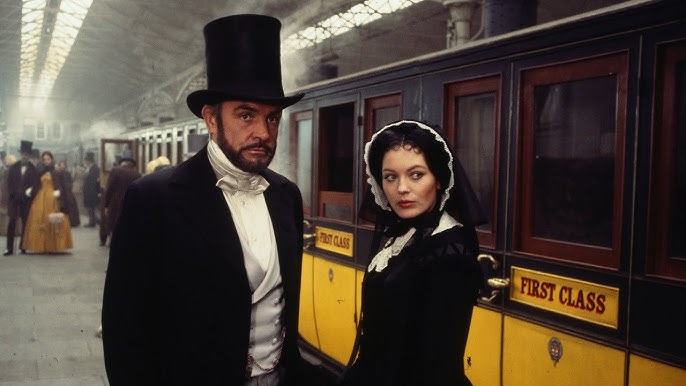

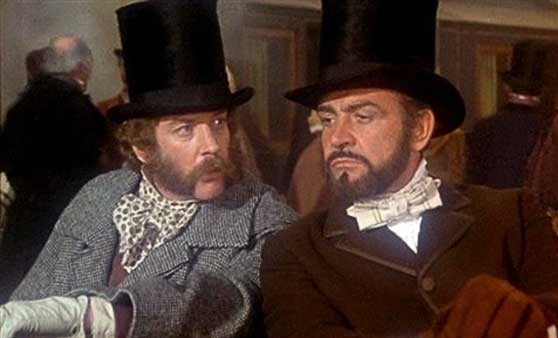
    Finally, we turn to the lighthearted caper “The Great Train Robbery” (1979), starring Sean Connery, Donald Sutherland, and Leslie-Anne Down. Michael Crichton wrote the screenplay, after his own novel, which in turn was based on an actual historical incident – an 1855 heist, in which an unbelievable amount of gold disappeared from a moving train. Crichton also directed the film. The music is by the great Jerry Goldsmith.

    All aboard! We’ll be taking the train today, on “Picture Perfect,” music for the movies, now in syndication on KWAX Classical Oregon!

    ——–

    Clip and save the start times for all three of my recorded shows:

    PICTURE PERFECT, the movie music show – Friday at 8:00 PM EDT/5:00 PM PDT

    SWEETNESS AND LIGHT, the light music program – Saturday at 11:00 AM EDT/8:00 AM PDT

    THE LOST CHORD, unusual and neglected rep – Saturday at 7:00 PM EDT/4:00 PM PDT

    Stream them, wherever you are, at the link!

    https://kwax.uoregon.edu
  • Poetry in Motion on “Picture Perfect”

    Poetry in Motion on “Picture Perfect”

    Time to sharpen your quill and replenish your laudanum. April is National Poetry Month. This week on “Picture Perfect,” the focus will be on poets at the movies.

    We’ll hear music from “Dead Poets Society” (1989), Peter Weir’s beautiful-but-vacuous take on the transformative power of poetry, its “Goodbye, Mr. Chips” story arc made all the more poignant (and less cheap) by the passing of its beloved star, Robin Williams. Maurice Jarre, a long, long way from his Oscar-winning work on “Lawrence of Arabia,” wrote the music, which blends dulcimer and bagpipes (!) with electronics.

    At least “Dead Poets Society” found a place in the hearts of the public. “Lady Caroline Lamb” (1973) did not. Sarah Miles plays Byron’s jilted lover, the wife of future prime minister William Lamb. Despite an impressive cast, which includes Jon Finch, Laurence Olivier, Ralph Richardson, and Richard Chamberlain (as Lord Byron, no less), and direction by venerable playwright and screenwriter Robert Bolt (“A Man for All Seasons”), the film received mixed reviews and tanked at the box office. The always fine Richard Rodney Bennett provided the atmospheric score.

    “Il Postino” (1994) tells the story of a simple postman whose prosaic life is transformed through the power of metaphor. His model is the exiled Chilean poet Pablo Neruda, played by Philippe Noiret. The film’s writer and star, Massimo Troisi, died of a heart attack twelve hours after shooting was completed, having postponed surgery until he finished work. He was 41 years-old. Argentinian-Italian composer Luis Bacalov’s bandoneon-tinged score was honored with an Academy Award for Best Music.

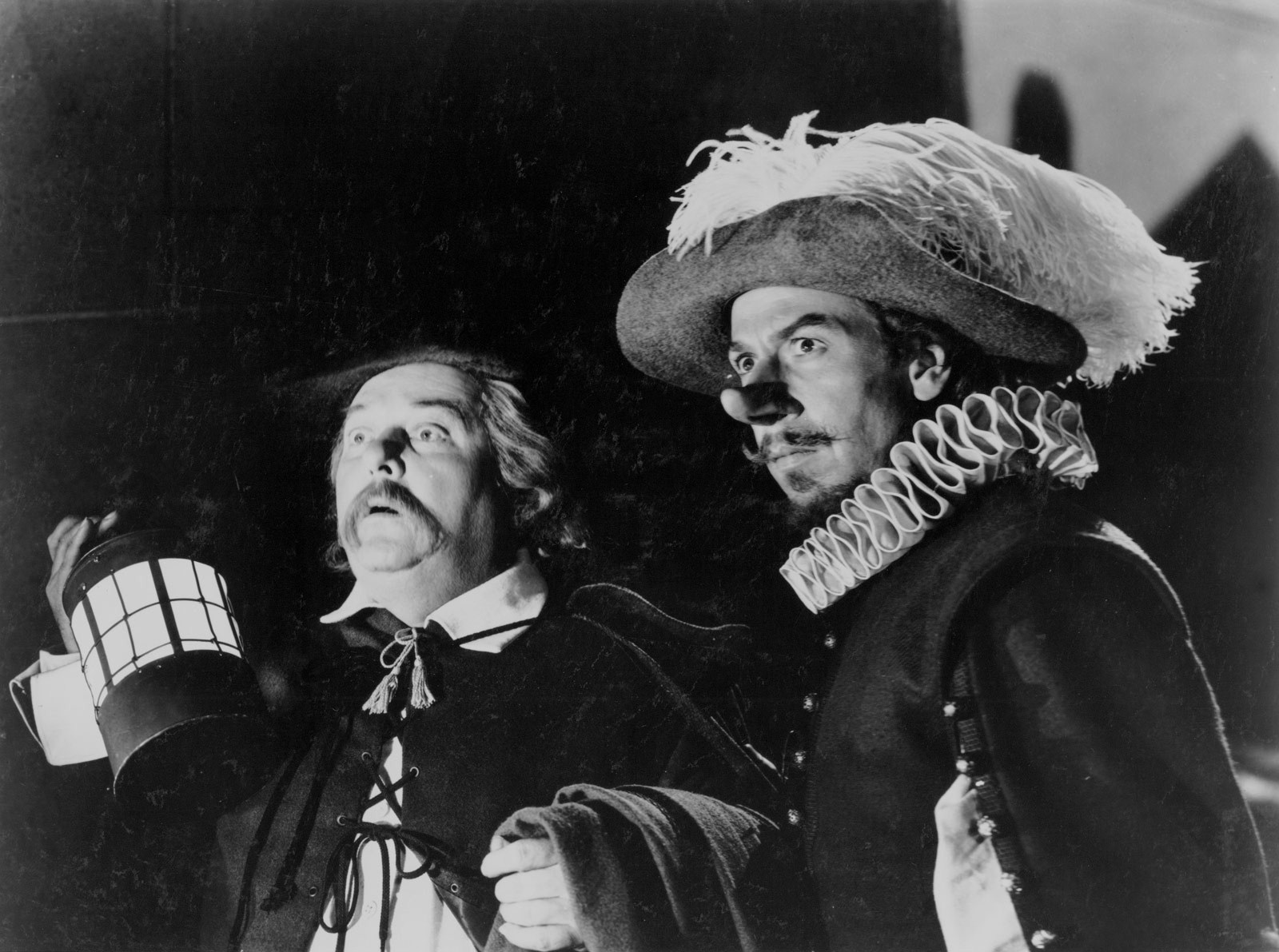
    Finally, we put a point on things with the rapier wit of “Cyrano de Bergerac” (1950). José Ferrer struts his stuff as the warrior-poet with the prominent proboscis, who never wants for words, save in the presence of his beautiful cousin Roxane. Ferrer elocuted – and fenced – his way to an Academy Award for Best Actor. The score is one of Dimitri Tiomkin’s finest, and we’ll hear a recording taken from the film’s original elements, under the crisp direction of the composer.

    It could be verse. Poetry warms the soul this week. It’s poetry in motion, on “Picture Perfect,” music for the movies, now in syndication on KWAX Classical Oregon!

    ——–

    Clip and save the start times for all three of my recorded shows:

    PICTURE PERFECT, the movie music show – Friday at 8:00 PM EDT/5:00 PM PDT

    SWEETNESS AND LIGHT, the light music program – Saturday at 11:00 AM EDT/8:00 AM PDT

    THE LOST CHORD, unusual and neglected rep – Saturday at 7:00 PM EDT/4:00 PM PDT

    Stream them, wherever you are, at the link!

    https://kwax.uoregon.edu
  • April Enchantments: Music for Spring Showers

    April Enchantments: Music for Spring Showers

    With so much rain falling over the past week (at least in Princeton, NJ, and Eugene, OR), it’s useful to remember that April showers bring May flowers. Not that rain doesn’t bring its own consolations, at least when you’re Classic Ross Amico.

    This week on “Sweetness and Light,” we’ll start your day with no less than three works that bear some relation to Elizabeth von Arnim’s lightest and most ebullient novel, “Enchanted April” – including a substantial suite from the score to a 1991 film version, by Richard Rodney Bennett. If you’re wondering what that otherworldly timbre is, it’s an electronic instrument called the ondes Martenot.

    In addition, there will be a couple of April fools: John Foulds (we’ll hear his buoyant “April – England,” alone worth the price of admission) and Billy Mayerl (his energetic piano miniature “April’s Fool”).

    T.S. Eliot wrote that April is the cruelest month. American composer Rick Sowash wouldn’t necessarily disagree, as we’ll note in his tuneful, though undeniably bittersweet Clarinet Trio No. 2, subtitled “Enchantement d’avril.” (That’s right, “Enchanted April.”)

    The clouds will part for Trevor Duncan’s light music classic, “Enchanted April,” the very thing to chase away the blues.

    While surely into each life some rain must fall, we’ll be holding out a bright umbrella and a cup of cheer, when you tune in for a playlist of April enchantments on “Sweetness and Light,” this Saturday morning at 11:00 EDT/8:00 PDT, exclusively on KWAX, the radio station of the University of Oregon!

    Stream it, wherever you are, at the link:

    https://kwax.uoregon.edu/


    IMAGE: “Enchanted April” by Robert LaDuke, an artist who’s new to me, but I love his retro vibe!

    https://www.meyergalleries.com/artist/robert-laduke

  • Hating the Twelve Days of Christmas

    Hating the Twelve Days of Christmas

    “The Twelve Days of Christmas” is easily my least favorite Christmas carol. Fun to sing, maybe, but maddening to listen to. Like “99 Bottles of Beer on the Wall,” with the beer replaced by wassail and eggnog. Maybe that would take some of the sting out. But to have to listen to anyone sing it? Sinatra, Crosby, The Chipmunks, I don’t care – it’s torture.

    Be that as it may, it was part of the season’s rituals to sing it as a kid. It was only much later that it became clear that this Twelve Days of Christmas business doesn’t really start until December 25. In fact, many seem to be oblivious to the fact that the twelve days run through January 6, or Epiphany – the Feast of Three Kings.

    By then, for most, the gifts are already put away, and for plenty, the trees, the stockings, and other Christmas trappings are already snug in the attic. But really, everything is supposed to stay up until Twelfth Night.

    On the other hand, if you’re superstitious, you don’t want them up any longer than that, or it will bring bad luck. The only way to avert it, then, would be to leave all the decorations in place for another year. Which wouldn’t exactly be horrible – I’m sure that’s what Santa does – but your neighbors would beg to differ.

    Today, then, is the Fourth Day of Christmas, which I single out for the gift of “four calling birds.” Apparently, it was originally “colly birds,” “colly” being archaic for “black as coal” (think “collier”). So, blackbirds is what you would get, if you were a recipient of this peculiar Christmas largesse.

    The carol has been around forever, appearing in print for the first time in 1780, but as a fun “memory song” from an era before recording artists, it’s the kind of thing that probably reaches back further into the primordial ooze of oral tradition.

    What’s really interesting to me, as a classical music nut, is that so many of the familiar carols are so closely connected with the great composers. “Hark! The Herald Angels Sing” was set to music of Mendelssohn. “Joy to the World” leans on Handel. “O Holy Night” was written by Adolphe Adam (composer of “Giselle”), and so on.

    In the case of “Twelve Days,” its origins are traditional, but it was English composer Frederic Austin who gave us its modern form in 1909. He codified the melody and lyrics, replacing “colly” with “calling,” and – the masterstroke – extending the cadence of “five go-old rinnnnnnnnngs.” That’s the part of the song any singer really likes, isn’t it?

    Now, Austin is not the best-known of English composers, but I’ve always been a bit of a musical Anglophile, so I do have some of his concert works in my collection.

    Here’s Austin’s “The Sea Venturers,” from 1935:

    I know of two treatments of this insufferable carol that manage to make it somewhat interesting, and I try to play them every year. The first is “Partridge Pie,” by English composer Richard Rodney Bennett. It’s a piano suite, consisting of wholly original music for each of the twelve days. Thankfully, unlike in the carol as it is sung, the material is not repeated from verse to verse.

    Book I

    Book II

    The other is “A Musicological Journey Through ‘The Twelve Days of Christmas,’” by American composer @Craig Courtney Craig Courtney. Courtney arranges each of the verses in the style of a different composer or historical era, reaching back to Gregorian chant and culminating in a pseudo-Sousa march. It tickles the ear as no recording of the traditional “Twelve Days” ever does. Here’s my preferred recording, with the Bach Choir of Pittsburgh and the Pittsburgh Brass. Each of the movements is posted separately, so you have to let the playlist run through to enjoy each of the twelve days.

    Let the gratuitous gift-giving continue! Still eight days of Christmas to come!

  • Armchair Travel: Music from Movies About England Abroad

    Armchair Travel: Music from Movies About England Abroad

    It would appear we’re not going anywhere anytime soon, but thankfully there are plenty of movies and music to engage the imagination.

    This week on “Picture Perfect,” pack your valise for selections from movies about the English abroad, including “Enchanted April” (Richard Rodney Bennett), “A Passage to India” (Maurice Jarre), “The Best Exotic Marigold Hotel” (Thomas Newman), and “Around the World in 80 Days” (Victor Young).

    Bennett, quite the accomplished concert composer (and occasional torch song singer), supplies a sensitive score for the 1991 Merchant/Ivory adaptation of Elizabeth von Arnim’s novel about four English ladies who spend an idyllic month at an Italian villa.

    Jarre received his third Academy Award for his music to David Lean’s final film, a 1984 adaptation of E.M. Forster’s novel of repression and racial tension in colonial India.

    Newman incorporates traditional Indian elements into his score for “The Best Exotic Marigold Hotel,” the 2012 surprise hit about English pensioners reinventing themselves in their retirement abroad.

    And Young won his only Oscar (alas, posthumously bestowed) for “Around the World in 80 Days,” the star-studded, light-as-a-feather, though admittedly charming megawinner at the 1956 Academy Awards. It takes longer to watch the movie than it does to read Jules Verne’s novel – though it does provide a rare opportunity to see Ronald Colman in color.

    Get ready to do some armchair traveling this week, on Picture Perfect,” music for the movies, this Friday evening at 6:00 EDT, on WWFM – The Classical Network and wwfm.org.


    PHOTO: There’s no balloon in Verne’s original, but as long as there’s champagne, who cares?

Tag Cloud

Aaron Copland (92) Beethoven (95) Composer (114) Film Music (123) Film Score (143) Film Scores (255) Halloween (94) John Williams (187) KWAX (229) Leonard Bernstein (101) Marlboro Music Festival (125) Movie Music (138) Opera (202) Philadelphia Orchestra (89) Picture Perfect (174) Princeton Symphony Orchestra (106) Radio (87) Ralph Vaughan Williams (85) Ross Amico (244) Roy's Tie-Dye Sci-Fi Corner (290) The Classical Network (101) The Lost Chord (268) Vaughan Williams (103) WPRB (396) WWFM (881)

DON’T MISS A BEAT

Receive a weekly digest every Sunday at noon by signing up here


RECENT POSTS