“Picture Perfect” follows the English abroad this week, with music from “Enchanted April” (Richard Rodney Bennett), “A Passage to India” (Maurice Jarre), “The Best Exotic Marigold Hotel” (Thomas Newman) and “Around the World in 80 Days” (Victor Young).
Bennett, quite the accomplished concert composer (and occasional torch song singer), provides a sensitive score for the 1991 Merchant/Ivory adaptation of Elizabeth von Arnim’s novel about four English ladies who spend an idyllic month at an Italian villa.
Jarre received his third Academy Award for his music to David Lean’s final film, the 1984 adaptation of E.M. Forster’s novel of repression and racial tension in colonial India.
Newman incorporates traditional Indian elements into his score for “The Best Exotic Marigold Hotel,” the 2012 surprise hit about English pensioners reinventing themselves in their retirement abroad.
Young won his only Oscar (alas, posthumously bestowed) for “Around the World in 80 Days,” the star-studded, light-as-a-feather, though admittedly charming megawinner at the 1956 Academy Awards. It takes longer to watch the movie than it does to read Jules Verne’s novel – though it does provide a rare opportunity to see Ronald Colman in color.
The weekend’s coming, so pack your valise and join me for “Picture Perfect,” this Friday evening at 6:00 EDT, on WWFM – The Classical Network and wwfm.org.
Okay, kids! Get ready to celebrate the birthdays of Sir William Walton, Sir Richard Rodney Bennett, and E. Power Biggs today. In our last hour together, we’ll have some English music for children. All that and more, coming your way from 4 to 7 p.m. EDT, on WWFM – The Classical Network and at wwfm.org.
Today would have been the 80th birthday of Richard Rodney Bennett. Bennett could do it all, from twelve tone to torch songs, from film music to jazz. He was a brilliant musician who never really seemed to find his niche and continues to be undersold, despite the knighthood he acquired in 1998.
Bennett studied at the Royal Academy of Music in London, with Howard Ferguson and Lennox Berkeley. Ferguson regarded him as perhaps the greatest talent of his generation, though lacking in a personal style – an assessment with which I happen to disagree, detecting the same fingerprints on his twelve tone works as on his compositions of more immediate appeal.
It’s interesting to note that Bennett also studied in Paris with Pierre Boulez, from 1957 to 1959. He had been exposed to serialism while attending summer courses in Darmstadt.
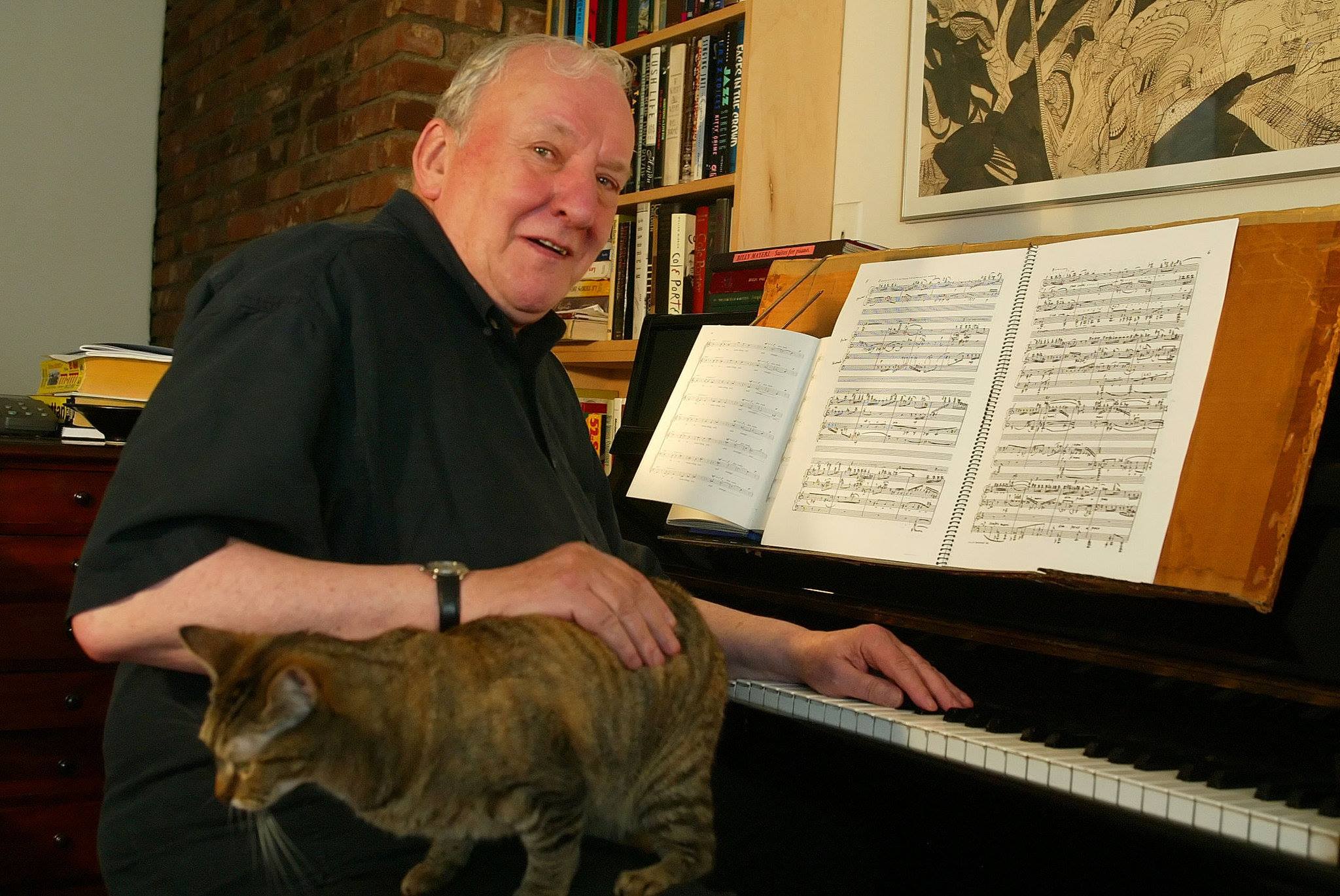
Bennett himself taught for a time at RAM (he was eventually the Chair of Composition there, from 1994 to the year 2000) and at the Peabody Conservatory in Baltimore. For the last three decades of his life, he maintained a residence in New York City. He died there in 2012. His remains are buried in Brooklyn.
In all, he composed over 200 concert works, and 50 film scores, including music for “Far from the Madding Crowd,” ‘Nicholas and Alexandra,” “Murder on the Orient Express,” “Enchanted April” and “Four Weddings and a Funeral.”
For 50 years, he was a writer and performer of jazz songs. He also arranged classics of the Great American Songbook.
The further his career progressed, the more tonal, melodic and ingratiating his concert music became. In point of fact, Bennett’s serialism had always been a personalized one. He later repudiated his serial works, stating, “I wouldn’t want anybody now to play my pieces from those days, when I was turning out that atonal stuff.”
Aside from his activities as a film composer and cabaret performer, he composed three symphonies, 17 concertos, five operas and dozens of chamber works. He had the attention and respect of his peers, with many of the world’s top musicians commissioning and performing his works, yet his music remains, somehow, less known than it should be.
Be that as it may, happy birthday, Sir Richard Rodney Bennett!
Here is the world premiere of his Symphony No. 2, in a concert broadcast from 1968:
His ingratiating “Partita for Orchestra,” from 1995:
Sir Richard Rodney Bennett could do it all: from twelve-tone to torch songs, from film music to jazz. Bennett was a brilliant musician who never really seemed to find his niche and continues to be undersold – despite the knighthood he acquired in 1998.
This Sunday night on “The Lost Chord,” we remember Bennett with an hour of his music, including his later, generously melodic “Partita for Orchestra,” his thornier Violin Concerto from 1975, and selections from his most celebrated film score, that for “Murder on the Orient Express.”
Even so, it hardly encompasses the enormous variety of his pursuits. Late in life, Bennett began to diversify even further, preferring to paint and work in collage.
Howard Ferguson, one of his teachers at the Royal Academy of Music in London, regarded him as perhaps the greatest talent of his generation, though, he opined, he lacked a personal style. I’m not sure I agree with this, but when one is all over the map with one’s interests, one becomes very difficult to pigeonhole.
Bennett died in 2012. I hope you’ll join me, on what would have been his 80th birthday, for “A Nod to Rod,” tonight at 10 ET. A repeat will air Wednesday evening at 6; or you can enjoy it later as a webcast at http://www.wwfm.org.
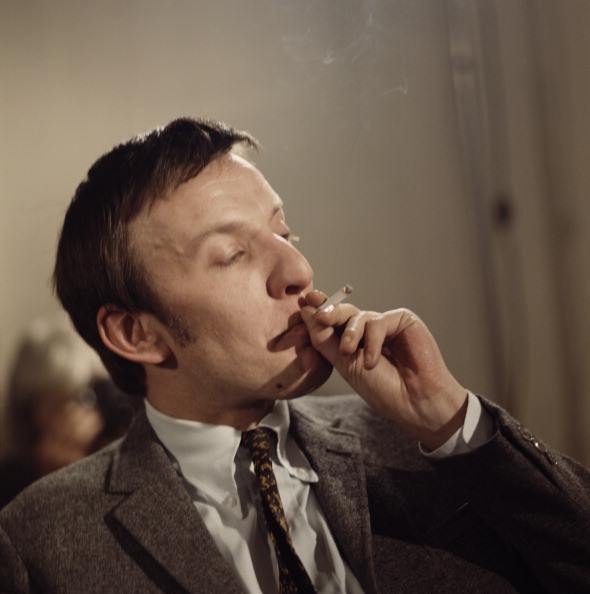
PHOTO: The young Bennett, looking very Mod, with skinny tie and cigarette
BTW – Not to detract from my post on Sir Richard Rodney Bennett, but today also marks the one year anniversary of the creation of Classic Ross Amico. Thank you for reading my page.