I prefer to keep my barbarians fictional, thank you. But with the nation’s 250th birthday approaching, I expect there will be plenty of instances in which truth will exceed credibility. It’s the world we live in, folks. Robert E. Howard, take me away!
This week on “Picture Perfect,” it’s an hour of music from movies inspired by Howard’s imaginative writings. Howard is best recognized for having created Conan the Cimmerian, a heroic warrior of the Hyborian Age. The character became the center of a series of lucrative stories first published in “Weird Tales” magazine, beginning in 1932.
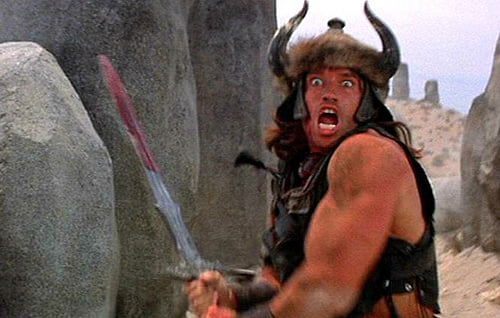
It would be a half century before Conan made the leap to the big screen, under the direction of John Milius. “Conan the Barbarian” (1982) propelled Arnold Schwarzenegger, already a legend in the field of bodybuilding, to international superstardom. Okay, “Conan” isn’t exactly “Citizen Kane,” but it does have its pleasures. The intensity of the violence can be a little disturbing, but the ponderous tone is a blast. “Conan” is a film that takes itself just seriously enough to make it occasionally hilarious.
Another thing “Conan” has going for it is the fact that it was made on a blockbuster budget. The first-rate production values extend to the music by Basil Poledouris, who employs a full symphony orchestra to impressive ends. In fact, the “Conan” score was one of the strongest of the decade. It’s amazing that anyone would find so much inspiration in such a mediocre film, but Poledouris’ music intersperses Borodin-style Central Asia lyricism with brawny, thrilling action music.
Sadly, the sequel, “Conan the Destroyer,” betrays signs of penny-pinching, so that it often winds up feeling like a direct-to-video effort. Poledouris was forced to make do with a smaller orchestra, which sounds a bit too much like a television ensemble. Still, he gave it his all, and there’s something to be said for the fact that it is an original score, rather than a mere retread of the original.
Of perhaps related interest: it looks like a long-anticipated third Schwarzenegger Conan movie will finally be happening. “King Conan” is expected to begin filming next year, with Christopher McQuarrie writing and directing!
Let’s hope it fares better than an adaptation inspired by another one of Howard’s pulp creations, Kull of Atlantis, who was given the big screen treatment in “Kull the Conqueror” (1997). Kevin Sorbo, TV’s Hercules, plays the title role. The composer, Joel Goldsmith (son of Jerry), was asked to incorporate heavy metal riffs into his orchestral underscore. I haven’t actually seen this one, but for some reason I don’t feel like I’m missing anything.
The astoundingly prolific Ennio Morricone – with more than 500 motion picture and television scores to his name – had an uncanny knack for spinning garbage into gold. His music for “Red Sonja” (1985) lends the film an aura of ‘80s cheese ball fun, perhaps more so than it deserves. This is the film that introduced Brigitte Nielsen as the chain-mailed barbarian beauty. Schwarzenegger appears in the supporting role of Lord Kalidor.
There are those who would deny themselves the guilty pleasures of viewing these silly, cheesy, violent films. In “Conan the Destroyer,” when our hero is presented with the statement, “I suppose nothing hurts you,” he responds, “… Only pain.”
Make the music loud, Crom! Drive my enemies before me and drown the lamentations of their women! Saddle up with Conan the Barbarian on “Picture Perfect” – music for movies inspired by the writings of Robert E. Howard – now in syndication on KWAX Classical Oregon!
——-
Clip and save the start times for all three of my recorded shows:
PICTURE PERFECT, the movie music show – Friday at 8:00 PM EDT/5:00 PM PDT
SWEETNESS AND LIGHT, the light music program – Saturday at 11:00 AM EDT/8:00 AM PDT
THE LOST CHORD, unusual and neglected rep – Saturday at 7:00 PM EDT/4:00 PM PDT
Stream them, wherever you are, at the link!
https://kwax.uoregon.edu
Tag: Robert E. Howard
-
Movies Adapted from the Writings of Robert E. Howard on “Picture Perfect”
-

Conan & Barbarian Film Scores: A Final WWFM Tribute
“Crom… I have never prayed to you before. I have no tongue for it. No one, not even you, will remember if we were good men or bad. Why we fought, or why we died. Valor pleases you, Crom, so grant me one request: grant me an hour of barbarian music!”
Ten days ago, I received notice that, after a 13-year run, “Picture Perfect” will be “sunsetting” on WWFM. Not much notice, and tonight’s show was already scheduled. But I must say, if the series has to end, it may as well go out in a blaze of glory.
There are those, I’m sure, who would deny themselves the guilty pleasures of viewing these silly, cheesy, violent films, all of which were inspired by the writings of pulp master Robert E. Howard. Howard created the warrior Conan in 1932. The character became the center of a series of lucrative stories first published in “Weird Tales” magazine.
It would be a half century before Conan made the leap to the big screen, under the direction of John Milius. “Conan the Barbarian” (1982) propelled Arnold Schwarzenegger, already a legend in the field of bodybuilding, to international superstardom. While “Conan” isn’t exactly “Citizen Kane,” it does have its pleasures. The intensity of the violence can be a little disturbing, but the ponderous tone is a blast. “Conan” is a film that takes itself just seriously enough to make it occasionally hilarious.
Another thing “Conan” has going for it is the fact that it was made on a blockbuster budget. The first-rate production values extend to the music by Basil Poledouris, who employs a full symphony orchestra to impressive ends. In fact, the “Conan” score was one of the strongest of the decade. It’s amazing that anyone would find so much inspiration in such a mediocre film, but Poledouris’ music intersperses Borodin-style Central Asia lyricism with brawny, thrilling action music.
Sadly, the sequel, “Conan the Destroyer,” betrays signs of penny-pinching, so that it often winds up feeling like a direct-to-video effort. Poledouris was forced to make do with a smaller orchestra, which sounds a bit too much like a television ensemble. Still, he gave it his all, and there’s something to be said for the fact that it is an original score, rather than a mere retread of the original.
Another one of Howard’s creations, Kull of Atlantis, was given the big screen treatment as “Kull the Conqueror” (1997). Kevin Sorbo, TV’s Hercules, plays the title role. The composer, Joel Goldsmith (son of Jerry Goldsmith), was asked to incorporate heavy metal riffs into his orchestral underscore. I haven’t actually seen this one, but for some reason I don’t feel like I’m missing anything.
The astoundingly prolific Ennio Morricone – with more than 500 motion picture and television scores to his name – had an uncanny knack for spinning garbage into gold. His music for “Red Sonja” (1985) lends the film an aura of ‘80s cheese ball fun, perhaps more so than it deserves. This is the film that introduced Brigitte Nielsen as the chain-mailed barbarian beauty. Schwarzenegger appears in the supporting role of Lord Kalidor.
“Make the music loud, Crom! Drive my enemies before me and drown the lamentations of their women.”
“Picture Perfect” gallops off into the sunset with movies inspired by the writings of Robert E. Howard, this Saturday evening at 6:00 EDT, on WWFM – The Classical Network and wwfm.org.
PHOTO: Classic Ross Amico, after 28 minutes of music from “Conan the Barbarian”
-

Conan’s Musical Might 80s Film Scores
In the film “Conan the Destroyer” (1984), one of Conan’s companions speculates, “I suppose nothing hurts you.”
To which Conan responds, philosophically, “Only pain.”
Discriminating viewers may feel a little pain themselves, watching these silly, cheesy, violent films, all of which were inspired by the writings of pulp master Robert E. Howard. Howard created the warrior Conan in 1932. The character became the center of a series of lucrative stories first published in “Weird Tales” magazine.
It would be a half century before Conan made the leap to the big screen, under the direction of John Milius. “Conan the Barbarian” (1982) propelled Arnold Schwarzenegger, already a legend in the field of bodybuilding, to international superstardom. While “Conan” isn’t exactly “Citizen Kane,” it does have its pleasures. The intensity of the violence can be a little disturbing, but the ponderous tone is a blast. “Conan” is a film that takes itself just seriously enough to make it occasionally hilarious.
Another thing “Conan” has going for it is the fact that it was made on a blockbuster budget. The first-rate production values extend to the music by Basil Poledouris, who employs a full symphony orchestra to impressive ends. In fact, the “Conan” score was one of the strongest of the decade. It’s amazing that anyone would find so much inspiration in such a mediocre film, but Poledouris’ music intersperses Borodin-style Central Asia lyricism with brawny, thrilling action music.
Sadly, the sequel, “Conan the Destroyer,” betrays signs of penny-pinching, so that it often winds up feeling like a direct-to-video effort. Poledouris was forced to make do with a smaller orchestra, which sounds a bit too much like a television ensemble. Still, he gave it his all, and there’s something to be said for the fact that it is an original score, rather than a mere retread of the original.
Another one of Howard’s creations, Kull of Atlantis, was given the big screen treatment as “Kull the Conqueror” (1997). Kevin Sorbo, TV’s Hercules, plays the title role. The composer, Joel Goldsmith (son of Jerry Goldsmith), was asked to incorporate heavy metal riffs into his orchestral underscore. I haven’t actually seen this one, but for some reason I don’t feel like I’m missing anything.
The astoundingly prolific Ennio Morricone – with more than 500 motion picture and television scores to his name – had an uncanny knack for spinning garbage into gold. His music for “Red Sonja” (1985) lends the film an aura of ‘80s cheese ball fun, perhaps more so than it deserves. This is the film that introduced Brigitte Nielsen as the chain-mailed barbarian beauty. Schwarzenegger appears in the supporting role of Lord Kalidor.
In the ‘80s, even bad films had great scores. I hope you’ll give “Conan the Barbarian” a shot this week, on “Picture Perfect,” music for movies, this Saturday evening at 6:00 EDT, on WWFM – The Classical Network and wwfm.org!
-
Howard’s Barbarians Great Movie Music
In “Conan the Destroyer” (1984), one of Conan’s companions speculates, “I suppose nothing hurts you.”
To which Conan replies, “Only pain.”
Discriminating viewers may feel a little pain themselves watching these silly, cheesy, violent films, all of which were inspired by the writings of pulp master Robert E. Howard. Howard created the warrior Conan in 1932. The character became the center of a series of lucrative stories first published in “Weird Tales” magazine.
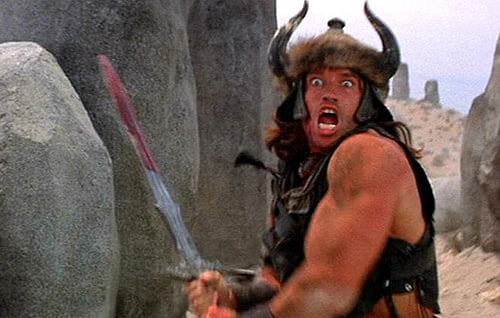
It would be a half century before Conan made the leap to the big screen, under the direction of John Milius. “Conan the Barbarian” (1982) propelled Arnold Schwarzenegger, already a legend in the field of bodybuilding, to international superstardom. While “Conan” isn’t exactly “Citizen Kane,” it does have its pleasures. The intensity of the violence can be a little disturbing, but the ponderous tone is a blast. “Conan” is a film that takes itself just seriously enough to make it occasionally hilarious.
Another thing “Conan” has going for it is the fact that it was made on a blockbuster budget. The first-rate production values extend to the music by Basil Poledouris, who employs a full symphony orchestra to impressive ends. In fact, the “Conan” score was one of the strongest of the decade. It’s amazing that anyone would find so much inspiration in such a mediocre film, but Poledouris’ music intersperses Borodin-style Central Asia lyricism with brawny, thrilling action music.
Sadly, the sequel, “Conan the Destroyer,” betrays signs of penny-pinching, so that it often winds up feeling like a direct-to-video effort. Poledouris was forced to make do with a smaller orchestra, which sounds a bit too much like a television ensemble. Still, he gave it his all, and there’s something to be said for the fact that it is an original score, rather than a mere retread of the original.
Another one of Howard’s creations, Kull of Atlantis, was given the big screen treatment as “Kull the Conqueror” (1997). Kevin Sorbo, TV’s Hercules, plays the title role. The composer, Joel Goldsmith (son of Jerry Goldsmith), was asked to incorporate heavy metal riffs into his orchestral underscore. I haven’t actually seen this one, but for some reason I don’t feel like I’m missing anything.
The astoundingly prolific Ennio Morricone – who has more than 500 motion picture and television scores to his name – has an uncanny knack for spinning garbage into gold. His music for “Red Sonja” (1985) lends the film an aura of ‘80s cheese ball fun, perhaps more so than it deserves. This is the film that introduced Brigitte Nielsen as the chain-mailed barbarian beauty. Schwarzenegger appears in the supporting role of Lord Kalidor.
In the ‘80s, even bad films had great scores. I hope you’ll give “Conan the Barbarian” a chance this week, on “Picture Perfect” – music for movies inspired by the writings of Robert E. Howard – this Friday evening at 6:00 EDT, on WWFM – The Classical Network and wwfm.org.
BONUS! Tune in a little early (before 6) to hear selections from a virtuoso organ transcription of “Conan the Barbarian” by Philipp Pelster!
-
Nadia Boulanger Meets Conan Music Today
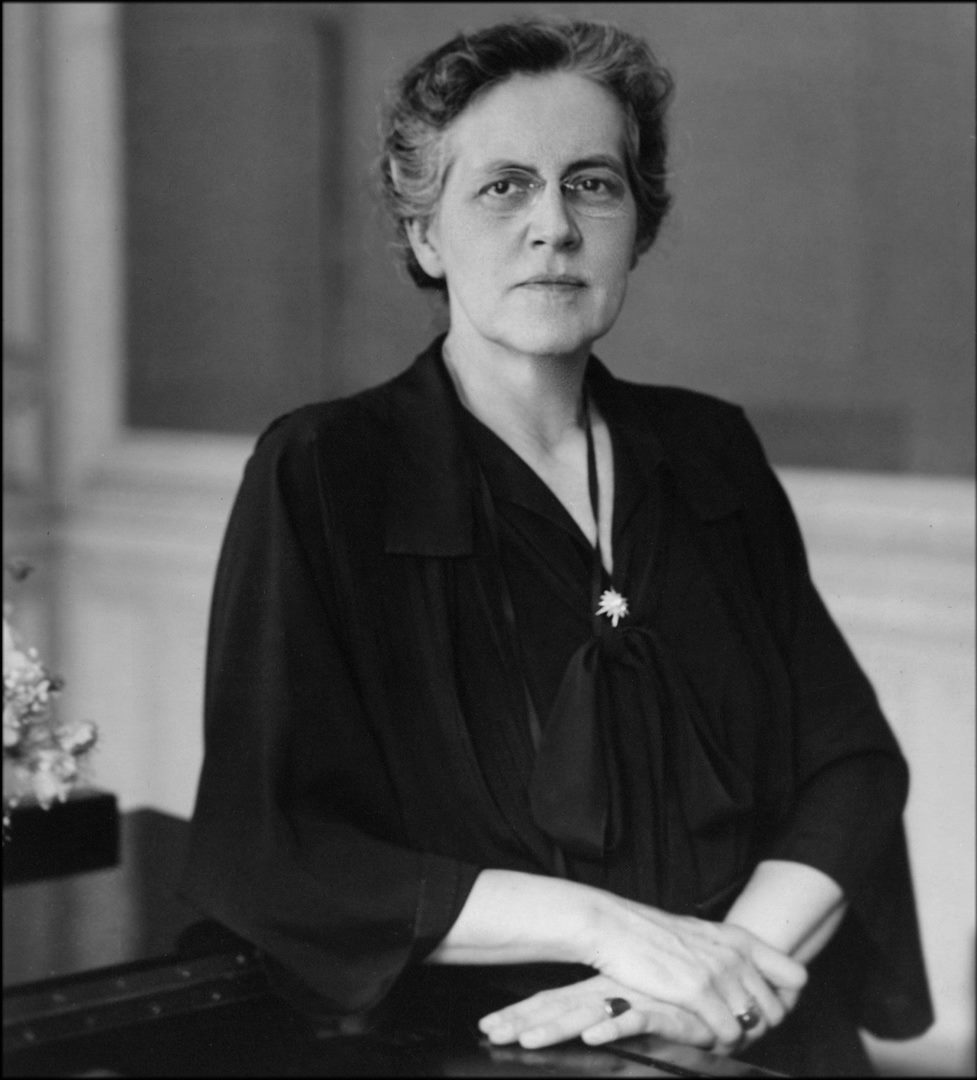
What did Nadia Boulanger and Conan the Barbarian have in common? A lot, apparently, at least from what may be deduced from anecdotes by her pupils. Boulanger’s strong will, cold objectivity and blunt assessments made her perhaps the greatest – and certainly the most influential – musical pedagogue of the 20th century.
Her influence on American music, in particular, is incalculable, having taught composers from Aaron Copland and Virgil Thomson through Elliot Carter and Philip Glass. It was Thomson who quipped, “She was a one-woman graduate school, so powerful and so permeating that legend credits every United States town with two things: a five and dime and a Boulanger pupil.”
Join me this afternoon, beginning at 4 p.m., as I celebrate this remarkable figure on her birthday, with two hours of music and music-making by but a handful of her hundreds of remarkable students, including Copland, Igor Markevitch, Dinu Lipatti and Lili Boulanger.
Then stick around at 6 p.m. for “Picture Perfect,” as I introduce music from movies inspired by the writings of pulp master Robert E. Howard. Howard is certainly best-known as the creator of Conan. While an hour of scores for barbarian movies may not seem like everyone’s cup of tea, I can guarantee that most of the music is thrilling and inventive, in ways one would be unlikely to encounter at a theater today.
“Conan the Barbarian” (1982) was released at a time when even the most embarrassing movies could have knockout scores, and composer Basil Poledouris really outdid himself in transcending the violent, silly visuals with a viscerally thrilling soundtrack. I know, I was skeptical myself, until I heard it. “Conan” has long been held by collectors of film music as one of the great scores of the decade, and it’s hard not to be pummeled into submission by its grandeur.
The hour will also feature music by Ennio Morricone, who has made a career out of spinning gold from garbage. Morricone recently received a much-overdue Academy Award for his work on Quentin Tarantino’s “The Hateful Eight.” We’ll hear some of his score to “Red Sonja” (1985), which also featured Arnold Schwarzenegger, though in a supporting role. In addition, there will be music by Joel Goldsmith, the son of Jerry Goldsmith, for “Kull the Conqueror” (1997).
It’s a brains-and-brawn double feature today, from 4 to 7 p.m. EDT, on WWFM – The Classical Network and at wwfm.org.
Tag Cloud
Aaron Copland (94) Beethoven (95) Composer (114) Film Music (149) Film Score (143) Film Scores (255) Halloween (97) John Williams (197) KWAX (232) Leonard Bernstein (105) Marlboro Music Festival (125) Movie Music (164) Mozart (91) Opera (215) Philadelphia Orchestra (90) Picture Perfect (174) Princeton Symphony Orchestra (110) Radio (90) Ross Amico (244) Roy's Tie-Dye Sci-Fi Corner (290) The Classical Network (101) The Lost Chord (269) Vaughan Williams (107) WPRB (397) WWFM (881)