Tag: Rossini

  • Free Opera Week at the Met: Glass, Verdi & More

    Free Opera Week at the Met: Glass, Verdi & More

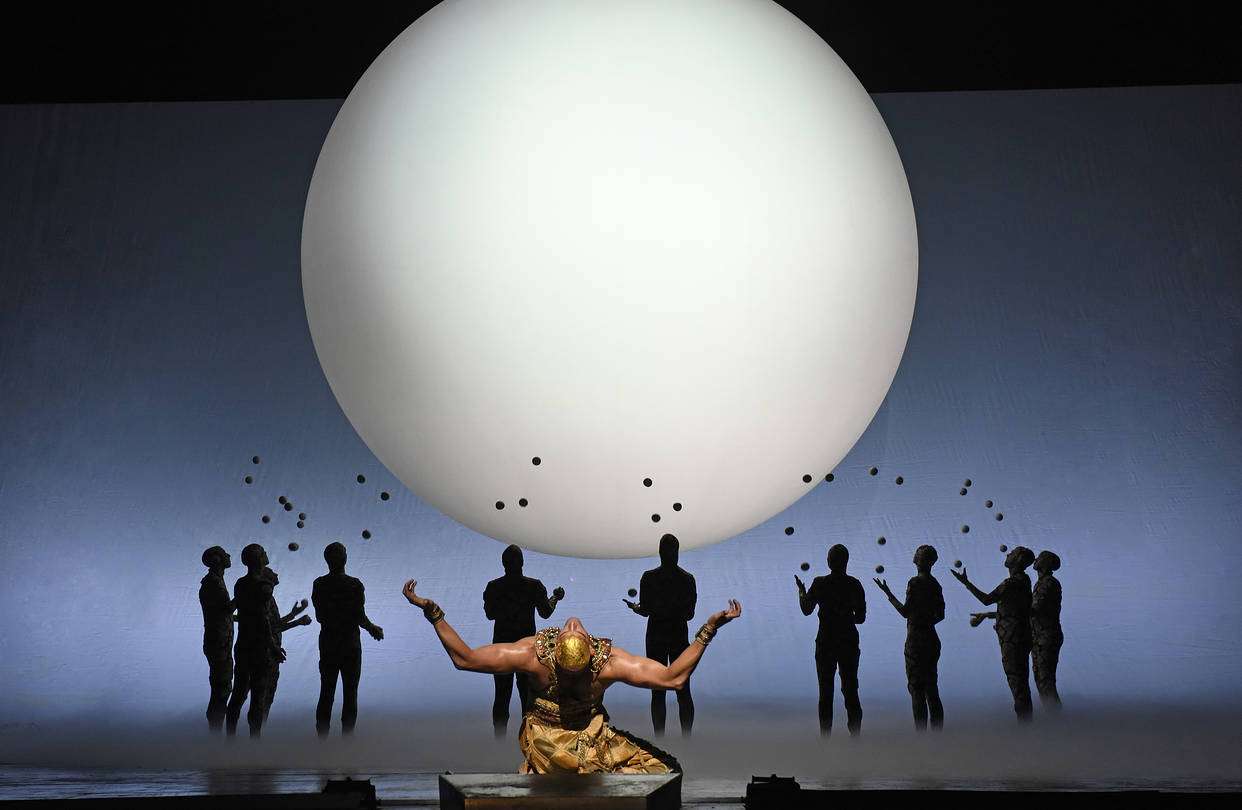
    Good Lord! Two Philip Glass operas in one week! I offer this mild oath in tribute to the monotheistic pharaoh at the center of Glass’ “Akhnaten.”

    Even if you think Minimalism drives you up a wall, try to catch the Metropolitan Opera production, which features an uncanny performance by Princeton University alumnus Anthony Roth Costanzo in the title role, impressive sets, evocative costumes, and plenty of jugglers (!).

    The Met will also offer two – count ‘em – two Rossini operas, “Armida” and “Semiramide.” The Met’s Rossini has been among the more gratifying revelations for me since the COVID-era streaming began. It sounds a little silly to state the obvious, but he’s a very theatrical composer!

    Oh yeah, and there will be two by Verdi, as well, including “La Forza” with Leontyne Price.

    The Met continues to make good on its pledge to stream free opera for the duration of the house’s shutdown. Each opera is accessible for approximately 23 hours, starting every day around 7 p.m. EDT. Handel’s “Rodelinda” streams through 6 p.m. today, at metopera.org.

    Here’s a complete schedule of this week’s offerings. You’ll find teasers and bonus materials when following the link:

    https://www.metopera.org/user-information/nightly-met-opera-streams/week-14/

    Monday, June 15
    Rossini’s Armida
    Starring Renée Fleming, Lawrence Brownlee, John Osborn, Barry Banks, and Kobie van Rensburg, conducted by Riccardo Frizza. From May 1, 2010.

    Tuesday, June 16
    Rossini’s Semiramide
    Starring Angela Meade, Elizabeth DeShong, Javier Camarena, Ildar Abdrazakov, and Ryan Speedo Green, conducted by Maurizio Benini. From March 10, 2018.

    Wednesday, June 17
    Gluck’s Iphigénie en Tauride
    Starring Susan Graham, Plácido Domingo, and Paul Groves, conducted by Patrick Summers. From February 26, 2011.

    Thursday, June 18, and Friday, June 19
    Verdi’s La Forza del Destino
    Starring Leontyne Price, Giuseppe Giacomini, Leo Nucci, and Bonaldo Giaiotti, conducted by James Levine. From March 24, 1984.

    Saturday, June 20
    Philip Glass’s Akhnaten
    Starring Dísella Lárusdóttir, J’Nai Bridges, Anthony Roth Costanzo, Aaron Blake, Will Liverman, Richard Bernstein, and Zachary James, conducted by Karen Kamensek. From November 23, 2019.

    Sunday, June 21
    Philip Glass’s Satyagraha
    Starring Rachelle Durkin, Richard Croft, Kim Josephson, and Alfred Walker, conducted by Dante Anzolini. From November 19, 2011.
  • Opera Philadelphia Streams Free Barber & More

    Opera Philadelphia Streams Free Barber & More

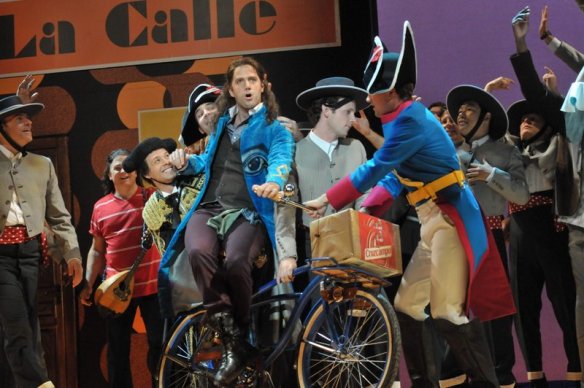
    Opera Philadelphia will continue its “Digital Festival O” series with a free stream of its Shoko Kambara-designed, Pedro Almodóvar-style production of Rossini’s “The Barber of Seville.” I reserve judgment, but the production does look divertingly wacky, with an Elvis-impersonating Don Basilio and abundant chicken imagery(!). The opera will drop tonight at 8 p.m. EDT, and will be available on-demand through June 29. A “Show Before the Show” segment will stream at 7:00.

    Here’s the trailer from 2014: https://www.youtube.com/watch?v=wowTcPBp-ZQ

    If you’re in the mood for something a little closer to home, and certainly more serious, Daniel Bernard Roumain’s “We Shall Not Be Moved” is available for streaming through August 31. On the run after a series of tragic events, five North Philadelphia teens seek refuge in a condemned West Philly house that once served as headquarters for the black liberation group MOVE. 35 years-ago this week, a standoff with Philadelphia police ended with a neighborhood in flames and 11 people dead. The Opera Philadelphia premiere combines spoken word, contemporary movement, video projection, and a surprisingly versatile score.

    Here’s a clip from “We Shall Not Be Moved”: https://www.youtube.com/watch?v=5IRHA6cxsD4

    You’ll find more information on Opera Philadelphia’s “Digital Festival O,” including a complete line-up, at the organization’s website, operaphila.org.

  • Saint-Saëns, Rossini & More From Marlboro

    Saint-Saëns, Rossini & More From Marlboro

    On this week’s “Music from Marlboro,” we’ll travel from Saint-Saëns to Saint Petersburg, with a performance by Lara St. John tossed into the mix.

    Works by two child prodigies (well, one of them “former”) will be heard on the first half of the program.

    Camille Saint-Saëns demonstrated perfect pitch at the age of two and gave his first public concert at five. He was 72, at the other end of a very long career, when he composed his Fantaisie, Op. 124. We’ll hear it performed by violinist Thomas Zehetmair and harpist Alice Giles, at the 1982 Marlboro Music Festival.

    Gioachino Rossini would blossom into one the most productive of opera composers, but even as a boy there was evidence of his remarkable facility and fecundity. He wrote his six string sonatas, scored for two violins, cello, and double bass, in 1804, over a period of three days. Rossini was twelve years-old. The sonatas are rhythmically vital and full of the kinds of melodies that would soon endear him to audiences the world over. We’ll hear the third of these, the String Sonata in C major, in a 1989 performance, featuring violinists St. John and Ivan Chan, cellist Paul Tortelier, and double bassist Timothy Cobb.

    Then we’ll round out the hour with Anton Arensky’s Piano Trio No. 1 in D minor. Arensky, a pupil of that icon of Russian nationalism, Nikolai Rimsky-Korsakov, gravitated more toward the cosmopolitan sound of Rimsky’s rival, Peter Ilych Tchaikovsky. His trio is full of good tunes, always charming, regardless of whether the music is melancholy, turbulent, reflective, or good humored. It’s the kind of piece that will have you humming for the rest of the day. It was played at the 1982 Marlboro Music Festival by pianist Frederick Moyer, violinist Isodore Cohen, and cellist John Sharp.

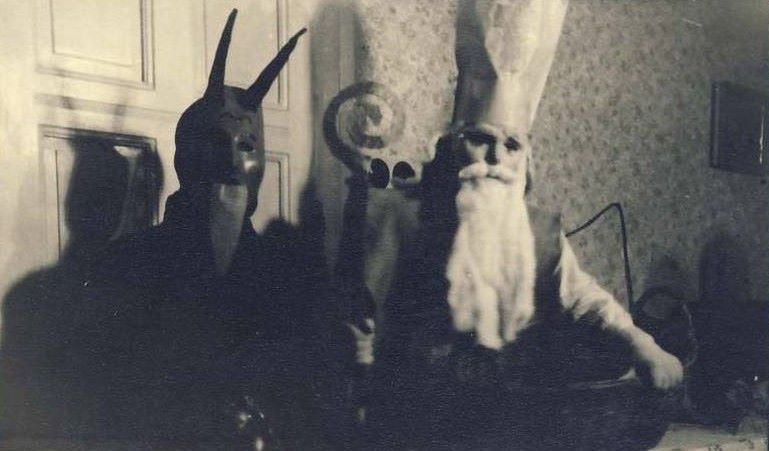
    We’re grasping for saints on this Krampusnacht. I hope you’ll join me for the next “Music from Marlboro,” this Wednesday evening at 6:00 EST, on WWFM – The Classical Network and wwfm.org.

    In the meantime, here’s a link to Lara St. John’s new “Hanukkah Carol,” co-written with accordionist Ronn Yedidia and sung by countertenor Aryeh Nussbaum Cohen.

    Marlboro School of Music and Festival: Official Page

  • Verdi, Rossini, and Mignone at Marlboro Music

    Verdi, Rossini, and Mignone at Marlboro Music

    Viva Verdi!

    When we think of “Aida,” perhaps what springs immediately to mind is a stage full of elephants, but when a Naples performance of Verdi’s grandest grand opera was delayed, the composer found diversion on a much smaller scale. Verdi tossed off his first piece of chamber music at the age of 60. The String Quartet in E minor was given an informal performance at the Hotel delle Crocelle on April 1, 1873. Said Verdi of his latest creation, “I don’t know whether the Quartet is beautiful or ugly, but I do know that it’s a Quartet!” We’ll get to hear it on this week’s “Music from Marlboro,” in a 1969 performance featuring violinists Pina Carmirelli and Endre Granat, violist Martha Strongin Katz, and cellist Ronald Leonard.

    The hour will open with another quartet by a figure who would go on to become one of the most productive of opera composers, Gioachino Rossini. Even as a boy, there was evidence of his remarkable fecundity. He wrote his six string sonatas, scored for two violins, cello, and double bass in 1804, over a period of three days. Rossini was twelve years-old. The sonatas are rhythmically vital and full of the kinds of melodies that would soon endear him to audiences the world over. We’ll hear the third of these, the String Sonata in C major, in a 1989 performance, with violinists Lara St. John and Ivan Chan, cellist Paul Tortelier, and double bassist Timothy Cobb.

    In between, we’ll find further enjoyment in the music of Brazilian composer Franciso Mignone. Born in São Paolo to an Italian immigrant flutist, Mignone studied at the Milan Conservatory before returning to accept a teaching position in Rio de Janeiro. Over the course of his career, he accumulated a diverse output written across many styles, from native “choros” to highly-schooled serialism. He is best known for his music composed in a folk-inflected, nationalistic idiom. Brazilian influences color many of his works, including his “Five Songs for Voice and Bassoon,” written around 1931 and revised in 1976. We’ll hear it performed at the 2016 Marlboro Music Festival by soprano Lucy Fitz Gibbon and bassoonist Catherine Chen.

    I hope you’ll join me for music by two Italian masters and one of Italian descent, on “Music from Marlboro,” this Wednesday evening at 6:00 EST, on WWFM – The Classical Network and wwfm.org.

    Marlboro School of Music and Festival: Official Page

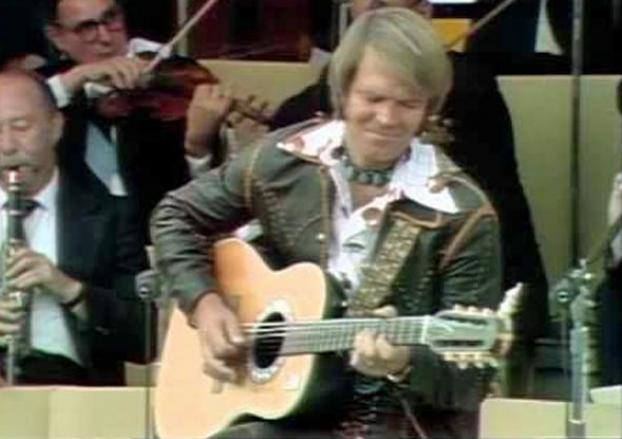
  • Glen Campbell William Tell Overture Guitar

    Glen Campbell William Tell Overture Guitar

    The late Glen Campbell plays the “William Tell Overture.”

Tag Cloud

Aaron Copland (92) Beethoven (95) Composer (114) Film Music (123) Film Score (143) Film Scores (255) Halloween (94) John Williams (187) KWAX (229) Leonard Bernstein (101) Marlboro Music Festival (125) Movie Music (138) Opera (202) Philadelphia Orchestra (89) Picture Perfect (174) Princeton Symphony Orchestra (106) Radio (87) Ralph Vaughan Williams (85) Ross Amico (244) Roy's Tie-Dye Sci-Fi Corner (290) The Classical Network (101) The Lost Chord (268) Vaughan Williams (103) WPRB (396) WWFM (881)

DON’T MISS A BEAT

Receive a weekly digest every Sunday at noon by signing up here


RECENT POSTS