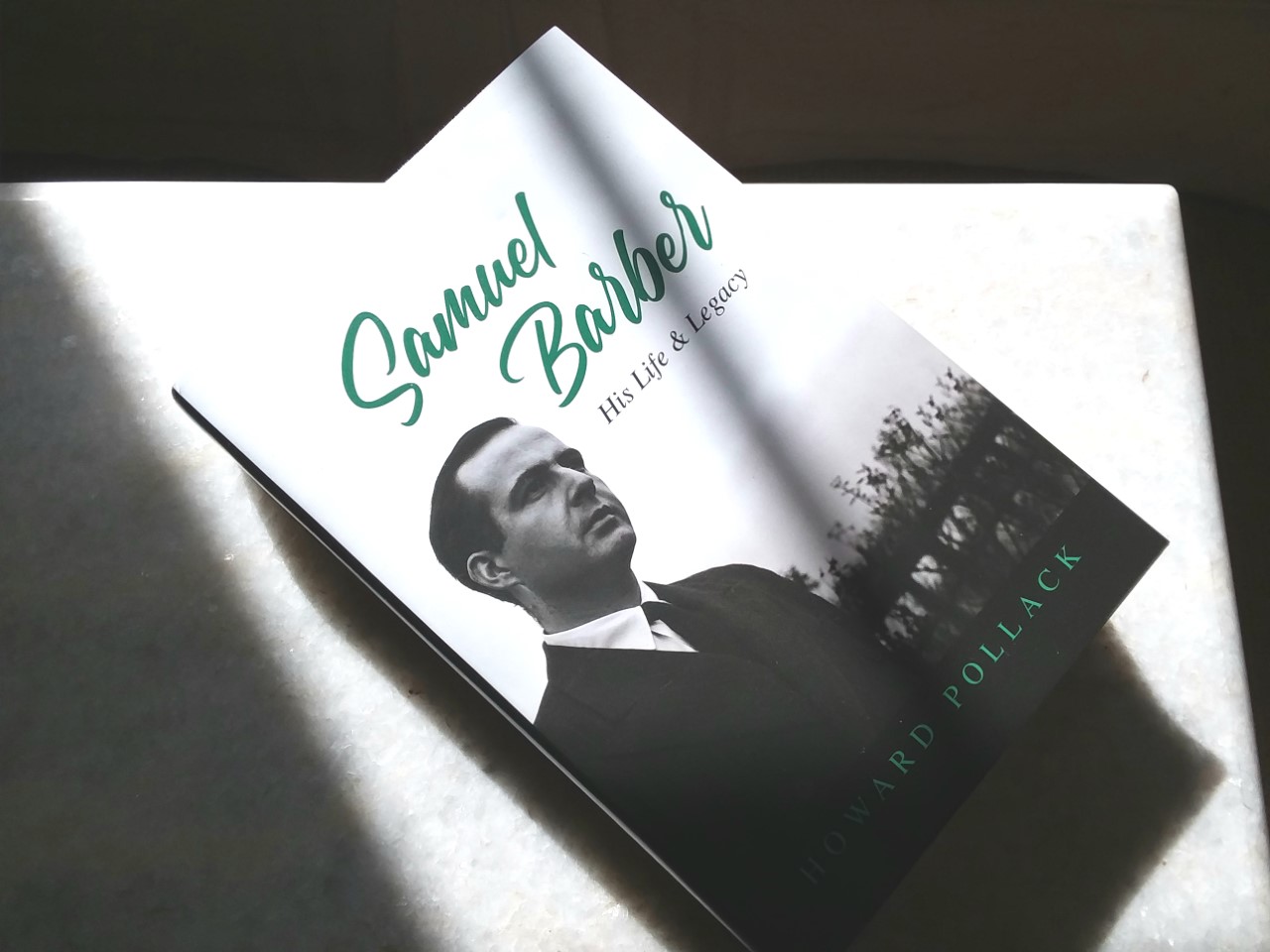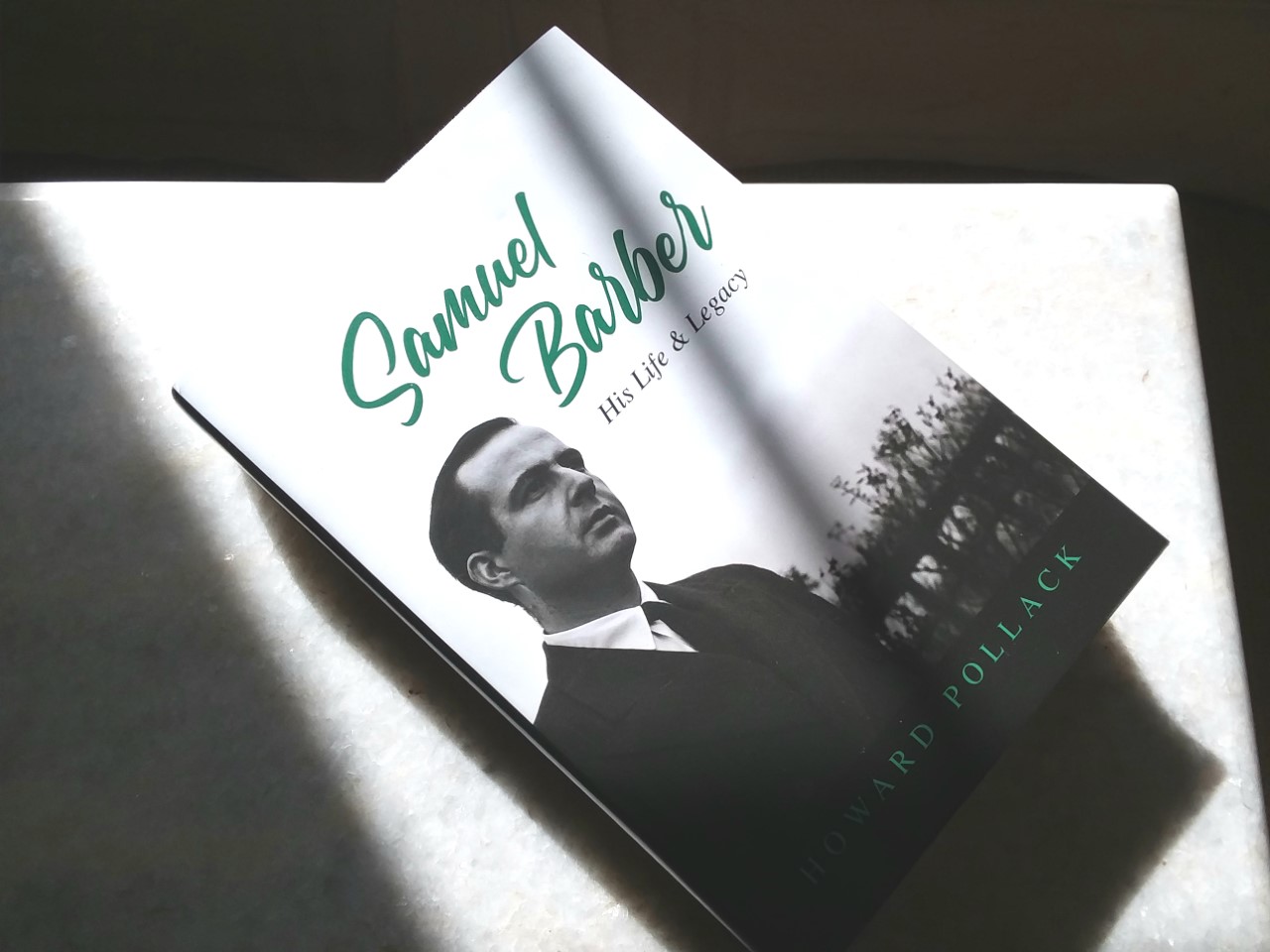
Received this baby from University of Illinois Press the other day. I’m very much looking forward to reading it. If it’s anything like Howard Pollack’s Copland biography, it should be superb. Pollack has also written acclaimed books about American composers John Alden Carpenter, George Gershwin, and Marc Blitzstein, among others. “Samuel Barber: His Life & Legacy” is scheduled for release on April 4.
More than just a pretty voice, soprano superstar Pretty Yende will display her versatility in Princeton this weekend, on a pair of concerts presented by the Princeton Symphony Orchestra.
The second half of the program, as might be expected, will feature sparkling arias from Rossini’s “The Barber of Seville” and Verdi’s “La traviata;” but the first half of the concert, devoted to American music, will include Yende’s soulful rendition of Samuel Barber’s nostalgic and poignant “Knoxville: Summer of 1915.” Also on the program will be overtures from Rossini and Verdi operas and Aaron Copland’s Pulitzer Prize winning masterwork, “Appalachian Spring.”
Put a spring in your step with the Princeton Symphony Orchestra, at Richardson Auditorium this Saturday evening at 8:00 and Sunday afternoon at 4:00. Sunday’s performance will be a preceded by an onstage conversation with music director Rossen Milanov at 3:00. For tickets and information, visit princetonsymphony.org.
Curious to learn more about “Knoxville?” The PSO will host musicologist Austin Stewart, as he reflects on the backgrounds of both Barber’s composition and the James Agee text upon which it is based, at Princeton Public Library this Thursday evening at 7:00. The library event is free and open to the public.
It is one of those things that would seem to go without saying, yet it should not be taken for granted – the blessing, as the 20th century progressed, of just how much recorded material exists relating to our great composers. Imagine what it would have been like to have had this kind of access to a conversational Brahms or Liszt.
On the anniversary of his birth, here is Samuel Barber from 1978, speaking with WQXR’s Bob Sherman, prior to the premiere of the composer’s “Third Essay for Orchestra” with the New York Philharmonic. The conversation is punctuated by interesting recordings, including one of Pierre Bernac singing Barber’s “Mélodies passagères” – in French – with Francis Poulenc at the piano. Barber reveals that he acted as page-turner during the recording. Also, he mentions that he was originally expected to go to Princeton!
The same interview, without ads for Scientific American (the program’s sponsor), but transferred at a lower level of sound:
The “Third Essay for Orchestra,” the piece that would receive its premiere only a few days later:
During the interview, Barber also teases the anticipated debut of a Concertino for Oboe, also with the New York Phil, a work that sadly never came to pass. This gorgeous “Canzonetta,” which would have served as the piece’s slow movement, is all that was released. It would be Barber’s final composition. The performance here is by Humbert Lucarelli and the now-defunct Lehigh Valley Chamber Orchestra.
Here’s an earlier broadcast, from 1958, an intermission feature of the New York Phil, with Barber and James Fassett, the composer talking about his new orchestral work, “Medea’s Meditation and Dance of Vengeance,” distilled from the ballet for Martha Graham:
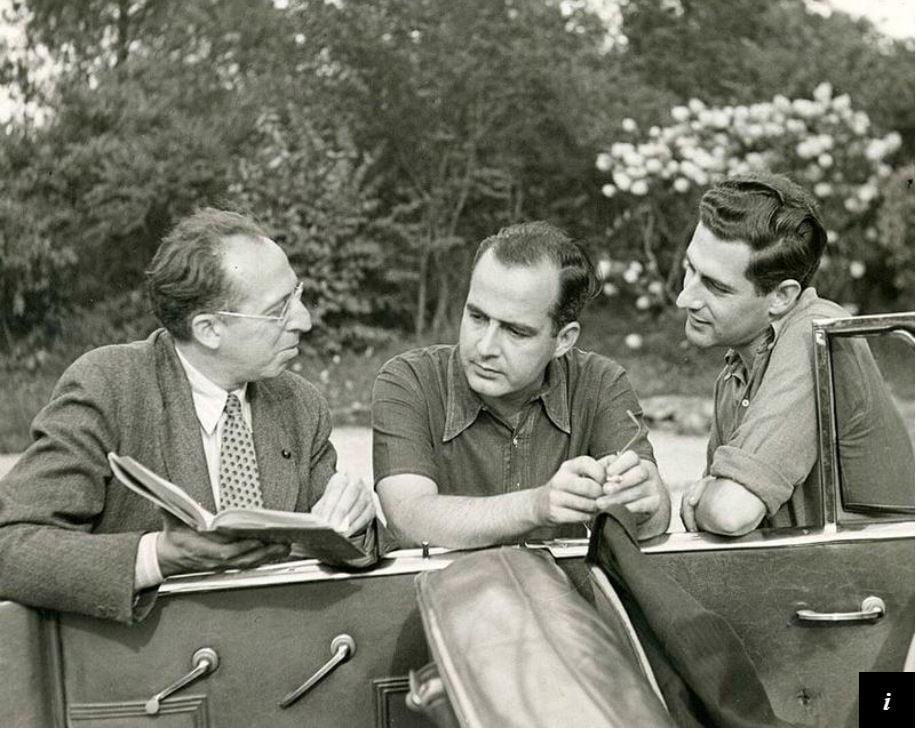
Finally, Barber and composer Gian Carlo Menotti shared a home in Mount Kisco, New York, from 1943 to 1972. The two had met as students at the Curtis Institute of Music in Philadelphia. Menotti would serve as librettist for Barber’s Pulitzer Prize winning opera “Vanessa.” He later worked to rehabilitate Barber’s “Antony and Cleopatra” after its disastrous 1966 premiere at the grand opening of the new Metropolitan Opera House at Lincoln Center. Both composers were two-time Pulitzer Prize winners. Menotti talks about Barber, ten years after their split (the two remained friends), at Curtis in 1980:
If you’re a Barberophile, you’ll also want to check out H. Paul Moon’s award-winning documentary, “Samuel Barber: Absolute Beauty.” You can view the trailer here:
This Sunday night on “The Lost Chord,” get ready for Memorial Day with two symphonies composed for the armed forces.
Morton Gould wrote his Symphony No. 4, his first large scale piece for symphonic band, in 1952, for the United States Military Academy at West Point. The score calls for a “marching machine,” but on the recording we’ll hear, now a classic on the Mercury label, the feet are those of the 120 musicians of the Eastman School Symphony Band. Frederick Fennell directs the Eastman Wind Ensemble.
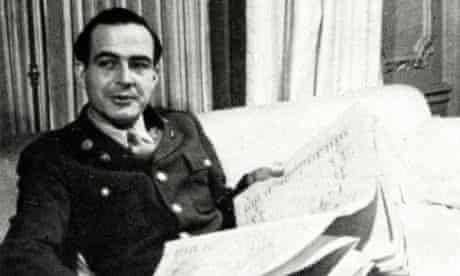
Samuel Barber composed his Symphony No. 2 in 1943, while he was serving in the U.S. Army Air Force. 20 years later, he revised and published its slow movement as a separate piece, titled “Night Flight.” He then jettisoned – and actually tried to destroy – the rest of the symphony. The work was reconstituted only after the composer’s death, from rediscovered parts in a warehouse in the UK. We’ll hear a recording with Marin Alsop and the Royal Scottish National Orchestra.
Reflect on the sacrifice of Americans at war, on “Orchestrated Maneuvers” – American military symphonies for Memorial Day – this Sunday night at 10:00 EDT, on WWFM – The Classical Network and wwfm.org.
PHOTO: Corporal Samuel Barber with the score of his Second Symphony
Since last March, when Covid broke across New Jersey, the only Barber I’ve visited is Samuel Barber. The composer of the ubiquitous “Adagio for Strings” was born in West Chester, Pa., on this date in 1910.
My favorite Barber pieces? The Violin Concerto. The Symphony No. 1. The Second Essay for Orchestra. “Souvenirs” (in the version for piano four hands). Okay, and the Adagio.
If its passionate, elegiac character seems out of step with such a lovely day, here’s something with a lighter, carefree disposition, from his set of piano pieces titled “Excursions.”
Also, one of his most charming songs, “The Monk and His Cat.”
Here’s a real gem: an interview with Barber in his NYC apartment, to celebrate his 67th birthday. Barber plays the piano, displays his conversational wit, and shares his recording of “Dover Beach,” on which he appears as baritone. Stay tuned for the birthday cake at the end!
His music may do nothing for the length of my beard, but it keeps my soul limber.
Happy birthday, Sam.
PHOTO: Barber, dressed like Sky Masterson, conducting his Second Symphony. Ironically, Barber disliked the work. He disliked it so much, he tried to destroy it. In 1984, three years after his death, the symphony was revived when a set of parts turned up in an English warehouse.