Tag: Samuel Barber

  • Remembering Veteran Composers on Veterans Day

    Remembering Veteran Composers on Veterans Day

    November 11. On the 11th hour of the 11th day of the 11th month in 1918 (Paris time), the Armistice went into effect that formalized Allied victory and the end of WWI.

    In 1954, at the urging of U.S. veterans, Armistice Day was renamed Veterans Day. Though the intent of the holiday is frequently confused with that of Memorial Day, Veterans Day is a time to honor ALL military veterans, not just those who died in service to their country.

    Last year I put together a photo gallery of American composers who served in the U.S. armed forces. Some of you suggested a few more, which I have now added. Thank you!

    It’s easier to turn up photos of European composers who served (Vaughan Williams, Maurice Ravel, and Arnold Schoenberg, to name a few), and there are certainly plenty of lists of popular singers, but not so many of American composers, which is a shame, since a good number of them also served.

    Thank you, veterans. Hoping for peace in these turbulent times.


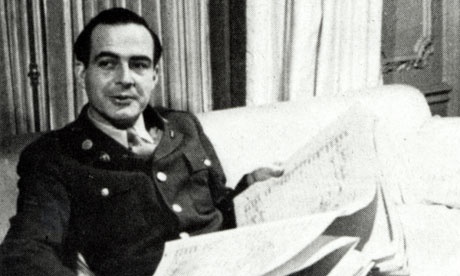
    PHOTOS: (counterclockwise from top) Corporal Samuel Barber, U.S. Army Air Force; John Philip Sousa in his Marine Band uniform; Sergeant Romeo Cascarino conducting an Army orchestra; and William Grant Still, U.S. Navy. More, when you click through the gallery…

  • Rosalind Elias Met Opera Mezzo Dies at 90

    Rosalind Elias Met Opera Mezzo Dies at 90

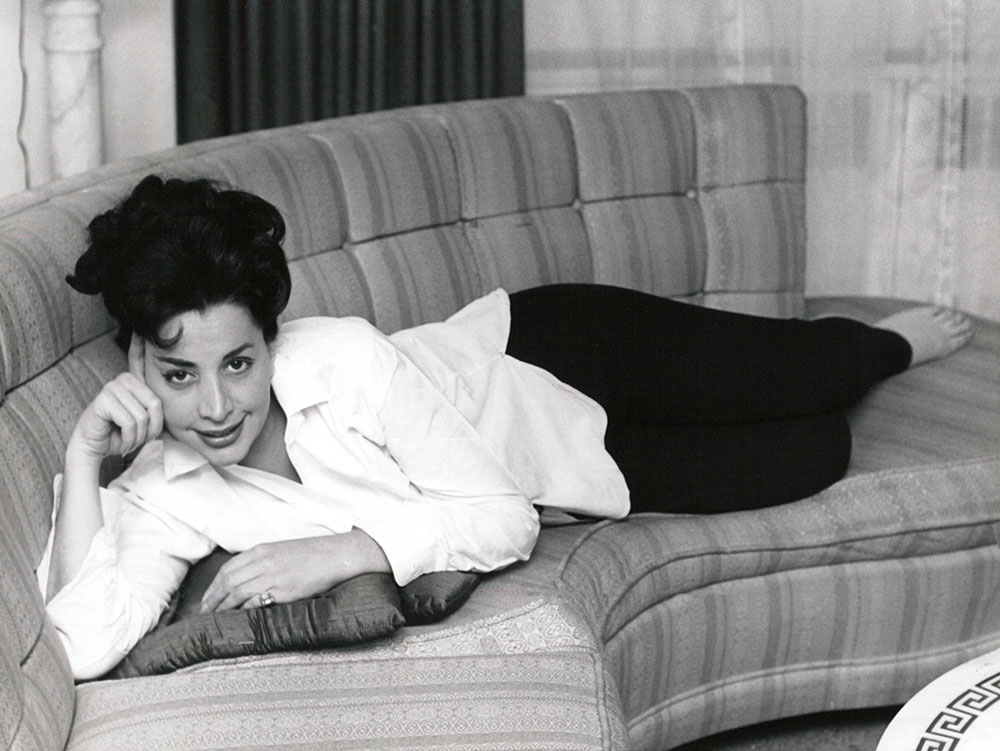
    The Met has lost one of its great mezzos. Rosalind Elias died yesterday at the age of 90. Over 35 seasons, Elias assumed 50 roles. In all, she sang at the Met 687 times. She made her Broadway debut in Stephen Sondheim’s “Follies” as recently as 2011.

    As Carmen:

    As Zerlina:
    https://www.youtube.com/watch?v=v6uOHHgoa5c

    As Erika in Samuel Barber’s “Vanessa”

    In “Follies”:

    Elias singing at 83!

    2-part interview on “Classic Talk”

  • Ormandy’s Lost American Music Recordings

    Ormandy’s Lost American Music Recordings

    It’s not so much that I am out of ideas, but it is mighty convenient that I have so much material left over from last week’s show. Even now, I run my eye down the stack of CDs with the warm satisfaction of an acquisitive magpie.

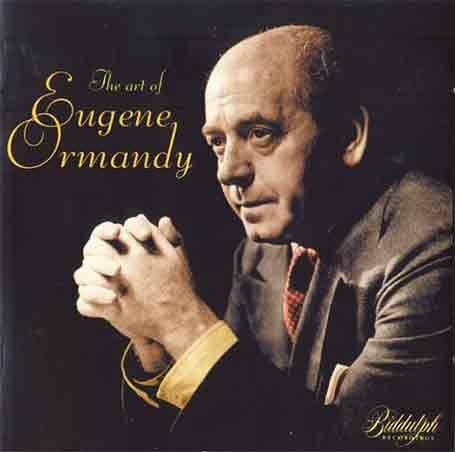
    This Sunday night on “The Lost Chord,” it’s the second installment in what is shaping up to be a three-part series of Eugene Ormandy conducting the Philadelphia Orchestra in rarely-heard recordings of American music.

    Samuel Barber was born in West Chester, Pa., not far from Philly, in 1910. He attended Philadelphia’s Curtis Institute of Music and had his first orchestral work, the “School for Scandal Overture,” performed by the Philadelphia Orchestra in 1931, when he was 21 years-old.

    His “First Essay for Orchestra” was sent to Arturo Toscanini in the same mail as his “Adagio for Strings.” Toscanini performed both works with the NBC Symphony in 1938, but it was Eugene Ormandy who made the first recording of “Essay,” with the Philadelphians, in 1940.

    Vincent Persichetti was born in Philadelphia in 1915, and he died there in 1987. In between, he attended Combs College of Music, the Curtis Institute (where he studied conducting with Fritz Reiner) and the Philadelphia Conservatory. He taught at Combs and the Philly Conservatory. Then he received an invitation from William Schuman (some of whose music we heard last week) to take up a professorship at Juilliard.

    Persichetti was one of our great composers, but to this day he remains underappreciated, more respected than loved. His Symphony No 4 of 1951 must be one of his most immediately attractive works.

    Finally, John Vincent may be the most undeservedly neglected composer in Ormandy’s entire discography. Ormandy described his recording of Vincent’s Symphony in D (“A Festival Piece in One Movement”) as “one of the best we have ever done,” and the piece itself as “one of the finest compositions created by an American composer in the past decade.” The 1954 work sounds at times like Sibelius gone to the rodeo, but my, is it good stuff!

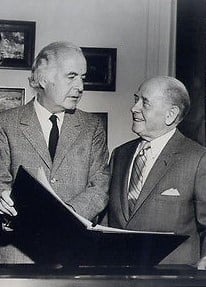
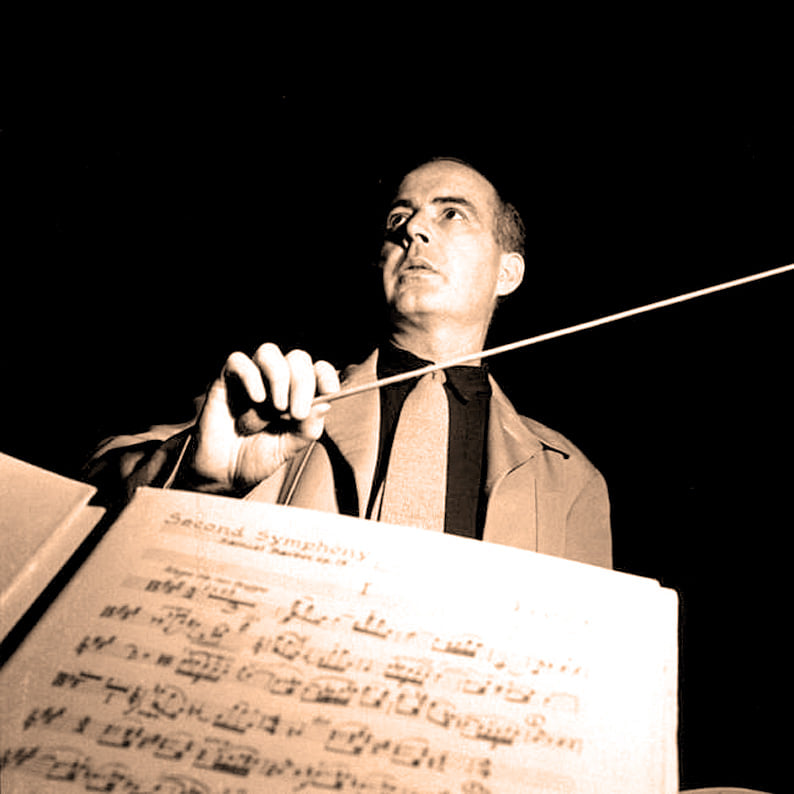
    I hope you’ll join me for “All-American Ormandy II.” Ormandy recommends a visit to the Barber (pictured), then convinces with the Vincents, this Sunday night at 10:00 EST, on WWFM – The Classical Network and wwfm.org.

  • Ormandy’s Lost American Gems Barber Persichetti Vincent

    Ormandy’s Lost American Gems Barber Persichetti Vincent

    It’s not so much that I am out of ideas, but it is mighty convenient that I had so much material left over from last week’s show, consisting of rarely-heard recordings of American music performed by Eugene Ormandy and the Philadelphia Orchestra.

    This Sunday night on “The Lost Chord,” I reach for the already conveniently stacked CDs to cue up three more gems.

    Samuel Barber was born in West Chester, Pa., not far from Philly, in 1910. He attended Philadelphia’s Curtis Institute of Music and had his first orchestral work, the “School for Scandal Overture,” performed by the Philadelphia Orchestra in 1931, when he was 21 years-old.

    His “First Essay for Orchestra” was sent to Arturo Toscanini in the same mail as his “Adagio for Strings.” Toscanini performed both works with the NBC Symphony in 1938, but it was Eugene Ormandy who made the first recording of the “Essay,” with the Philadelphians, in 1940.

    Vincent Persichetti was born in Philadelphia in 1915, and he died there in 1987. In between, he attended Combs College of Music, the Curtis Institute (where he studied conducting with Fritz Reiner) and the Philadelphia Conservatory. He taught at Combs and the Philly Conservatory. Then he received an invitation from William Schuman (some of whose music we heard last week) to take up a professorship at Juilliard.

    Persichetti was one of our great composers, but to this day he remains underappreciated, more respected than loved. His Symphony No 4 of 1951 must be one of his most immediately attractive works.

    Finally, John Vincent may be the most undeservedly neglected composer in Ormandy’s entire discography. Ormandy described his recording of Vincent’s Symphony in D (“A Festival Piece in One Movement”) as “one of the best we have ever done,” and the piece itself as “one of the finest compositions created by an American composer in the past decade.” The 1954 work sounds at times like Sibelius gone to the rodeo, but my, is it good stuff!

    I hope you’ll join me for “All-American Ormandy II,” rarely-heard recordings of Barber, Persichetti and Vincent, on “The Lost Chord,” this Sunday night at 10 ET, with a repeat Wednesday evening at 6; or that you’ll listen to it later as a webcast at wwfm.org.

    To help get you in the mood, here’s an in-depth interview with Persichetti by Bruce Duffie:

    http://www.bruceduffie.com/persichetti.html

  • Veterans Day Remembrance on The Classical Network

    Veterans Day Remembrance on The Classical Network

    November 11. On the 11th hour of the 11th day of the 11th month in 1918 (Paris time), the Armistice went into effect that formalized Allied victory and the end of WWI.

    In 1954, at the urging of U.S. veterans, Armistice Day was renamed Veterans Day. Though the intent of the holiday is frequently confused with that of Memorial Day, Veterans Day is a time to honor all military veterans, not just those who died in service to their country.

    This afternoon on The Classical Network, we’ll honor several composers who served – including Samuel Barber, whose Second Symphony and “Commando March” were dedicated to the U.S. Army Air Forces – alongside other musical salutes.

    We’ll also celebrate conductors Ernest Ansermet and Vernon Handley on their birthdays and remember Werner Andreas Albert, who died yesterday at the age of 84.

    In addition, there will be a Cello Sonata in E-flat major by Bernhard Romberg, born on this date in 1767, performed by the late Anner Bylsma.

    Join me on this 11th day of the 11th month, from 1600 to 1900 (4 to 7 p.m. EST), on WWFM – The Classical Network and wwfm.org.


    PHOTOS: (counterclockwise from top) Corporal Samuel Barber, U.S. Army Air Force; John Philip Sousa in his Marine Band uniform; Sergeant Romeo Cascarino conducting an Army orchestra; and William Grant Still, U.S. Navy

Tag Cloud

Aaron Copland (92) Beethoven (95) Composer (114) Film Music (123) Film Score (143) Film Scores (255) Halloween (94) John Williams (187) KWAX (229) Leonard Bernstein (101) Marlboro Music Festival (125) Movie Music (138) Opera (202) Philadelphia Orchestra (89) Picture Perfect (174) Princeton Symphony Orchestra (106) Radio (87) Ralph Vaughan Williams (85) Ross Amico (244) Roy's Tie-Dye Sci-Fi Corner (290) The Classical Network (101) The Lost Chord (268) Vaughan Williams (103) WPRB (396) WWFM (881)

DON’T MISS A BEAT

Receive a weekly digest every Sunday at noon by signing up here


RECENT POSTS