Tag: Shakespeare

  • Shakespeare Inspired Music Today

    Shakespeare Inspired Music Today

    All the world’s a stage, and all the men and women merely players.

    That said, I’ve got but a few hours in which to play music to mark the presumed anniversary today of the birth of the great William Shakespeare.

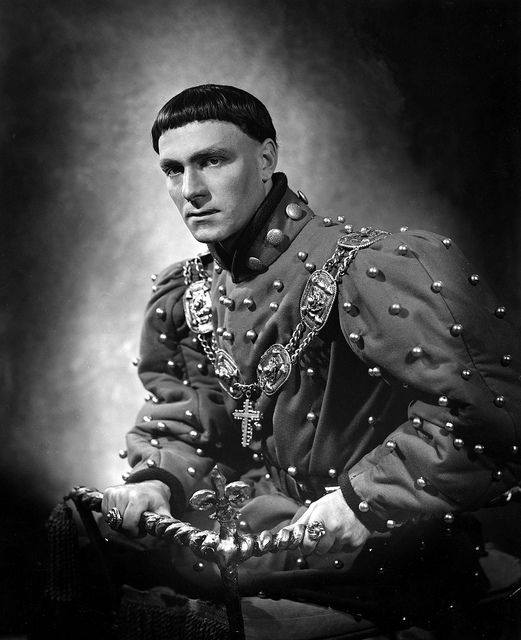
    We’ll hear works inspired by a number of Shakespeare’s plays, including a “scenario” assembled from William Walton’s magnificent score for Laurence Olivier’s acclaimed film adaptation of “Henry V.” The speaker will be none other than Christopher Plummer.

    Today’s Noontime Concert will serve as prologue, with the Rolston String Quartet coming your way from the Church of the Holy Trinity, Rittenhouse Square, in Center City Philadelphia. The program, presented by Astral Artists, will include works by Mozart (the String Quartet No. 18 in A major, K. 464), Ligeti (the Quartet No. 1, “Metamorphoses nocturnes”), and Beethoven (the Quartet No. 13 in B-flat major, Op. 130).

    … [M]ay we cram
    Within this wooden “O” the very casques
    That did affright the air at Agincourt?
    O, pardon!

    Piece out our imperfections with your thoughts, from 12 to 4 p.m. EDT, on WWFM – The Classical Network and wwfm.org.

  • Shakespeare Berlioz Love and Loss on WWFM

    Shakespeare Berlioz Love and Loss on WWFM

    As I said yesterday, we don’t really know when Shakespeare was born (he was baptized on April 26, 1564). Traditionally his birthday is celebrated on April 23, since that also happens to mark the anniversary of his death, in 1616, and by nature man is a compulsive creature, seeking order in all things.

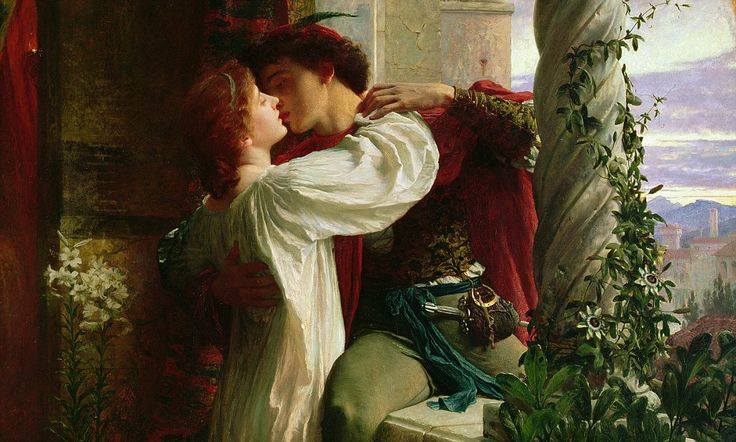
    Though we’ve manufactured a birthday for the Bard it is quite possible he could have been born at any time between now and Thursday. So why not take advantage of the broad blank canvas provided me on a Tuesday afternoon to present Hector Berlioz’s mad, ramshackle symphony, “Romeo and Juliet?”

    Berlioz adored Shakespeare. His “Symphonie Fantastique,” remember, was inspired by his passion for the actress Harriet Smithson, whom he had seen in Paris as Ophelia and fell instantly under her spell. He would woo and win her with his macabre, at times hysterical “symphonie.” At least, for as wild as his opium-induced vision of rejection, dejection, and, ultimately, damnation, would become, the work somehow clung to a semblance of “symphonic,” its romanticism bubbling out over the top of its somewhat classical structure.

    “Romeo and Juliet,” on the other hand, is neither fish nor fowl – a veritable Frankenstein’s monster assembled from the components of symphony, symphonic poem, opera, and oratorio. Unwieldy and flamboyant, Berlioz’s “symphony” unfolds as a collage of the play’s emotional high points – plus a scherzo inspired by Mercutio’s Queen Mab exposition, which is the symphony’s best known movement. In fact, it is rare to hear anything else, except perhaps the love music. Listen for a complete performance of this perplexing masterpiece, this afternoon at 2 p.m. EDT.

    First, on today’s Noontime Concert, it’s a program of new music with the American Modern Ensemble. The group’s founder, composer Robert Paterson, will be represented by two works – a collection of arias from the opera “Three Way” (2017), which explores the present and future of sex and love, and “In Real Life” (2015-16) for soprano and chamber orchestra, which examines the humor and heartbreak of what it means to join a dating website. In between, we’ll hear Robert Maggio’s “Forgetfulness” (2015), a setting for baritone and chamber ensemble of Billy Collins’ poem about Alzheimer’s Disease and dementia. The concert took place at Merkin Concert Hall at Kaufman Music Center in New York City.

    The course of true love never did run smooth. Being caught between warring houses in old Verona seems almost attractive, by comparison. It’s an afternoon of romance, androids, and BDSM (I’m not kidding), from 12 to 4 p.m. EDT, on WWFM – The Classical Network and wwfm.org.

  • Celebrating Shakespeare Music and Spring

    Celebrating Shakespeare Music and Spring

    Okay, so we don’t know when exactly Shakespeare was born. We do know that he was baptized on April 26, 1564. He died on April 23, 1616. Scholars have found the potential symmetry irresistible; therefore his birthday has traditionally been observed on the same day as his death. To borrow from “The Tempest,” our little lives are not only rounded with a sleep, it seems; if we’re famous enough, and we die close enough to our natal day, our birthdays are also rounded down.

    It doesn’t really matter when Shakespeare was born, but I look forward to celebrating the Bard every year. So many of his insights remain fresh, and the plays tie in beautifully with the spirit of renewal that springtime fosters. Also, there is just so much interesting and vital music inspired by his writings.

    We’ll sample as much of it as we can – what masques, what dances shall we have – this Monday, from 4 to 7 p.m. EDT, on WWFM – The Classical Network and wwfm.org.

  • Korngold’s Shakespeare Birthday Celebration

    Korngold’s Shakespeare Birthday Celebration

    “Is it not strange that sheep’s guts could hail souls out of men’s bodies?”

    – William Shakespeare, “Much Ado About Nothing”

    On the eve of the observation of Shakespeare’s birthday (April 23, 1564), hang on to your soul, this Sunday night on “The Lost Chord,” as we enjoy highlights from the world premiere recording of the complete incidental music to a 1920 Max Reinhardt production of “Much Ado About Nothing.”

    The music is by Erich Wolfgang Korngold, one of Vienna’s most astounding prodigies, who went on to achieve international celebrity as a composer of film scores. Korngold’s introduction to Hollywood was by way of Reinhardt’s 1935 film version of “A Midsummer Night’s Dream.”

    The performance, with the music performed for the first time in its entirety since 1933, was recorded at the University of North Carolina School of the Arts. John Mauceri conducts, on this 2013 Toccata Classics release. You can check out the complete Regional Emmy Award-winning broadcast here:

    https://www.youtube.com/watch?v=OmFXEMmbULY

    We start counting out candles for the Bard, with Korngold’s “Much Ado About Korngold,” this Sunday night at 10:00 EDT, on WWFM – The Classical Network and wwfm.org.

  • Patrick Doyle’s Shakespeare Soundtracks

    Patrick Doyle’s Shakespeare Soundtracks

    This week on “Picture Perfect,” a few days in advance of the surmised birthday of William Shakespeare (on April 23, 1564), it will be much ado about Patrick Doyle and his music composed for the films of Kenneth Branagh.

    In 1987, Doyle joined Branagh’s Renaissance Theatre Company, for which he provided incidental music. Two years later, Branagh – and by extension, Doyle – made a leap to the big screen, where they achieved a remarkable feat, rethinking Shakespeare’s “Henry V.” Remember, this is the play that propelled Laurence Olivier to worldwide fame in 1944, both as a filmmaker and the Bard’s most celebrated interpreter, and William Walton’s score is regarded as one of the best of all time.

    Branagh’s version is quite different. Though equally rousing, it doesn’t shy away from Henry’s more complicated nature and the grittier aspects of what it means to go to war. It was a bold gamble, but one that paid off. Not only did this revisionist “Henry” receive nearly universal acclaim, the film was a box office success, and Branagh would be nominated for two Academy Awards, like his predecessor, in the categories of Best Actor and Best Director. Certainly the film’s score deserved to be recognized – but in the year of “The Little Mermaid,” it failed even to secure an Academy Award nomination.

    An interesting footnote: Doyle himself is the baritone who introduces “Non nobis Domine,” a prayer of thanksgiving, following the Battle of Agincourt.

    In 2006, Branagh directed an adaptation of “As You Like It.” As has become his custom, he took a celebrity approach to its casting, although perhaps not so widely uneven as some of the cameos in his big screen “Hamlet.” Kevin Kline appears as Jacques; Alfred Molina is the fool, Touchstone; and Branagh regulars, Brian Blessed and Richard Briers appear, as well.

    The most radical liberty taken with the play is that Branagh recasts the events to take place among English traders in 19th century Japan. The language remains firmly rooted in Shakespeare’s text, although there are striking cross-cultural elements, including ample kimonos, kabuki theatre, ninjas, and a sumo wrestler. Still, it’s a long way off from the astounding bomb that was Branagh’s American Songbook-interpolated “Love’s Labour’s Lost.”

    While Olivier’s “Hamlet” won four Academy Awards in 1948, including those for Best Picture and Best Actor, Branagh’s 1996 version is cinema’s first adaptation of the complete text. It is, perhaps, an uneven interpretation, with some puzzling casting choices – including walk-ons by Jack Lemmon, Robin Williams and Gerard Depardieu – but there are enough merits, certainly, to make the four-hour trek worthwhile.

    Finally, Branagh teamed with his then-wife, Emma Thompson, for a titanic battle of wits as Benedick and Beatrice in his 1993 adaptation of “Much Ado About Nothing.” Again, the film features an eclectic supporting cast of classically trained actors and pop Hollywood phenomena. Briers, Blessed, and Imelda Staunton share screen time with Denzel Washington, Michael Keaton and Keanu Reeves. Yet, somehow, despite the different nationalities, ethnicities, and accents, the entire enterprise works. There is an exuberance to the over-the-top opening sequence which sets up a momentum that carries through the rest of the film.

    Sigh no more, but join me for the Shakespeare scores of Patrick Doyle on “Picture Perfect,” this Friday evening at 6:00 EDT, on WWFM – The Classical Network and wwfm.org.


    How could you not love this opening?

Tag Cloud

Aaron Copland (92) Beethoven (95) Composer (114) Film Music (120) Film Score (143) Film Scores (255) Halloween (94) John Williams (185) KWAX (229) Leonard Bernstein (100) Marlboro Music Festival (125) Movie Music (135) Opera (198) Philadelphia Orchestra (88) Picture Perfect (174) Princeton Symphony Orchestra (106) Radio (87) Ralph Vaughan Williams (85) Ross Amico (244) Roy's Tie-Dye Sci-Fi Corner (290) The Classical Network (101) The Lost Chord (268) Vaughan Williams (103) WPRB (396) WWFM (881)

DON’T MISS A BEAT

Receive a weekly digest every Sunday at noon by signing up here


RECENT POSTS